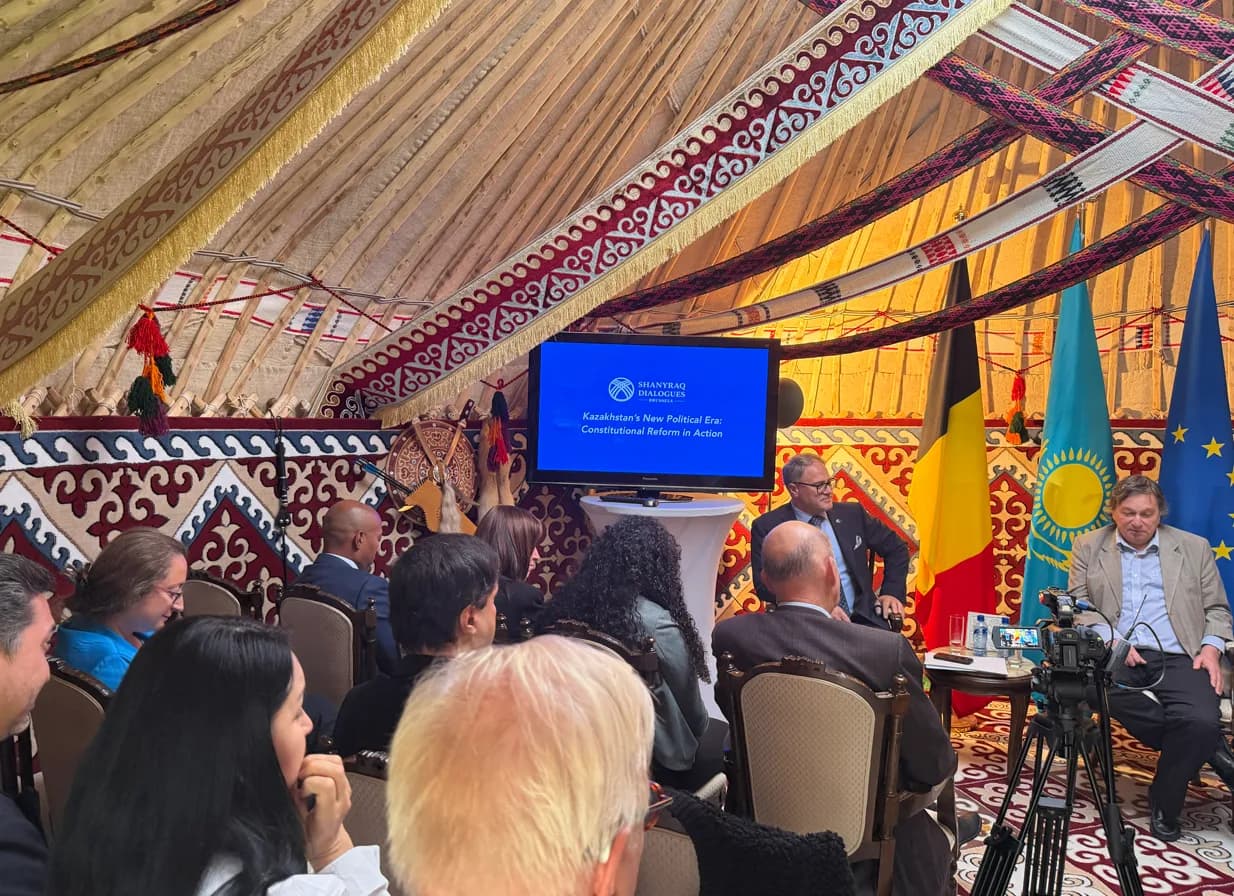
High-level roundtable on Gender Equality at the Kazakh embassy in Brussels
High-level roundtable on Strengthening Demographic Resilience, Gender Equality and Women’s Empowerment in Central Asia
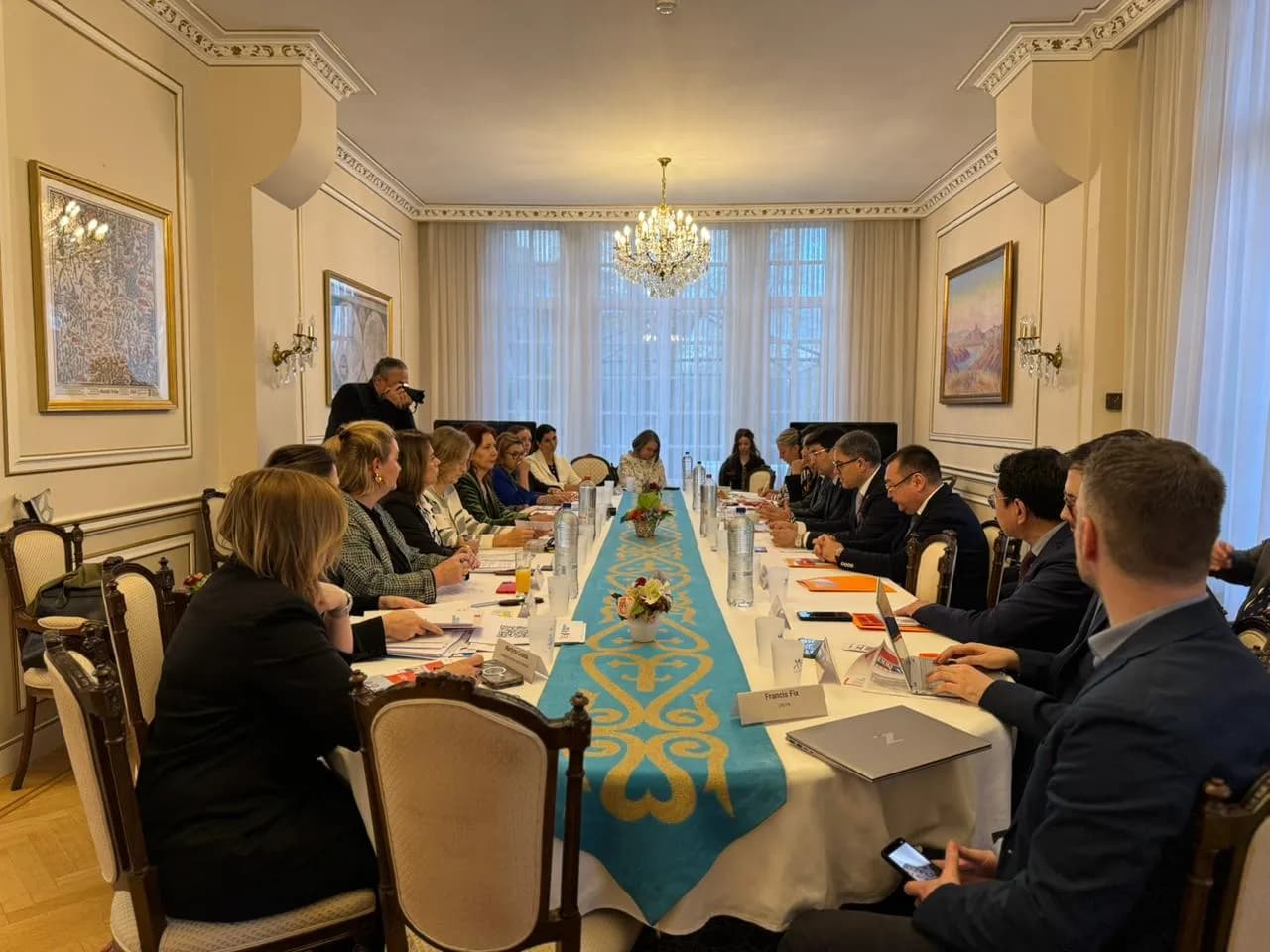

Brussels, November 18, 2025 — Today, the Embassy of the Republic of Kazakhstan to the Kingdom of Belgium hosted a high-level roundtable on “Strengthening Demographic Resilience, Gender Equality and Women’s Empowerment in Central Asia.” The event was jointly organized with the Embassy of Uzbekistan, UNFPA, and UN Women, bringing together ambassadors, senior diplomats from Central Asian countries, and high-level EU officials.
Central Asia, home to approximately 84 million people, stands at a demographic crossroads. By 2040, the region’s population is projected to surpass 100 million, creating both opportunities and challenges. This demographic shift will add 20 million working-age individuals by 2050, offering a potential demographic dividend—if strategic investments are made.
The roundtable highlighted interconnected megatrends shaping the region:
Gender Inequality
Despite progress, gender gaps persist in education, labor participation, and leadership roles. Female labor force participation remains at 47% versus 69% for men, and unpaid care work continues to limit women’s access to opportunities. Gender-based violence and stereotypes further hinder empowerment.Climate Vulnerability
Central Asia faces severe climate stressors—water scarcity, heat exposure, and land degradation—that disproportionately affect women and girls. Climate-induced migration and food insecurity amplify these risks, yet women’s voices remain underrepresented in climate policy.Migration Dynamics
Urbanization and economic migration are reshaping societies, creating challenges for public service delivery and migrant protection. Gender-sensitive migration governance is essential to ensure safe and orderly movement.Digital Divide
While digitalization unlocks opportunities, women are nearly twice as likely as men to hold jobs at high risk of automation. Closing the gender digital gap through skills training and inclusive policies is critical for future competitiveness.
Opening the dialogue, the Ambassador emphasized that Kazakhstan’s national strategy places people at its core:
“Under the leadership of President Kassym-Jomart Tokayev, Kazakhstan has placed human capital at the center of its national development strategy, recognizing it as the key basis for economic growth.”
He noted that demographic resilience is not only a social priority but a foundation for lasting prosperity and stability. Kazakhstan’s approach focuses on empowering women and youth, promoting family policy, and fostering partnerships that transcend borders.
The Ambassador highlighted several Key Achievements:
- Digital Census 2021: The first fully digital census in Kazakhstan’s history, with nearly half of the population participating online, strengthening trust and enabling evidence-based policymaking.
- Health and Education Reforms: Expanded access to youth-friendly health services, integrated reproductive health education into medical curricula, and revised legislation to ensure adolescents’ access to care.
Gender Equality Initiatives: Multi-sectoral response centers for survivors of violence, developed with UNFPA and UN Women, now serve as models of integrated service delivery.
- Active Ageing Plan (2025–2029): A new framework to ensure dignity and opportunity for older persons, aligned with EU best practices.
The Ambassador stressed that demographic shifts, gender gaps, and ageing populations are regional challenges requiring collective action:
“Central Asia today stands at a demographic crossroads—young, dynamic, and full of potential. The choices we make now, and the partnerships we build, will determine the well-being of generations to come.”
Kazakhstan is deepening cooperation with UN agencies and the EU to:
* Empower women and youth as drivers of innovation.
* Promote active ageing and social inclusion.
* Foster people-to-people partnerships connecting researchers, civil servants, and communities across regions.
The Ambassador called for continued collaboration to guide policies with data and evidence, close gender gaps, and ensure that demographic change becomes a source of strength rather than vulnerability.
“We see great potential in deepening cooperation between the EU, UNFPA, UN Women, and the Central Asian countries to invest in human capital and build resilience for the future.”
Ceren Güven Güreş, representing UN Women, spotlighted both the transformative progress and the persistent inequalities shaping the region’s gender landscape.
Güven Güreş emphasized that all five Central Asian countries have adopted national gender strategies and enacted significant legal and policy reforms in recent years. Among the most notable achievements:
- Kazakhstan: The 2024 Law on the Rights of Women and Safety of Children reinstates criminal liability for domestic violence, mandates police action even without formal complaints, and removes reconciliation as a legal option. Kazakhstan also introduced gender-responsive budgeting and amended its electoral code to guarantee that at least 30% of candidates are women, youth, or persons with disabilities.
- Kyrgyz Republic: Strengthened its gender equality framework by introducing a 30% gender quota in the 2022 electoral code and lifting obsolete restrictions on women’s access to professions in the new 2025 Labour Code.
- Tajikistan: Adopted the 2022 Law on Equality and the Elimination of All Forms of Discrimination, laying the foundation for a comprehensive gender equality system.
- Uzbekistan: Institutionalized gender-responsive budgeting through an MoU between UN Women and the Ministry of Economy and Finance, and adopted a National Strategy for Achieving Gender Equality by 2030.
Despite these reforms, Güven Güreş warned that harmful social norms and structural barriers continue to hinder progress:
Women spend three times more time than men on unpaid care work.
One in five young women is not in employment, education, or training—ranging from 9% in Kazakhstan to 40% in Tajikistan.
Women’s employment rate remains at 50%, compared to 74% for men.
Central Asia registers some of the highest gender pay gaps in the UNECE region—up to 38% in Tajikistan.
“Legal change without social transformation risks producing symbolic compliance,” she noted, underscoring the need for long-term civic education and youth engagement to shift attitudes and behaviors.
Climate change, migration, and regional conflicts exacerbate vulnerabilities, particularly for women and girls in rural areas. Güven Güreş highlighted that climate stressors and insecurity disproportionately impact women, increasing poverty and limiting access to resources.
UN Women urged deeper collaboration with the EU to:
Close gender data gaps and strengthen evidence-based policymaking.
Expand gender-responsive budgeting across all five countries.
Support social norm transformation and grassroots advocacy.
“Central Asia stands at a demographic and social crossroads. Without investing in human capital and gender equality, progress will remain fragile,” Güven Güreş concluded.
Nigina Abaszadeh, UNFPA Resident Representative in Uzbekistan and Country Director for Tajikistan, highlighted the region’s unique demographic opportunity—and the urgent need for action to ensure it translates into sustainable development.
Central Asia’s population, currently 84 million, is projected to reach 100 million by 2040, with the working-age population (15–64) increasing from 50 million to 71 million by 2050.
“This demographic dividend offers a time-bound opportunity to accelerate economic growth,” Abaszadeh stressed. “But it is a fragile opportunity—success depends on strategic investments in human capital and gender equality.”
UNFPA outlined a roadmap to capture the demographic dividend through people-centered investments:
- Invest in Human Capital: Scale up education and healthcare, including sexual and reproductive health (SRH), and develop family-friendly policies.
- Strengthen Education Systems: Align curricula with future labor demands and expand STEM opportunities for girls.
- Ensure Health and Empowerment: Address maternal health, gender-based violence, and barriers to women’s participation.
- Advance Labor Market Inclusion: Reform legal frameworks and promote job opportunities for youth and women.
Strategic enablers include:
- Demographic Intelligence: Institutionalize population data systems for evidence-based policymaking.
- Link Population, Climate & Migration: Embed population-environment linkages into climate action.
- Deepen Regional Cooperation: Establish a Central Asia demographic r resilience platform.
She also noted that
“Central Asia stands at a demographic crossroads,” Abaszadeh concluded. “The choices we make today—investing in education, health, and gender equality—will determine whether this demographic shift becomes a driver of prosperity or a missed opportunity.”
Belén Sanz Luque, Regional Director for UN Women Europe and Central Asia, praised the Central Asian Alliance for Gender Equality as a platform for connectivity and cooperation.
“We have seen important progress in advancing laws, particularly on violence against women, and in improving women’s access to education, employment, and public life,” she said. “Women are becoming key actors in economic development, and we must continue fostering leadership and access to global markets.”
Sapar Palvanov: Turkmen ambassador
Sapar Palvanov highlighted the importance of understanding family dynamics and cultural context in Turkmenistan:
Today, governments understand the need for change. We have roadmaps and national strategies. Progress is visible, but we must work patiently to shift mindsets.”
He noted the rise of women entrepreneurs in Turkmenistan as a positive trend:
“Women are creating businesses and jobs. Even in my mission, female staff play a strong role. We advocate for more women in government positions.”
Florence Bauer, UNFPA Regional Director for Eastern Europe and Central Asia, underscored the demographic dynamics shaping the region:
“Central Asia is young and dynamic. By 2050, 20 million more people will enter working age. This demographic dividend can reduce poverty and drive growth—but it will not happen automatically. It requires strategic policies and investments in human capital.”
She highlighted megatrends such as climate change, migration, and digitalization, which intersect with gender equality:
- Climate stressors affect fertility and migration patterns.
- Digitalization creates opportunities but also risks of exclusion for women.
- Health and education investments are critical to prepare youth for future jobs.
“Investing in women’s empowerment is fundamental. Without it, demographic potential will remain unrealized,” Bauer concluded.
Conclusion
The roundtable underscored that demographic resilience and gender equality are not just social imperatives—they are economic necessities. By investing in women and adapting to demographic shifts, Central Asia can unlock sustainable growth and resilience in the face of global challenges.
Central Asia must prioritize:
- Human capital development: Health, education, and social protection.
- Gender equality and women’s empowerment: Removing barriers to participation and leadership.
- Inclusive economic policies: Creating decent work in a rapidly evolving labor market.
- Digitalisation: Bridging the gender gap in technology and skills.
Derya Soysal
Contributing writer at EUReflect.
Follow EUReflect
See more of our reporting on Google
Mark EUReflect as a preferred source and our stories are ranked higher for you in Top Stories, Discover and Google News — and carry a “preferred” badge when they are cited in AI results.
Add EUReflect as a preferred source