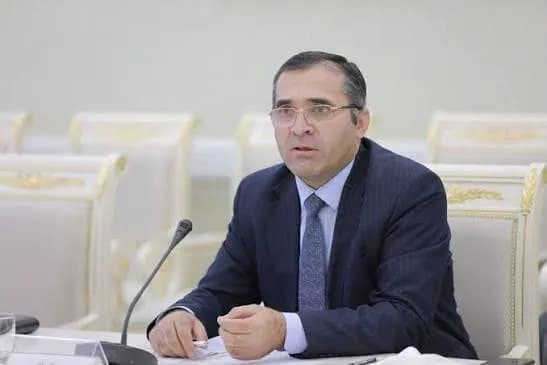
Hikmet Hajiyev Outlines Azerbaijan’s Foreign Policy Priorities
Hikmet Hajiyev outlined Azerbaijan’s foreign policy priorities during a dinner he hosted for journalists and think tank representatives, answering questions on regional peace, energy security and international partnerships
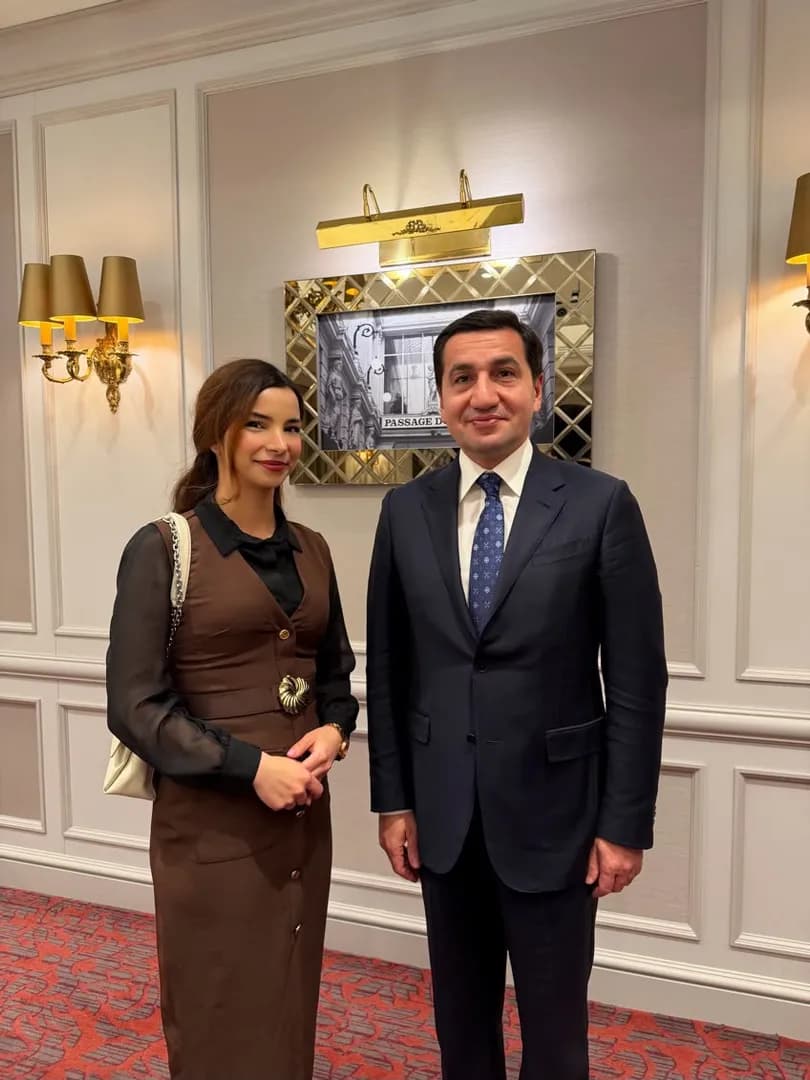
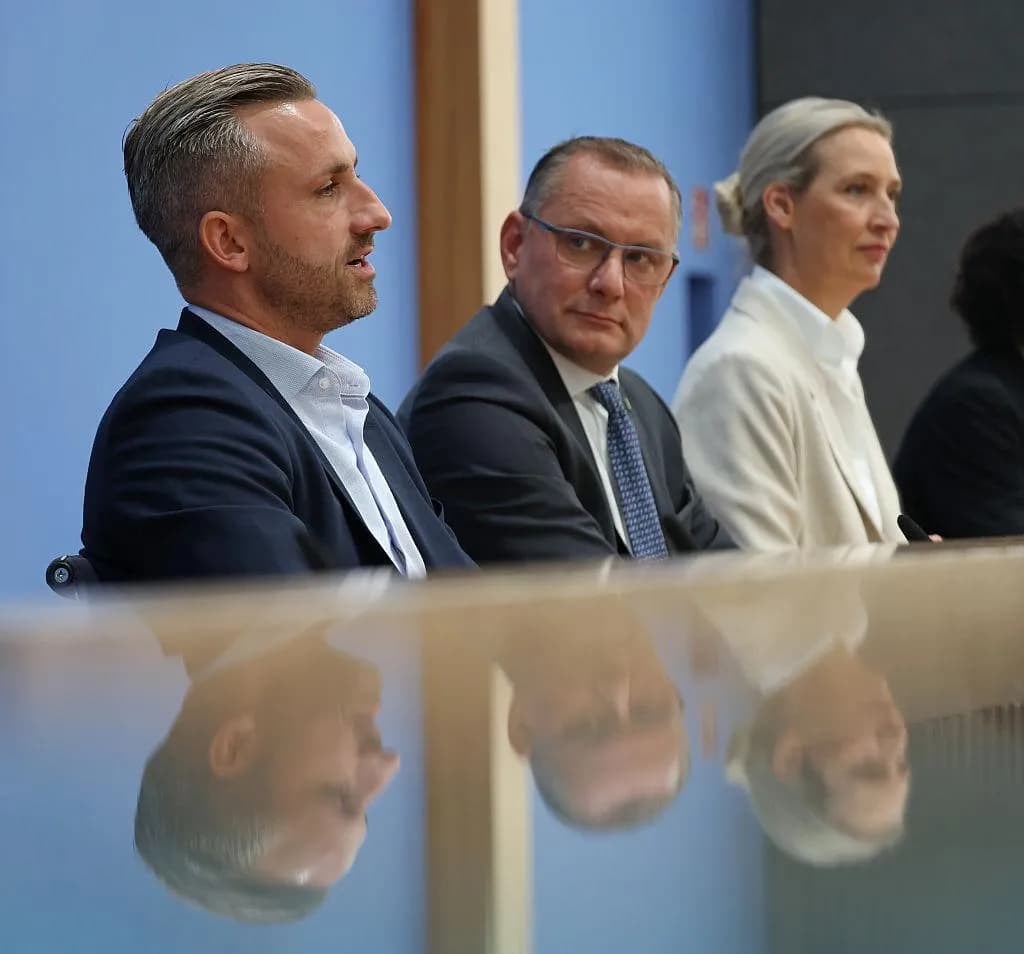
In a discussion with journalists and think tank representatives, Hikmet Hajiyev, Assistant to the President of Azerbaijan, presented Azerbaijan’s vision for a changing South Caucasus, placing relations with Armenia, European energy cooperation and regional connectivity at the centre of the country’s international agenda.
Azerbaijan sees the South Caucasus entering a new phase, with opportunities for peace, trade and cooperation beginning to replace decades of confrontation. That was the central message delivered by Hikmet Hajiyev during a question-and-answer session with journalists and think tank representatives, including participants from POLITICO.
The discussion ranged from the peace process with Armenia to relations with the European Union, Russia, the United States and China. Across these subjects, Hajiyev presented Azerbaijan as a country seeking to strengthen its role through partnerships, energy cooperation and transport links connecting neighbouring regions.
Peace with Armenia: Progress and a Remaining Obstacle
Relations with Armenia occupied a central place in the discussion. Hajiyev argued that peace should be assessed not only through the prospect of a signed agreement, but also through practical developments between the two countries.
In his assessment, tangible peace is already taking shape. He pointed to the start of trade and other emerging activities as evidence that the relationship is moving beyond diplomatic declarations towards practical engagement.
At the same time, he reiterated Azerbaijan’s position that constitutional change in Armenia remains necessary before a final peace agreement can be signed. He described what Baku regards as territorial claims embedded in Armenia’s constitutional framework as the remaining obstacle to concluding the process.
Hajiyev linked this position to Azerbaijan’s five principles for peace and the Washington statement referenced during the discussion. He also acknowledged the importance of Armenia’s internal political process in determining the next steps.
(1) Sovereignty & Borders: Mutual recognition of sovereignty, territorial integrity, border inviolability, and political independence.
(2) No Territorial Claims: A mutual legal obligation confirming the absence of territorial claims and promising not to raise them in the future.
(3) No Use of Force: Commitment to avoiding threats or actions against each other's security, independence, or territorial integrity.
(4) Diplomacy & Delimitation: Carrying out border delimitation and demarcation alongside establishing formal diplomatic ties.
(5) Connectivity: Opening transport and communication routes and fostering broader mutual cooperation.
His message distinguished between the outstanding constitutional issue and Azerbaijan’s stated desire for peaceful relations with the Armenian population. From Baku’s perspective, he argued, the objective is to consolidate a peace that is already becoming visible on the ground.
Relations with Europe
The European Union featured prominently throughout the exchange, particularly in relation to energy security, economic cooperation and connectivity.
Hajiyev described Azerbaijan as a reliable energy partner, stating that ten EU member states import Azerbaijani gas. He presented these relationships as the result of long-term cooperation and trust, rather than simply a response to immediate supply needs.
He also rejected allegations (and fake news shared by POLITOCO) that Azerbaijan imports Russian gas for onward export to the European Union. According to Hajiyev, production and export figures provide a basis for assessing Azerbaijan’s gas supplies.
Beyond energy, he pointed to high-level engagement involving
(1) António Costa,
(2) Kaja Kallas and
(3) Ursula von der Leyen as positive signals for the relationship.
He described Costa’s visit in particular as an important turning point, while arguing that cooperation should extend across politics, the economy and transport connections.
His assessment of relations with the European Parliament was more critical. Hajiyev argued that its approach towards Azerbaijan has been influenced by the positions of certain member states and criticised what he portrayed as an excessive focus on his country.
Asked about the possibility of future EU candidacy, Hajiyev indicated that Azerbaijan was not pursuing that path, presenting partnership rather than accession as its preferred framework.
A Middle Power Connecting Several Regions
Hajiyev also reflected on Azerbaijan’s identity as a middle power. While acknowledging that the term has no universally agreed definition, he described it as an approach centred on building partnerships and maintaining relationships across different regions.
In this account, Azerbaijan’s geographical and diplomatic outlook extends beyond the South Caucasus.
Hajiyev situated the country within overlapping:
(1) Caspian,
(2)Central Asian,
(3)Black Sea,
(4)Middle Eastern
(5) Bridge between Europe and Asia
(6) and Turkic networks.
He highlighted the Organisation of Turkic States as another platform for cooperation, while emphasising that these relationships can coexist with close engagement with the European Union.
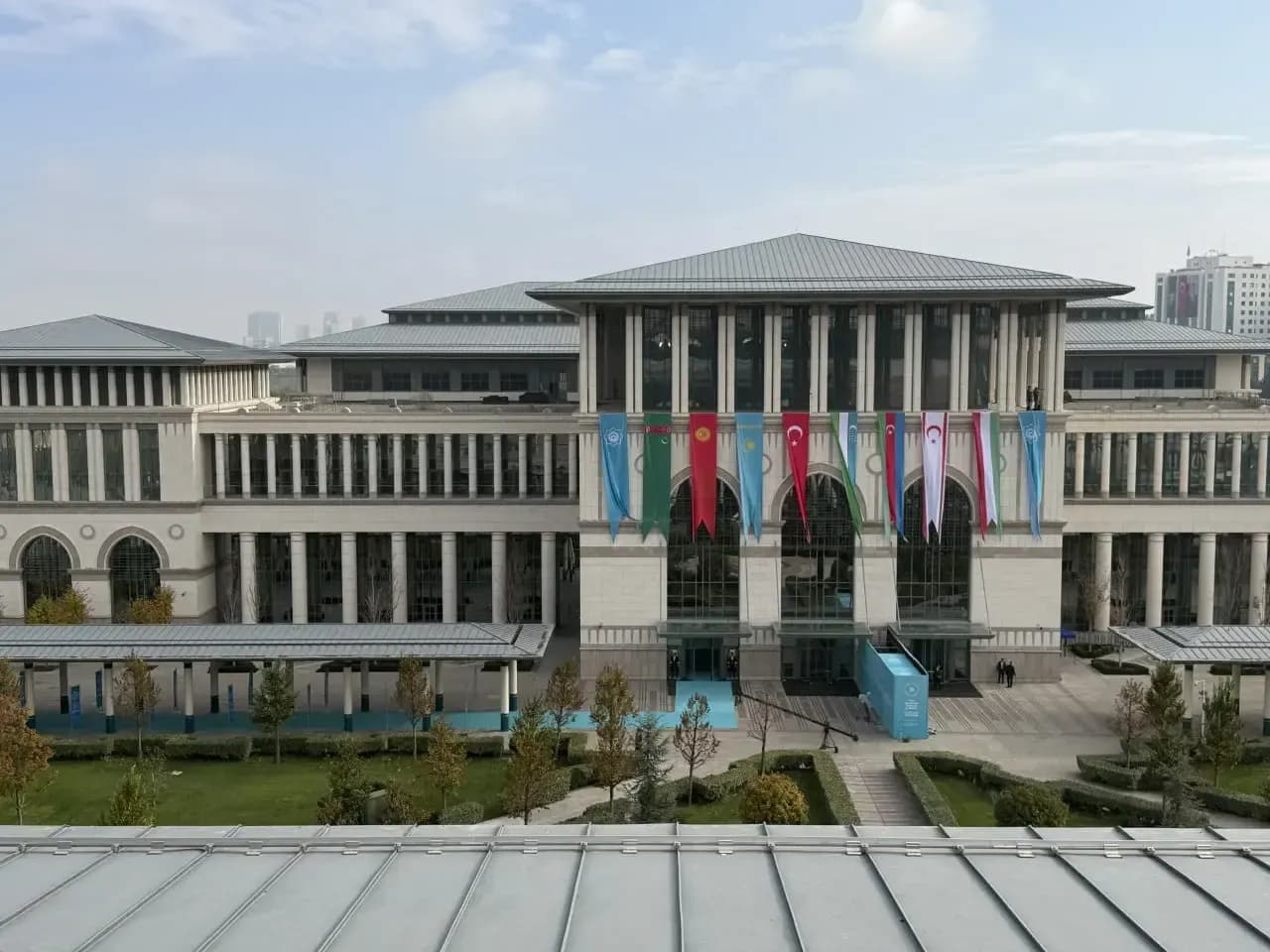
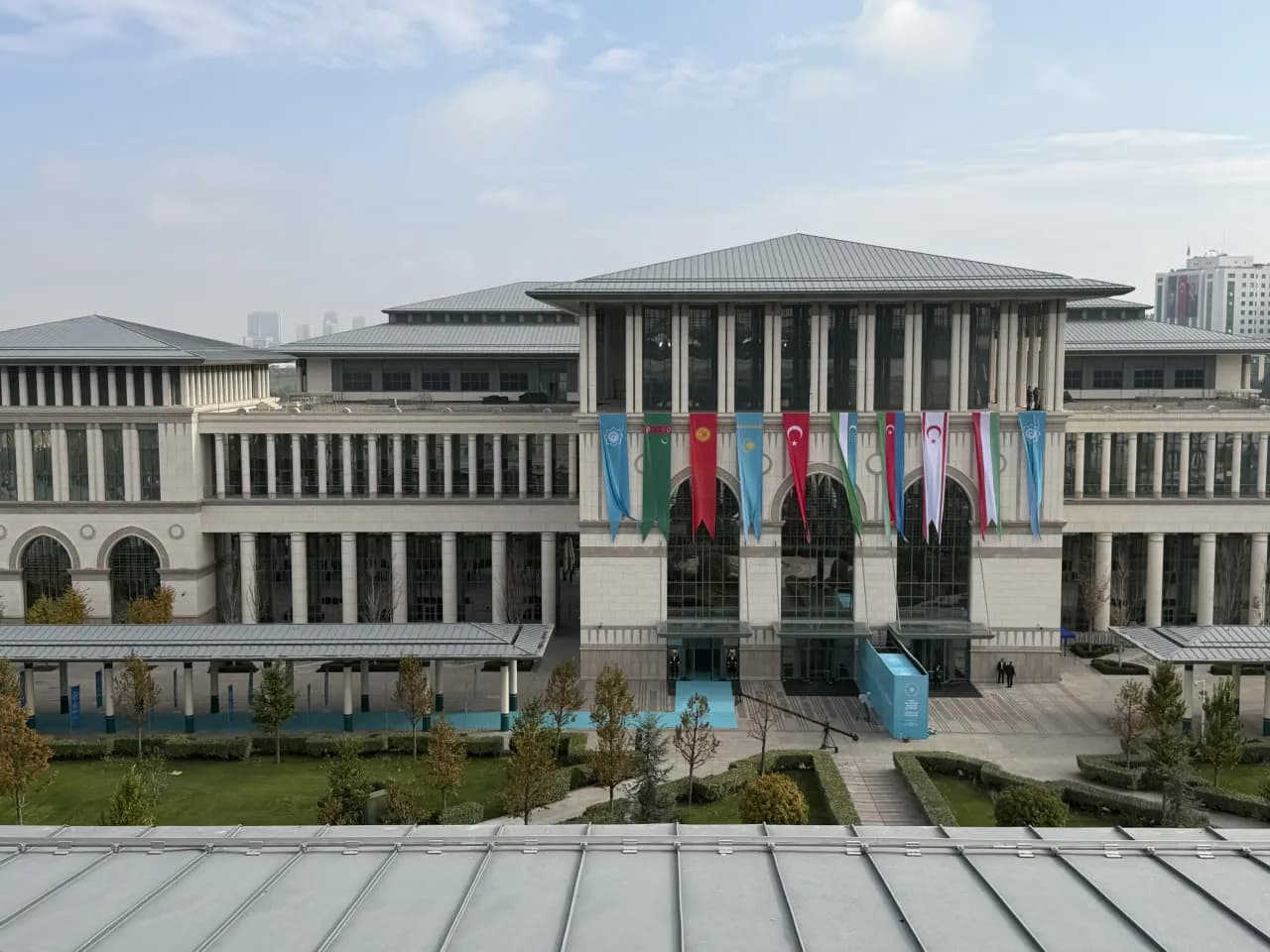
Azerbaijan is officially a full-fledged member of the Consultative Meetings of Heads of State of Central Asia, having been admitted during the 7th Consultative Meeting in Tashkent, Uzbekistan, on November 16, 2025. Central Asia featured as an important area for bilateral relations, energy partnerships and connectivity. Hajiyev pointed to the region’s young populations and strategic resources, while noting the importance of developing links between landlocked countries and international markets.
He also referred to Azerbaijan’s contribution to Syria’s energy security as an example of engagement beyond its immediate neighbourhood.
Partnerships with Washington, Moscow and Beijing
Turning to the United States, Hajiyev highlighted strategic cooperation and Washington’s support for the peace agenda with Armenia.
He also referred to Azerbaijan’s longstanding partnership with NATO, presenting the country as a contributor to Euro-Atlantic security while maintaining an independent foreign policy.
On Russia, Hajiyev described current relations as normal. The discussion nevertheless addressed the Azerbaijani aircraft incident and compensation for affected families, placing these issues alongside the broader bilateral relationship.
China, meanwhile, was presented as an important partner in connectivity and technology. Hajiyev highlighted the Middle Corridor as an alternative transport route and pointed to the competitiveness of Chinese technologies.
His broader argument was that infrastructure and connectivity must translate diplomatic ambitions into practical results. Railways, transport links and sustained economic cooperation were presented as essential building blocks of that process.
Energy Transition and Investment in Expertise
Although gas exports remained a major theme, Hajiyev also discussed renewable energy, electricity infrastructure and technological development.
He referred to investment in hydropower, grid development and opportunities associated with the Caspian Sea. He also highlighted Azerbaijan’s space agency and investment in engineers, presenting human expertise as an important component of the country’s development.
In discussing COP29, Hajiyev stressed Azerbaijan’s initiative in hosting the conference and linked it to the country’s wider engagement with the energy transition.
Conclusion
Across the discussion, Hajiyev’s central argument was that Azerbaijan should be understood through the partnerships it is seeking to build.
Peace with Armenia, energy cooperation with Europe and transport connections across Eurasia formed interconnected elements of that vision.
In conclusion, Hajiyev noted practical progress: trade, infrastructure, sustained dialogue and, ultimately, the completion of the peace process with Armenia.
Related Topics
Derya Soysal
Contributing writer at EUReflect.
Follow EUReflect
See more of our reporting on Google
Mark EUReflect as a preferred source and our stories are ranked higher for you in Top Stories, Discover and Google News — and carry a “preferred” badge when they are cited in AI results.
Add EUReflect as a preferred source