Iran Challenges US Visa Decisions Before World Cup
Iran has accused the United States of denying visas to several key members of its World Cup delegation despite approving entry for players and essential staff. Tehran called the move discriminatory and urged FIFA to intervene, while US officials cited security and immigration requirements.
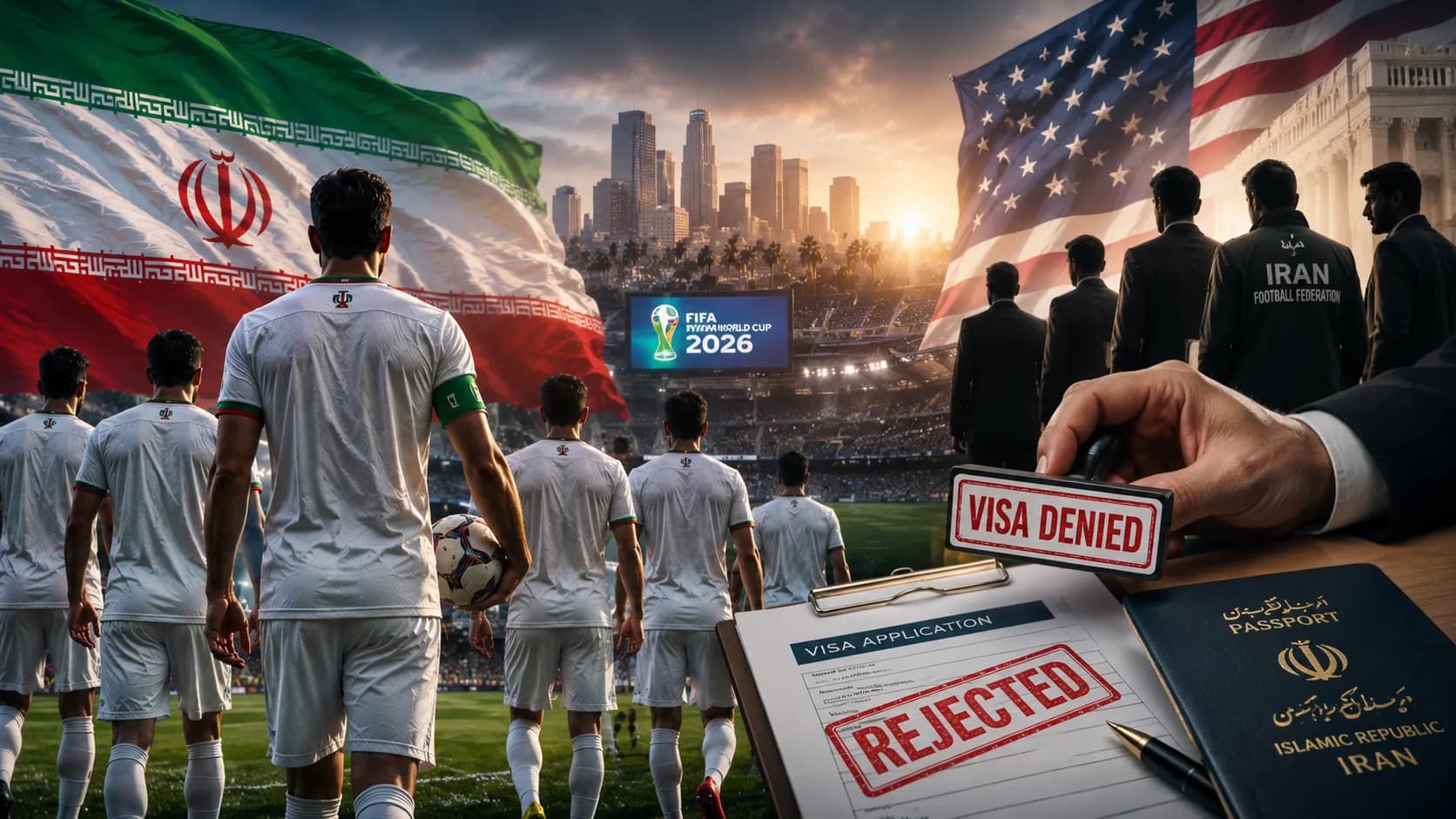
A fresh diplomatic dispute has emerged ahead of the 2026 FIFA World Cup after Iranian authorities accused the United States of denying entry visas to several members of the country's football delegation. The controversy erupted despite Washington confirming that all Iranian players and essential support personnel had been granted permission to travel for the tournament. Iranian officials have described the move as discriminatory and politically motivated, arguing that it undermines the principles of international sport and fair competition.
The disagreement highlights the complex intersection of politics and global sporting events, particularly as the United States prepares to co-host one of the largest sporting tournaments in the world alongside Canada and Mexico.
Iran Alleges Key Officials Excluded from World Cup Travel
Iranian officials claim that a significant number of administrative and technical staff associated with the national football team have been denied visas, preventing them from accompanying the squad to the tournament. According to reports from Iranian state-linked media, the affected individuals include senior football federation executives, media representatives, and technical advisers who play important roles in the team's operations.
Iran's diplomatic representatives described the excluded personnel as essential members of the delegation whose absence could affect logistical coordination, media management, and overall tournament preparation. Officials argued that while players have been allowed to travel, limiting access for support staff creates unnecessary obstacles for the national team.
The Iranian embassy strongly criticized the decision, stating that such actions amount to political interference in sport and violate the spirit of international competition. Iranian authorities have urged football governing bodies to examine the issue and ensure equal treatment for all participating nations.
US Cites Security Concerns and Immigration Requirements
American officials have defended their approach, emphasizing that visas were issued to all players and support personnel considered necessary for participation in the tournament. The United States government has stressed that security remains a top priority, particularly given the scale of the World Cup and the millions of spectators expected to attend matches across North America.
Officials have also stated that immigration screening procedures apply to all visitors and that the country will not compromise its national security standards. Concerns surrounding potential links between certain individuals and sanctioned organizations have reportedly influenced the vetting process.
The issue comes against the backdrop of strained relations between Washington and Tehran, which have experienced heightened tensions in recent years. American authorities maintain that participation in international sporting events does not exempt individuals from security reviews or immigration requirements.
Meanwhile, the Department of Homeland Security has reiterated its commitment to ensuring a safe and secure tournament environment, noting that extensive preparations are underway across all host cities.
Unique Challenges Facing Iran During the Tournament
The situation has created additional logistical complications for Iran's national team. Following security and travel considerations, Iran relocated its World Cup training base from Arizona to Mexico in late May. The team is expected to use Mexico as its primary base of operations throughout the competition.
Reports indicate that special travel arrangements may require Iranian players and officials to enter and leave the United States only for match-related activities. Such restrictions could present unique challenges compared to the experience of most other participating nations, whose delegations typically remain in host countries for extended periods during major tournaments.
The circumstances are particularly notable because this edition of the World Cup marks a rare situation in which a host nation will welcome a team from a country with which it has significant political and military tensions. Despite these challenges, Iran successfully qualified for the tournament after an impressive campaign that saw the team finish at the top of its qualification group.
Iran is scheduled to begin its World Cup campaign in Los Angeles before playing additional group-stage matches in California and Seattle. Football supporters around the world will be closely monitoring both the team's on-field performance and the ongoing diplomatic developments surrounding its participation.
Conclusion
The visa dispute between Iran and the United States has added an unexpected political dimension to the build-up for the 2026 FIFA World Cup. While American authorities insist that security considerations are guiding their decisions, Iranian officials argue that the restrictions unfairly target members of their football delegation and contradict the inclusive values of international sport.
As the tournament approaches, pressure may grow on football's governing bodies to address concerns raised by Iran and ensure that sporting competition remains separate from geopolitical disagreements. Whether the issue can be resolved before the competition begins remains uncertain, but it has already become one of the most significant off-field stories leading into the World Cup.
Zulya Atabayeva
Contributing writer at EUReflect.
Follow EUReflect
See more of our reporting on Google
Mark EUReflect as a preferred source and our stories are ranked higher for you in Top Stories, Discover and Google News — and carry a “preferred” badge when they are cited in AI results.
Add EUReflect as a preferred source