Uzbekistan Opens Higher-Education Market to Foreign Universities
Mirziyoyev sets a target of attracting branches of the world's leading universities, backed by cost compensation and scholarship quotas. The decree, budget and timeline are still to come.
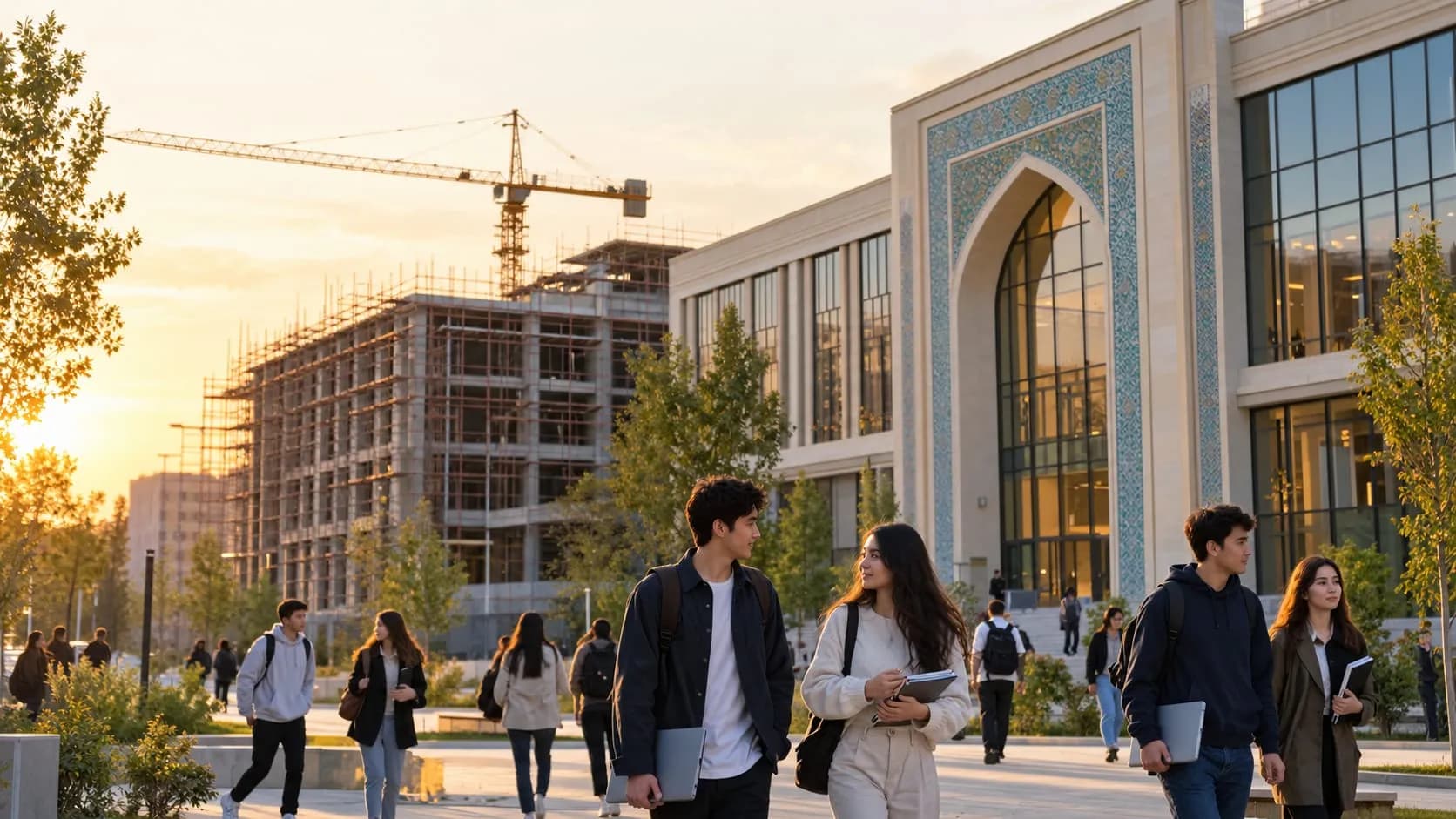
TASHKENT —Uzbekistan intends to bring branches of the world's leading universities into the country and is prepared to pay for part of the cost, President Shavkat Mirziyoyev told educators at a meeting ahead of Teachers' and Mentors' Day on 1 October, according to the presidential press service.
Under the plan, private institutions that obtain a franchise from a recognised foreign university would be compensated for up to half of their brand-licensing and equipment costs and up to 30 percent of campus construction costs. To support the return on investment, the state would also allocate scholarship-funded places at these private universities.
Priority fields were named as engineering, agriculture and water management, energy, artificial intelligence and medicine — the same sectors Tashkent has placed at the centre of its industrial and investment agenda.
What "300" means
Early headlines suggested 300 branches would be opened. The original Uzbek wording refers instead to branches of universities ranked among the world's top 300. Which ranking will be used — QS, Times Higher Education or another — has not been specified, and no figure has been given for the number of branches targeted.
The context
Thirty-two foreign universities already operate in Uzbekistan, and the student population has reached 1.6 million. In the same speech, the president criticised the quality of university textbooks and of graduate training, framing the franchise policy as a quality lever rather than a capacity measure. A related governance change was also announced: at least two-thirds of the supervisory boards of state universities are to be made up of representatives of the private sector and foreign universities.
Uzbekistan is moving from permitting foreign campuses to subsidising them — and it has named the disciplines it wants.
The school sector received its own package at the same meeting. Investors opening private schools in 52 designated districts will have access to seven-year loans at 10 percent interest and subsidies of up to 1.5 billion soums.
What remains open
For now the announcement is a target and an instruction, not a legal act. No decree, budget envelope or implementation calendar has been published. Unanswered questions include how long the incentives will run, how franchise quality will be verified — whose name goes on the diploma, and where the teaching staff will come from — and when the compensation scheme takes effect. These are expected to be settled in the forthcoming decree.
For foreign universities weighing Central Asia, the signal is nonetheless clear: Uzbekistan is moving from permitting foreign campuses to subsidising them, and it has named the disciplines it wants.
EUReflect News
Site Administrator
Follow EUReflect
See more of our reporting on Google
Mark EUReflect as a preferred source and our stories are ranked higher for you in Top Stories, Discover and Google News — and carry a “preferred” badge when they are cited in AI results.
Add EUReflect as a preferred source