Iran Crisis 2026: What Future Lies Ahead
Iran in 2026 faces deep protests, economic crisis and political unrest. A foreign-backed government would be rejected by society, increase regional tensions, raise oil prices and risk civil war, affecting Pakistan, the Middle East and global stability.
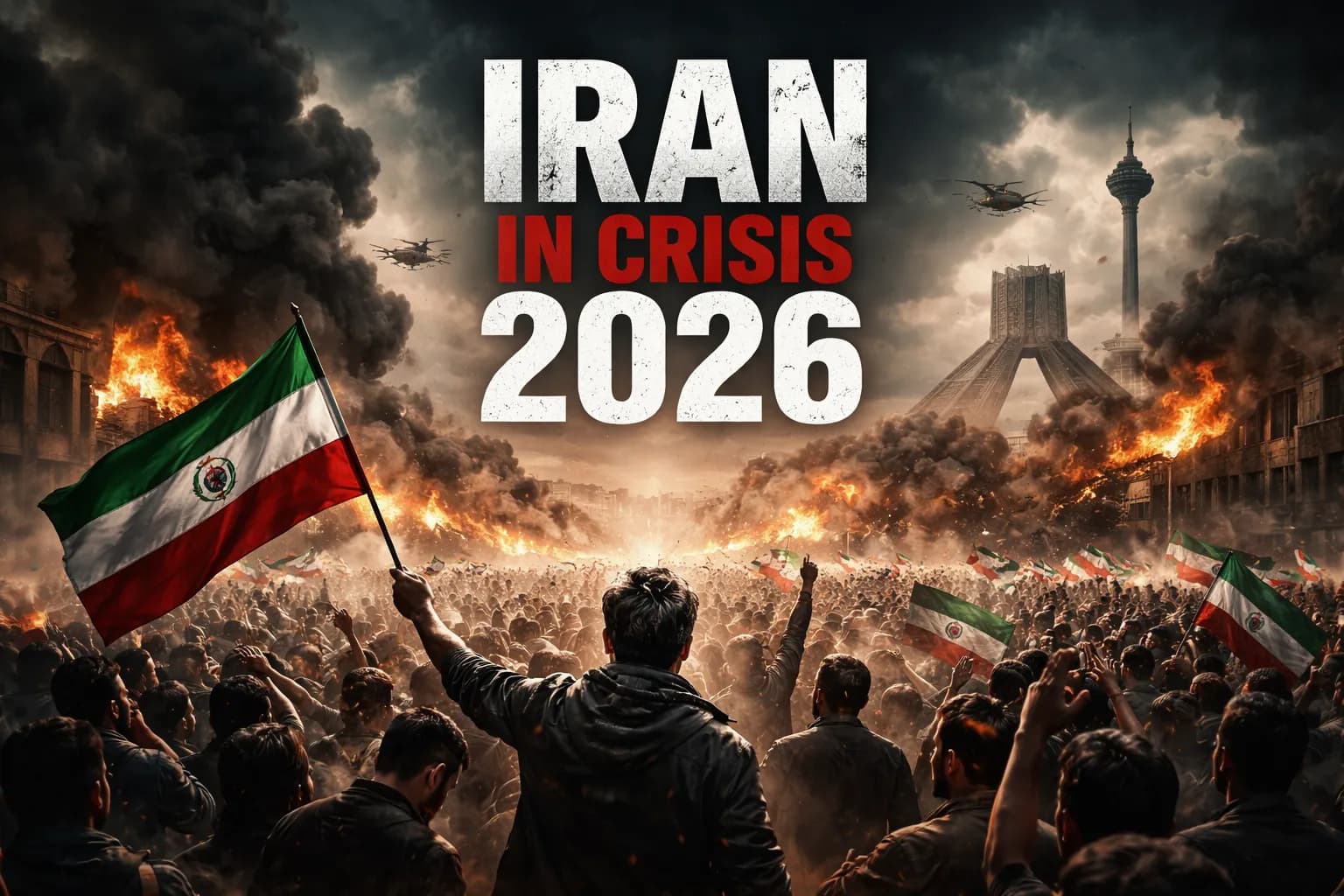
Iran in 2026 is facing a very serious crisis. Across the country, many people are protesting against the government. The main reasons are high inflation, unemployment, poor economic management, and political pressure. Young people, women, and the middle class are at the front of these protests. They want real political and social change. Because of this unrest, the government is losing public trust. Even powerful groups inside the state may disagree with each other, which increases instability. This crisis is deep and long-term, not something that can be solved easily by force.
Some analysts worry about a situation where the United States and Israel try to impose a puppet government in Iran. A puppet government is one that is controlled by foreign powers. If this happens, most Iranians would strongly reject it. People would see it as a threat to their independence. This could lead to more protests, violence, and even civil war. Parts of the military and political elite might also oppose such a government. Iran has a long history of resisting foreign control, so this plan would likely fail and leave the country more unstable.
If a foreign-backed government were imposed, the effects would go beyond Iran. The UnitedStates may want to limit Iran’s nuclear program and regional power, but such a move could increase resistance and damage America’s image in theregion. Israel might gain short-term security benefits, but the backlash could create wider conflicts. Russia would strongly oppose this action because it threatens its influence in Iran, Syria, and Iraq. China would also be concerned because instability could harm its energy supplies and Belt and Road projects. Overall, this could lead to proxy wars, higher oil prices, and rising global tensions.
A U.S.-backed government in Iran would likely mean strong Israeli influence in the country, which would deeply worry regional states. Many neighboring countries would see this as a serious security threat rather than a solution.Pakistan, in particular, would strongly oppose such a development, as it already faces security pressure from both India and Afghanistan. An unstable or foreign- influenced Iran would create another insecure border for Pakistan, something it cannot afford. Increased militancy, refugee flows, and regional tensions wouldplace heavy strain on Pakistan’s security and economy. Therefore, Pakistan andother regional countries would resist any situation that turns Iran into a new center of foreign influence and instability, preferring a stable and independent Iran instead. Other countries like Saudi Arabia, the UAE, Turkey, Iraq, Lebanon, and Syria would also fear regional chaos. These countries prefer a stable Iran rather than a forced change from outside.
Iran’s economy would suffer greatly from continued instability. The country haslarge oil and gas reserves, and the Strait of Hormuz is very important for global energy supply. If unrest increases, oil exports could stop, causing global oil prices to rise. Foreign investors would avoid Iran, and sanctions would further damage the economy. Even a new government would struggle to fix the economy without public support.
There are three possible future outcomes. First, a foreign-backed government could collapse due to public resistance, leading to civil war and regional conflict. Second, there could be limited stability if elites compromise, but the country would remain weak and fragile. Third, Iran could break into different regions controlled by rival groups, causing long-term violence and economic damage.
Iran’s future will strongly affect the region and the world. Economically, instabilitycould raise global energy prices. Politically, the balance of power could change, with China and Russia gaining influence while the U.S. and Israel face limits. Regional countries will focus on protecting their borders and avoiding conflict. Pakistan, in particular, will resist any situation that increases cross-border threats.
Iran’s crisis in 2026 is not only a national issue but a global one. Imposing a foreign-backed government would likely fail and make the situation worse. Iran’sfuture depends on internal reforms, public trust, and unity within the state. Regional and global powers must act carefully, because mistakes in Iran could affect security, economies, and stability across the world.
Uroosa Khan
Contributing writer at EUReflect.
Follow EUReflect
See more of our reporting on Google
Mark EUReflect as a preferred source and our stories are ranked higher for you in Top Stories, Discover and Google News — and carry a “preferred” badge when they are cited in AI results.
Add EUReflect as a preferred source