Iran Crisis Shapes Trump–Netanyahu Meeting
Israeli Prime Minister Benjamin Netanyahu meets U.S. President Donald Trump in Washington with Iran as the primary agenda item. The talks also cover Gaza, Lebanon, and regional security, while highlighting both the enduring U.S.-Israel partnership and recent policy differences between the two leaders.
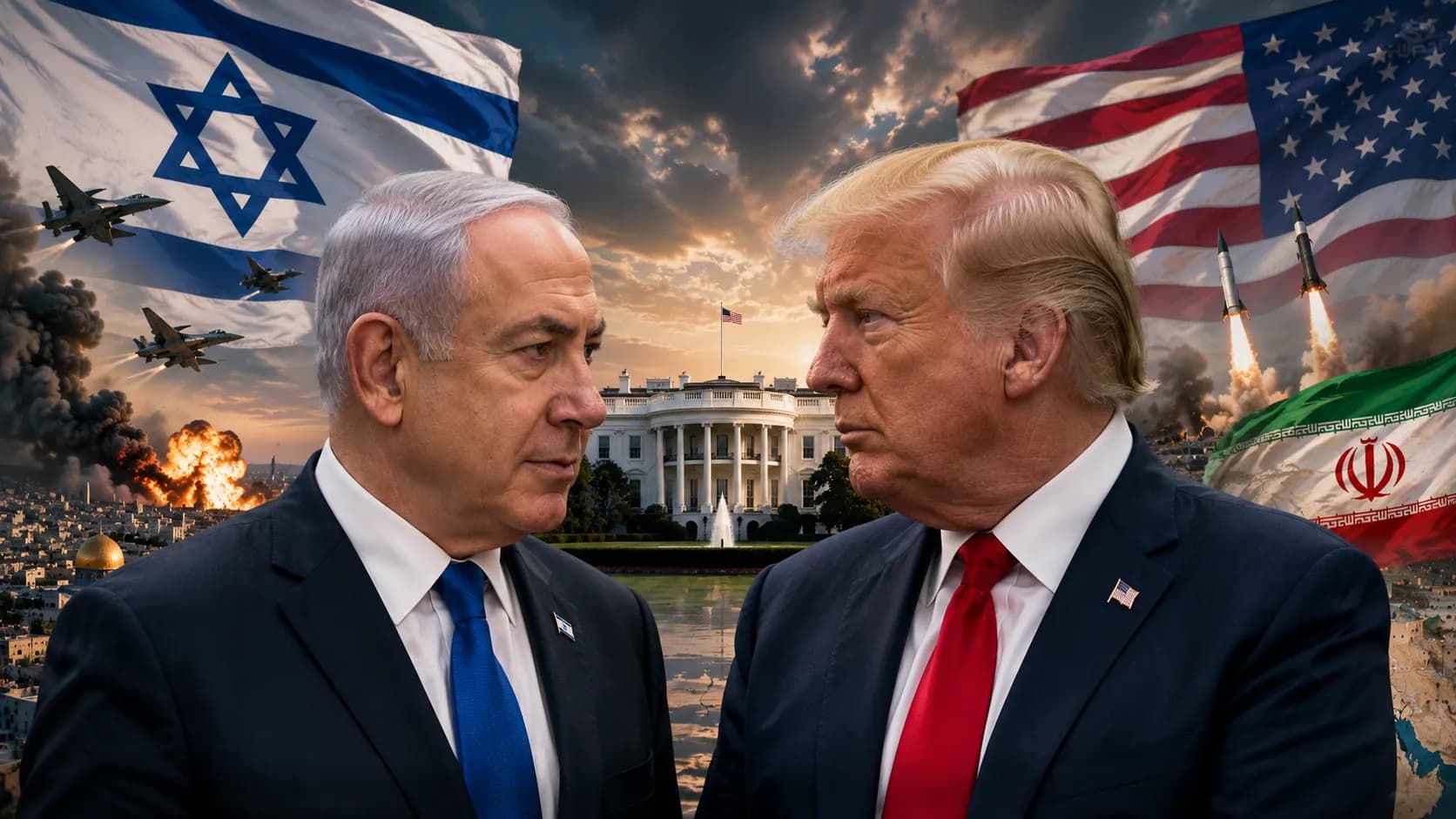
Trump and Netanyahu Reconnect as Iran Dominates Agenda: Strategic Coordination Amid Emerging Differences
Israeli Prime Minister Benjamin Netanyahu departed for Washington on Monday for what is expected to be one of the most consequential meetings of his current term with U.S. President Donald Trump. The visit marks the eighth meeting between the two leaders since Trump returned to office and their first face-to-face discussion since the recent confrontation involving the United States, Israel, and Iran fundamentally reshaped the regional security landscape.
Unlike previous bilateral meetings, this summit comes at a time when military operations, diplomatic initiatives, domestic political calculations, and regional alliances are intersecting simultaneously. While both leaders continue to emphasize their strategic partnership, recent developments suggest that Washington and Jerusalem are also navigating increasingly complex policy differences regarding the future direction of the Middle East.
Iran Remains the Central Strategic Priority
Before departing for Washington, Netanyahu made clear that Iran would dominate the discussions.
"In these complex times, you need to act with both great determination and great wisdom. We will discuss all the issues on the agenda, primarily Iran. Of course, our goal is to protect our security and also to expand the circle of peace around us."
The statement reflects Israel's longstanding assessment that Iran continues to represent its principal national security challenge. Although regional crises in Gaza and Lebanon remain active, Jerusalem continues to view Iran's military capabilities, regional influence, and strategic ambitions as the primary factor shaping Israeli defense policy.
For the Trump administration, Iran likewise remains a critical foreign policy concern. However, recent events indicate that Washington's immediate objective has shifted toward preventing further escalation while preserving deterrence.
The Aftermath of the U.S.–Iran Confrontation
The meeting follows a significant military episode involving the United States and Iran.
Earlier this month, the United States conducted a two-week bombing campaign against Iranian targets. The operation prompted Tehran to retaliate by launching attacks against American military bases in the region. Notably, Israel did not directly participate in the U.S. bombing campaign despite being Washington's closest regional ally.
Over the weekend, President Trump decided to halt the military operation. Iran subsequently announced that it would suspend its own attacks for as long as the American pause remains in effect, creating a temporary reduction in hostilities.
Despite this pause, Israel has maintained a firm deterrent posture. Israeli officials have warned that any future Iranian attack would receive an immediate and forceful military response, underscoring Jerusalem's determination to prevent any perception of weakened resolve.
Strategic Alignment, Tactical Differences
Although the United States and Israel continue to share the broader objective of containing Iran, recent developments suggest that the two governments are not identical in their preferred methods.
Netanyahu himself has recently acknowledged that differences have emerged between the two allies as Israeli and American interests have occasionally diverged.
Those tensions became unusually visible following an acrimonious telephone conversation in June. Reports of the exchange initially leaked to the media before President Trump publicly confirmed them. During the conversation, Trump reportedly described Netanyahu in highly critical terms, exposing strains that rarely become public between two leaders traditionally viewed as close political partners.
The incident demonstrated that even strong strategic alliances can experience periods of disagreement when military objectives, diplomatic priorities, and domestic political pressures evolve differently.
Nevertheless, neither government has questioned the broader strategic relationship. Instead, current disagreements appear to concern tactical approaches rather than long-term geopolitical goals.
Gaza and Lebanon Add Complexity
Although Iran is expected to dominate the agenda, regional security discussions will almost certainly extend beyond Tehran.
In what many observers interpret as a gesture toward Washington, Israel announced on Sunday that it would permit a multinational security force to enter Gaza under President Trump's proposed peace framework for the enclave. The decision suggests a willingness by the Israeli government to cooperate with American diplomatic initiatives while maintaining its own security requirements.
Meanwhile, Israel announced on July 21 that it had redeployed portions of its military presence in southern Lebanon. The move forms part of U.S.-supported understandings reached with Lebanese authorities during recent negotiations and reflects continued coordination between Washington and Jerusalem regarding northern border security.
Together, these developments indicate that the upcoming meeting is likely to address multiple interconnected security theaters rather than focusing exclusively on Iran.
Domestic Political Stakes
The Washington visit also carries significant domestic political implications for Netanyahu.
Israel is scheduled to hold national elections on October 27, and recent opinion polls indicate that Netanyahu faces a competitive political environment. Against this backdrop, appearing alongside the President of the United States offers an opportunity to reinforce his image as an experienced statesman capable of managing Israel's most important international relationship.
Historically, close cooperation with Washington has represented an important political asset for Israeli leaders. A successful summit that projects unity and strategic coordination could therefore strengthen Netanyahu's position during the election campaign.
For President Trump, the meeting also reinforces America's commitment to one of its closest allies while demonstrating continued engagement in Middle Eastern security affairs.
Managing Partnership in a More Complicated Region
The upcoming Trump–Netanyahu meeting illustrates both the resilience and the evolving nature of the U.S.–Israel partnership.
The two governments remain closely aligned in viewing Iran as the principal strategic challenge facing the region. At the same time, recent military developments reveal subtle differences regarding crisis management, escalation control, and the balance between military pressure and diplomatic restraint.
Washington appears increasingly focused on preventing a wider regional conflict after achieving immediate military objectives, while Israel continues to emphasize long-term deterrence against Iran and its regional network of allies.
These approaches are not necessarily contradictory; rather, they reflect different national priorities shaped by each country's strategic responsibilities and domestic political considerations.
The inclusion of Gaza, Lebanon, and regional security arrangements alongside the Iran dossier further demonstrates that Middle Eastern diplomacy has become increasingly interconnected. Decisions taken on one front inevitably influence developments elsewhere.
Conclusion
The Washington summit represents far more than another routine meeting between allied leaders. It arrives at a pivotal moment following the recent U.S.–Iran confrontation, amid ongoing instability in Gaza and Lebanon, and against the backdrop of important political developments in both countries.
While Iran is expected to remain the dominant subject of discussion, the broader significance of the meeting lies in determining how Washington and Jerusalem intend to coordinate their strategies in an increasingly volatile regional environment.
Whether the discussions produce new security understandings or simply reaffirm existing commitments, the outcome will likely shape the next phase of U.S.–Israeli cooperation and influence the strategic trajectory of the Middle East in the months ahead.
Ipek Tuncer
M.A. in International Relations
Follow EUReflect
See more of our reporting on Google
Mark EUReflect as a preferred source and our stories are ranked higher for you in Top Stories, Discover and Google News — and carry a “preferred” badge when they are cited in AI results.
Add EUReflect as a preferred source