Iran Launches Retaliatory Strikes Across Middle East After U.S.‑Israel Attacks
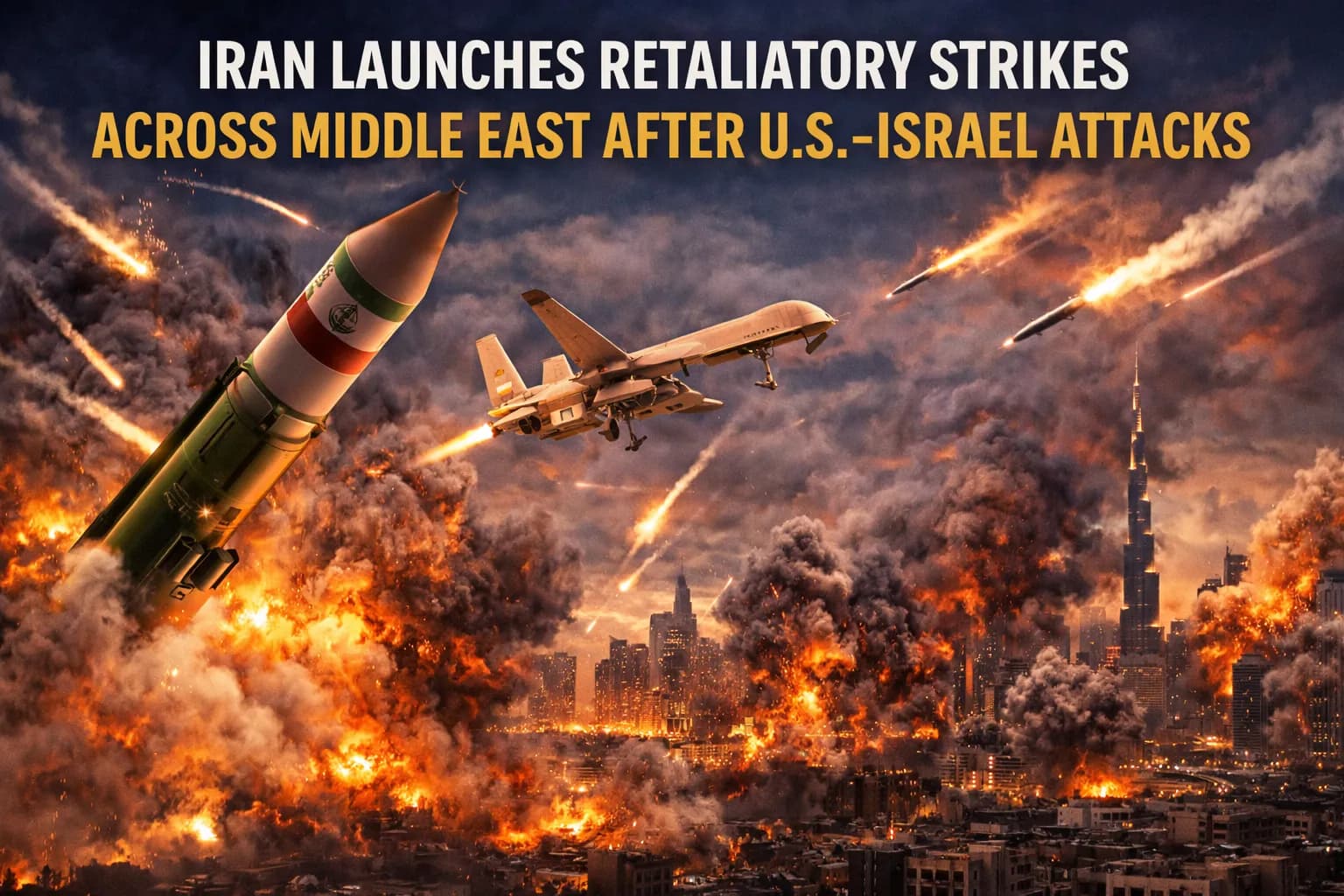
Dateline: Gulf Region / Tehran, Feb. 28, 2026.Iran launched a broad campaign of missile and drone strikes across the Middle East on Saturday, responding to earlier coordinated military attacks by the United States and Israel on Iranian territory. The retaliatory assault affected several countries in the Gulf Cooperation Council (GCC) and beyond, with explosions reported in the United Arab Emirates, Qatar, Bahrain, Kuwait, Jordan and Israel as air defences engaged incoming projectiles.
Regional retaliation and missile barrages
In a rare escalation of hostilities, Iran’s Islamic Revolutionary Guard Corps (IRGC) said it struck “occupied territories” and U.S. military bases across the region, declaring the operation would continue until what Tehran described as “aggression” ceased. Governments in Gulf states activated air defences as ballistic missiles and armed drones traversed their airspace.
The United Arab Emirates reported multiple waves of intercepted Iranian missiles over Abu Dhabi and Dubai. Debris from the interceptions fell in populated areas, causing infrastructure damage and at least one confirmed fatality in Abu Dhabi, where falling debris struck a civilian, according to UAE Defence Ministry statements.
Smoke and explosions were seen across major cities in the Gulf, including Doha in Qatar and Manama in Bahrain, where sirens and defensive fire echoed through the air. Several nations reported no major damage to critical infrastructure after successful missile interceptions, though injuries were reported in some locales.
Impact on civilians and transport
In Dubai, debris from interceptions caused fires near hotels and commercial areas, while regional airports temporarily suspended operations amid the heightened military alert, affecting international flight schedules. The situation prompted several countries to issue safety advisories for foreign nationals and residents amid concern over potential escalation.
Broader geopolitical escalation
Iran’s counter‑strikes followed a major joint U.S. and Israeli offensive earlier in the day targeting Iranian military and nuclear sites — operations that reportedly inflicted significant damage on Iranian strategic assets. Tehran’s government framed its actions as a defensive response to what it described as an unprovoked attack on its sovereignty.
Officials in the region expressed concern that the clashes could trigger wider conflict beyond the immediate theatres of engagement, with foreign ministries urging restraint while affirming their right to defend national territory and citizens.
Security and diplomatic fallout
The escalation prompted broad international reactions, including calls for de‑escalation, emergency diplomatic consultations and heightened readiness among allied forces. The U.N. Security Council and other global bodies were expected to address the crisis as details continued to emerge.
Olha Pashchenko
Contributing writer at EUReflect.
Follow EUReflect
See more of our reporting on Google
Mark EUReflect as a preferred source and our stories are ranked higher for you in Top Stories, Discover and Google News — and carry a “preferred” badge when they are cited in AI results.
Add EUReflect as a preferred source