Iranians Take to the Streets Following Death of Supreme Leader Khamenei
Dateline: Tehran, Feb. 28, 2026.Iranians took to the streets in several cities following reports of the death of Ayatollah Ali Khamenei, expressing a range of reactions that ranged from jubilation to private mourning, according to social media posts and open-source reporting.
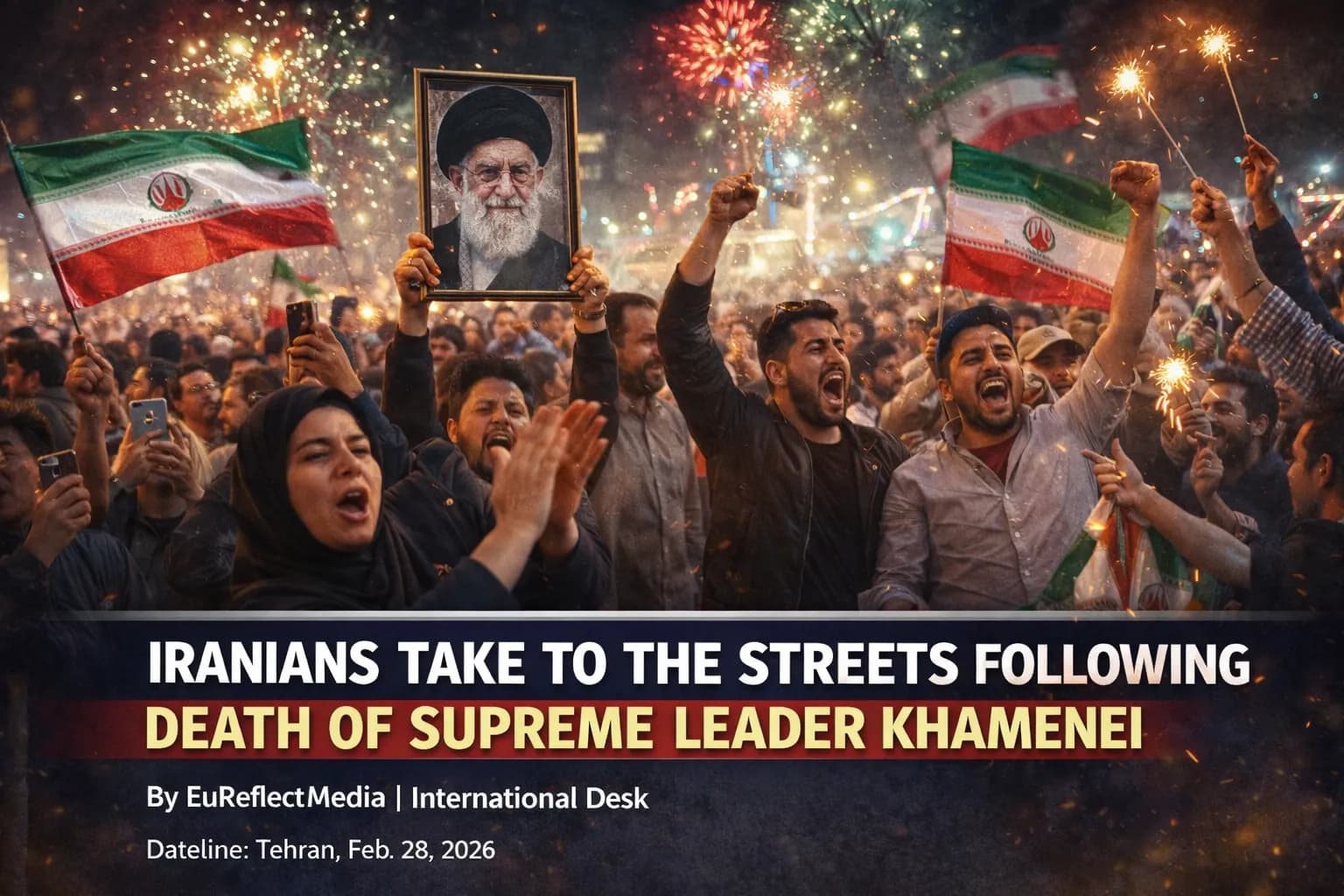
In urban centers including Tehran, Mashhad, and Isfahan, crowds were reported to have gathered in public squares and streets, waving flags, chanting slogans, and in some cases setting off fireworks. Social media videos show scenes of celebration and calls for political change.
Mixed private and public reactions
Some Iranians indicated that while they publicly joined celebrations, they privately mourned the Supreme Leader, reflecting a complex social and political climate. Citizens expressed both hope for a potential shift in governance and apprehension about possible unrest or retaliation following the U.S.–Israeli military strikes that reportedly led to Khamenei’s death.
Local authorities increased security presence in many cities, particularly near government buildings and religious sites, as tensions remained high. Despite some visible celebrations, Tehran and other cities experienced limited violent incidents, according to independent reports.
Implications for Iran’s political landscape
The death of Khamenei leaves a significant leadership vacuum in the Islamic Republic. Analysts suggest that these public displays, combined with private mourning, indicate potential openings for internal political debate and a possible reconfiguration of Iran’s governing structure.
Observers also note the risk of factional tensions within the Islamic Revolutionary Guard Corps and the clerical hierarchy, as competing groups may seek to influence succession processes.
International and regional context
The public reaction comes amid a broader regional crisis, including ongoing U.S.–Israeli strikes targeting Iranian military and nuclear infrastructure, and retaliatory missile and drone launches across the Gulf. The international community continues to call for restraint, warning of escalation that could affect neighboring countries and global markets.
Social media monitoring shows that these celebrations were widespread but uneven, with some regions remaining subdued due to fear of state reprisal or uncertainty about the situation.
Olha Pashchenko
Contributing writer at EUReflect.
Follow EUReflect
See more of our reporting on Google
Mark EUReflect as a preferred source and our stories are ranked higher for you in Top Stories, Discover and Google News — and carry a “preferred” badge when they are cited in AI results.
Add EUReflect as a preferred source