Norway Joins Europe’s Emerging Nuclear Architecture
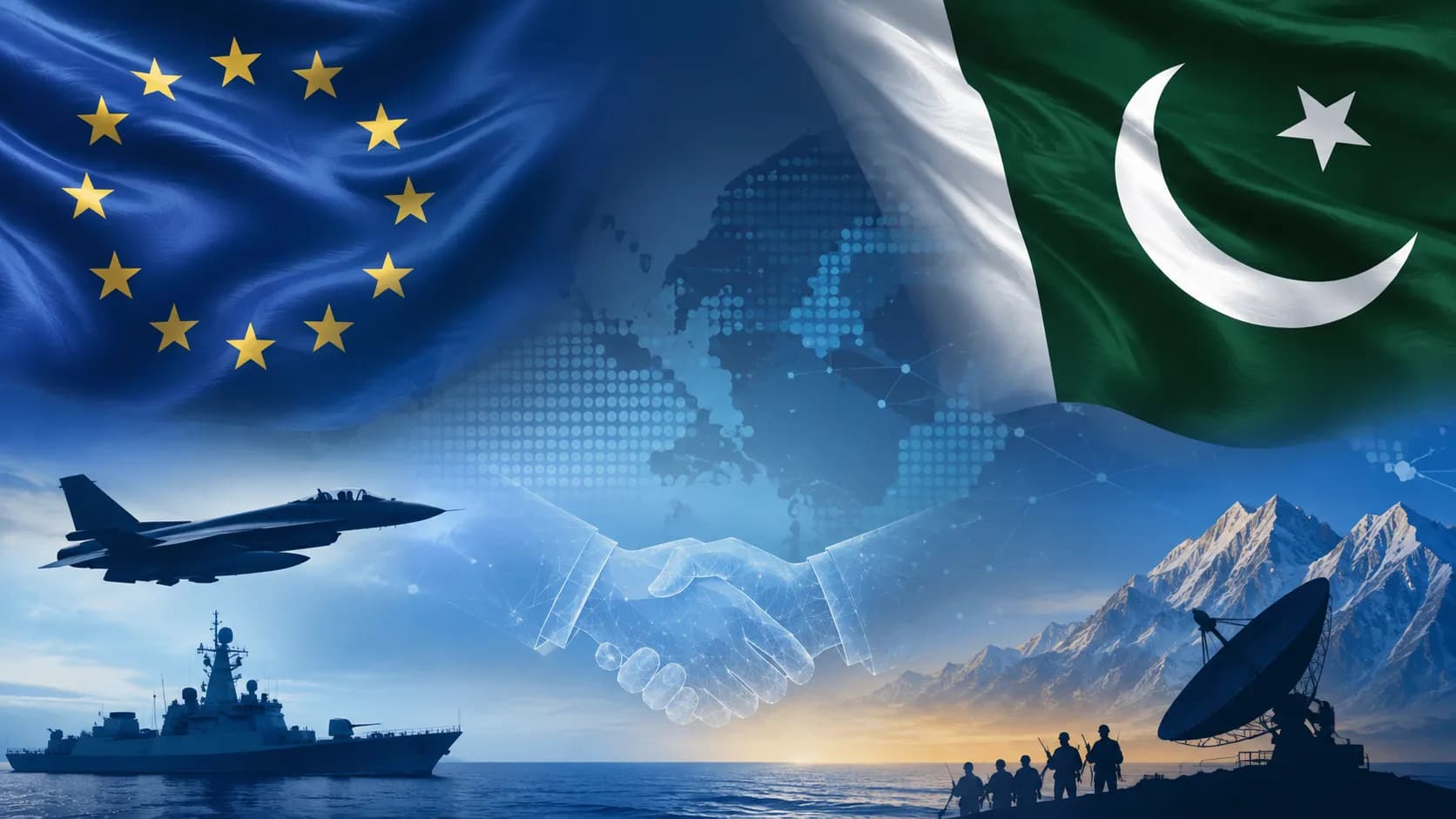
Norway joined France’s nuclear deterrence programme, signaling Europe’s growing push for strategic autonomy and reduced dependence on the US. The initiative strengthens Europe’s northern and eastern security architecture while raising major geopolitical and legal questions regarding NATO, Russia, and the NPT framework.
Introduction
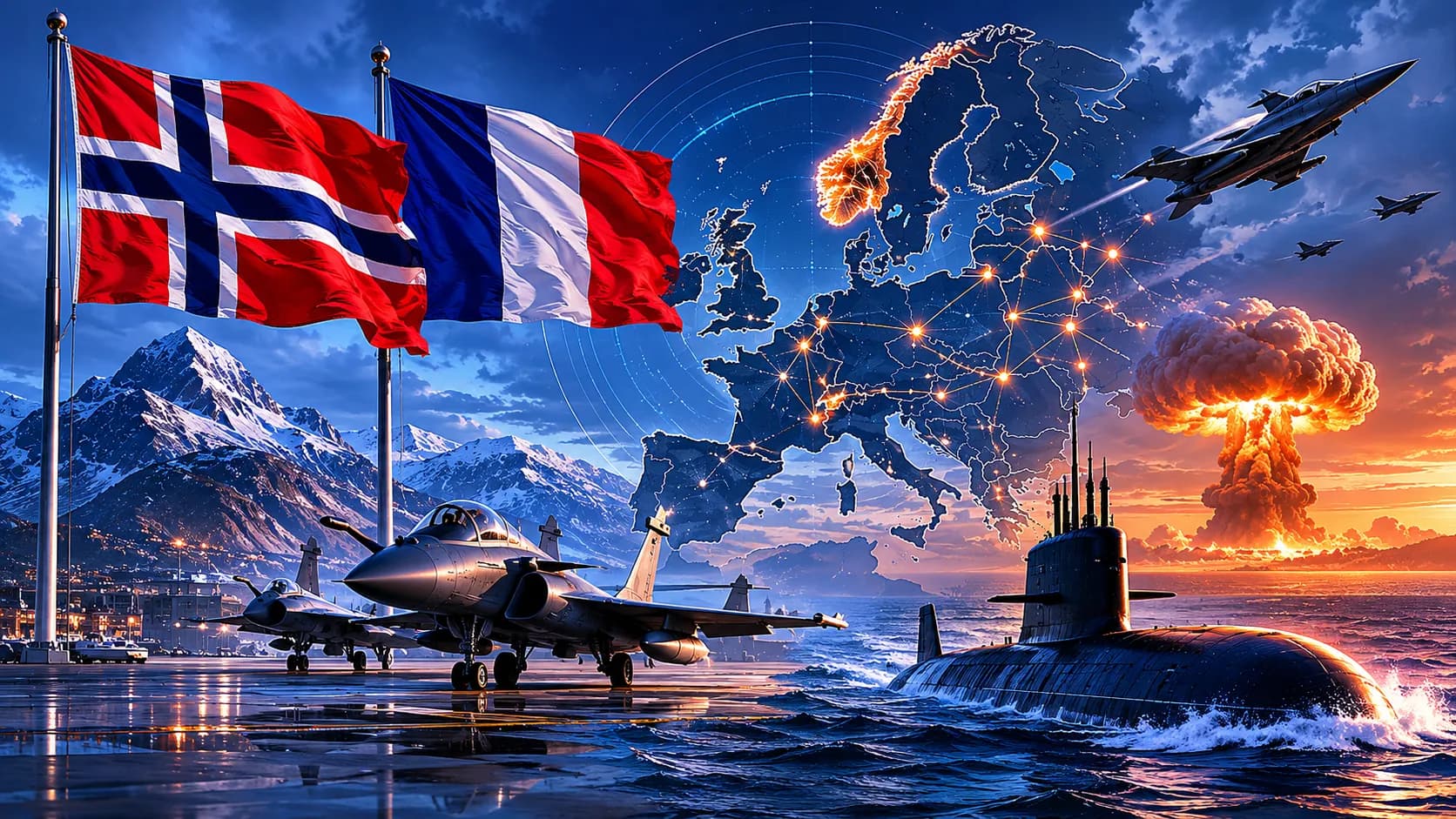
In a move that evokes the strategic calculations of the Cold War era, Norway became the ninth country to join France's nuclear deterrence programme on May 27, 2026. The defence pact was signed in Paris and jointly announced by Norwegian Prime Minister Jonas Gahr Støre and French President Macron, both of whom underscored what they described as the gravest security environment Europe has faced since the Second World War. This development serves as a compelling indicator that Europe is rediscovering its own defence instincts, increasingly questioning its strategic dependence on the United States, and actively seeking to determine its own geopolitical destiny.
1. Macron's Nuclear Vision: What Is "Forward Deterrence"?
In March 2026, Macron — the leader of the European Union's sole nuclear-armed member state — unveiled a programme designed to reinforce continental security. Under this framework, referred to as "forward deterrence," participating countries would be permitted to temporarily host French "strategic air forces," enabling them to operate across the European continent with the stated objective of complicating the strategic calculations of potential adversaries and enhancing rapid-response capabilities.
While this concept bears a resemblance to NATO's nuclear-sharing model, it carries a fundamental distinction: France's nuclear arsenal operates exclusively under Parisian command, entirely independent of American control. According to data released by SIPRI and the Federation of American Scientists, France possesses an estimated 290 nuclear warheads, more than eighty percent of which are submarine-launched. This configuration places France as the world's fourth-largest nuclear power, behind Russia, the United States, and China, respectively.
Macron's strategic vision is far from coincidental. The existential uncertainty generated by the war in Ukraine, mounting doubts regarding the reliability of American commitments to NATO, and the growing imperative for European nations to allocate greater portions of their own budgets to defence have collectively compelled the continent to adopt a fundamentally different mode of strategic thinking. France, historically and institutionally, regards itself as uniquely positioned to fill that emerging vacuum.
2. Why Does Norway Matter? The Strategic Weight of Geography
Norway's accession to the programme carries significance that extends well beyond the symbolic. Norway shares a 198-kilometre land border with Russia and is an indispensable actor in Arctic security — a theatre of growing geopolitical contestation. Against this backdrop, Oslo's inclusion under the nuclear umbrella represents a substantial strategic gain for Europe's northern flank.
At the signing ceremony, Prime Minister Støre noted that Norway had concluded defence agreements with both Germany and the United Kingdom within the preceding six months. This pattern reflects Oslo's deliberate policy of constructing a multi-layered security network rather than becoming strategically dependent on any single power. Proponents view this approach as prudent and far-sighted; critics, however, question whether such agreements risk provoking a response from Moscow.
The scope of the agreement itself is equally noteworthy. Its provisions extend well beyond nuclear deterrence to encompass hybrid warfare, maritime security, space cooperation, cybersecurity, support for Ukraine, and defence industrial collaboration. This breadth makes abundantly clear that the accord represents a comprehensive strategic partnership rather than a narrowly defined nuclear arrangement.
3. Nine Countries, One Framework: Where Is European Defence Headed?
Prior to Norway's accession, the programme had already incorporated eight nations: Belgium, Denmark, Germany, Greece, the Netherlands, Poland, Sweden, and the United Kingdom — the latter itself a nuclear power. A cursory examination of this list reveals that the programme is primarily concentrated along NATO's eastern and northern flanks, thereby conveying an unmistakable deterrent signal directed at Russia.
Nevertheless, this configuration also raises several questions of considerable strategic weight. The inclusion of a non-EU member such as the United Kingdom indicates that this initiative is a product of allied political will rather than an EU institutional framework. Furthermore, the participation of non-nuclear states prompts serious legal and normative questions regarding compatibility with the obligations enshrined in the Nuclear Non-Proliferation Treaty (NPT).
Viewed from a broader historical perspective, this development signals the dawn of a geopolitical era in which cold calculations never truly lose their urgency. Having spent decades sheltering beneath the American nuclear umbrella, Europe appears to have resolved to construct its own deterrence architecture. This transformation carries profound implications not only for Transatlantic relations but also for the very foundations of international security law.
Conclusion: A New Nuclear Order — or a Calculated Risk?
Norway's formal entry into France's nuclear deterrence programme constitutes the latest chapter in a far-reaching transformation of Europe's security architecture. The consolidation of nine nations under a single French command structure stands as an unambiguous testament to how seriously the continent takes the pursuit of strategic autonomy.
Yet every major strategic initiative carries risks commensurate with its ambitions. How Russia will ultimately interpret these developments, what legal tensions may emerge within the NPT framework, and how the United States and NATO will respond to this parallel architecture remain open and consequential questions. Europe is currently making what may be among the most pivotal geopolitical choices in its modern history. The reward, if the gamble proves sound, could be genuine strategic autonomy; the cost, if it does not, may be the opening of unforeseen and potentially irreversible risks.
Alvara Merrick
Contributing writer at EUReflect.
Follow EUReflect
See more of our reporting on Google
Mark EUReflect as a preferred source and our stories are ranked higher for you in Top Stories, Discover and Google News — and carry a “preferred” badge when they are cited in AI results.
Add EUReflect as a preferred source