Is the US–Iran Deal a Ceasefire or a Coming Collapse?
The new U.S.–Iran MoU has paused hostilities with a 60-day ceasefire, but experts warn it is only a temporary truce. Lasting peace will require strict verification, economic safeguards, military deconfliction channels, and mutual acceptance of regional realities to prevent future conflict.
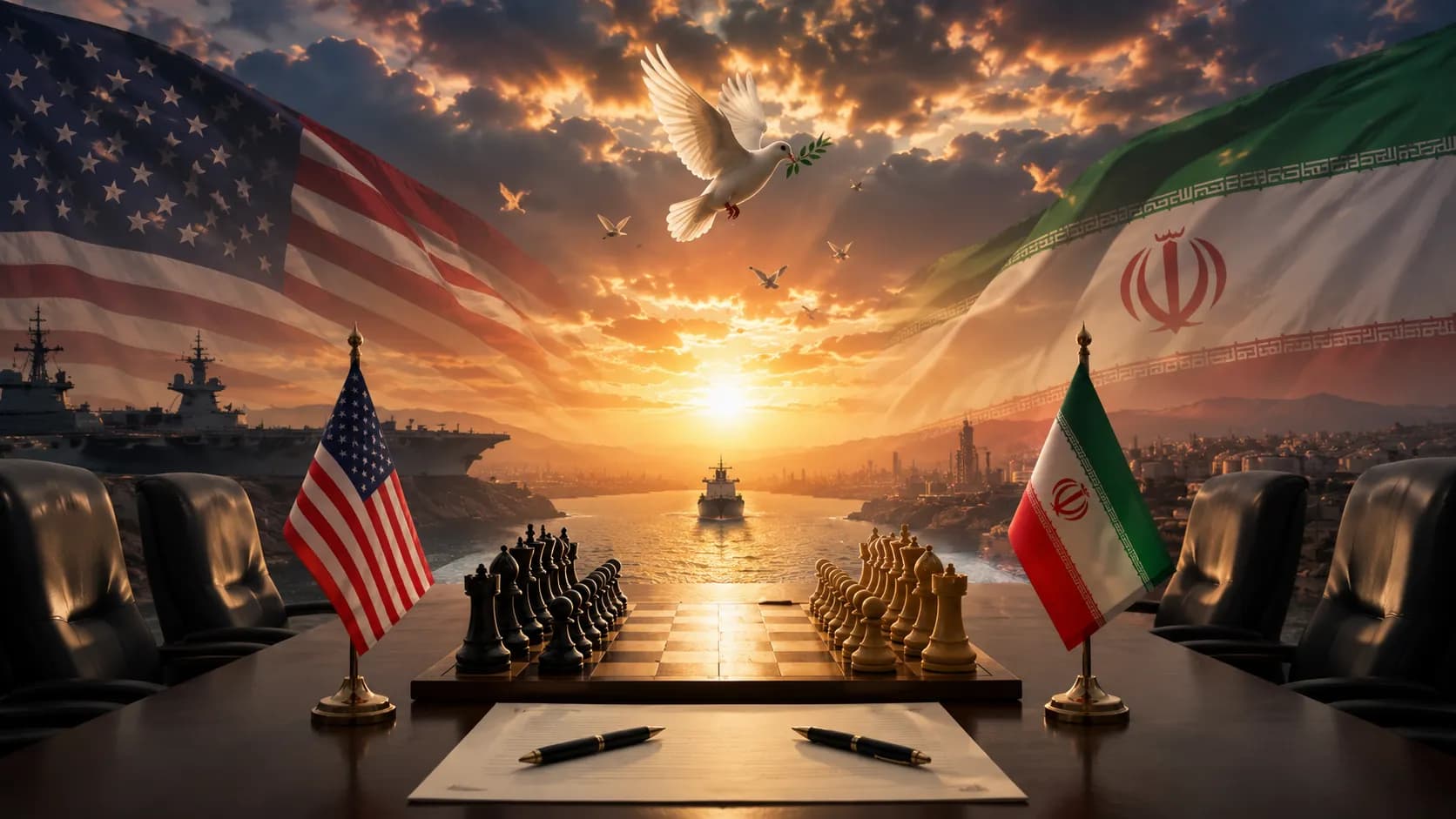
The ink on the new US Iran memorandum of understanding (MoU) may not even be dry, but anyone who has watched the last 73 years of shadow war knows that a signature is not a ceasefire. The deal announced on June 15, 2026, brokered by Pakistan and Qatar, has halted the immediate fighting that erupted after US Israeli strikes on Iran on February 28 killed thousands and pushed global energy prices to record highs. The official signing ceremony is scheduled for Friday, June 19, 2026, in Geneva, Switzerland. The agreement establishes a 60-day ceasefire, during which further negotiations will address the termination of sanctions, Iran's nuclear program, and the establishment of a monitoring mechanism However, if both nations believe this agreement alone will avert future conflict, they are dangerously naive.
From the 1953 CIA led coup against Prime Minister Mohammad Mossadegh, a foundational trauma that Tehran views not as history but as living memory, to the 2020 assassination of Qasem Soleimani, to the strikes of February 2026, trust has been a casualty of every "diplomatic breakthrough". On June 15, President Trump announced he was authorizing the immediate removal of the US naval blockade of Iranian ports. Iran, for its part, committed to reopening the Strait of Hormuz to all commercial vessels.
Yet what has actually been agreed upon is far more fragile than the headlines suggest. The MoU's 60 day verification and implementation period is itself a greater litmus test for permanently ending the war than the now deferred comprehensive nuclear deal. The most defensible reading of the draft texts and public statements so far is that the agreement would establish a renewable 60 day truce built around a limited number of practical measures. In short, it is a stopgap, not a settlement.
To prevent the next missile strike or proxy battle, Washington and Tehran must abandon performative cordiality and adopt three historically informed, brutally realistic strategies: mutual verification over mutual trust, economic interdependence without regime change fantasies, and a cold, grudging acceptance of each other's regional influence.
History proves that deals without humility fail. The 2015 Joint Comprehensive Plan of Action (JCPOA), negotiated by the Obama administration, was remarkably successful in curbing Iran's nuclear program. The International Atomic Energy Agency repeatedly confirmed that Iran was "transparently, verifiably, and fully implementing the JCPOA". Yet the deal collapsed politically because the first Trump administration unilaterally walked away from it in 2018. The US then imposed "maximum pressure" sanctions; Iran responded by enriching uranium to unprecedented 60% purity, just one technical step from weapons grade material. Each side called the other the aggressor, and both were right.
The current memorandum is already exhibiting similar fault lines. While Trump has repeatedly claimed that the US has reached "The Deal" with Iran, Tehran has tended to characterize it as a mere MoU with no legally binding effect. This discrepancy itself indicates that significant differences between the two sides remain unresolved. Meanwhile, Iranian hardliners have mounted a fightback against a deal they say does not guarantee sufficient sanctions relief, compensation, or control of the Strait of Hormuz.
Key provisions of the draft memorandum as reported by Iranian media include a permanent and immediate end to the war on all fronts, including Lebanon; a US commitment to non interference in Iran's internal affairs; the complete lifting of the US naval blockade within 30 days; the reopening of the Strait of Hormuz under Iranian arrangements; the release of $24 billion in frozen Iranian funds; a 60 day negotiation period for nuclear issues; and the reaffirmation by Iran of its commitment under the Nuclear Non Proliferation Treaty not to produce nuclear weapons.
But critical details remain unresolved. Whether Iran's overseas assets frozen by Western countries will be released, and if so to what extent, is still an open question. The timeline for the end of the conflict involving Israel and Lebanon remains uncertain. Most importantly, the fate of Iran's enriched uranium stockpile, estimated at around 400 kilograms of material enriched to 60% purity, sufficient to produce several nuclear weapons if further enriched, has been deferred. Iranian state media has insisted that "Iran's right to enrich uranium and the retention of enriched material... will be emphasised with a view to their inclusion in the final agreement". The US, meanwhile, is pushing for a long term moratorium of up to 20 years.
Both countries must institutionalize "firewalls" between their disagreements. Iran will never stop opposing US policy in Lebanon or Syria. The US will never stop criticizing Iran's human rights record or its support for regional proxies. But these issues do not have to lead to drone strikes or nuclear brinkmanship.
The critical fix is a permanent, 24/7 military de-confliction hotline, not the ad hoc channel used after the fact. When a US carrier enters the Gulf or Iran tests a missile, the default response must be a verified notification, not a provocation. History shows that accidental wars start when pride outruns communication. The 1988 shooting down of Iran Air Flight 655 by the USS Vincennes, which killed 290 civilians, remains a chilling reminder of how quickly miscalculation can become catastrophe. Avert the next war by forcing generals to talk before they can shoot.
The current MoU acknowledges this need in principle, with provisions for a monitoring mechanism to oversee implementation of the agreement. But a mechanism designed to monitor economic and nuclear compliance is not the same as a dedicated military channel capable of defusing crises in real time. Without such a channel, a minor incident in the Gulf, a drone overflight, a harassing maneuver, a mine drifting into shipping lanes, could spiral into open conflict before either capital can intervene.
The most unstable dynamic in US Iran relations is the ability of each side to hold the other's economy hostage. The US can sanction any Iranian bank overnight. Iran can choke the Strait of Hormuz, through which 20% of the world's oil supplies flow. This mutual economic hostage taking guarantees future crises.
The new MoU offers a temporary reprieve but no permanent solution. A binding, renewable "economic ceasefire" is needed: the US commits to no new sanctions except for verified nuclear cheating; Iran commits to no attacks on commercial shipping or energy infrastructure. Enforcement should be referred to a third party body like the International Court of Justice, not the UN Security Council, where vetoes paralyze action. Cordiality does not require friendship, only predictable pain.
Furthermore, the draft's economic provisions raise as many questions as they answer. The US and its allies are reportedly required to present reconstruction plans for Iran worth at least $300 billion. Will such a massive sum actually be delivered, and on what terms? Iranian officials are already complaining that the deal does not guarantee sufficient sanctions relief or compensation. If the economic benefits fail to materialize, Tehran's hardliners will have all the ammunition they need to scuttle the entire process.
The most dangerous fantasy is that either nation can "win" the Middle East. Iran wants the US out of Iraq and the Gulf. The US wants Iran to stop backing the Houthis in Yemen or Hezbollah in Lebanon. Neither full outcome is possible. The only war avoiding path is a grudging spheres of influence agreement: Iran accepts limited US presence in the Gulf for maritime security; the US accepts that Tehran has legitimate security ties in Baghdad and Beirut. This is not moral, it is realistic. Every war since 2003 (Iraq, Syria, Yemen) escalated because one side tried to expel the other entirely.
The current MoU explicitly excludes Iran's missile program and its support for "resistance groups" from the final negotiation agenda. This silence is not a solution; it is an invitation to future conflict. Unless both sides openly acknowledge that neither will be expelled from the region, they will continue to fight proxy wars that inevitably escalate into direct confrontation.
Cordiality is not warmth; it is the absence of armed ruin. The United States and Iran need not be friends. They need only find war too costly to contemplate. This requires a deal that makes war boring: predictable, expensive, and unsupported by domestic publics. The moment either side believes it can humiliate the other without retaliation, the deal is dead.
The current MoU, for all its limitations, at least creates a framework for continued negotiation. The nuclear issue has been deferred for 60 days, which is both a weakness and an opportunity. If the two sides use that time to build genuine verification mechanisms and de escalation channels, the truce could become durable. If they use it to posture and prevaricate, the war will resume, and the next round will be even bloodier.
The next war between Iran and the US will not start over a nuclear facility. It will start over a miscalculated naval maneuver, a cyberattack that kills civilians, a proxy group that goes rogue, or a terrorist attack like the one on the USS Vincennes. This MoU buys time. But only a hard, honest, history based structure, one that admits past betrayals, locks in military distance, abandons dreams of domination, and establishes enforceable economic and military firewalls, can turn that time into a future without fire. Thus, signing an agreement is easy. Living with your enemy is the only thing that works.
Uroosa Khan
Contributing writer at EUReflect.
Follow EUReflect
See more of our reporting on Google
Mark EUReflect as a preferred source and our stories are ranked higher for you in Top Stories, Discover and Google News — and carry a “preferred” badge when they are cited in AI results.
Add EUReflect as a preferred source