Ismail Gaspıralı: A Life Under the Sign of Progress
Ismail Gaspıralı is a pioneering intellectual of the Jadid reform movement who advocated educational modernization among Turkic and Muslim communities of the Russian Empire. Through the establishment of usul-i jadid schools and the publication of the newspaper Tercüman, he promoted scientific education, women’s learning, and the idea of cultural unity among Turkic peoples.
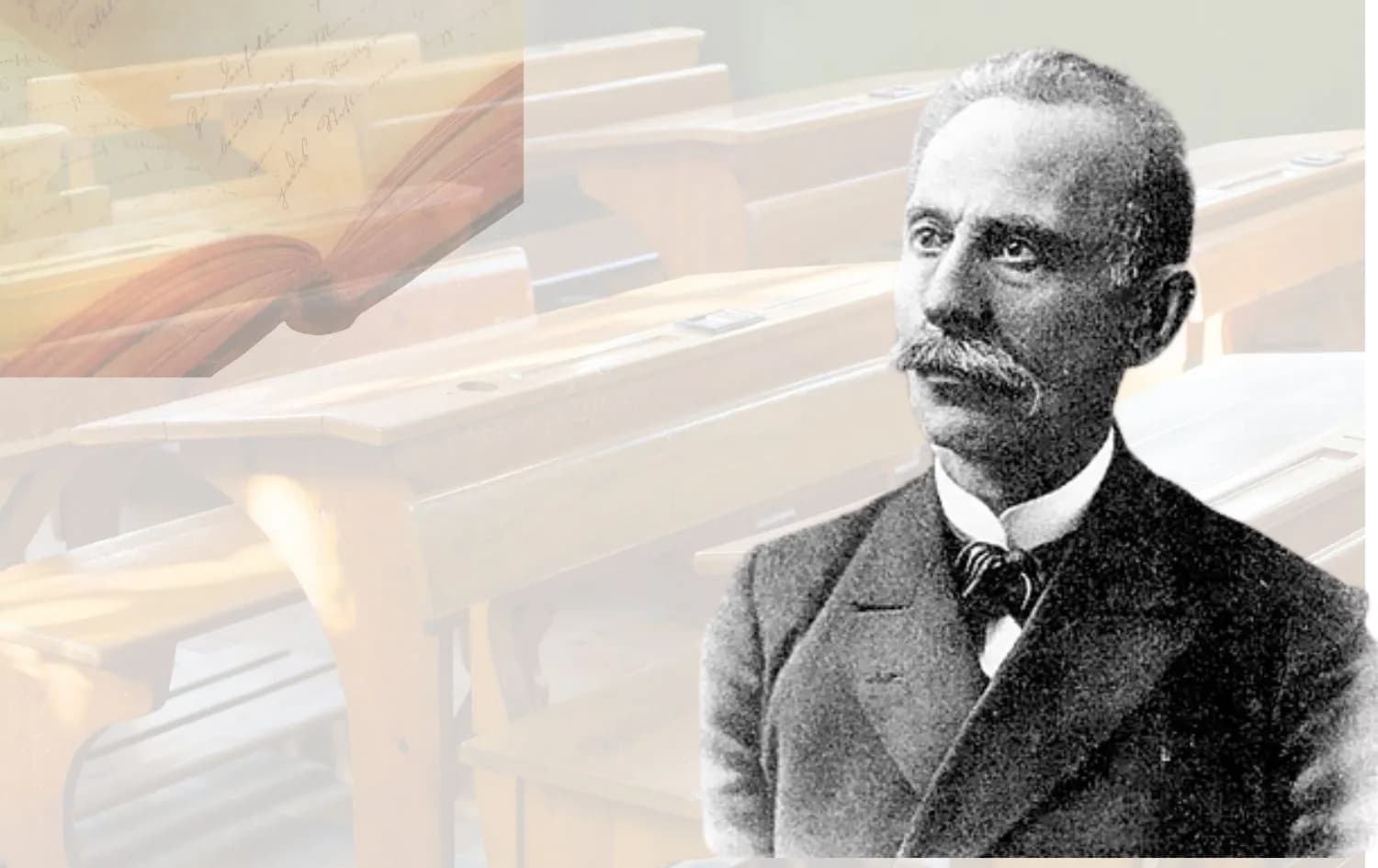
Recently, I had the honor of recalling the memory of the Crimean Tatar intellectual, educator, and man of letters Ismail Gaspıralı during a conference on the Jadid reform movement organized by the Embassy of Uzbekistan in Brussels and the Benelux countries.
This movement of modernization, promoted by Turkic-speaking intellectuals of Russia and Central Asia, although little known in Europe, had a decisive influence on the emergence of a shared Turkic identity consciousness.
The term Jadid derives from the Arabic word jadīd, meaning “new” or “renewal.” The choice of this term highlights the reformist and modernist aspirations of the intellectuals who promoted the movement.
In this context, it is worth briefly retracing the adventurous, unique, and fascinating life of Ismail Gaspıralı, whom many scholars consider the father of Jadidism.
Gaspıralı was born in 1851 in Crimea, under Russian occupation, near Bakhchisarai, the capital of the historic Crimean Khanate. His father was a lieutenant in the Tsarist army, while his mother belonged to the Tatar nobility.
At the age of thirteen, he was sent to a military school in Moscow, where he encountered Pan-Slavist circles. Paradoxically, this environment strengthened his awareness of his Tatar and Muslim identity. At the age of sixteen, he abandoned the military school with a friend and attempted to cross into Ottoman territory in order to join the Ottoman Army, which was engaged in suppressing an uprising in Crete. The adventure ended abruptly when the two friends were arrested in Odessa while preparing to cross the border.
Temporarily abandoning the idea of a military career in Turkey, Gaspıralı returned to Bakhchisarai and began working as a Russian language teacher in a school. Alongside his Russian lessons, he also taught his students the Tatar language.
Between 1872 and 1874, Ismail Gaspıralı was in Paris, where he became an assistant to the renowned Russian writer Ivan Turgenev. During this period, he also interacted with intellectuals and with Ottoman political exiles belonging to the group known as the Young Ottomans, who had taken refuge in France.
With his eyes still turned toward Istanbul—the cultural and identity center for the Turkic peoples of Russia—Gaspıralı later traveled there with the hope of becoming an officer in the Ottoman army. However, his wish to join the Ottoman military was ultimately not fulfilled.
Gaspıralı eventually returned to Crimea and entered political life. In 1878 he became mayor of Bakhchisarai, devoting himself not only to the administration of the city but also to the implementation of his modernist and reformist ideas.
At this stage, Gaspıralı launched two projects that would establish him as a major figure in the modernist awakening and the development of Turkic identity consciousness: the creation of the “usul-i jadid” schools and the publication of the Turkish-language newspaper Tercüman.
The term usul-i jadid can be translated as “new method.” This concept referred not only to changes in teaching techniques but also to reforms in the structure of courses, their content, and the overall approach to learning.
At the time, education among the Muslim peoples of Russia was largely limited to learning to read and studying religious texts in Quranic schools known as madrasas. Gaspıralı regarded this form of education as insufficient, as it lacked any scientific subjects. He also believed that in order to resist the assimilation policies of the Russian Empire, Turkic peoples needed to raise their level of education—an essential prerequisite for the emergence of a common Turkic identity consciousness.
Gaspıralı expressed this idea in the following words:
“The only reason for our backwardness is our ignorance. We have no idea what is being invented in Europe or what is happening there. To overcome this isolation, we must also be able to learn these subjects. We must include them in our curricula so that our students can access them.”
In the Jadid schools, Gaspıralı introduced methods that were revolutionary for Muslim populations within the Russian Empire:
-Teaching scientific subjects alongside religious education
-A “new method” of accelerated reading based on phonetics
-Modern classroom arrangements and the abolition of corporal punishment
-Forty-five-minute lessons adapted to the rhythm of students, with breaks between classes
Gaspıralı claimed that with his new method it was possible to learn to read within forty days. Naturally, his reformist approach did not receive unanimous support and faced opposition from traditionalist circles, which argued that “what is learned quickly is forgotten just as quickly.”
At the same time, Gaspıralı considered knowledge of the Russian language essential for Turkic populations living within the Russian Empire. Therefore, Russian was also taught in usul-i jadid schools.
Sources indicate that Gaspıralı personally traveled across different provinces of the Russian Empire to establish these schools. Among other initiatives, he founded a usul-i jadid school in Samarkand.
By the time of his death in 1914, there were no fewer than 5,000 Jadid schools operating throughout the territory of the Russian Empire.
Ismail Gaspıralı also paid particular attention to the education of women and opened Jadid schools for girls. Furthermore, together with his daughter, he published the first women’s newspaper in the Tatar language, Alem-i Nisvan (“The World of Women”).
In conclusion, the work and activities of Ismail Gaspıralı can be interpreted as part of an anti-colonial project aimed at the emancipation of the Turkic peoples of Russia. This emancipation, in his view, could only be achieved through a profound reform of the educational system so that Turkic populations could stand on equal footing with European societies in scientific knowledge and general learning.
This emancipatory dimension of the Jadid movement was accompanied by a demand for cultural, linguistic, and political recognition of the Muslim populations of Russia, as well as an awareness of their unity. Gaspıralı’s educational reforms must therefore be understood in light of his desire to foster a strong Turkic consciousness.
The emphasis placed on the cultural unity of all Turkic peoples—expressed in the motto of the newspaper Tercüman, “Unity in language, thought, and action” (dilde, fikirde, işte birlik)—made Ismail Gaspıralı a precursor of Turkism and Pan-Turkism. Through his newspaper Tercüman, his ideas spread throughout the Turkic world, from the Balkans to Kashgar, and notably to major intellectual centers such as Istanbul, Tashkent, and Bukhara.
Pierre Bastin
Contributing writer at EUReflect.
Follow EUReflect
See more of our reporting on Google
Mark EUReflect as a preferred source and our stories are ranked higher for you in Top Stories, Discover and Google News — and carry a “preferred” badge when they are cited in AI results.
Add EUReflect as a preferred source