Kazakhstan and the European Union Deepen Connectivity Partnership Through Middle Corridor Conference in Brussels
BRUSSELS — Senior government officials, European policymakers, transport executives, and international investors gathered in Brussels on Monday for a high-level business conference focused on strengthening connectivity between Kazakhstan and the European Union through the development of the Middle Corridor.
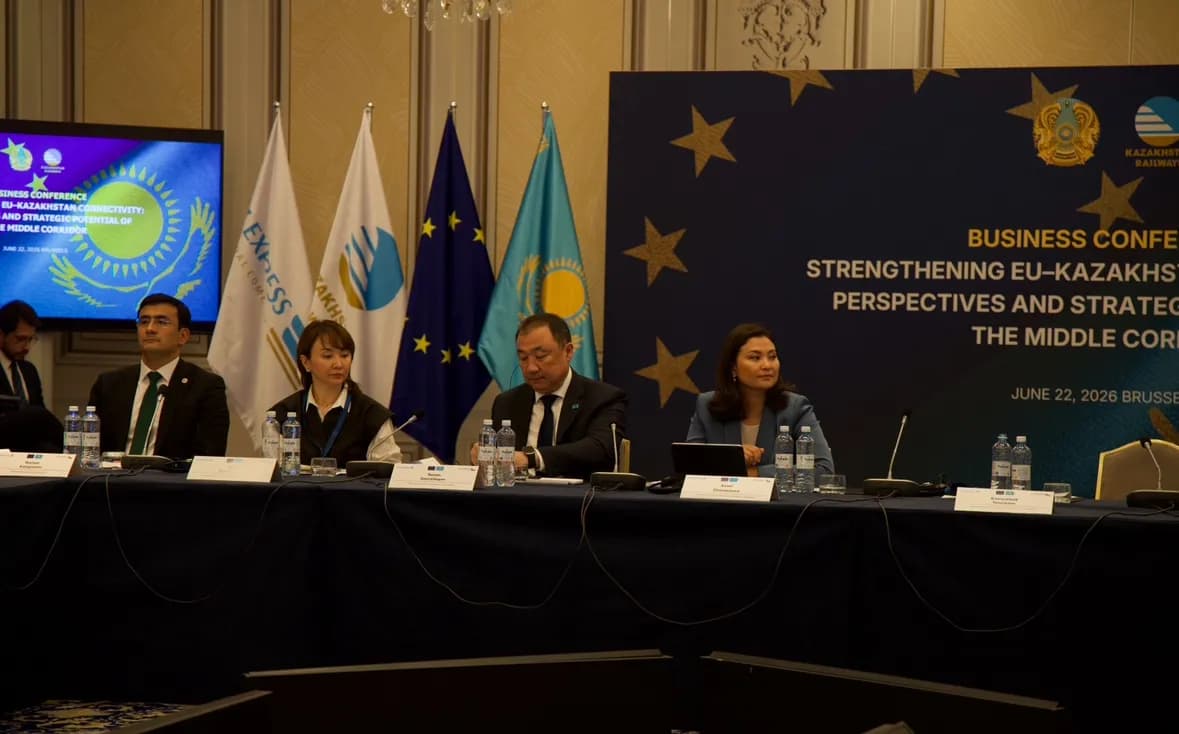
Hosted by the Ministry of Transport of the Republic of Kazakhstan, Kazakhstan Temir Zholy (KTZ), and the Mission of Kazakhstan to the European Union, the conference highlighted the growing strategic significance of the Trans-Caspian International Transport Route (TITR), widely known as the Middle Corridor, as a key trade and logistics link connecting Europe and Asia.
The event took place against the backdrop of shifting geopolitical realities and ongoing efforts by governments and businesses to diversify global supply chains. Participants emphasized that the Middle Corridor has become an increasingly important route for secure, resilient, and sustainable transportation across Eurasia. Kazakhstan’s geographic position and investments in transport infrastructure have strengthened its role as a critical transit hub connecting Central Asia, the Caspian region, the South Caucasus, and European markets.
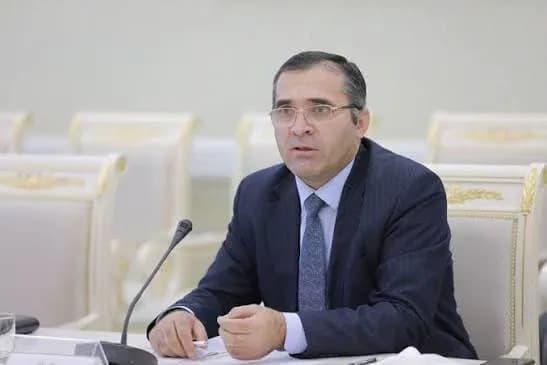
Opening remarks were delivered by Asel Zhanassova, Deputy Head of the Administration of the President of Kazakhstan, Myriam Ferran, Deputy Director-General of the European Commission’s Directorate-General for International Partnerships (DG INTPA), and Kuanyshbek Yessekeyev, Assistant to the President of Kazakhstan. Their interventions underscored the importance of deeper cooperation between Kazakhstan and the European Union in transport, infrastructure, and economic development.
The conference featured two major discussions. The first focused on the strategic value of the Middle Corridor for Kazakhstan-EU relations, examining infrastructure modernization, transport resilience, and opportunities to align the corridor with the European Union’s Global Gateway initiative. Speakers included representatives from the Kazakh government, the European Commission, and the European Parliament.
The second session explored business and investment opportunities arising from the corridor’s expansion. Industry leaders discussed public-private partnerships, logistics modernization, container transportation, and the development of more efficient supply chains between Europe and Central Asia. Presentations were delivered by executives from KTZ Express, Global DTC, HHLA International, Hellmann Worldwide Logistics, DHL Global Forwarding, the European Investment Bank, Rhenus, and Ahlers Logistics.
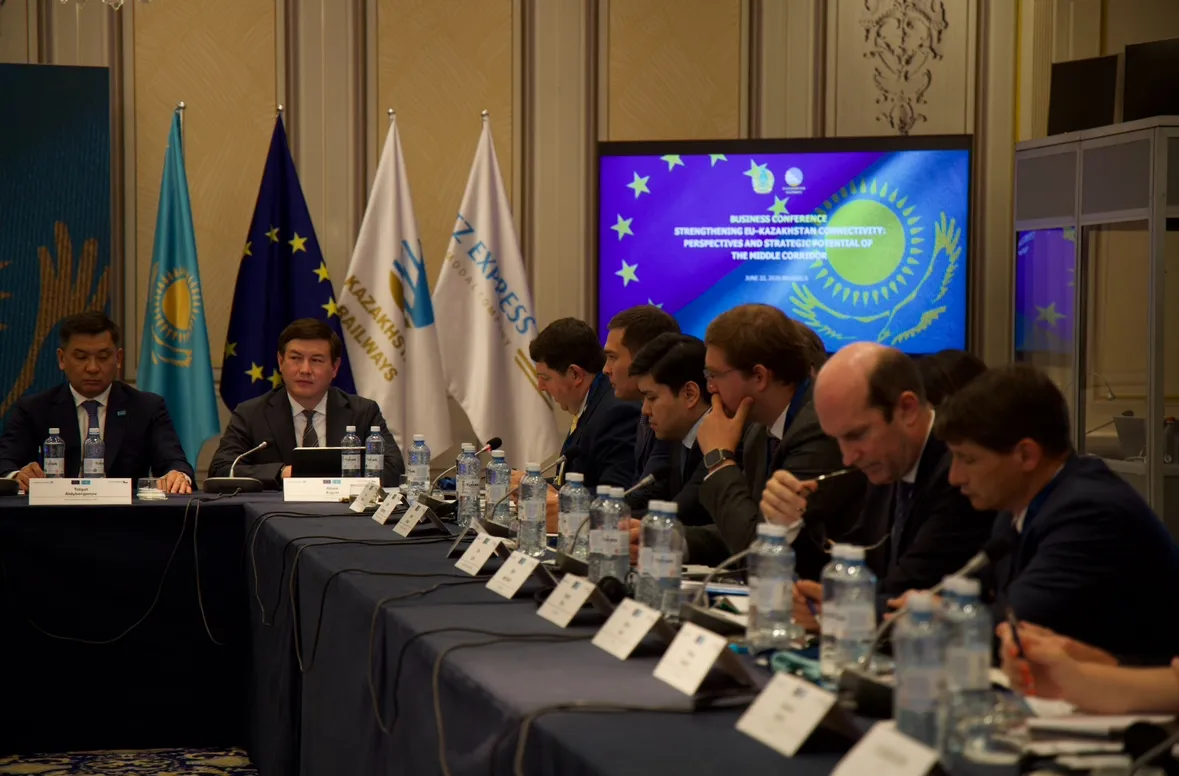
One of the conference’s central themes was digital transformation. Participants examined how emerging technologies can enhance transport efficiency, strengthen customs cooperation, and improve the overall competitiveness of Eurasian trade routes. The concept of a “Digital Middle Corridor” received particular attention as stakeholders explored new approaches to connecting Europe and Asia through integrated digital solutions.
A significant outcome of the gathering was the signing and exchange of several cooperation agreements. Among them were agreements on the development of transportation services along the Middle Corridor between KTZ Express and A.P. Moller–Maersk, the implementation of port and terminal projects in Romania and Poland, and memoranda aimed at advancing airport infrastructure, aviation cooperation, and biometric technologies in Kazakhstan’s transport sector.
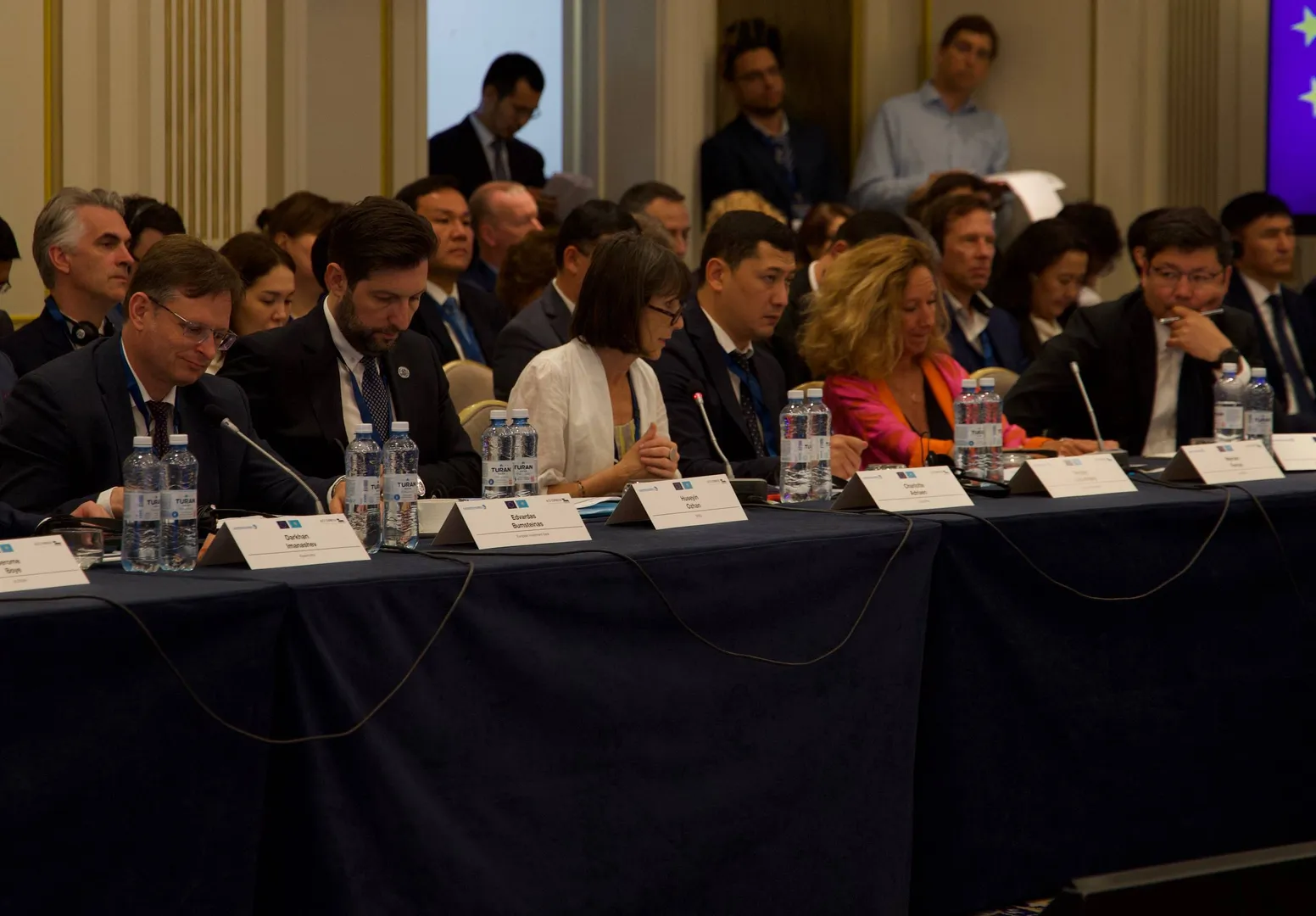
The conference concluded with networking sessions and business-to-business meetings between Kazakh and European transport and logistics companies, providing a platform for new partnerships and investment opportunities.
As Europe and Central Asia seek more diversified and reliable trade corridors, the Brussels conference demonstrated the growing importance of the Middle Corridor as a strategic bridge between the two regions. The discussions and agreements reached during the event signal continued momentum in Kazakhstan-EU cooperation and a shared commitment to strengthening connectivity across Eurasia.
Olha Pashchenko
Contributing writer at EUReflect.
Follow EUReflect
See more of our reporting on Google
Mark EUReflect as a preferred source and our stories are ranked higher for you in Top Stories, Discover and Google News — and carry a “preferred” badge when they are cited in AI results.
Add EUReflect as a preferred source