Kazakhstan’s New Parliament: The Qurultai
Kazakhstan’s Central Election Commission (CEC) has officially registered 145 deputies of the Qurultay, the country’s new unicameral parliament, with their parliamentary mandates taking effect, today, on August 27.
A Historic Day in Astana
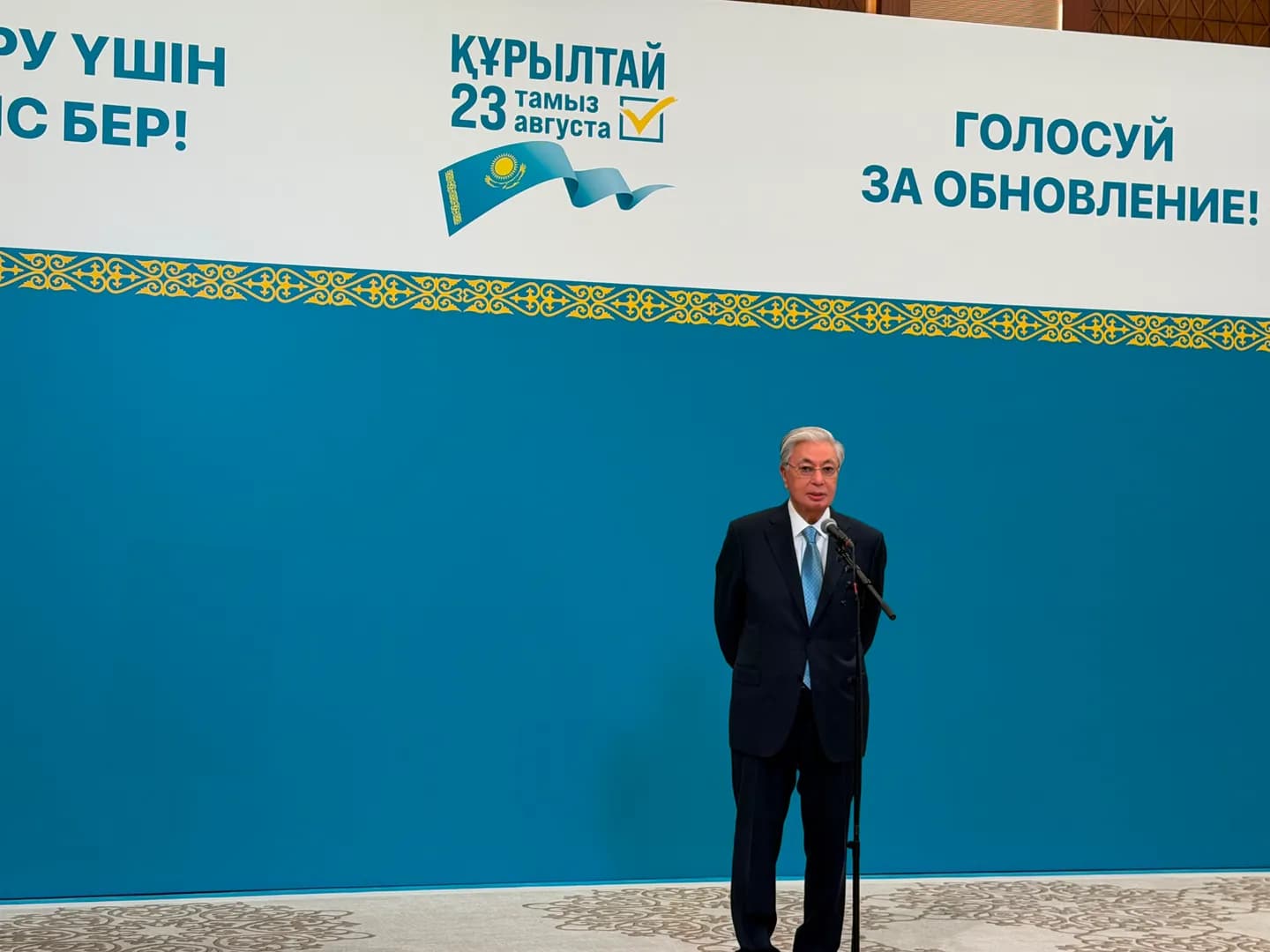
President Kassym-Jomart Tokayev cast his ballot at Astana's Palace of Independence shortly after polls opened, and the moment set the tone for the day. Speaking to reporters afterward, he was unambiguous about the stakes.
Addressing journalists, the President emphasized the special significance of the elections to the Kurultai, noting that they open a new stage of large-scale transformations.
"Today is truly a historic day for our country. For the first time, we are holding elections to a unicameral Kurultai. This is an important historic event. United as a single nation, we are carrying out large-scale reforms. All of you know this well and are witnesses to the transformations taking place. We have managed to achieve significant results. At the same time, a great deal of work still lies ahead, and the goals set before us are of particular importance. Today's elections are only the beginning of this major work," Kassym-Jomart Tokayev emphasized.
"Undoubtedly, today is a truly historic day for our country. For the first time, we are holding elections to the unicameral Qurultay. This is an important milestone. United as one nation, we are carrying out large-scale reforms."
— President Kassym-Jomart Tokayev, 23 August 2026
His words captured what made the day genuinely significant. This was not simply another parliamentary cycle; it was the first electoral test of an entirely new constitutional order, and — as Tokayev himself predicted in the days before the vote — it will likely be remembered as one of the most consequential elections in Kazakhstan's independent history.
Turnout told its own story about civic engagement: 9,351,539 of 12,623,289 registered voters cast ballots, a turnout of 74.08%, the highest recorded in a Kazakhstani national vote since the 2026 constitutional referendum and the highest for a legislative election since 2016. Polling stations across the country combined solemn civic ritual with a genuinely festive atmosphere — national music, family outings, and interactive zones for children — while accessibility measures, including Braille-compatible audio stencils and AI-assisted digital services from the Central Election Commission, ensured the vote was inclusive for citizens of every generation and ability.
The Road to Reform
To understand why the Qurultay matters, it helps to trace the reform journey that produced it. Kazakhstan's transformation did not happen overnight — it is the product of a deliberate, multi-year process of institutional modernization that President Tokayev has pursued since taking office.
From 'New Kazakhstan' to a New Constitution
We are facing a new Kazakhstan. A new Parliament, industrial investments, a rail corridor between China and Europe, projects in uranium and renewable energy: Kazakhstan is launching a new chapter in its development.
A 1 GW wind farm set to rise in the southeast of the country. Fifty million euros invested by Alstom to develop its rail maintenance network. A new Orano facility intended to extend the operation of one of the world's leading uranium sites, according to Ray, E. (2026, August 19).
The foundations were laid back in 2022, when Tokayev launched the reform program “New Kazakhstan: The Path of Renewal and Modernization,” culminating in a constitutional referendum that reduced the concentration of presidential power, strengthened parliament, limited presidential terms and expanded space for independent candidates. That reform proved to be only the first chapter.
In his September 2025 Address to the People of Kazakhstan, President Tokayev proposed the boldest step yet: merging the country's bicameral Parliament — the Mazhilis and the Senate — into a single unicameral chamber. He was careful to stress that a change of this magnitude deserved rigorous deliberation, initially suggesting a nationwide referendum could come as late as 2027. What followed was a remarkably fast yet consultative process: a working group on parliamentary reform was established within a month, and over the following months it reviewed more than 2,000 proposals submitted by ordinary citizens and experts.
By January 2026, discussions had broadened well beyond parliamentary structure alone, evolving into a full-scale rewrite of the Basic Law. A 130-member Constitutional Commission — drawing on legal experts, members of the National Kurultai, regional public councils, media leaders and academics — produced a draft that was published for nationwide discussion on 31 January 2026.
Referandum
On 15 March 2026, Kazakhstanis were asked directly: did they accept the new Constitution? The answer was decisive — 87.15% voted in favor, on a turnout of 73.12%, the highest for any national referendum since 1995. The new Basic Law rewrote roughly 84% of the previous 1995 Constitution and introduced 95 articles, including the replacement of the bicameral Parliament with the unicameral Qurultai, the reintroduction of the office of Vice President, a firmer constitutional separation of religion and state, and expanded guarantees around human, digital and environmental rights.
“A single parliamentary chamber can simplify legislative procedures, reduce institutional duplication and contribute to more timely decision-making. These qualities may be particularly valuable for a country navigating rapid economic, technological and geopolitical change” according to Yama, PhD from the Institute of Asian Studies at Chulalongkorn University, Bangkok, Thailand.
The Kurultai will have the opportunity to provide legislative support for the country’s key development priorities, including the modernization of the energy sector, transport and public utility infrastructure, improvements in budgetary policy, regional development, support for small and medium-sized enterprises, digital transformation of the economy, industrial processing, the agro-industrial sector, logistics, and projects related to critical minerals according to The News Site.
Among the first major decisions expected under the new system is the appointment of a vice-president (after three decades) — a post Kazakhstan scrapped back in 1996 and has now brought back under the new Constitution.
The vice-president will be appointed by the president, subject to the Kurultai's approval. Speaking to journalists after casting his vote on Sunday, Tokayev said he expects to name his pick within seven to ten days according to Aznews.
The revival of the position has also sparked speculation about the part it might play in any future transfer of power, adding a new senior figure to Kazakhstan's political landscape at a moment when questions still linger over the country's next presidential election.
The new Constitution formally entered into force on 1 July 2026. On that same day, President Tokayev signed the decree calling the first-ever Qurultai elections — setting the stage for the 23 August vote.
What Is the Qurultay — and Why the Name Matters?
As noted above, the creation of the Kurultai represents a continuation of the reform cycle launched in recent years by the President of Kazakhstan. During the meeting between European Union leaders and President Kassym-Jomart Tokayev in Brussels in June 2026, the EU acknowledged the adoption of the new Constitution and the ongoing implementation of the reform agenda. Yet perhaps the most tangible and easily measurable changes can be seen elsewhere: in the economy. In June 2026, EU-Kazakhstan cooperation notably resulted in a €150 million financing agreement from the European Investment Bank to improve Kazakhstan's transport connections.
For Washington policymakers, the reforms can usher in the formation of a more structured and predictable political and legal environment, which is important for long‑term economic and strategic cooperation. In this respect, the constitutional changes open up a new window of opportunity for the Trump administration, one that can enable the intensification of an already deepening dialogue across a variety of topics according to eurasianet.
In the run-up to the August 23 election, Kazakhstan's leadership was primarily focused on reshaping the country's constitutional architecture. With that phase now behind them, attention is shifting to the newly formed legislative body and, more importantly, to what it will actually deliver.
The new Kurultai will be expected to tackle a set of issues that matter directly to investors and international partners alike. Chief among them is the quality of legislation itself — ensuring laws are clear, consistent, and enforceable rather than symbolic. Equally pressing is the reliability of investment protection, a long-standing concern for foreign businesses weighing exposure to the Kazakh market. Beyond that, lawmakers will need to focus on fostering genuine business development, improving the effectiveness of public administration, strengthening infrastructure policy, and advancing broader economic modernization — all areas seen as critical tests of whether the country's institutional overhaul translates into tangible results on the ground.
Kazakhstan recorded 6.5% economic growth in 2025, its highest rate since 2011 according to the World Bank. This acceleration was supported by increased oil production, but it cannot be reduced to that factor alone. Manufacturing output grew by 6.4% over the year, while the services sector expanded by 5.5%. For Astana, the challenge is to transform its vast natural resource wealth into a driver of industrialization rather than remaining predominantly dependent on raw-material exports, as highlighted in an article published by Opinion Internationale.
The choice of name is itself a statement of national identity. “Qurultay” (also transliterated Kurultai) evokes the historic assemblies of the Turkic and Mongol steppe, where khans, elders and clan representatives gathered to deliberate on matters of state — a tradition of consultative governance stretching back centuries across Central Asia. By naming its new national legislature after this institution, Kazakhstan is deliberately tying a thoroughly modern parliamentary body to a deep well of indigenous political heritage, presenting reform not as an imported template but as a continuation of Kazakh statecraft.
Structurally, the new Qurultai is a single-chamber legislature of 145 deputies elected for five-year terms through proportional representation from party lists in one nationwide constituency — replacing the previous Mazhilis (lower house) and Senate (upper house) entirely. Under the new model, the legislative process is streamlined: laws are considered and adopted within a single chamber before being sent directly to the President, cutting out layers of institutional friction that existed under the former bicameral system.
A Competitive Campaign and a Credible Vote
Seven political parties contested the 23 August election, campaigning on a substantive agenda dominated by living standards, taxation and the minimum wage, inflation, industrial and regional development, and the implementation of the new constitutional order itself. President Tokayev, addressing the nation ahead of polling day, highlighted the emergence of new political figures, the visibility of televised debates, and the active participation of young people, professionals and entrepreneurs as evidence that the country's political culture is genuinely broadening.
"The new legislative body should become a common platform for constructive views and aspirations. The Kurultai will set a high pace for the further modernization of the country."
— President Kassym-Jomart Tokayev
Kazakhstan also opened the process to unusually broad international scrutiny. The OSCE Parliamentary Assembly deployed nearly 80 parliamentarians and staff from roughly 30 countries to observe the election, while additional missions from the SCO, the CIS and the CSTO Parliamentary Assembly monitored polling stations nationwide. Observers from Belarus's Council of the Republic, for instance, highlighted high turnout, strong digital infrastructure and inclusive accessibility measures as standout features of the vote.
The Results and a Multi-Party Chamber
Final results announced by the Central Election Commission on 25 August 2026 confirmed five parties cleared the 5% threshold required for representation according to Astana Times:
•Adilet (Justice) Party — 71.17% of the vote (6,528,948 votes) — 110 seats
•Auyl People's Democratic Patriotic Party — 6.26% (574,621 votes) — 10 seats
•Respublica Party — 5.56% (509,631 votes) — 9 seats
•Ak Zhol Democratic Party — 5.21% (478,083 votes) — 8 seats
•Nationwide Social Democratic Party — 5.11% (469,058 votes) — 8 seats
Two additional parties — the People's Party of Kazakhstan (3.11%) and the Baitaq Green Party (1.07%) — fell just short of the threshold, while 2.51% of voters chose the “Against All” option, itself a marker of the freedom built into the new electoral design. Parties are now required to meet a 30% quota for women, young people and persons with disabilities among their seated deputies — a concrete, binding commitment to inclusive representation embedded directly in the post-election process.
Adilet's commanding result reflects the party's role as the standard-bearer of Tokayev's reform program: founded in May 2026 and quickly absorbing the former ruling party Amanat and its roughly 800,000 members, Adilet received more than 810,000 membership applications within its first weeks — evidence of a political base eager to rally behind the modernization agenda.
Once the Kurultai begins its work, the sitting government is required to resign. Under the new rules, the president nominates a candidate for prime minister following consultations with the party factions represented in the chamber. The appointed prime minister then has ten days to propose the structure and composition of the cabinet, with ministers appointed by the president after further consultations with the Kurultai according to EUAlive.
Regional Solidarity and International Recognition
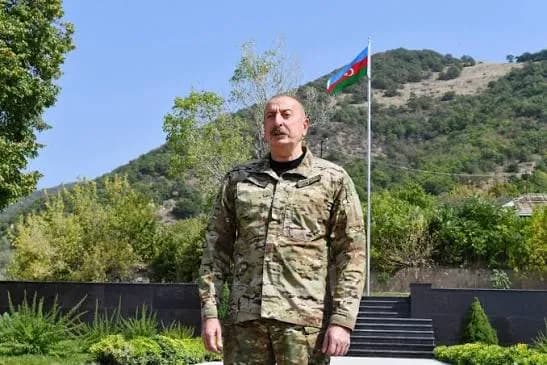
The successful conduct of the vote drew swift congratulations from Kazakhstan's neighbors and partners. President of Azerbaijan Ilham Aliyev wrote to congratulate Tokayev, describing the Qurultay elections as “the beginning of a new historical stage in Kazakhstan's socio-political life” that would “serve the comprehensive development of your country” and “the continuation of the wide-sweeping reforms” underway. Kyrgyz President Sadyr Zhaparov extended similar congratulations, underscoring the sense across Central Asia that Kazakhstan's institutional experiment carries weight well beyond its own borders.
Furthermore, on August 25, 2026, a telephone conversation was held between the National Leader of the Turkmen People, Chairman of the Halk Maslahaty of Turkmenistan Gurbanguly Berdimuhamedov and the President of the Republic of Kazakhstan Kassym-Jomart Tokayev. After exchanging warm greetings, the Turkmen leader and the President of Kazakhstan noted with satisfaction the high level of relations between the two countries.
Anouar El Anouni, spokesperson for EU foreign affairs and security policy, said the European Union acknowledged Kazakhstan’s efforts to organize the election in a “well-prepared and orderly manner” despite the short period between calling and holding the vote according to Abuova, N. (2026, 26 août).
As The Diplomat observed in its analysis of the vote, Central Asia's growing international agency — its expanding role in shaping conversations on connectivity, trade, energy and critical minerals with partners from Beijing to Brussels to Washington — increasingly requires domestic institutions capable of turning diplomatic agreements into durable legislation, budgets and implementation. Kazakhstan's new Qurultai, precisely because it consolidates legislative authority into a single, more accountable chamber, is positioned to be that institution — the anchor that lets Kazakhstan's ambitious foreign policy translate into lasting results at home.
Finally, during the elections, they were a press briefing and international Observers Deliver Assessment of Kazakhstan’s First Kurultai Vote. Offering a view from within the European Union, Jerzy Olędzki, Member of the Board of the M. Boym Institute for Asian and Global Studies in Poland and an expert on Central Asia, highlighted the importance of continued reform and accountability.
"The elections provide an opportunity to consolidate the political landscape and strengthen the administrative system," he said. "It is very important for Kazakhstan to continue implementing reforms. Oversight of the executive authorities should also be strengthened, while the country should continue pursuing its multi-vector foreign policy."
What Comes Next
The pace of implementation has remained brisk. On 26 August 2026, President Tokayev signed a decree convening the first session of the newly elected Qurultai for 28 August at 11:00 a.m. in Astana. The opening of that session will formally launch the 145-member legislature's work, marking the practical beginning of a new era of Kazakhstani governance under the Constitution that took effect on 1 July.
The stakes for this first convocation are considerable. It inherits a mandate to translate the energy of the constitutional reform process into concrete legislative output: further modernizing the economy, advancing Kazakhstan's role as a hub along the Trans-Caspian International Transport Route (the “Middle Corridor”), and continuing the expansion of digital governance and social protections envisioned in the new Basic Law. Political analysts consulted by Kazakhstani media have already begun mapping the transformations still to come as the country completes its transition to the new system of government.
Jana Qazaqstan and Conclusion
Viewed as a whole, the sequence — the 2022 reforms, the 2025 announcement, the 2,000-plus citizen proposals, the March 2026 referendum, the record-competitive August campaign, and now the seating of a new unicameral Qurultai — represents one of the most ambitious peaceful institutional overhauls attempted anywhere in the world this decade. It is a rare thing for a state to willingly rewrite 84% of its constitutional text and rebuild its legislature from the ground up, and Kazakhstan has done so through referendum and ballot box rather than through crisis or upheaval.
This is the substance behind the idea of Jana Qazaqstan — not a slogan, but a working method: identify the institutional gap between ambition and capacity, consult broadly, legislate methodically, and submit the result to the voters for a mandate. A leaner, more accountable single-chamber parliament; guaranteed representation for women, youth and persons with disabilities; a reinforced framework of digital, human and environmental rights; and a political landscape now anchored by a broadly-supported reformist party — these are the building blocks of a state preparing itself for a more demanding, multipolar world.
For a country of 21 million people bordering both Russia and China, sitting at the crossroads of the Middle Corridor connecting Asia and Europe, and increasingly courted by the European Union, the Gulf states and the United States alike, robust domestic institutions are not a luxury — they are the foundation that allows Kazakhstan's multi-vector foreign policy and economic ambitions to be matched by durable governance at home. The Qurultay, and the reform process that produced it, is Kazakhstan's answer to that challenge: a strong Jana Qazaqstan, built session by session, ballot by ballot, on the country's own terms.
Bibliography
Abuova, N. (2026, 26 août). Experts: Kurultai results put political parties' ability to deliver to test. The Astana Times. https://astanatimes.com/2026/08/experts-kurultai-results-put-political-parties-ability-to-deliver-to-test/ [astanatimes.com]
AnewZ. (2026, 24 août). Kazakhstan elects first Kurultai: what happens next? AnewZ. https://anewz.tv/region/central-asia/23678/kazakhstan-elects-first-kurultai-what-happens-next/news [anewz.tv]
Kozhybayev, R. (2026, 25 août). Kazakhstan's new parliament opens window for fresh trade possibilities. Eurasianet. https://eurasianet.org/kazakhstans-new-parliament-opens-window-for-fresh-trade-possibilities [eurasianet.org]
Gotev, G. (2026, 26 août). Final results of Kazakhstan's first Kurultai elections confirm landslide for pro-presidential party. EUalive. https://eualive.net/final-results-of-kazakhstans-first-kurultai-elections-confirm-landslide-for-pro-presidential-party/ [eualive.net]
Ray, E. (2026, 19 août). Kazakhstan : du nouveau Kurultai aux nouvelles routes de l'Europe. Opinion Internationale. https://www.opinion-internationale.com/2026/08/19/kazakhstan-du-nouveau-kurultai-aux-nouvelles-routes-de-leurope_144066.html
Temirgaliyeva, A. (2026, August 23). Kazakh citizens in Malaysia begin voting in Qurultay elections. Qazinform News Agency. https://qazinform.com/news/kazakh-citizens-in-malaysia-begin-voting-in-qurultai-elections-011793 [qazinform.com]
The News Site. (2026, July 28). Kurultai 2026: Kazakhstan demonstrates a new model of political modernization. https://thenewssite.in/2381/kurultai-2026-kazakhstan-demonstrates-a-new-model-of-political-modernization/ [thenewssite.in]
Yama, A. (2026, August 27). Kazakhstan’s first Kurultai: New chapter for parliamentary institutions. The Astana Times. https://astanatimes.com/2026/08/kazakhstans-first-kurultai-new-chapter-for-parliamentary-institutions/ [astanatimes.com]
Related Topics
Derya Soysal
Contributing writer at EUReflect.
Follow EUReflect
See more of our reporting on Google
Mark EUReflect as a preferred source and our stories are ranked higher for you in Top Stories, Discover and Google News — and carry a “preferred” badge when they are cited in AI results.
Add EUReflect as a preferred source