Uzbekistan at the Warsaw Human Dimension Conference
Civil Society in New Uzbekistan: Reform Results Presented at the Warsaw Human Dimension Conference
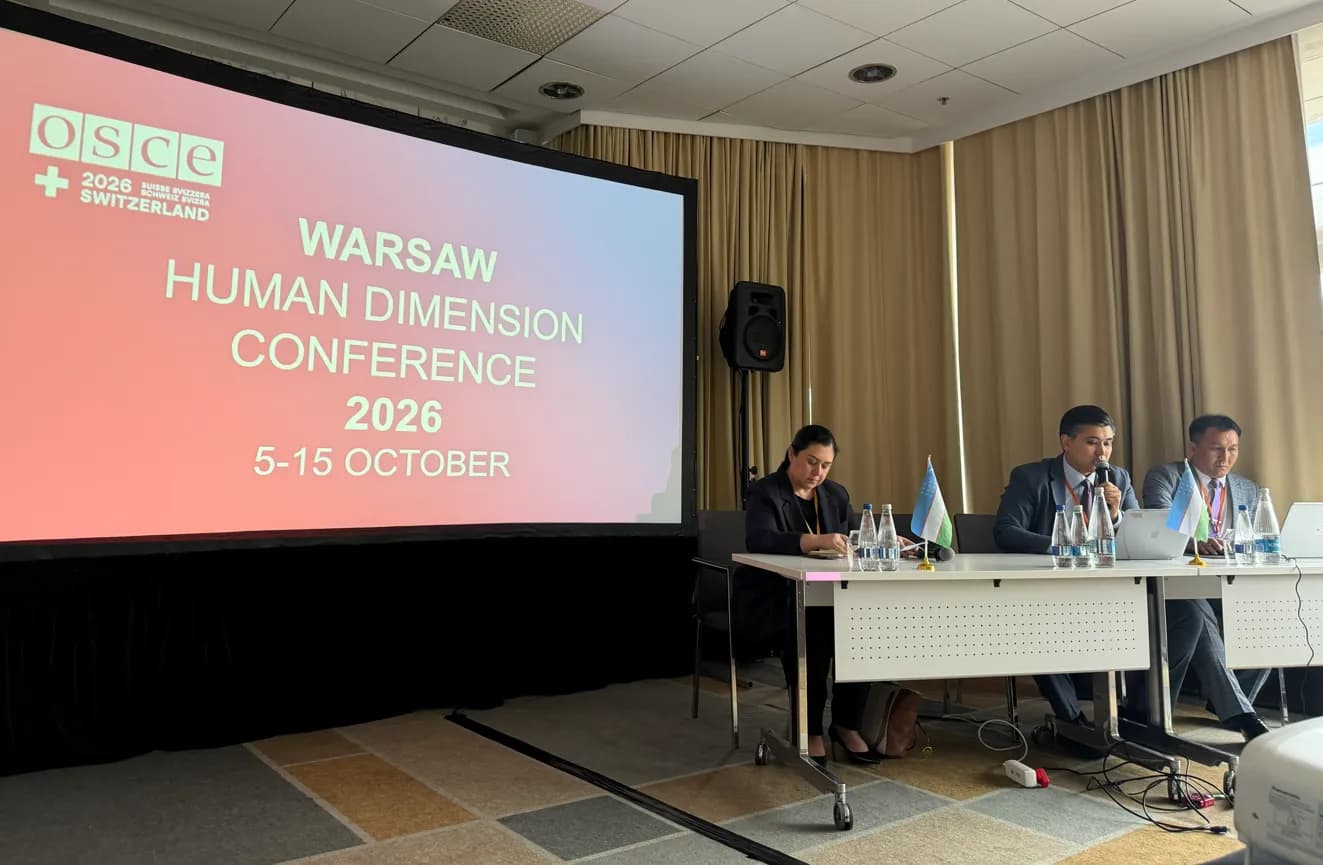
Warsaw.
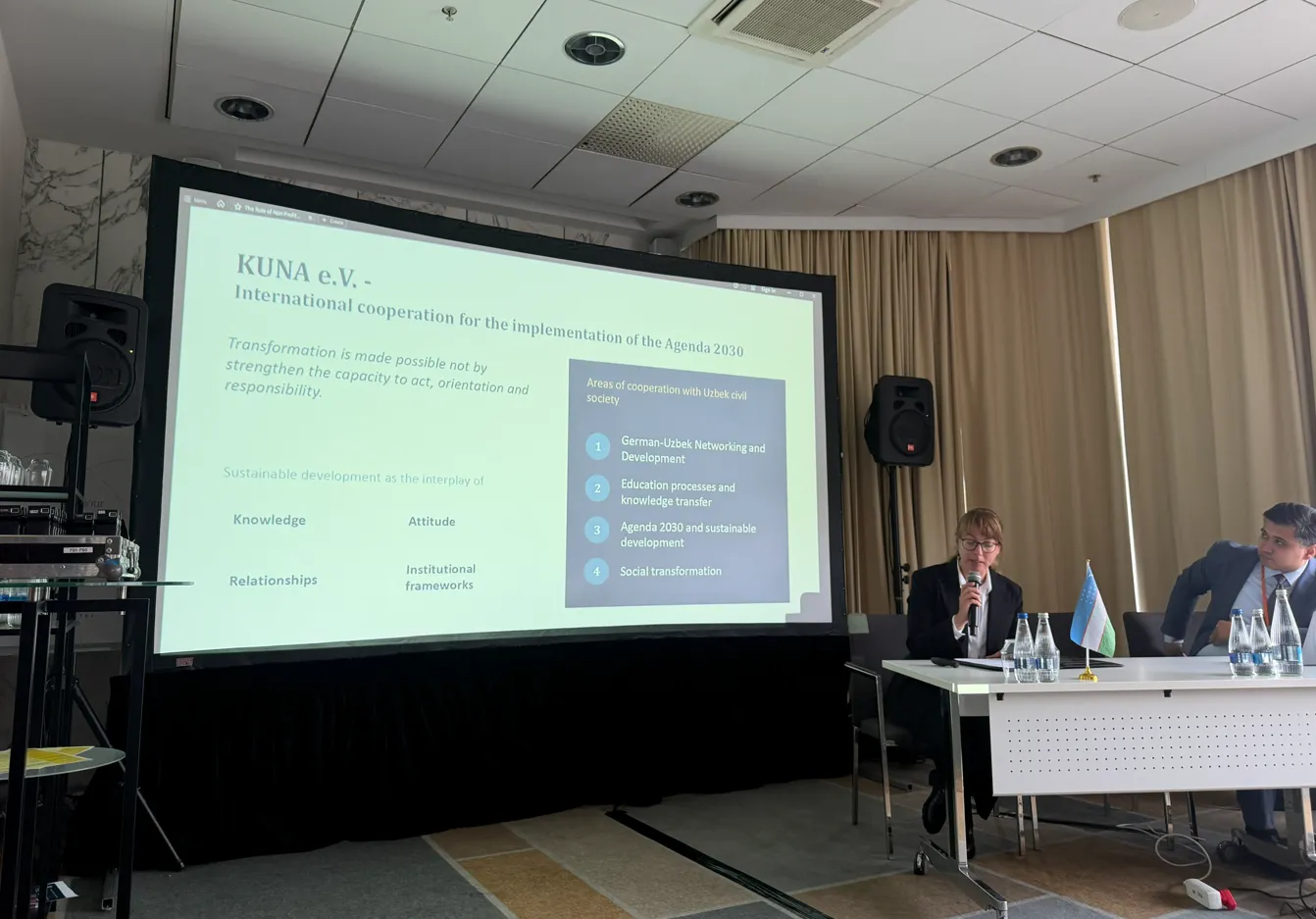
The speakers were Uzbekistan's Ombudsman Feruza Eshmatova, Jasur Dusmuratov of the Centre for the Analysis of Democratic Processes, Serik Murataev, head of the non-governmental non-profit organisation Barqaror Hayot (Sustainable Life), N. Neumann, Chair of KUNA e.V., and political scientist Professor Wojciech Nowak.
From individual organisations to partners of the state
In the opening address, the Centre thanked participants for their interest in Uzbekistan's democratic transformation. It also said that sharing national experience and good practice is especially valuable in today's international context.
The address described the reforms as guided by the principle "For the sake of the human being and their happiness" and by the idea that "the state serves the people." It said the goal is to give citizens a larger role in running public and state affairs.
The numbers show how large the sector has become. Uzbekistan now has:
9,627 non-governmental organisations
8,992 citizens' self-governance bodies
2,490 media outlets
Together they employ more than 150,000 people. This shows that civil society matters for jobs and social and economic development as well as for public life.
A growing voice in lawmaking
NGOs have grown steadily since independence in 1991, and the pace has picked up recently. The number of people working in NGOs rose from 44,000 in 2021 to 70,000 in 2025, an increase of almost 60 per cent.
NGOs also have more influence on policy. Their proposals to improve legislation rose fivefold, from 1,000 in 2021 to 5,000 in 2025. Speakers said this input makes decisions more open and inclusive and helps public policy reflect what people actually need.
Media freedom and bloggers
Media reform was presented as another key part of the agenda. Over the past ten years, Uzbekistan has strengthened the legal basis for media work, made public authorities more transparent and widened journalists' access to information.
The country now has 1,655 independent media outlets. Between 2016 and 2025, the number of bloggers rose fortyfold, from 50 to 2,000. The University of Journalism and Mass Communications of Uzbekistan admits about 500 students each year, who are taught by more than 200 professors and lecturers.
The mahalla: civil society closest to the citizen
The event gave special attention to the mahalla, Uzbekistan's traditional neighbourhood institution. The 8,992 mahallas help identify and solve residents' everyday problems, deliver social assistance and carry out state programmes at the local level.
New working methods organised "by mahalla," "by household" and "by citizen" have brought public administration closer to people. Each neighbourhood now has a "mahalla seven," a team of seven representatives with clearly defined duties. Funding for the Association of Mahallas rose from USD 76.7 million in 2025 to USD 85.8 million in 2026.
Participatory budgeting drew particular attention. In 2026, citizens cast more than 20.4 million votes across two rounds. About USD 534 million was allocated to carry out the winning local projects.
State support
The Public Fund under the Oliy Majlis (Uzbekistan's parliament) has grown about 17.5 times, from USD 7 million in 2022 to USD 122 million in 2026. Between 2017 and 2025, state grants totalling USD 13.9 million funded 3,067 projects that reached 4.2 million citizens. More than 25,000 people received social, legal, medical or psychological support, and over 100,000 gained professional skills.
Other funding has grown as well:
Between 2023 and 2025, 69 anti-corruption projects run by NGOs received USD 467,000.
Local budget support for civil society rose from USD 1.3 million in 2021 to USD 6.3 million in 2025.
The number of NGOs helping to implement state programmes grew from 30 in 2021 to 100 in 2026. NGOs are now the direct implementers of 350 provisions of state programmes.
The speakers gave examples:
Digital Generation Uzbekistan trains young people in AI, programming, robotics and digital design.
The Uzbekistan Youth Entrepreneurship Support Centre has helped up to 8,000 young people get vocational training and jobs.
The Sog'lom Avlod Uchun International Charitable Foundation provided USD 85,000 in medical and social assistance in 2024–2025, including free medical check-ups in remote areas.
Challenges
The participants did not present the reforms as finished. They named five priorities for the next stage:
Building public trust by making NGO work more open, transparent and accountable.
Countering disinformation and manipulative online content that weaken trust in institutions.
Diversifying funding by getting businesses to support NGOs through corporate social responsibility, so the sector relies less on donors.
Improving transparency in how charitable and sponsorship funds are raised and used.
Further developing participatory budgeting to encourage civic initiative and responsibility.
Conclusion
The main message of the event was that over the past decade Uzbekistan's civil society has grown from a set of individual organisations into a real partner of the state. Speakers said that as the country opens up and integrates further with the international community, its civil society has new chances to learn from abroad and take part in international dialogue. They also said this brings challenges for information security and social stability. Taking part in Warsaw was itself part of that wider engagement.
Related Topics
Derya Soysal
Contributing writer at EUReflect.
Follow EUReflect
See more of our reporting on Google
Mark EUReflect as a preferred source and our stories are ranked higher for you in Top Stories, Discover and Google News — and carry a “preferred” badge when they are cited in AI results.
Add EUReflect as a preferred source