Kazakhstan's New Political Era: Constitutional reform
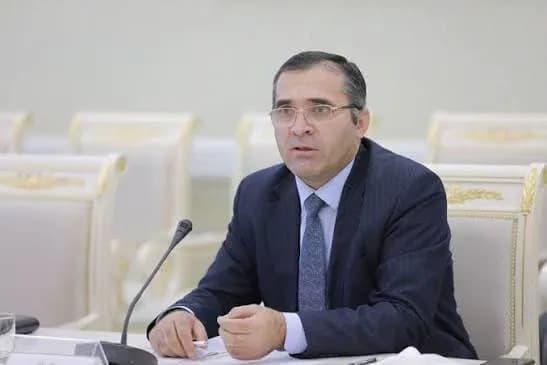
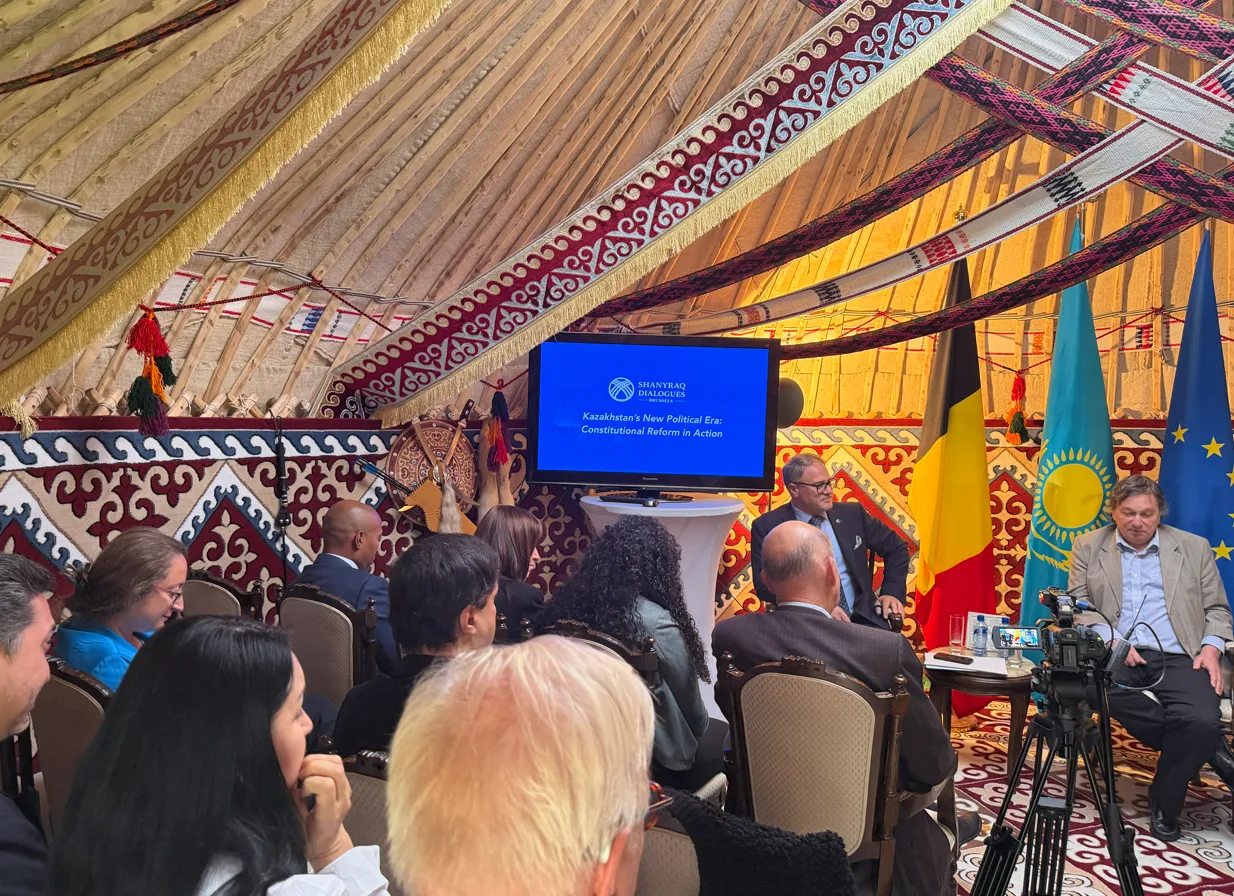
Brussels, September 2026 — When the Mission of Kazakhstan to the European Union gathered diplomats, journalists and academics under the round felt roof of a traditional yurt for the latest edition of the Shanyraq Dialogues, the symbolism was deliberate.
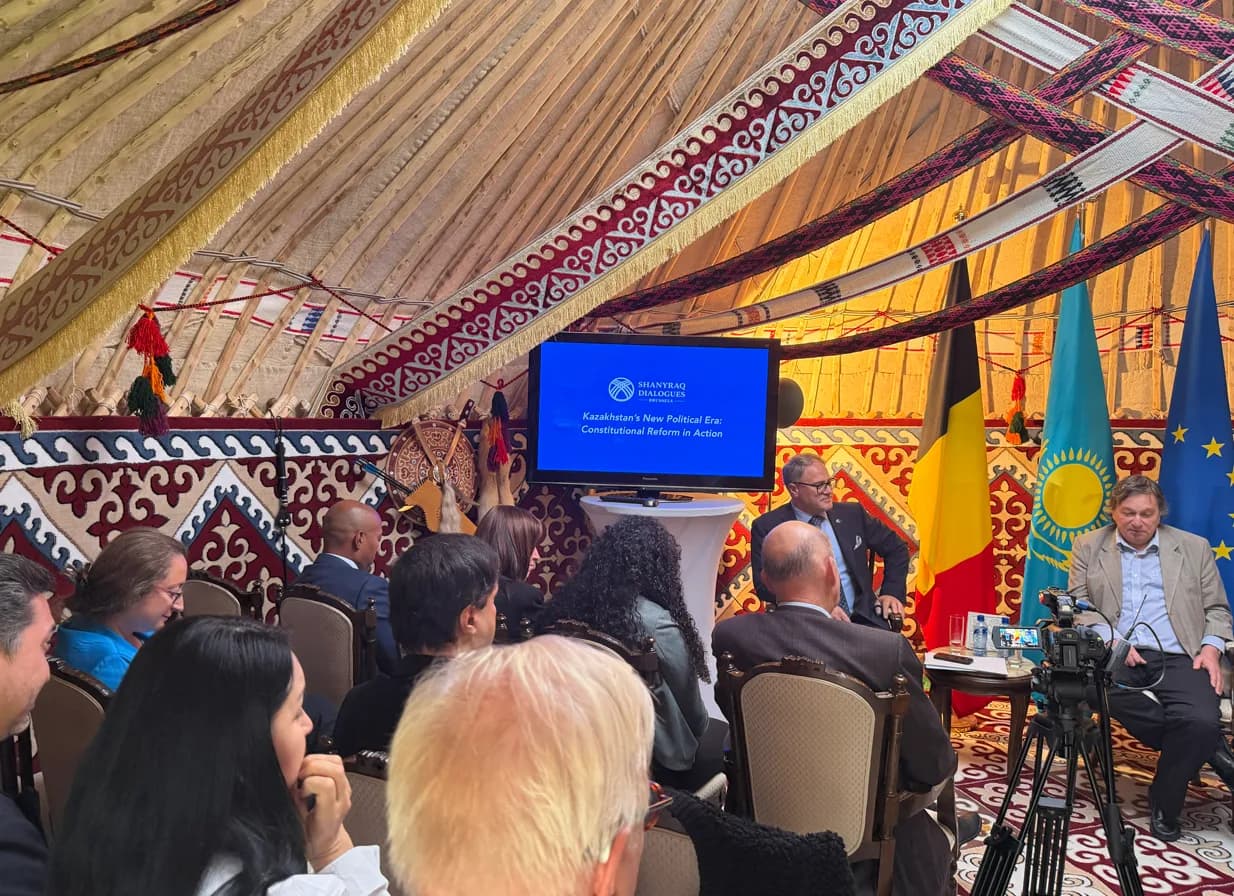
As Ambassador Roman Vassilenko, Head of Mission of the Republic of Kazakhstan to the EU and NATO, told guests:"the shanyraq, the circular crown above us, symbolizes continuity, unity and a shared home... "
Beyond the humour, he explained, the shanyraq is a fitting symbol for the discussion to follow:"It holds the structure together while remaining open to the world around it. In many ways, such an approach is at the heart of Kazakhstan's reform process: strengthening the foundations of the state while keeping institutions open and responsive to society."
A Constitutional Milestone
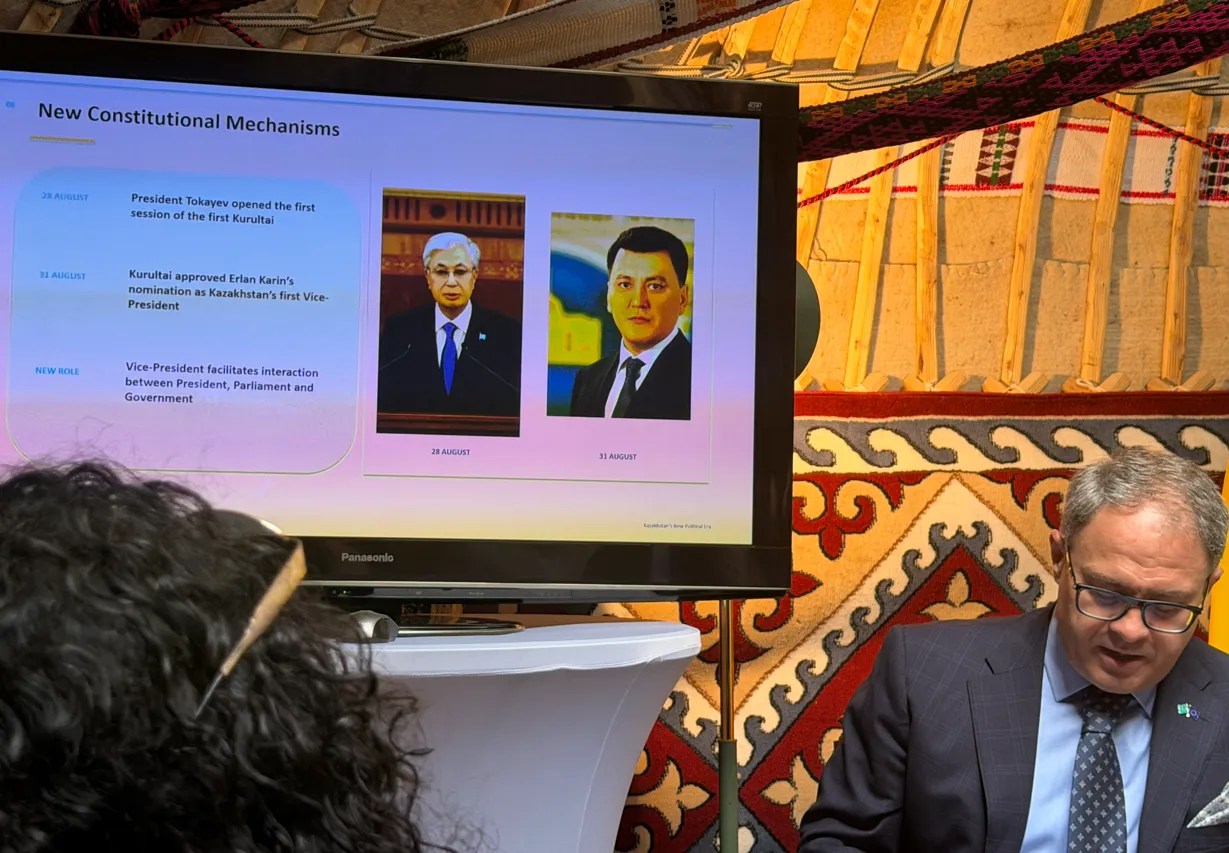
The event's topic,"Kazakhstan's New Political Era: Constitutional Reform in Action," came, in the Ambassador's words,"at a particularly important moment." On 15 March 2026, Kazakhstan adopted a new Constitution by nationwide referendum, which entered into force on 1 July. Its centerpiece is a new unicameral Parliament, the Kurultai, elected on 23 August, with 145 deputies chosen for five years. As Vassilenko noted,"only 25 percent of former MPs retained their mandates, representing a remarkable renewal of the deputies' corps." The new chamber has also"significantly increased the representation of women: 49 seats, or almost 34%, compared with 18% in the former Mazhilis... younger and more professionally diverse, bringing new faces from public service, academia, business and civil society into national politics." As he put it,"the renewal is, therefore, not only institutional – it is also generational and professional."
The elections, he added,"attracted unprecedented international attention, with around 800 international observers, including representatives of the OSCE/ODIHR, PACE and other international organizations." On 28 August, President Kassym-Jomart Tokayev opened the first session of the Kurultai, and just days later, on 31 August,"the new constitutional mechanisms were put into practice" when the Kurultai approved the President's nomination of Erlan Karin as Kazakhstan's first Vice-President — a new institution, Vassilenko explained,"designed, among other functions, to facilitate interaction between the President, Parliament, Government and civil society" and to"represent the President in international affairs."
Looking ahead, he pointed to the forthcoming Halyk Kenesi (Kazakhstan's People's Council),"designed to broaden public dialogue and reflect the country's social, regional and ethnic diversity," invoking the Kazakh proverb"Бірлік бар жерде тірлік бар" – "Where there is unity, there is life." As he clarified,"for us, unity does not mean uniformity. It means bringing different voices, regions and communities together around a common national future."
Crucially, Vassilenko was careful to frame this as only the beginning:"constitutional reform is not only about institutions. Its significance lies in how effectively they serve citizens, strengthen governance and contribute to the country's development. Kazakhstan is, therefore, entering a new stage: from institutional design to implementation, from reform to results."
Technology, Human Capital and a Growing Middle Class
This institutional transformation, the Ambassador stressed,"is taking place alongside rapid economic and technological change, with AI, digitalisation, infrastructure and industrial development high on the national agenda." In his words,"the Kazakhstan of tomorrow will be shaped by stronger institutions, technological progress, economic opportunity and human capital."
That vision was echoed by fellow panelist Georgi Gotev, founder and editor of EUalive, who observed the Kurultai elections on the ground. For Gotev, the vote is best understood as more than an institutional exercise — it is a genuine milestone reflecting a deeper social shift: a Kazakhstan in which an overwhelming majority of citizens now identify as middle class, a striking break from the Soviet era when official ideology rejected class distinctions altogether. Kazakhstan's sustained economic growth — averaging 4.7% annually since 2006 — has lifted millions out of poverty and expanded the middle class roughly 2.5-fold over the past two decades, a shift visible in everyday life, from the modernization of housing and urban infrastructure to the renewal of much of the country's vehicle fleet within the past decade. Investment in human capital and education, repeatedly emphasized by Ambassador Vassilenko as a pillar of the reform agenda, is presented by Astana as the true long-term driver of this prosperity.
Kazakhstan, a European Country
One point that resonated during the exchange is Kazakhstan's often-overlooked European dimension. Geographically, the Ural River — one of the conventional boundaries between Europe and Asia — cuts through western Kazakhstan, placing roughly 148,000 km² of its territory, including the city of Oral, on the European side of the continental divide, an area larger than Greece. The Editor of EUAlive said that we have to know that Kazakhstan is also European.
But the more consequential link, as Vassilenko underlined, is economic and institutional:"for our international partners, including the European Union, these developments are significant. They form part of Kazakhstan's broader effort to strengthen the effectiveness of the state while deepening economic cooperation, connectivity, investment and people-to-people ties." Indeed, the European Union is Kazakhstan's largest trading and investment partner, absorbing around a third of Kazakh exports and providing over half of total foreign direct investment stock in the country. This was reaffirmed in June 2026, when President Tokayev met European Council President António Costa and Commission President Ursula von der Leyen in Brussels to deepen cooperation under the Enhanced Partnership and Cooperation Agreement (EPCA).
Kazakhstan, hub of AI and the "Alem.ai"
Vassilenko's reference to artificial intelligence as central to Kazakhstan's future agenda finds concrete expression in Alem.ai, the International Artificial Intelligence Center inaugurated in Astana in October 2025 inside the former Expo 2017 "Nur Alem" sphere — described by President Tokayev as"a factory of ideas and innovation." The center combines a research university, startup incubators, and AI-driven government pilot projects, part of a national plan to train one million Kazakhs in AI skills by 2030; IT exports from Kazakhstan reached $1 billion in 2025, a 35-fold increase in five years. Gotev said that he was impressed by the Alem AI center in Astana and noted that EU has to much things to learn from Kazakhstan about digitalization.
Learning From Each Other
Perhaps the most striking note of the Ambassador's remarks was one of reciprocity rather than one-way dependency. While Kazakhstan brings energy resources, critical raw materials and a fast-advancing AI ecosystem to the table, Vassilenko was equally clear that Kazakhstan has much to learn from European standards of governance, regulation and institutional practice — a spirit of mutual learning that runs through the EU–Kazakhstan Roadmap on critical raw materials, batteries and renewable hydrogen, which commits both sides to"promotion of best practices and Environmental, Social and good Governance standards."
This convergence has accelerated markedly since Russia's full-scale invasion of Ukraine in 2022, which pushed the EU to diversify its energy supplies and critical raw material sourcing away from Russia, turning attention decisively toward Central Asia. The first EU–Central Asia Summit in Samarkand (April 2025) formalized this shift, with the EU pledging €12 billion through its Global Gateway initiative — including €6.4 billion for energy and climate projects and €2.5 billion for critical raw materials.
A Middle Power Bridging Continents
As Ambassador Vassilenko put it,"at a time of growing uncertainty and pressure on the multilateral system, Kazakhstan sees itself as a middle power committed to sovereignty, dialogue, peace and mutually beneficial partnerships. We believe that in an increasingly complex world, dialogue is not optional – it is a necessity." With its Kurultai now in place, a Vice-Presidency established for the first time, a rapidly consolidating middle class, and an AI ecosystem drawing international attention, Kazakhstan is signaling to Brussels that the relationship it seeks is not one of donor and recipient, but of two partners — European and Central Asian, established and emerging — each with something valuable to teach the other. As Vassilenko concluded:"A new Constitution sets the framework. New institutions give that framework life. And their effective work and the results they deliver give reform its meaning.
Related Topics
Derya Soysal
Contributing writer at EUReflect.
Follow EUReflect
See more of our reporting on Google
Mark EUReflect as a preferred source and our stories are ranked higher for you in Top Stories, Discover and Google News — and carry a “preferred” badge when they are cited in AI results.
Add EUReflect as a preferred source