Kosovo: February 17, More Than a Date, an Identity
Every year, February 17 is a deeply symbolic date for Kosovo.
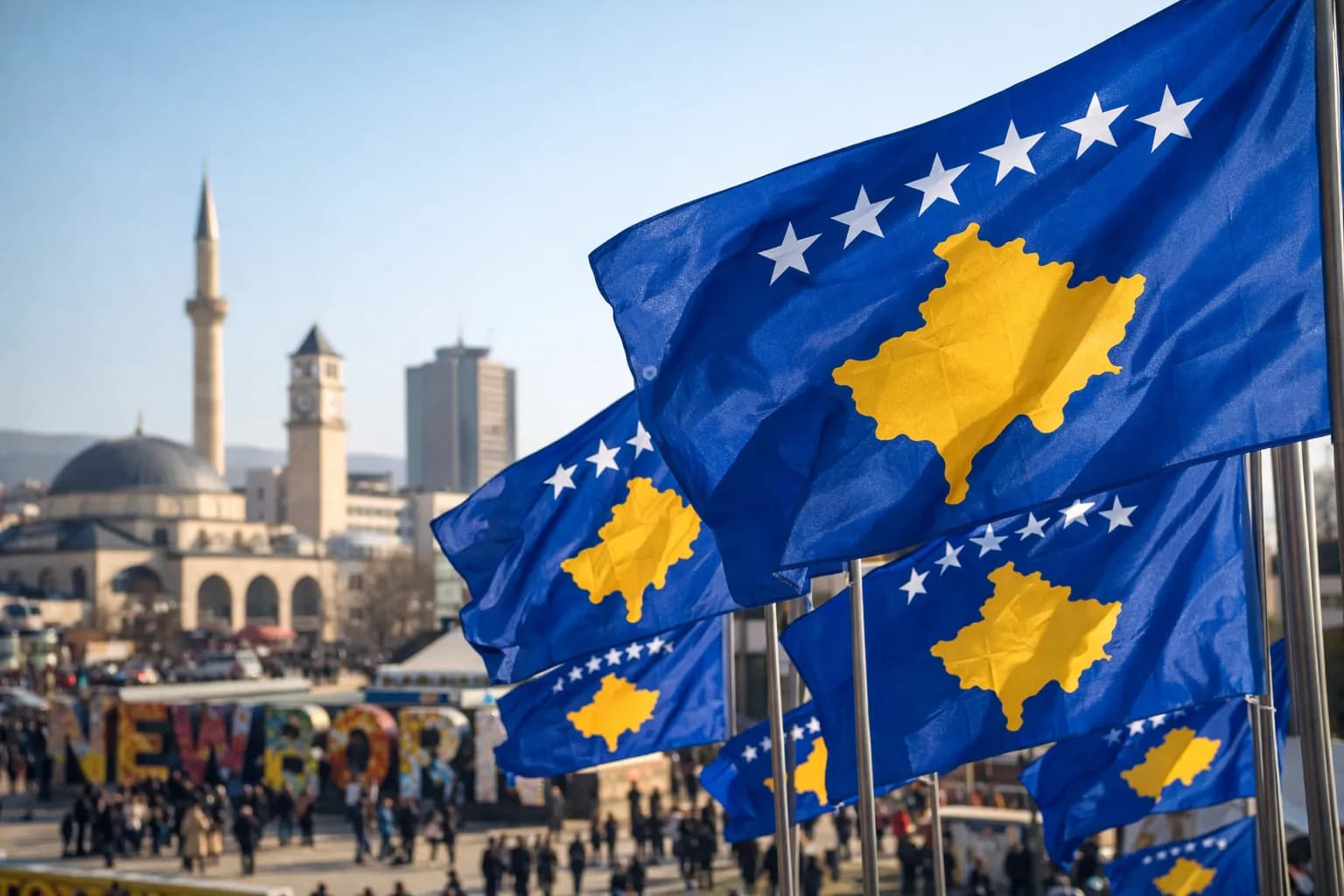
Every year, February 17 is a deeply symbolic date for Kosovo. It marks the declaration of independence proclaimed in 2008 by the country’s Assembly, a founding moment that represents the desire to build a democratic state and strengthen a distinct national identity. Today, this day remains at the heart of collective memory and pride for many Kosovars.
In the streets of Pristina, the capital, the celebrations give a concrete and visible dimension to this attachment. Blue and yellow flags decorate buildings, public squares fill with gatherings and concerts, and the famous NEWBORN monument — unveiled on the very day of independence — is repainted each year with a new design, reflecting the country’s evolution and the messages society wishes to share.
An independence shaped by a long journey
The proclamation of February 17, 2008 is part of a long and complex historical process. For many, it represents the outcome of a path marked by major political transformations and a strong aspiration for self-determination.
Since that declaration, Kosovo has built its institutions and affirmed its state project. Today, it is recognized by a large part of the international community, which has helped strengthen its presence and legitimacy on the global stage, even though some diplomatic questions remain.
An ancient and deeply rooted culture
Beyond its recent political history, Kosovo has a cultural richness that stretches back thousands of years. The territory has been inhabited since the Neolithic period, showing an exceptional historical continuity and a heritage deeply rooted in the region.
This historical depth is reflected in the country’s heritage: traditions, music, cuisine, clothing, and monuments tell the story of the many periods and influences that have shaped Kosovar identity over time.
A growing contemporary arts scene
Today, Kosovo’s culture is not only about preserving the past. It is also expressed through a dynamic contemporary arts scene led by a new generation of artists. Painting, performance, dance, and modern storytelling help express the country’s history, its hopes, and its transformations.
These cultural expressions contribute to building a modern identity while remaining connected to tradition. They present a Kosovo in motion, defining itself as much through creativity as through history.
A national day looking toward the future
February 17 is therefore more than just a political anniversary. It is a day where history, culture, and identity come together. Through public celebrations, national symbols, and a shared sense of pride, this date represents the birth of a state as well as the continuity of a people and their culture.
More than a commemoration, it is a moment of unity, remembrance, and hope, reminding many Kosovars of the path already traveled and the future still to be built.
Enes Taskin
Contributing writer at EUReflect.
Follow EUReflect
See more of our reporting on Google
Mark EUReflect as a preferred source and our stories are ranked higher for you in Top Stories, Discover and Google News — and carry a “preferred” badge when they are cited in AI results.
Add EUReflect as a preferred source