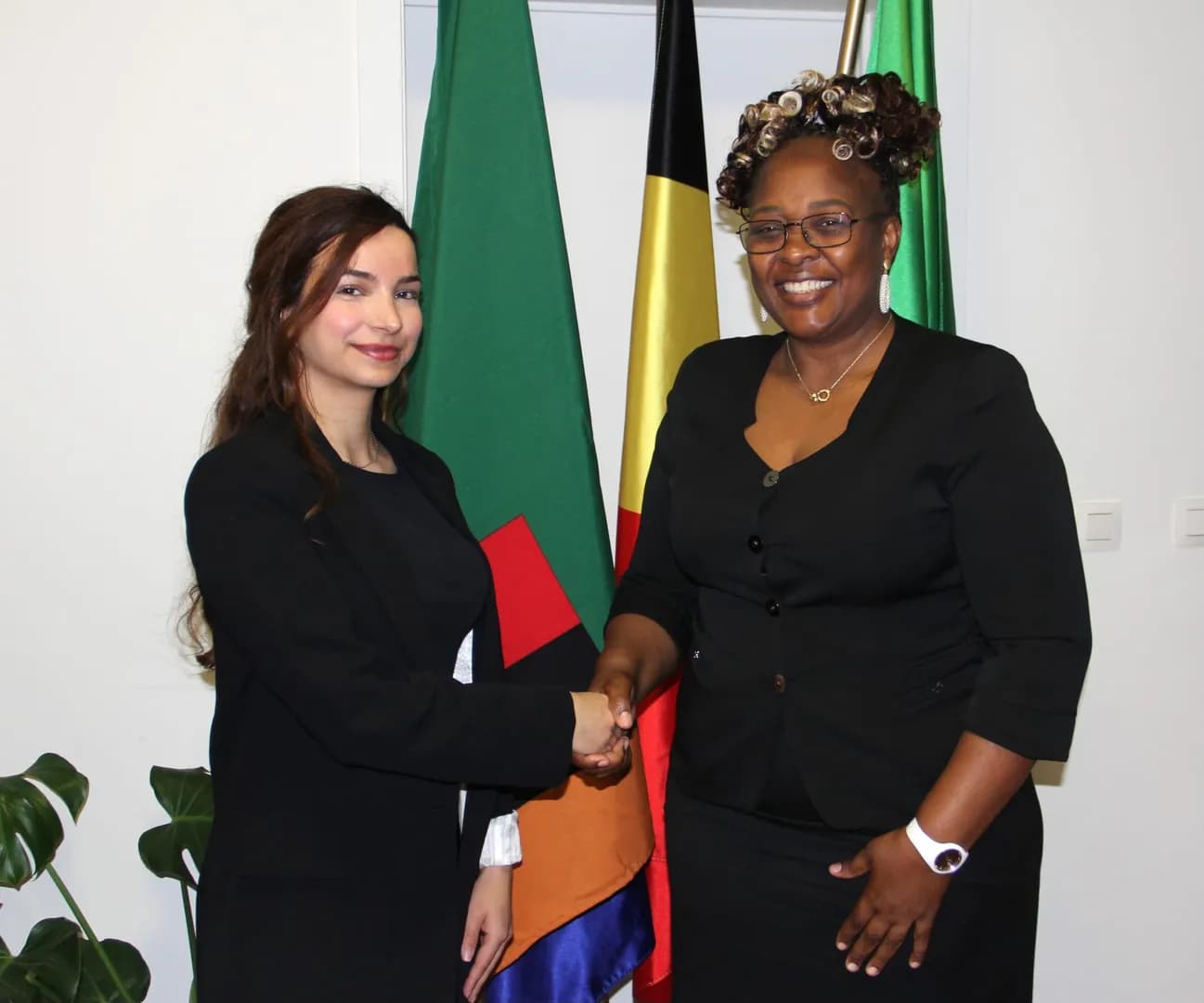
Uzbekistan Marks 35 Years of Independence in Brussels
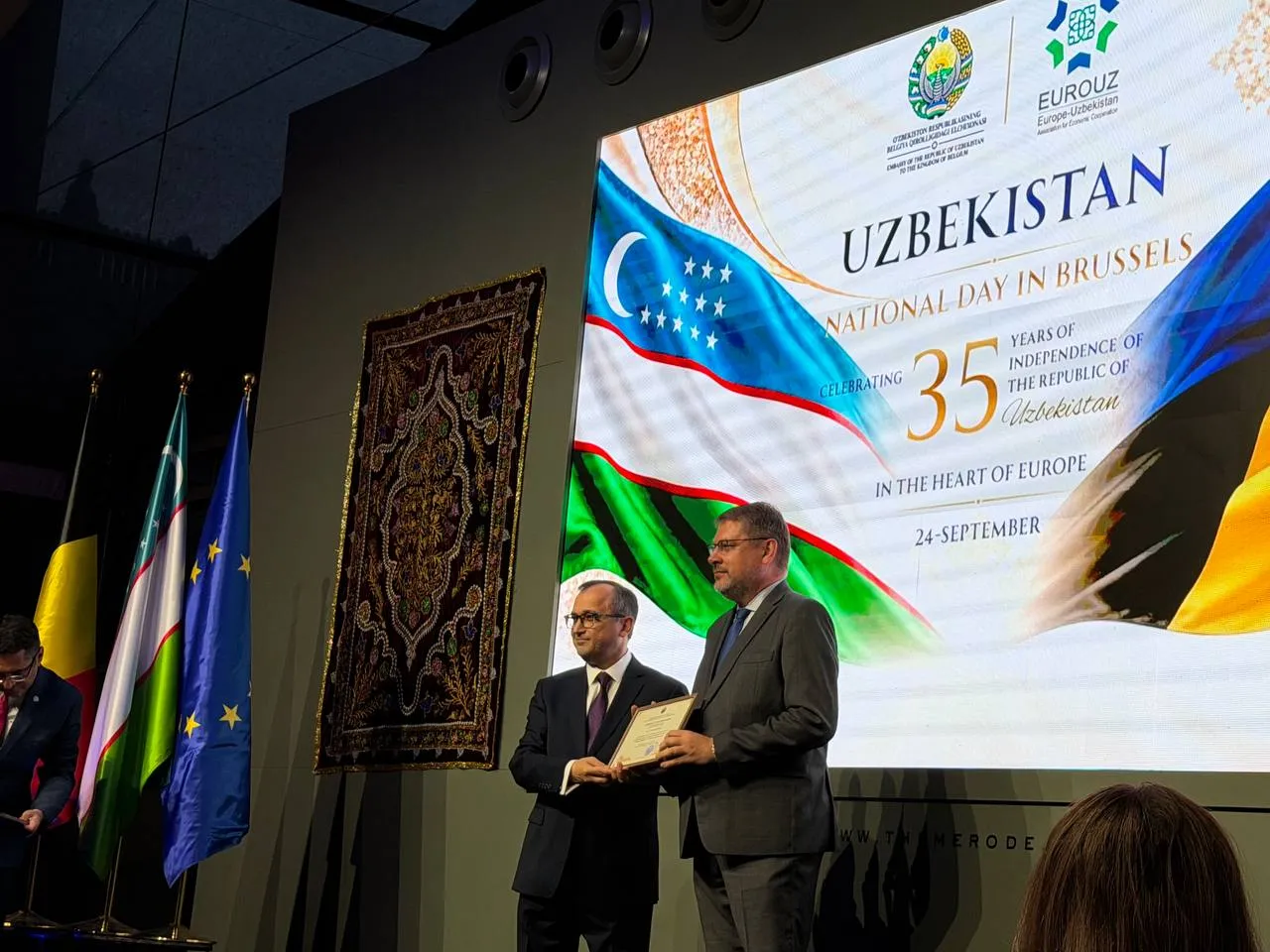
Uzbekistan Marks 35 Years of Independence With a Solemn Celebration in Brussels. Ambassadors, EU officials and the diplomatic corps gather to honour Uzbekistan’s ancient legacy and its deepening strategic partnership with Belgium and the European Union.
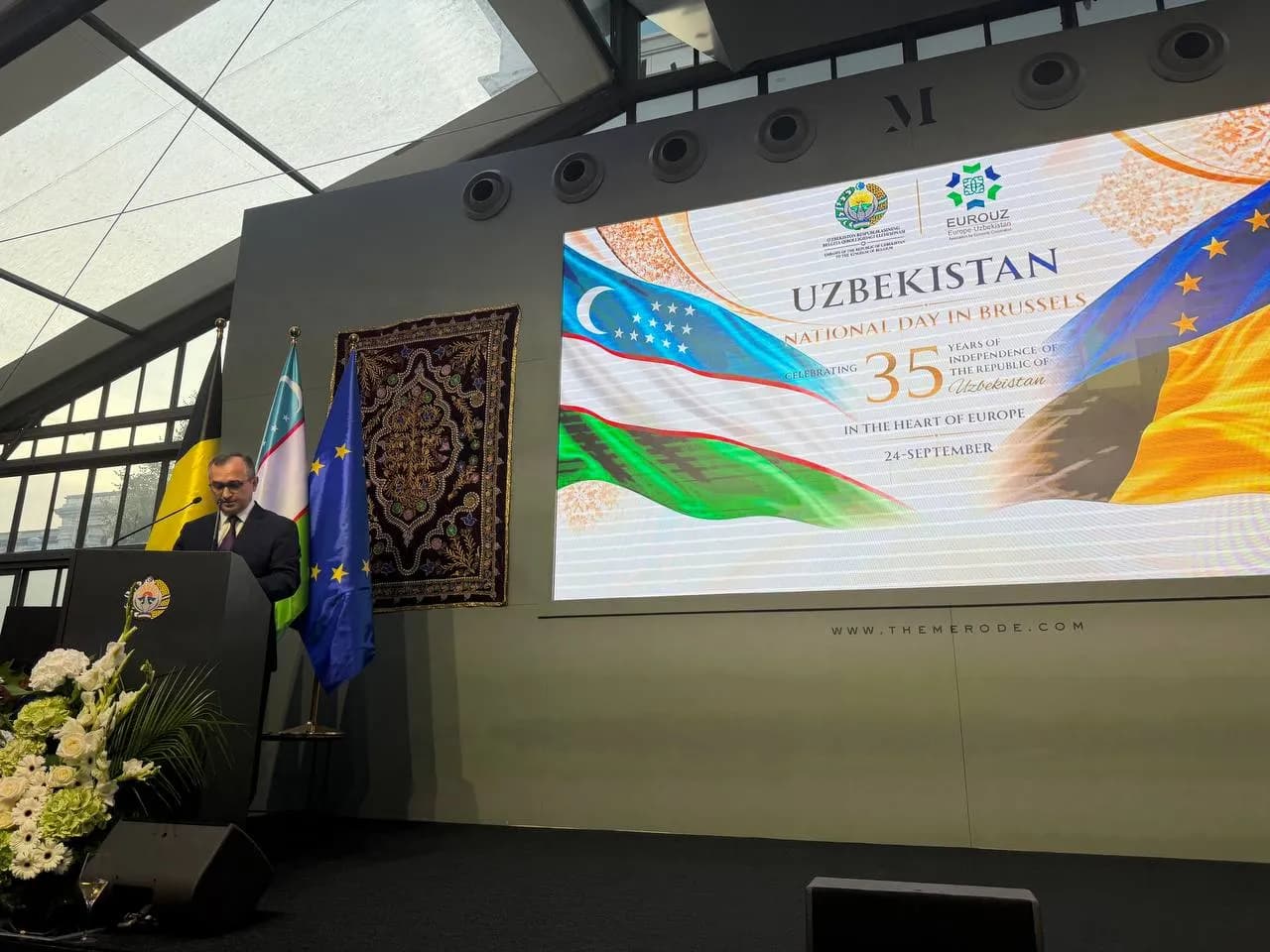
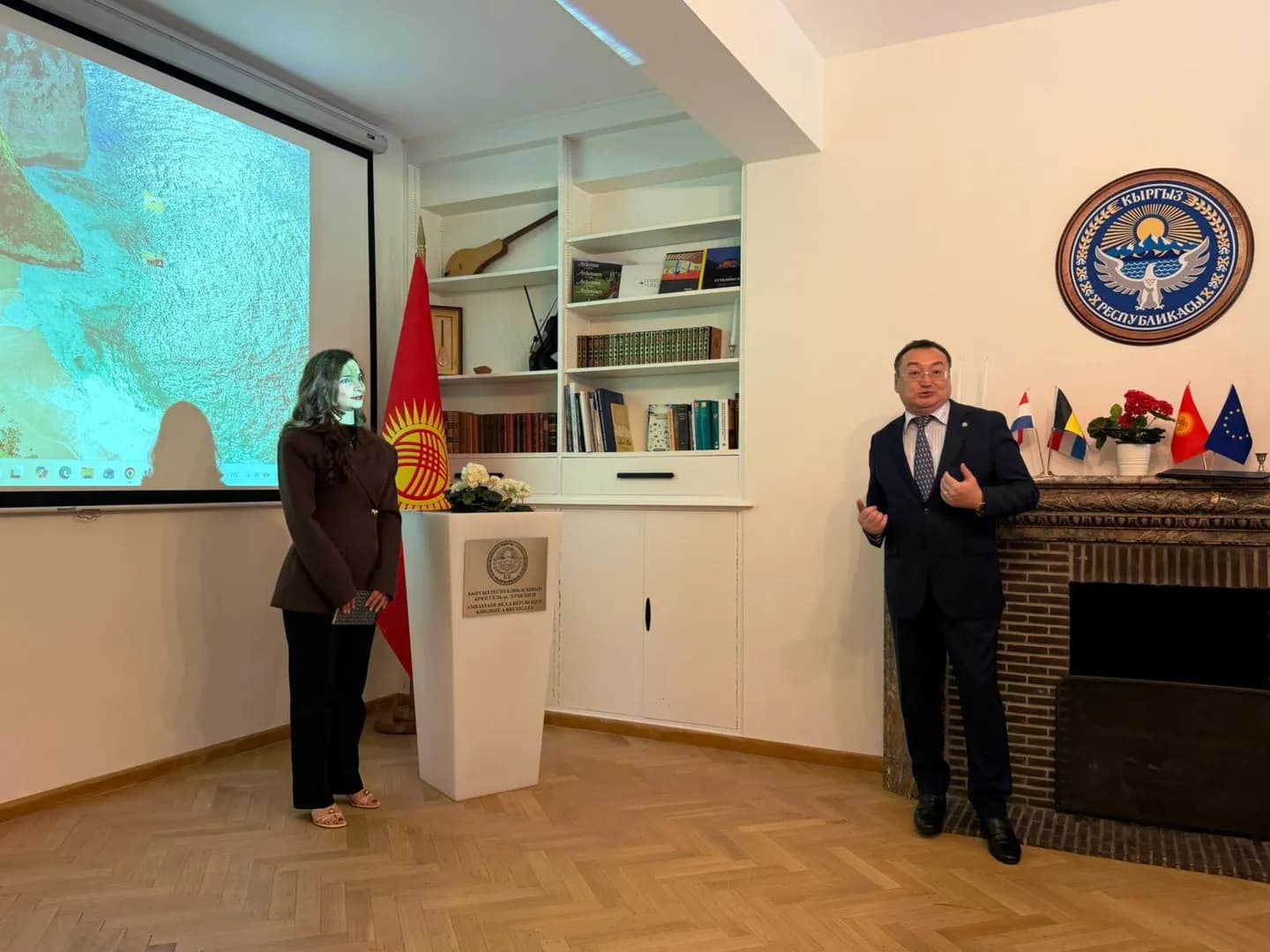
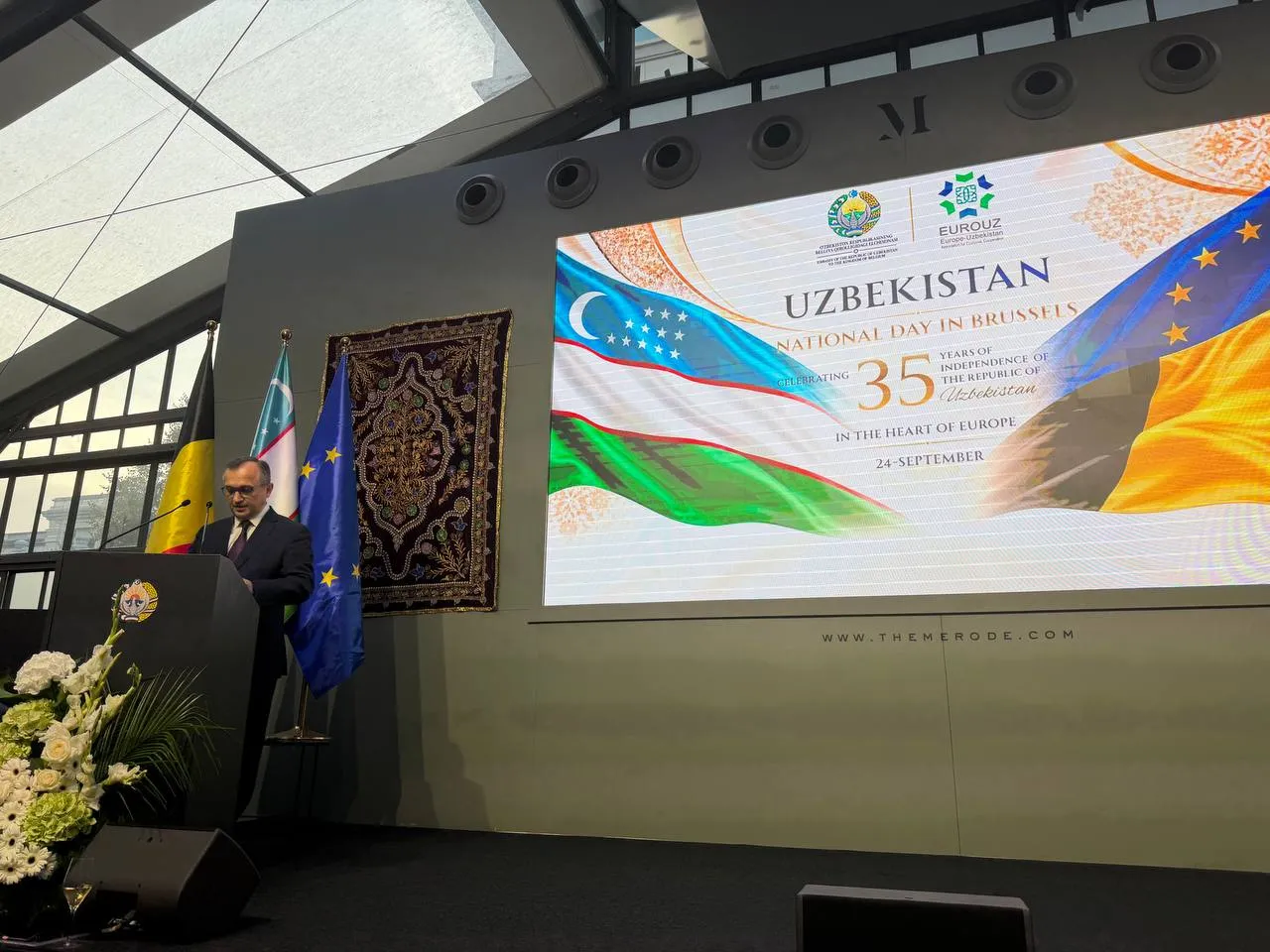
Opening the evening, Ambassador Gayrat Fazilov, who has headed Uzbekistan’s mission to Belgium, the Netherlands, Luxembourg, the EU and NATO since December 2023, welcomed “dear compatriots, ladies and gentlemen” and thanked representatives of the European Union, the European Parliament and the Kingdom of Belgium for joining what he called “a truly historic milestone.” Uzbekistan, he reminded guests, formally attained independence in 1991, but its statehood reaches back over three millennia, through the First and Second Renaissances that produced scholars such as Muhammad al-Khwarizmi, Ahmad al-Farghani, Abu Rayhan al-Biruni, Abu Ali ibn Sina (Avicenna), Mirzo Ulugbek and Alisher Navoi — and through the empire built by Amir Temur, “a symbol of justice, creativity and nation-building.”
“Above all, independence restored to us our honour and dignity, our sacred religion, our native language, as well as our national traditions and values.” — Ambassador Gayrat Fazilov
The Ambassador linked this historical narrative to President Shavkat Mirziyoyev’s own words at the official 35th-anniversary ceremony held in New Tashkent in late August, when the President said the value of independence “is manifested first and foremost in human dignity and the life of freedom” — a ceremony that this year combined a political address on seven new national programmes with a large cultural production featuring international performers including Sarah Brightman, José Carreras and Alessandro Safina.
A Decade of Reform, an Economy Transformed
Ambassador Fazilov detailed the scale of Uzbekistan’s economic opening over the past decade: the country has climbed roughly 80 places in the index of economic freedom, moving into the group of “moderately free” economies, while annual foreign direct investment has grown from around $2.3 billion to between $40 and $50 billion. Sweeping reforms to currency convertibility, taxation, customs and investment policy have accompanied the resolution of long-standing border disputes with neighbouring states and closer regional cooperation across Central Asia.
These figures echo those presented days earlier on the world’s largest diplomatic stage. On 23 September, Saida Mirziyoyeva, Head of the Presidential Administration of Uzbekistan, delivered her country’s national address to the 81st session of the UN General Assembly in New York, telling delegates that Uzbekistan’s economy had grown from $50 billion to $147 billion over ten years, that more than $150 billion in foreign investment had been attracted, and that the poverty rate had fallen to 4 percent, lifting nearly ten million people out of poverty.
“Openness doesn’t translate into weakness. On the contrary, striving for peace means taking responsibility for the future. Our choice is human dignity.” — Saida Mirziyoyeva, UN General Assembly, 23 September 2026
Ambassador Fazilov also noted that Uzbekistan is today home to representatives of more than 130 nations and ethnic groups and 16 religious denominations, describing inter-ethnic harmony and religious tolerance as “a golden asset and an invaluable treasure of our people” in what he called “today’s turbulent world.”
Samarkand to Brussels: A Strategic Partnership With the EU
The Ambassador placed particular emphasis on the trajectory of EU-Uzbekistan relations. In April 2025, Samarkand hosted the first-ever EU–Central Asia Summit, bringing together European Council President António Costa, European Commission President Ursula von der Leyen and the presidents of all five Central Asian states, who agreed to elevate ties to a full strategic partnership backed by a €12 billion Global Gateway investment package.
That momentum culminated on 24 October 2025 in Brussels, when President Mirziyoyev signed the Enhanced Partnership and Cooperation Agreement (EPCA) with the EU and its member states — a 356-article accord replacing the 1996 Partnership and Cooperation Agreement and covering trade, investment, critical raw materials, connectivity, digitalisation, education, climate and the rule of law. The visit also concluded bilateral EU-Uzbekistan market-access negotiations, a key step in Tashkent’s ongoing accession to the World Trade Organization, and included a meeting between President Mirziyoyev and King Philippe at Laeken Palace.
“Today, cooperation with the European Union and its member states covers such important areas as energy, water and climate, transport connectivity, critical raw materials, digitalisation, education and scientific research,” Ambassador Fazilov said, describing the EPCA as having “opened new horizons for cooperation” and given “practical substance to our strategic partnership.”
Uzbekistan and Belgium: A Reliable, Time-Tested Partnership
Turning to the bilateral relationship, Ambassador Fazilov described Belgium as “one of Uzbekistan’s reliable and time-tested partners within the European Union.” He recalled the meeting between President Mirziyoyev and King Philippe during the October 2025 Brussels visit, welcomed the King’s earlier trip to Kazakhstan, and voiced hope for a royal visit to Uzbekistan “in the very near future.”
He also looked ahead to a planned visit to Uzbekistan by Belgium’s Deputy Prime Minister and Minister of Foreign Affairs, Maxime Prévot, expected in the first half of 2027 as part of a broader overhaul of Belgium’s diplomatic network that also produced the country’s newest embassy: Belgium’s mission in Tashkent, which opened in September 2026 under its first resident Ambassador, Matthias Kende, who presented copies of his credentials to Uzbek Foreign Minister Bakhtiyor Saidov earlier that month. The mission, which succeeds a period of non-resident coverage from Astana, is expected to be reinforced in 2027 with an additional diplomat and a consular section.
“Ladies and gentlemen, I would like also to express my sincere appreciation once again to the Association of Uzbek-European Economic Cooperation, EUROUZ, and its member companies for their comprehensive assistance in organising our reception, and to the Vatandosh Compatriots Association for its kind support in organising the concert programme.” — Ambassador Gayrat Fazilov
Belgium’s Response
Speaking on behalf of the Belgian government, Ambassador Pierre Cartuyvels, who has served as Chief of Protocol at Belgium’s Federal Public Service for Foreign Affairs since 2025 and previously represented Belgium as Deputy Permanent Representative to the EU, extended the government’s “warmest congratulations” to Uzbekistan on its national day, describing the country as one whose “history reaches deep into the story of humanity” and whose cities “stood at the crossroads of civilisations, connecting East and West.”
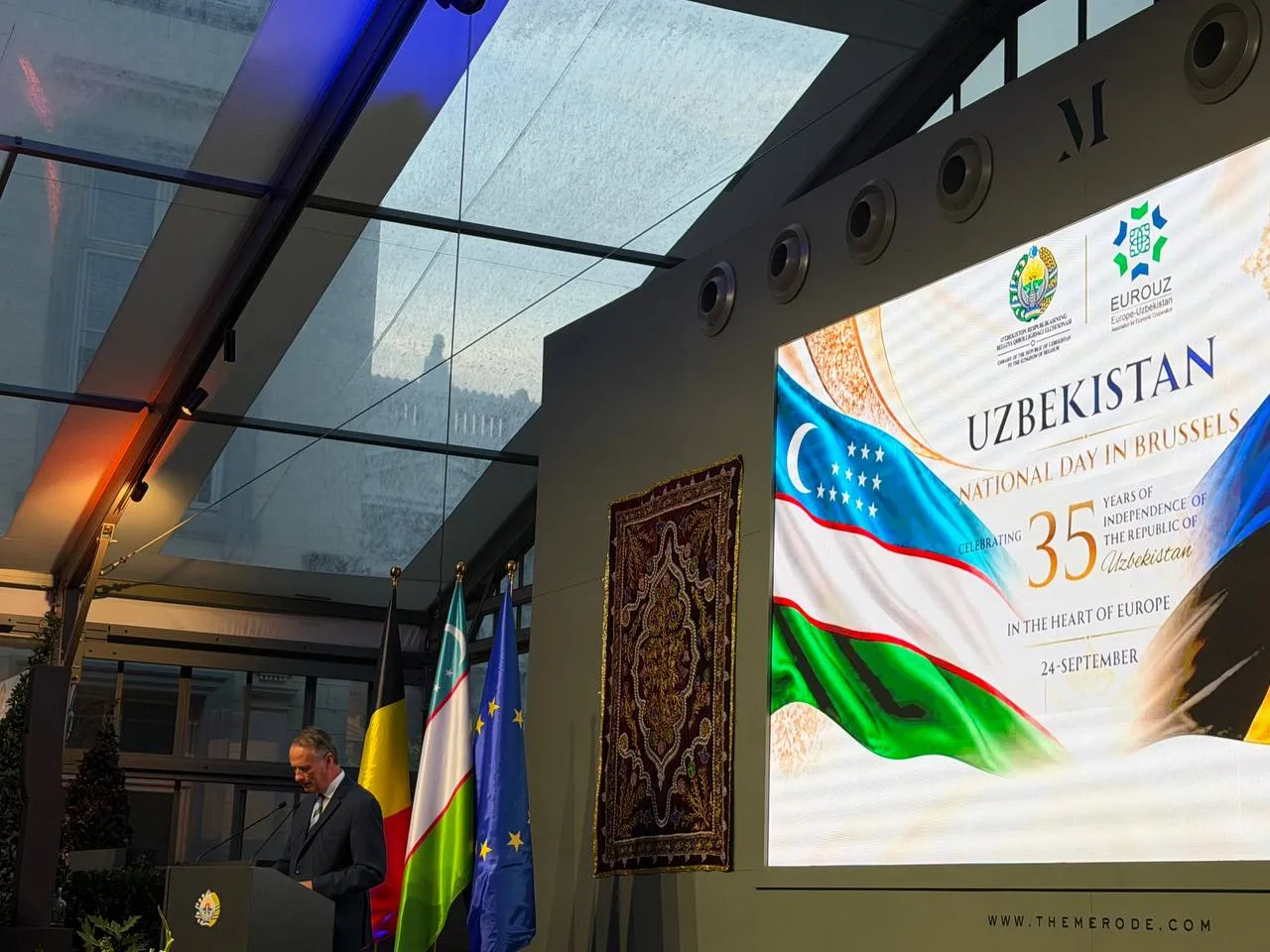
Ambassador Cartuyvels drew a direct line between that historical openness and the messages delivered days earlier by both governments at the UN General Assembly in New York. He cited Saida Mirziyoyeva’s address of 23 September, in which she said Uzbekistan “chooses no camp in today’s power play” but instead “openness and dialogue with the world” and “human dignity above all.” He also referenced the address delivered the previous day, 22 September, by Belgium’s own Deputy Prime Minister and Minister of Foreign Affairs, Maxime Prévot, who had made “a long plea for freedom of navigation and respect for international law” before the same assembly.
“Because you embody, like all of you Ambassadors here tonight, the spirit of dialogue which we need so much.” — Ambassador Pierre Cartuyvels
Highlighting the density of recent bilateral contacts, Ambassador Cartuyvels noted that President Mirziyoyev and Foreign Minister Saidov visited Belgium in October 2025, that bilateral political consultations were held in Tashkent in March 2026, and that the arrival of Belgium’s first resident ambassador at the end of August 2026 marked “a landmark event in our bilateral relations.” He commended Uzbekistan’s growth rate of “over seven percent in 2025,” voiced Belgian support for Uzbekistan’s WTO accession, and reaffirmed “full support” for the wider EU-Central Asia engagement launched in Samarkand.
“Today Belgium celebrates with Uzbekistan not only its independence, but also a friendship and cooperation that unite our two countries. On this national day, we wish peace, prosperity and continued success to the people of Uzbekistan. Happy National Day.” — Ambassador Pierre Cartuyvels
A European Presence in the Room
The reception underscored how far EU-Central Asia relations have moved up the diplomatic agenda in Brussels. Among those attending were Eduards Stiprais, the Latvian diplomat who has served as the EU Special Representative for Central Asia since March 2025 and previously headed the EU Delegation to Uzbekistan, and Marilyn Josefson, Foreign Policy Advisor in the Cabinet of European Council President António Costa — both key figures in the institutional relationship that produced the Samarkand summit and the EPCA.
Conclusion
Beyond the speeches, the evening carried the unmistakable signature of Uzbekistan’s diaspora diplomacy in Belgium: a concert programme organised by the Vatandosh Compatriots Association, and logistical support from EUROUZ, the business association that has become a fixture of Uzbek-European economic outreach in Brussels. For a community of diplomats, entrepreneurs, academics and compatriots who have spent the year tracking the country’s reform agenda — from the Samarkand summit to the EPCA signing, from the new Belgian embassy in Tashkent to the anniversary ceremonies in New Tashkent — the Brussels reception offered a moment to draw those threads together: a nation, in Ambassador Fazilov’s words, that has “demonstrated to the entire world” its worthiness of “our great ancestors,” thirty-five years after regaining its independence.
Related Topics
Derya Soysal
Contributing writer at EUReflect.
Follow EUReflect
See more of our reporting on Google
Mark EUReflect as a preferred source and our stories are ranked higher for you in Top Stories, Discover and Google News — and carry a “preferred” badge when they are cited in AI results.
Add EUReflect as a preferred source