Malaysia’s Tigers Try to Close the Gap at Hockey World Cup
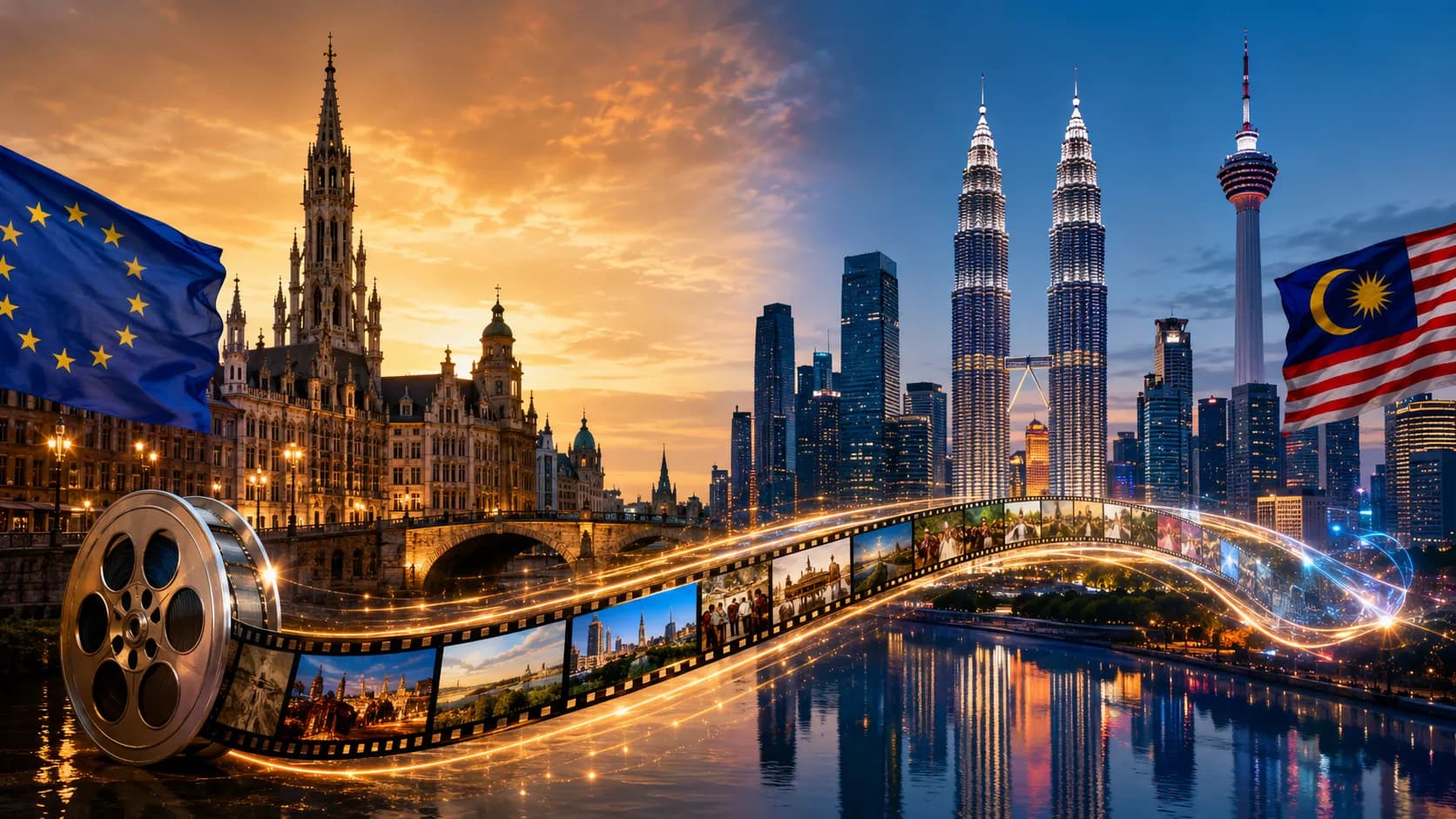
For Malaysia’s men’s hockey team, competing at the FIH Hockey World Cup 2026 in Brussels represents more than another appearance on the international stage. It is an opportunity to measure the progress of Malaysian hockey against some of the strongest teams in the world, while carrying the ambitions of an entire continent.

Competing in a challenging group alongside Belgium, Germany and France, Malaysia entered the tournament facing three of the world’s strongest hockey nations. Yet Head Coach Brendon Carolan and defender Muhammad say the team arrived prepared to compete, learn and demonstrate that Malaysia can challenge higher-ranked opponents.

“For us to be one of the top 16 teams in the world, it obviously makes us proud, representing Asia itself as a continent,” Carolan said.
For the Malaysian players, the significance of appearing at the World Cup goes beyond the tournament itself. Defender Muhammad, making his second World Cup appearance, described the opportunity as a source of pride both personally and nationally.

“To be present in the FIH World Cup 2026 is really proud for me, not just for me, it’s for the country as well,” Muhammad said. “As this is my second World Cup, and for sure I want to do the best for the country.”
Malaysia’s participation also carries particular importance for Asian hockey. As the only Asian team among the 12 nations in their group, the Malaysian squad sees itself as representing the continent on one of the sport’s biggest stages.
“Malaysia is the only Asian country within the other eleven,” Muhammad explained. “So for sure we brought the name of an Asian country to do well in the World Cup, so that we can give a good example to the other Asian countries to grow the hockey in Asia as well.”
Carolan similarly emphasized the pride associated with representing Malaysia internationally. Hockey has a significant place in the country’s sporting culture, and the team’s ambitions extend beyond simply participating in major tournaments.
“We’re representing proudly Malaysia as a start, a huge proud nation, and hockey is a huge part of our culture,” he said.
The challenge in Brussels, however, is substantial. Malaysia was drawn alongside Belgium, Germany and France, with all three opponents ranked among the world’s leading hockey nations.
“For us, it’s a huge task,” Carolan said. “Obviously Belgium, it’s the best team, and Germany are also previous World champions. It’s a challenge for us.”
The Malaysian squad therefore approached the tournament with an extensive preparation programme. According to Muhammad, the team understood that its position in the world rankings meant it would be regarded as the underdog against the established powers.
“To be with the top-ranked teams, like Belgium, Germany and France, we had to prepare well,” he said. “We had our trainings, really, really planning, so we know that at the World Cup we will face this kind of top team.”
Preparation was not limited to physical training. The defender highlighted the importance of technical work and tactical discussions with the coaching staff, including video sessions designed to help the players understand their opponents.
“Firstly, we prepared well. We prepared in terms of our physical and technical things, and we have some discussions and video sessions with our coaches,” Muhammad said.
That preparation has helped Malaysia approach matches against the world’s leading teams with confidence rather than simply accepting the role of underdog.
“Everybody will look at us as the underdog because we have the lowest ranking in the group,” Muhammad said. “But actually we proved it during our match against the top, top team.”
For the defender, the performances against higher-ranked opponents demonstrate the potential of Malaysian hockey.
“Even though our rank is lower than the top team, we gave them a fight, so that we can grow and put the same standard as their world rank,” he said.
The team’s long-term ambition is to continue narrowing the gap with the world’s elite. Carolan believes consistency against top-level opposition will be crucial to Malaysia’s development.
“I think for us to close the gap, perhaps to the top 16 in the world, I think just to close the gap and be more consistent among the top teams and hopefully represent ourselves well,” he said.
For Malaysia, therefore, the World Cup is not only about the result of a single tournament. It is part of a wider effort to establish the country as a stronger force in international hockey and to contribute to the continued development of the sport across Asia.
The Malaya Tigers may have entered their Brussels campaign as underdogs against some of the world’s most established teams, but their message is clear: rankings do not define the limits of their ambition.
With careful preparation, national pride and a determination to compete at the highest level, Malaysia is using the World Cup as an opportunity to test itself against the best — and to take another step toward its long-term goal of becoming a consistent presence among international hockey’s elite.
Olha Pashchenko
Contributing writer at EUReflect.
Follow EUReflect
See more of our reporting on Google
Mark EUReflect as a preferred source and our stories are ranked higher for you in Top Stories, Discover and Google News — and carry a “preferred” badge when they are cited in AI results.
Add EUReflect as a preferred source