Meeting in Islamabad: Pakistan's Quiet Push for Peace Between the US and Iran
Pakistan is emerging as a key mediator between the United States and Iran, leveraging trust and strategic positioning to ease tensions. Through diplomacy and regional coordination, Islamabad is shaping de-escalation efforts and redefining its role in regional security and global politics.
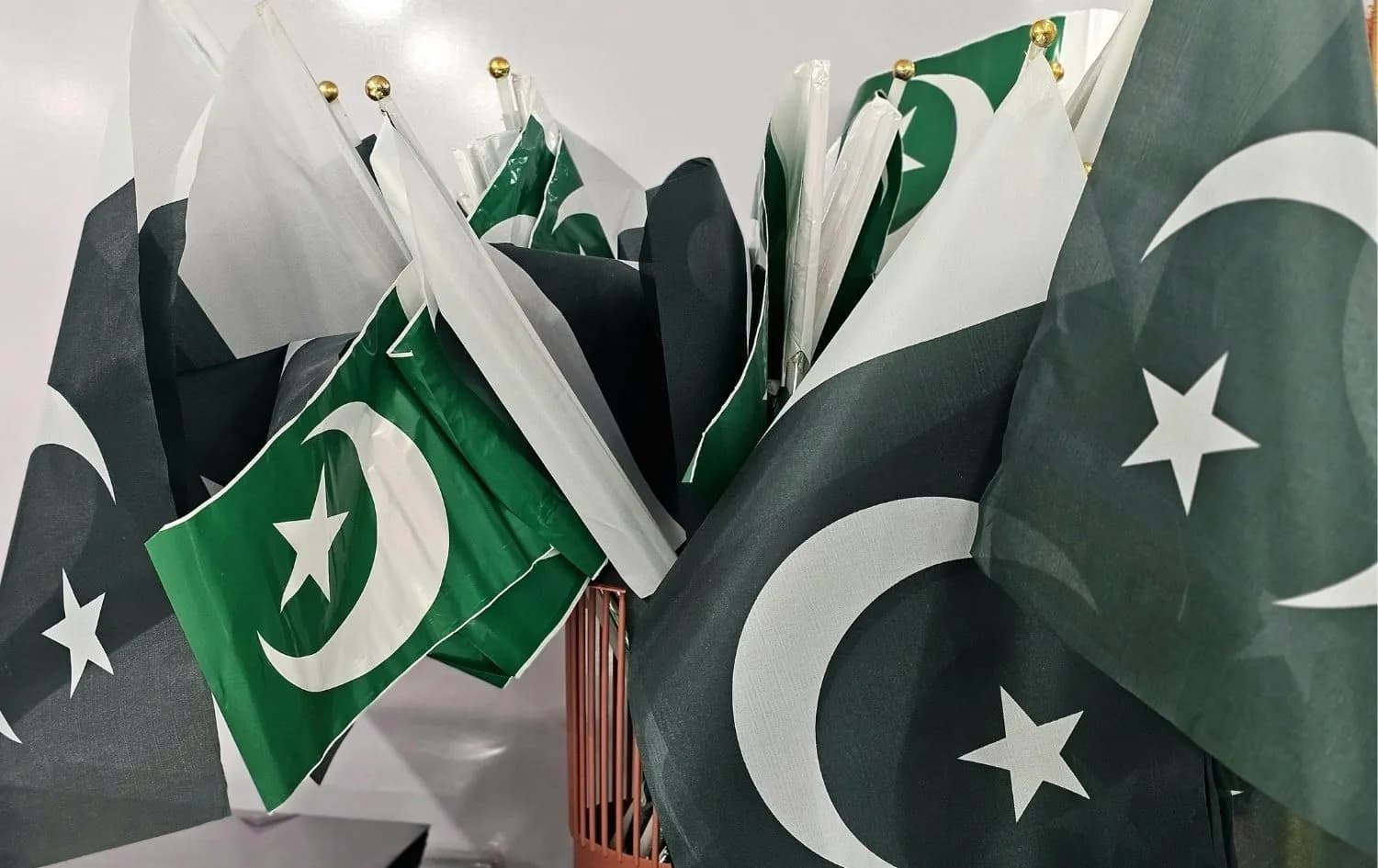
In a region often defined by rivalries, Pakistan has emerged as an unexpected but increasingly vital mediator between the United States and Iran. Over the past several weeks, as tensions escalated into open conflict, Islamabad leveraged its unique geographical position and long standing relationships with both capitals to open backchannel communications. Deputy Prime Minister and Foreign Minister Ishaq Dar confirmed that Pakistan is actively relaying a 15 point proposal from Washington to Tehran, while also transmitting Iran's five point counterproposal back to the US.
This delicate exchange of messages has already yielded tangible confidence building measures. Iran agreed to allow 20 additional Pakistani flagged ships to transit the Strait of Hormuz, two vessels per day, easing a critical energy chokepoint. For a country that shares a 1,000 kilometer border with Iran and hosts a Shia population of nearly 20 percent, these small but meaningful steps are not just diplomatic victories; they are acts of self preservation and regional responsibility.
Building on this momentum, Pakistan is now hosting a landmark quadrilateral meeting of foreign ministers in Islamabad on March 29 and 30, 2026. The gathering brings together the top diplomats of Saudi Arabia, represented by Prince Faisal bin Farhan; Turkiye, represented by Hakan Fidan; and Egypt, represented by Dr. Badr Abdelatty. These three influential Muslim nations have deep stakes in the outcome of the US Iran crisis. The agenda is ambitious. The ministers aim to forge a unified Islamic position on de escalation, explore actionable mechanisms for a durable ceasefire, and discuss a framework for eventual direct US Iran talks, which could potentially be hosted in Islamabad. The very fact that these four countries have chosen Pakistan as the venue reflects a growing international trust in Islamabad's ability to convene difficult conversations.
As Turkish Foreign Minister Fidan noted, a message has been sent through Pakistan, and Washington is fully in the loop. This is not happenstance. It is the result of months of quiet telephone diplomacy by Prime Minister Shehbaz Sharif and Army Chief Field Marshal Asim Munir, who have spoken with over 20 world leaders, including President Trump and President Pezeshkian, to align interests and build a corridor of trust.
Looking ahead, the most promising scenario is one where Pakistan's mediation matures from message carrying to genuine peacemaking. If Islamabad successfully resolves the US Iran standoff, the ripple effects would be transformative. Economically, a comprehensive agreement would reopen the Strait of Hormuz to full international shipping, stabilizing global oil prices and directly relieving Pakistan's own fuel costs, which are already down from their wartime spike. The billions of dollars in remittances sent home by Pakistani workers in the Gulf would be secured, and new energy deals with Iran could finally materialize, easing Pakistan's chronic power shortages. Diplomatically, Pakistan would join the ranks of elite mediators like Qatar and Oman, but with a distinctive edge. It would be the only country trusted simultaneously by Washington, Tehran, Riyadh, Ankara, and Cairo.
This enhanced standing would translate into greater investment, technology transfers, and a redefined partnership with the United States, moving beyond transactional counter terrorism cooperation toward a strategic economic and security dialogue. Domestically, peace would allow Pakistan to focus on its own development, from completing the China Pakistan Economic Corridor to modernizing its agriculture and energy sectors. Defence Minister Khawaja Asif captured the national sentiment well when he said, "The benefits are huge, and staying away is not an option." Pakistan has chosen to stay, and in doing so, it has taken a bold step toward becoming not just a witness to history, but a maker of it.
Beyond the immediate crisis, Pakistan's mediation efforts are quietly reshaping how regional security is understood and managed. By successfully positioning itself as the trusted channel between Washington and Tehran, Islamabad has demonstrated that it possesses something no other country in the neighborhood can claim: the ability to speak to all major powers, including the United States, China, Iran, Saudi Arabia, Turkey, and the Gulf states, without being seen as a proxy for any single one. This unique attribute makes Pakistan vital for the future regional security architecture in several concrete ways.
First, Pakistan can serve as a permanent crisis communication hub, offering its territory and good offices whenever tensions flare between Iran and the US or between Iran and the Gulf monarchies. Second, with its deep experience in counterterrorism and its strategic location along key maritime lanes in the Arabian Sea, Pakistan is well positioned to lead joint security patrols and intelligence sharing arrangements that benefit all littoral states.
Third, as a nuclear power with a professional military and a growing economy, Pakistan can anchor a new security framework that moves beyond zero sum rivalries toward cooperative stability, where energy flows freely, borders remain calm, and disputes are resolved through dialogue rather than missiles. The quadrilateral meeting in Islamabad is not an endpoint. It is the beginning of a larger recognition that lasting peace in the Middle East and South Asia requires a reliable, capable, and trusted partner. Increasingly, that partner is Pakistan.
Henceforth, Pakistan is trusted by Iran because history has shown that whenever Arab mediated countries tried to broker peace between Tehran and Washington, the United States would attack Iran right in the middle of those negotiations, often with Mossad having a quiet hand inside those mediating nations. In Pakistan's case, that shadow does not exist. Mossad does not have that kind of reach or inclusion in Islamabad's decision making, and that is precisely why Iran sits at the table when Pakistan calls.
Uroosa Khan
Contributing writer at EUReflect.
Follow EUReflect
See more of our reporting on Google
Mark EUReflect as a preferred source and our stories are ranked higher for you in Top Stories, Discover and Google News — and carry a “preferred” badge when they are cited in AI results.
Add EUReflect as a preferred source