Over 200 Civilians Freed from ADF Captivity
Ugandan and Congolese Forces Strike Islamic State Linked Camp in Eastern DRC
Overview
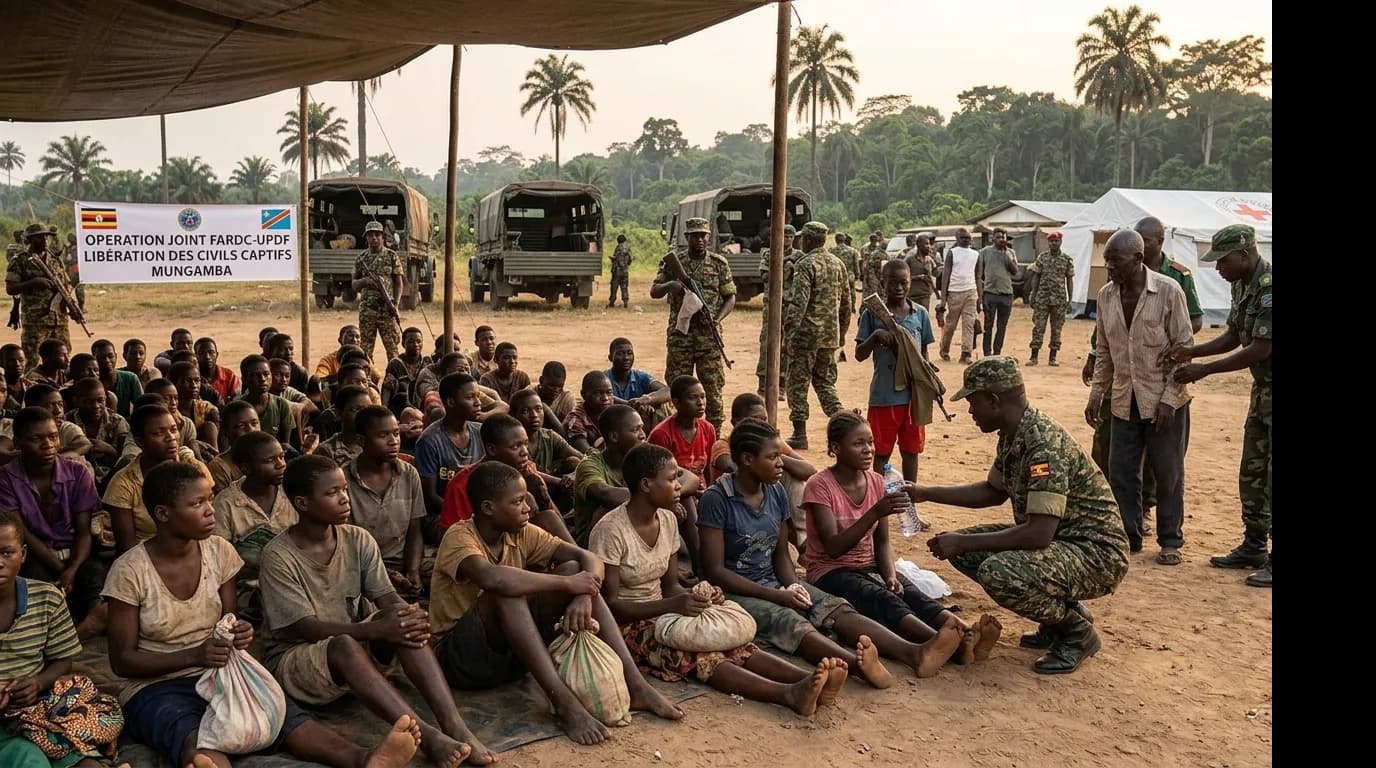
Ugandan and Congolese military forces have rescued more than 200 civilians from a camp run by the Allied Democratic Forces (ADF), an Islamic State linked rebel group operating in the eastern Democratic Republic of the Congo. The joint operation, carried out on April 19 along the River Epulu, was announced by the Uganda Peoples' Defence Forces (UPDF) on April 20. According to the Ugandan military, several ADF fighters were killed in the raid and a cache of weapons was recovered. The targeted camp was reportedly under the command of a figure known as Ssebagala, also called Mzee Mayor.
The freed captives, most of them boys and girls aged between 14 and 19, were described by the Ugandan army as frail and in poor health. "Many recounted harsh conditions in captivity, including lack of food, forced labour, and punishment for disobedience," the military statement said. "Several appeared frail, suffering from untreated illnesses such as malaria, respiratory infections, and physical exhaustion." The youngest of those rescued was a 14 year old girl. Speaking to the released civilians at Mungamba, Major General Stephen Mugerwa, overall joint commander of Operation Shujaa, reassured them that they were not being held, and that authorities would ensure their safe return to their families.
ADF: previous context
The ADF was originally formed in Uganda in the 1990s by people disgruntled with the government's treatment of the country's Muslim community. After being routed by the Ugandan army, the remnants fled across the border into eastern DRC, where the group has operated for more than two decades. Its leader, Musa Seka Baluku, pledged allegiance to the Islamic State in 2016, and IS first formally acknowledged the group's activity in April 2019. Since then, the ADF has been responsible for a series of high profile attacks, including suicide bombings in Kampala in 2021 and the targeting of schools in western Uganda in 2023.
In eastern DRC, however, the group has become best known for kidnapping and killing. A 2024 study by BBC Monitoring found that the ADF was responsible for more than half of all civilian deaths in that conflict affected region. United Nations figures suggest the group has killed thousands of civilians, and Amnesty International researcher Rawya Rageh reported at the end of 2025 that abductions and killings were occurring with "alarming frequency," with women and girls being used as sexual slaves.
In November 2021, Uganda and DRC launched a joint offensive, Operation Shujaa, aimed at dismantling ADF strongholds. Despite years of fighting, the group has continued to operate and earlier this month an ADF attack killed at least 43 civilians. Joint operations have intensified since January 2026, with the UPDF and FARDC overrunning a major ADF camp linked to Baluku in February. Major General Mugerwa said increased military pressure has also led to a growing number of escapes, with former captives presenting themselves at joint force locations such as Lolwa, Kyndala Kundala, and Babungwe.
The ADF's activities have been reinvigorated over the past year as the DRC battles several other armed groups in the east, most prominently the Rwandan backed M23. For civilians caught between these overlapping conflicts, joint operations like the one along the River Epulu offer rare moments of release, but analysts caution that the structural threat posed by the ADF is far from resolved.
This article is based on information from BBC News, Al Jazeera, and Uganda's Daily Monitor. All details have been independently rewritten in original language and presented following professional journalistic standards.
Dmytro Melnyk
Contributing writer at EUReflect.
Follow EUReflect
See more of our reporting on Google
Mark EUReflect as a preferred source and our stories are ranked higher for you in Top Stories, Discover and Google News — and carry a “preferred” badge when they are cited in AI results.
Add EUReflect as a preferred source