Prince’s Royal Privileges Shake Under Epstein Allegations
Andrew’s Royal Privileges Shake Under Epstein Allegations
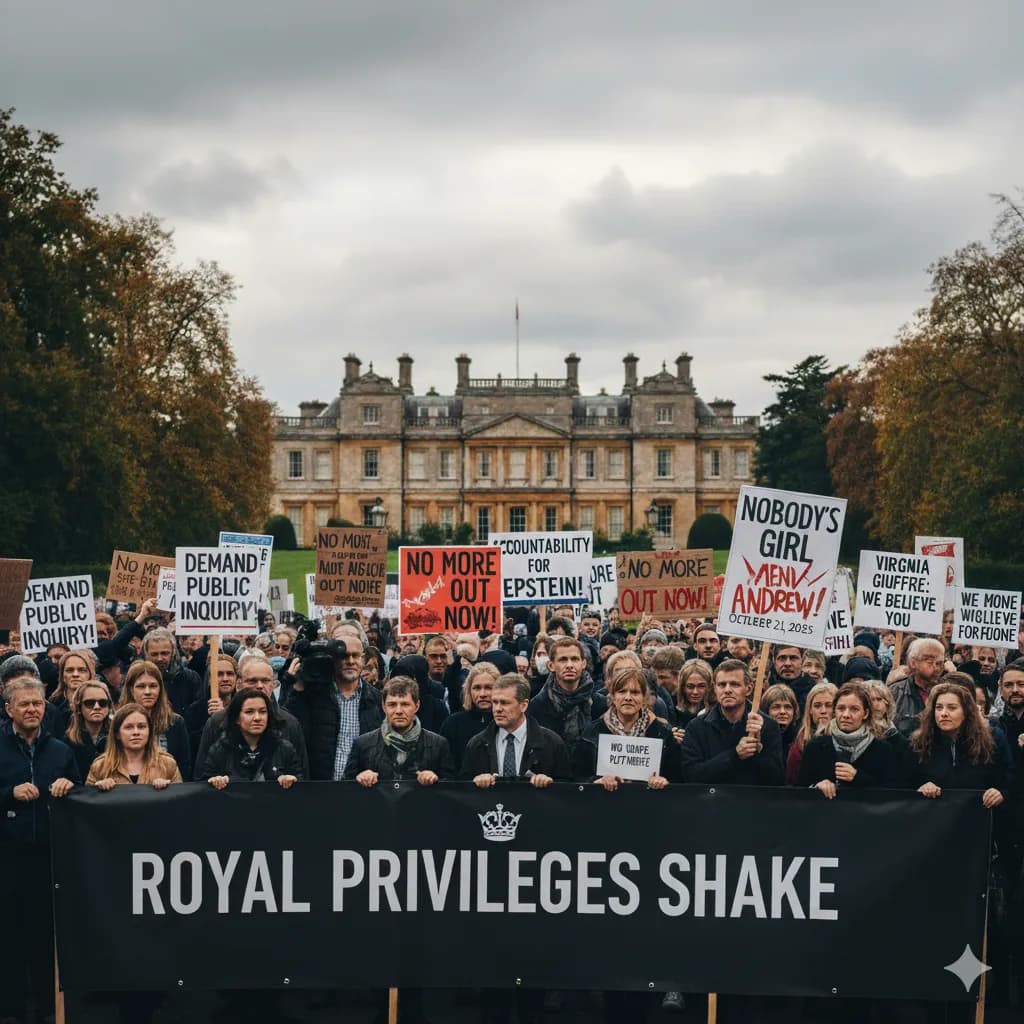
In the United Kingdom, tensions between the monarchy and parliament have escalated once again around the controversies surrounding Prince Andrew’s residence at Royal Lodge in Windsor. Allegations linked to the Jeffrey Epstein scandal have gained new momentum with the posthumous publication of Virginia Giuffre’s autobiography, Nobody’s Girl. This development has placed Andrew’s royal titles and taxpayer-supported lifestyle under intense scrutiny.
Drawing from various sources, this article synthesizes the background, causes, progression, key actors’ positions, and potential outcomes of the issue in an objective manner. In particular, the government’s rejection of debate requests, calls for investigations, and the lack of financial transparency are deepening discussions on accountability in British politics. According to Politico’s recent analysis, Andrew’s scandal has exposed a vulnerability in England’s secretive royal funding system, linking this crisis to a broader issue of financial opacity—Andrew’s living arrangements are viewed as just one part of the monarchy’s mysterious financial structure.
Prince Andrew, known as the Duke of York and son of Queen Elizabeth II, has long been accused of involvement in Epstein’s sexual abuse network. The claims detailed in Giuffre’s autobiography allege that Andrew engaged in sexual relations with her, which he vehemently denies. Despite a 2022 out-of-court settlement with Giuffre, the book’s release on October 21, 2025, prompted Andrew to announce his voluntary relinquishment of his titles.
However, their official removal requires parliamentary approval. His residency at Royal Lodge, financed through a symbolic rent, has become the focal point of public finance criticisms. Per Politico, this situation reinforces the perception of King Charles‘s “embarrassing brother” living rent-free, thereby exposing the overall opacity of royal funding. Giuffre’s memoirs, published after her suicide, provide fresh details about Epstein’s network, reigniting Andrew’s role in the spotlight and causing significant concern at Buckingham Palace.
Background: Epstein Connections and Giuffre Allegations
The roots of the issue trace back to Prince Andrew’s friendship with Jeffrey Epstein. Epstein, a financier convicted of child abuse in 2008, died by suicide in prison in 2019. As one of Epstein’s victims, Virginia Giuffre claims she was forced into sexual encounters with Andrew three times at age 17. Her autobiography bolsters these allegations with new elements, such as assertions that Andrew’s team hired online trolls to harass her. Although Andrew denies the accusations, he settled with Giuffre in 2022 for millions of pounds. This agreement sparked suspicions of public fund usage, which the palace refuted.
The scandal led to Andrew’s removal from royal duties. His 2019 BBC interview drew widespread backlash, and in 2022, his titles were effectively suspended. Despite King Charles cutting financial support, Andrew continued residing at Royal Lodge. This property belongs to the Crown Estate, managed by the monarchy, with revenues directed to the Treasury. The 75-year lease signed in 2003 required a £1 million upfront payment and £7.5 million in renovations in exchange for an annual symbolic “peppercorn” rent.
This has allowed Andrew to live rent-free for over 20 years; terminating the lease would obligate the Crown Estate to pay him approximately £558,000 in compensation. Politico’s review describes these arrangements as emblematic of the royal funding system’s secrecy, framing Andrew’s case as part of a “much broader problem.”
This financial setup raises questions in the public conscience. While Crown Estate profits are expected to benefit taxpayers, Andrew’s low-cost residency is seen as a potential revenue loss. The Epstein links further challenge the ethics of this privilege. Giuffre’s posthumously published autobiography has intensified the debates, accelerating Andrew’s decision to relinquish his titles—though this is voluntary and not an official revocation.
Causes: Renewed Epstein Pressure and Public Reaction
The resurgence of discussions stems primarily from the publication of Giuffre’s autobiography. The book offers new insights into Epstein’s network, bringing Andrew’s role back into focus and triggering his title relinquishment announcement. Critics deem this insufficient; according to a YouGov poll, 80% of Britons support the official removal of his titles (based on approximately 6,700 participants).
Demands for financial transparency are another key driver. The Royal Lodge arrangement was reviewed by the National Audit Office in 2005, but calls for an updated examination are growing. Opposition parties, particularly the Liberal Democrats, argue that this privilege harms taxpayers. Treasury Minister Rachel Reeves has criticized the situation, stating that “people should cover their own expenses.” Politico’s report notes that this has exploded the opacity in the royal funding system; with King Charles’s brother living rent-free, the system’s secrecy invites broader scrutiny. Additionally, new elements in Giuffre’s memoirs, such as her claim of being raped by a “well-known prime minister,” have elevated the scandal to an international level.
Parliamentary pressure reflects the historical tension between monarchy and democracy. Andrew’s Epstein ties question the royal family’s accountability, while the Royal Lodge scandal concretizes this. The government’s alignment with palace guidance amplifies criticisms; Politico links this crisis to the general opacity of royal funding, arguing that Andrew’s scandal illuminates a systemic issue.
Progression: Parliamentary Sessions and Government Stance
Events peaked on October 22, 2025, during Prime Minister’s Questions (PMQs). Liberal Democrat leader Sir Ed Davey urged Prime Minister Sir Keir Starmer to review the Crown Estate and have Andrew testify before MPs. Davey highlighted the flaws in current arrangements. Starmer acknowledged the need for proper scrutiny of Crown properties but the government took no concrete steps.
The following day, the government rejected debate requests. Former Labour MP Rachel Maskell’s “Removal of Titles Bill” proposed stripping titles upon parliamentary recommendation, but the government withheld time, blocking its progress. House of Commons Leader Sir Alan Campbell stated they were following palace guidance. This also dismissed the SNP’s call.
The Public Accounts Committee (PAC) holds potential for investigation. Chair Sir Geoffrey Clifton-Brown announced he would request information from the Crown Estate on lease arrangements. However, the committee’s schedule is full until the new year, delaying any review. Liberal Democrat Sarah Olney questions whether the deal benefits taxpayers; former PAC Chair Baroness Margaret Hodge labeled it “rotten.” Politico’s article expands on these debates, stating that Andrew’s scandal has burst open the opacity of royal funding; the system remains veiled in secrecy, with his rent-free living as part of a larger problem.
House of Commons Speaker Sir Lindsay Hoyle clarified that royal family members can be discussed, but a specific motion is required. The government denies “blocking” claims, deferring to committees and emphasizing Andrew’s need to provide information for Epstein inquiries. As Politico points out, this process makes royal funding opacity more visible.
Financial and Legal Dimensions
Financially, Royal Lodge’s 30-room structure and 98-acre grounds represent potential Crown Estate revenue. Andrew’s upfront payments grant rent exemption, but this is viewed as detrimental to taxpayers. Should he leave, compensation of £558,000 would be due, decreasing until 2028. Politico’s report highlights this as an example of royal funding opacity; the system is shrouded in secrecy, implying special treatment for King Charles’s brother in his rent-free life. Moreover, how Andrew finances Royal Lodge is described as a “mystery,” fueling public outrage.
Legally, title removal requires parliamentary legislation. Maskell’s bill suggests the King act on parliamentary advice, but without government support, passage is unlikely. Epstein investigations continue; Downing Street encourages Andrew to share information. The National Audit Office’s Crown Estate report could serve as a basis for future reviews. Politico’s examination broadens these aspects, discussing the historical roots of royal funding opacity—for instance, similar secrecies in other scandals.
Expectations and Outcomes
In the future, the PAC may launch an inquiry in the new year. If so, Andrew’s testimony would be historic—a rare instance of a royal family member facing parliamentary questioning. This could enhance monarchy financial transparency and deliver justice for Epstein victims. However, government reluctance may delay changes. Increased public pressure could lead to title removal or eviction from Royal Lodge. Politico’s analysis ties these expectations to royal funding opacity, predicting that Andrew’s scandal could spark broader reforms; the system’s secrecy questions the monarchy’s legitimacy in Britain. Parliamentary pressure to question the royal family on Epstein links is also rising, strengthening transparency demands.
This crisis is accelerating monarchy reform debates in Britain; demands for transparency and accountability may shape the royal family’s future. Ultimately, the Epstein scandal and Royal Lodge arrangement transcend an individual crisis, representing a systemic legitimacy challenge.
Bibliography
BBC News. 2025. “MPs Call for Inquiry into Prince Andrew’s Royal Lodge Residence.” October 22, 2025. https://www.bbc.com/news/articles/cpv1rr1znveo.
The Economist. 2025. “Parliament Turns on Prince Andrew.” October 23, 2025. https://www.economist.com/britain/2025/10/23/parliament-turns-on-prince-andrew.
The Guardian. 2025. “MPs Call for Inquiry into Prince Andrew’s Royal Lodge Residence.” October 22, 2025. https://www.theguardian.com/uk-news/2025/oct/22/prince-andrew-royal-lodge-residence-inquiry-calls-mps.
The Independent. 2025. “Starmer Faces Calls for Inquiry into Prince Andrew’s Royal Lodge Deal as Epstein Allegations Resurface.” October 22, 2025. https://www.independent.co.uk/news/uk/politics/prince-andrew-virginia-giuffre-royal-lodge-keir-starmer-pmqs-inquiry-b2850029.html.
Politico Europe. 2025. “Prince Andrew’s Scandal Blows Hole in Britain’s Opaque Royal Funding System.” Accessed October 24, 2025.https://www.politico.eu/article/prince-andrew-scandal-britains-opaque-royal-funding-system.
The Telegraph. 2025. “Labour Urged to Order Inquiry into Prince Andrew’s Royal Lodge Deal.” October 22, 2025. https://www.telegraph.co.uk/politics/2025/10/22/labour-urged-to-order-inquiry-into-andrews-royal-lodge-deal.
Zeynep Güney
Contributing writer at EUReflect.
Follow EUReflect
See more of our reporting on Google
Mark EUReflect as a preferred source and our stories are ranked higher for you in Top Stories, Discover and Google News — and carry a “preferred” badge when they are cited in AI results.
Add EUReflect as a preferred source