Pro-EU government loses no-confidence vote in Romania
Instability in Romania continues after the current government resigns.
Written by journalist Danylo Aleksandrov
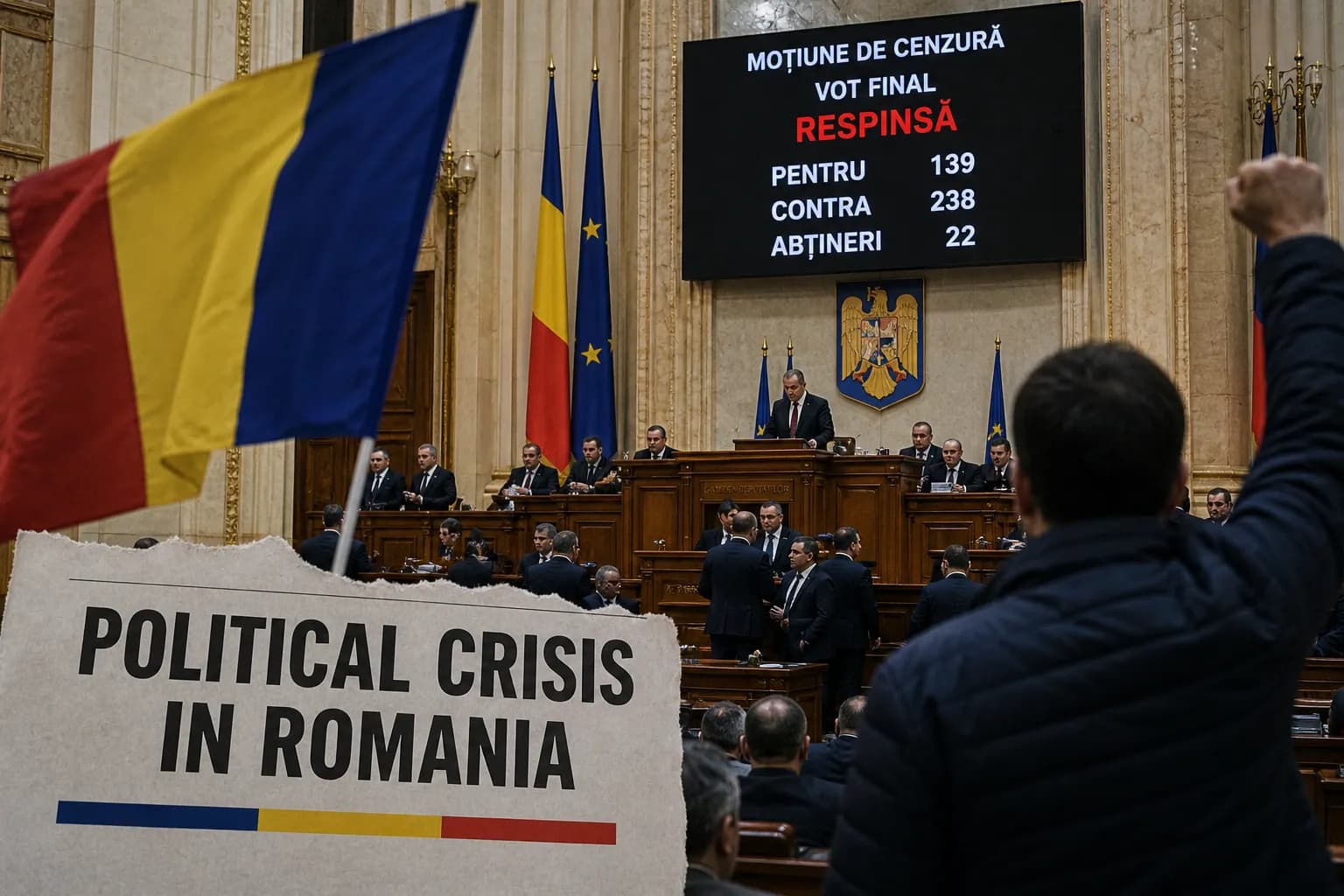
On Tuesday the pro-EU coalition government of Romania’s Prime Minister Ilie Bolojan will resign after losing a no-confidence vote in the country’s parliament.
The road to this vote began last week, when on one hand, several weeks ago the Social Democratic Party (PSD) withdrew from the coalition, and on the other the Alliance for the Unity of Romanians (AUR) proposed holding such a vote. 281 MEPs voted for the government removal, with only 4 voting against. PM’s own National Liberal Party (PNL) along with its coalition allies Save Romania Union party and the UDMR (which represents the Hungarian ethnic minority) did not vote.
Bolojan voiced his criticism of the vote, describing it as "cynical and artificial", stressing that as a Prime Minister, he understood the challenges ahead and was ready for ungratefulness from Romanians, at the same time understanding that something has to be quickly done in order to improve the economical situation in the country.
After the results of presidential elections were annulled in December 2024, Romania has been dealing with a period of instability, along with a difficult situation in the economy, characterized by one of the highest budget deficits among EU member states, technical recession and inflation. The coalition, which came to power in June 2025 made reducing the budget deficit one of its main tasks. But this was hard to achieve as PSD was often at odds with the coalition in regards to some of the policies which were planned, such as higher taxes, freezing of public sector salaries and spending and administration jobs cutting. Bolojan insisted that such measures were necessary to better the situation in the country.
Observers note, that some time is needed until a new coalition is formed, since there are disagreements between different parties, who vow not to join a coalition with some of their colleagues, which means that the period of instability will drag on for more time. Two options, although complex, are likely. First is a cabinet which will not include Bolojan, but will otherwise remain similar, though with changes in roles. The second one is a minority cabinet led by PSD and its populist allies, but it is less likely since some of thee party’s allies inclusion might not get the President’s approval.
EUReflect News
Site Administrator
Follow EUReflect
See more of our reporting on Google
Mark EUReflect as a preferred source and our stories are ranked higher for you in Top Stories, Discover and Google News — and carry a “preferred” badge when they are cited in AI results.
Add EUReflect as a preferred source