US-Iran Escalation Disrupts Shipping Around the Strait of Hormuz
The United States and Iran have launched their largest wave of retaliatory attacks on shipping since the conflict began, disrupting traffic through the Strait of Hormuz and pushing oil prices above $100 a barrel.
A Major Escalation at Sea
The conflict between the United States and Iran escalated sharply on September 9, with both sides carrying out attacks against vessels in and around the Strait of Hormuz.
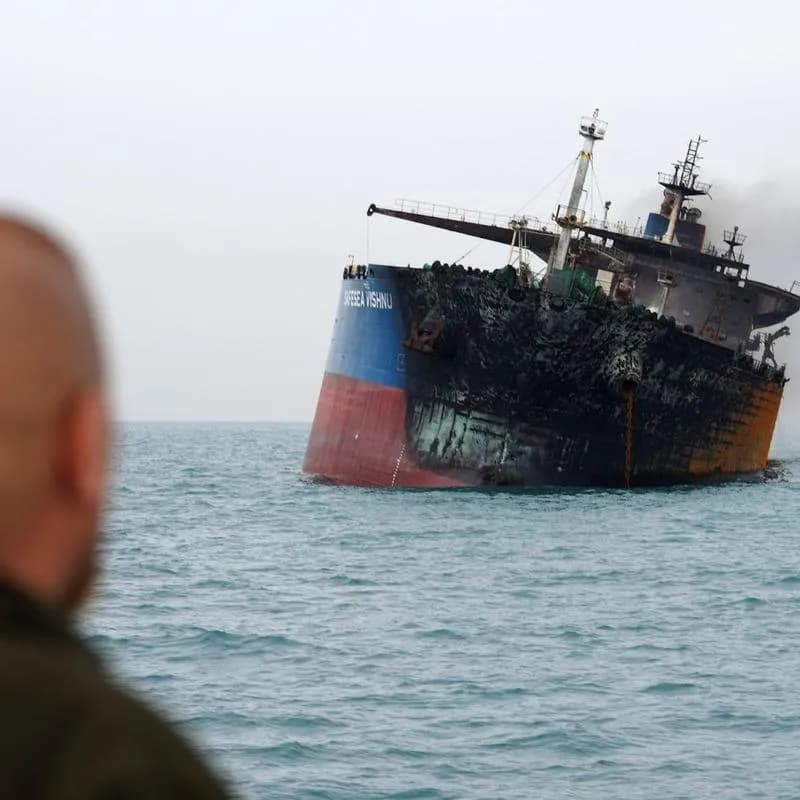
According to Reuters, Iran said it had attacked 10 ships near the strategic waterway after the United States destroyed five Iranian oil tankers. The attacks represent the largest declared wave of retaliatory strikes on shipping since the six-month-old conflict began.
The United States said the destruction of the Iranian tankers came in response to repeated Iranian ballistic missile attacks against a U.S. Navy warship. U.S. officials said the vessel avoided the attacks and that no American personnel were injured.
Iran Targets a US Base in Jordan
The confrontation has also expanded beyond the maritime area.
Iran's Islamic Revolutionary Guard Corps said it launched ballistic missiles at a military base near Al Azraq in eastern Jordan that is used by U.S. forces. Jordan said its air defenses intercepted 18 of 20 Iranian missiles, while the remaining two landed in unpopulated areas. No casualties were reported by Jordanian authorities.
The attack adds another country to the military consequences of the conflict and increases concerns about further regional escalation.
Shipping Under Pressure
The Strait of Hormuz has become one of the main pressure points in the conflict. The waterway normally carries around one-fifth of global oil supplies, making any prolonged disruption significant for international energy markets.
Reuters reported that several merchant and liquefied natural gas vessels were damaged or set on fire in the Gulf and Gulf of Oman. Maritime authorities were investigating reports of additional ships being struck.
Iran has also threatened shipping near ports in Kuwait and Bahrain and announced plans to expand an exclusion zone around parts of the Strait of Hormuz.
Oil Prices Rise Above $100
The attacks immediately affected global energy markets.
Brent crude rose above $100 per barrel, reaching its highest level since July as traders assessed the risk of further disruption to oil shipments. The escalation has also contributed to higher fuel prices in the United States.
The effect extends beyond the energy sector. Higher oil prices can increase transportation and production costs and create additional inflationary pressure for economies that depend on imported energy.
The Conflict Expands Across the Region
The latest developments are occurring alongside renewed fighting involving Iran-aligned Houthi forces in Yemen.
According to AP, Houthi forces carried out missile and drone attacks against targets in Saudi Arabia, including energy infrastructure. Saudi-backed forces subsequently launched airstrikes against Houthi positions in Yemen. The escalation has further increased pressure on regional energy and shipping routes.
As a result, the current confrontation is no longer limited to direct U.S.-Iran military exchanges. Attacks and counterattacks now involve maritime routes, military bases and energy infrastructure across several parts of the Middle East.
A Growing International Security Concern
The latest attacks have placed the Strait of Hormuz at the center of the conflict. Continued disruption in the waterway could affect the movement of oil and other energy products and increase uncertainty in global markets.
For Washington and Tehran, the immediate confrontation remains focused on military and maritime pressure. For the wider international community, however, the consequences increasingly involve energy security, commercial shipping and regional stability.
The scale of the latest attacks raises the possibility that further retaliation could widen the conflict even further.
Source: This article is based primarily on reporting by Reuters, published September 9, 2026, and cross-checked with Associated Press reporting from the same day.
Ipek Tuncer
M.A. in International Relations
Follow EUReflect
See more of our reporting on Google
Mark EUReflect as a preferred source and our stories are ranked higher for you in Top Stories, Discover and Google News — and carry a “preferred” badge when they are cited in AI results.
Add EUReflect as a preferred source