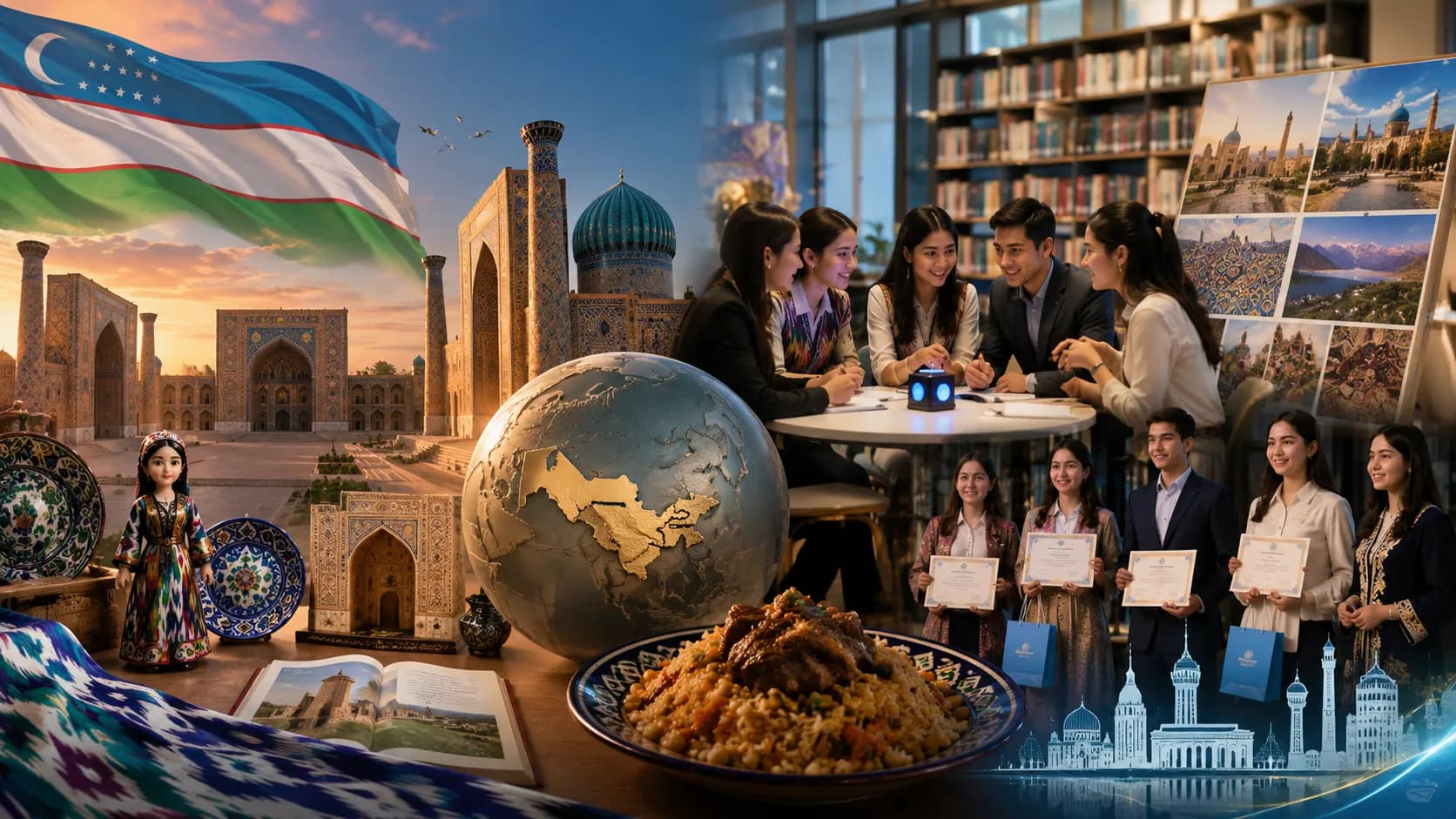
Samarkand State University: A Journey Through History, Hospitality, and Academic Excellence
Samarkand State University, tracing its origins to the Mirzo Ulughbek Madrasa (1420), combines a rich historical legacy with modern academic ambitions. During a 2022–2023 research stay, the author experienced the university as a hub of intellectual exchange, international collaboration, and cultural immersion. The institution excels in supporting foreign scholars, fostering multilingual research, and connecting students with local communities. Beyond academics, it offers a deep engagement with Uzbek culture, traditions, and daily life. Ranked in global indices such as the 2025 THE Impact Rankings (401–600) and QS World University Rankings (1001–1200), the university shows promise in sustainable development goals and internationalization. Samarkand State University stands out as a center where historical scholarship, modern research, and cross-cultural learning intersect, making it a prime destination for researchers in Central Asian studies, Turkic languages, and post-Soviet transformation.
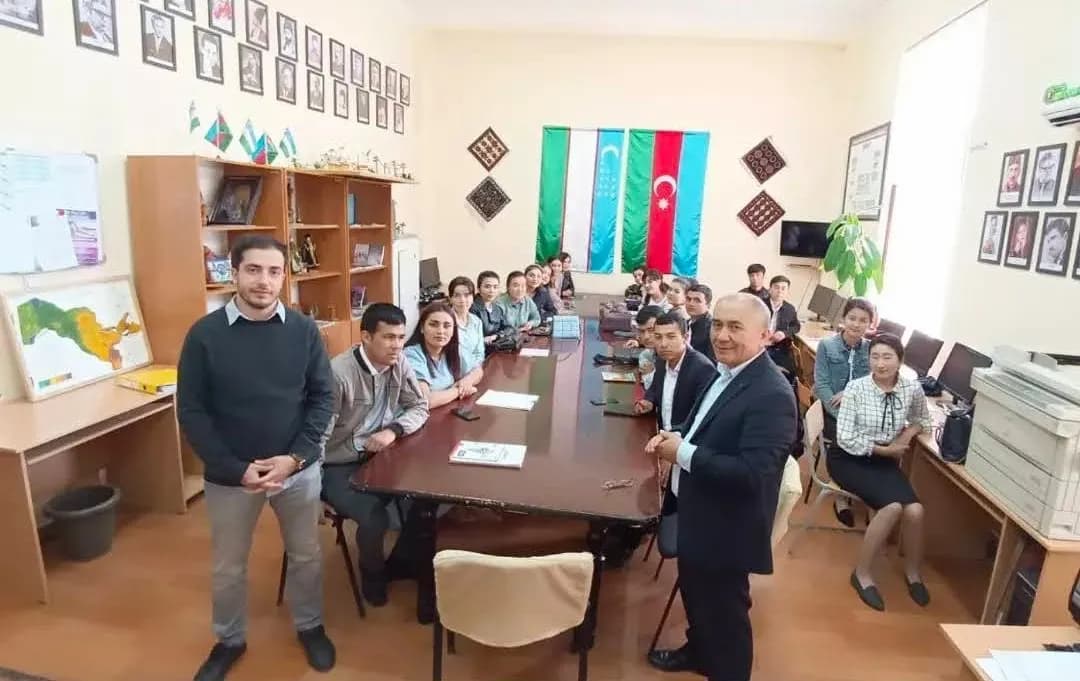
In the heart of Central Asia, where the ancient Silk Road once flourished and civilizations exchanged not only goods but knowledge and culture, stands Samarkand—a city that continues to echo with the intellectual legacy of centuries past. Among its greatest treasures is Samarkand State University, a higher education institution that traces its roots back to the Mirzo Ulughbek Madrasa, established on September 21, 1420. I had the unique opportunity to spend the academic year of 2022–2023 there as a visiting researcher, and what I experienced was not just a year of research and study, but a profound immersion into Uzbekistan’s academic, linguistic, and cultural landscape.
A Legacy Carved in Science and Wisdom
To understand Samarkand State University is to appreciate its deep historical significance. It is not merely a modern institution; it is the direct successor of the Mirzo Ulughbek Madrasa, where more than 600 years ago, scholars began teaching astronomy, mathematics, law, and philosophy alongside religious sciences. The legendary Ulughbek himself—a Timurid prince, astronomer, and mathematician—fostered a culture of empirical learning and open inquiry in an age where dogma often stifled science. As centuries passed, the institution evolved—becoming the Higher Pedagogical Institute in 1927, the Uzbekistan State University in 1933, and eventually Samarkand State University, proudly carrying the names of national icons such as Alisher Navoi and Sharof Rashidov. Even during the upheaval of World War II, the university remained resilient, briefly merging with Tashkent State University before reemerging in 1944 with renewed vigor. This profound sense of continuity—of preserving and renewing knowledge through generations—is what struck me most deeply when I arrived in Samarkand.
An Academic Home Away from Home
As a researcher focusing on international relations and regional studies, I arrived in Samarkand with a dual purpose: to improve my Uzbek language proficiency and to collect data for my thesis. What I found was more than access to archives or textbooks. The academic staff at Samarkand State University welcomed me as a colleague, not just as a guest. Professors, language instructors, and fellow researchers went out of their way to ensure I had everything I needed—from language mentoring to research assistance and even introductions to local contacts. The university’s commitment to supporting international scholars deserves special recognition. In an increasingly competitive and fragmented global academic landscape, Samarkand State University has positioned itself as a welcoming hub for those working on Central Asia, Turkic studies, or post-Soviet transformation. Its Faculty of Philology and International Department all work together to ensure that foreign scholars can both contribute and benefit during their stay.
On the other hand, during my time at Samarkand State University, I was not alone in my journey. I had the pleasure of meeting researchers and visiting scholars from all over the world—from Europe to East Asia, from the United States to the Middle East. The university has steadily grown into a hub of international academic exchange, hosting scholars working on a wide range of topics, from Islamic history and linguistics to sustainable development and Central Asian politics. This diverse academic environment fostered collaboration, dialogue, and the cross-pollination of ideas, enriching not only my own research but also creating an atmosphere of genuine intellectual curiosity and openness.
More Than a Campus: A Cultural Immersion
My experience in Samarkand was not limited to lecture halls and libraries. I lived in the city, traveled to nearby villages, and spent time with local families. I was invited to homes in the countryside, participated in traditional Uzbek weddings, and sat cross-legged at dastarkhans (low tables) piled with non, plov, and seasonal fruits. I saw first-hand how hospitality, respect for elders, and communal solidarity form the core of Uzbek life. These experiences provided more than anecdotal color—they fundamentally shaped my understanding of identity, tradition, and modernization in Uzbekistan. For any researcher hoping to grasp the nuances of contemporary Uzbek society, living among the people is as important as reading policy papers or academic texts. And Samarkand itself is the perfect setting for such exploration. Walking through Registan Square, visiting the Ulughbek Observatory, or simply watching university students debate ideas over tea, one senses that this city—and this university—are deeply committed to balancing tradition and progress.
An Institution on the Rise
While its historical roots are impressive, Samarkand State University is also making serious strides on the international academic stage. In the 2025 Times Higher Education (THE) Impact Rankings, the university placed within the 401–600 bracket globally. Its performance in key sustainable development goals is particularly commendable:
Clean Water and Sanitation: Ranked 71st
Life on Land: Ranked 87th
Zero Hunger: Ranked 101–200
Decent Work and Economic Growth: Ranked 301–400
Quality Education: Ranked 601+
These numbers reflect more than metrics; they show the university’s efforts to align itself with global development priorities and contribute to sustainable growth in the region.
Moreover, in the QS World University Rankings 2025, Samarkand State University made its debut in the 1001–1200 band. While it is still climbing the ladder, its individual indicators show strong promise:
Faculty–Student Ratio: Ranked 494
Academic Reputation: Ranked 534
International Faculty Ratio: Ranked 651
Employer Reputation: Ranked 701
These are promising signals for a university that was, until recently, more regionally focused. The growing international visibility is a testament to its leadership’s ambition and vision. Samarkand State University’s participation in THE and QS rankings indicates a strong desire to engage with the global academic community.
Why Samarkand Should Be on Every Researcher’s Map
For researchers in Central Asian studies, Turkic languages, post-Soviet transformation, or Islamic intellectual history, Samarkand State University should be high on your list. It offers a rich archive of local knowledge, engaged faculty, and direct access to communities you might never reach from a distance. But even beyond academics, it offers something rare: a chance to learn through human connection, through shared meals and field visits, through laughter and sincere conversations. My time at Samarkand State University was not just productive—it was transformative. It reshaped how I approach research, how I think about language, and how I understand the enduring power of education as a bridge between cultures. To those considering a visit, collaboration, or study at this remarkable institution: do not hesitate. Whether for a few months or a full academic year, your experience at Samarkand will stay with you for a lifetime.
Sources
Historical roots of the university, https://www.samdu.uz/en/pages/university_history, (23.07.2025).
Author’s personal observations during a one-year research stay at Samarkand State University (2022–2023).
Statistical data obtained directly from the International Relations Office of Samarkand State University, (2025).
Dolunay Yusuf Baltürk
Contributing writer at EUReflect.
Follow EUReflect
See more of our reporting on Google
Mark EUReflect as a preferred source and our stories are ranked higher for you in Top Stories, Discover and Google News — and carry a “preferred” badge when they are cited in AI results.
Add EUReflect as a preferred source