Sustainable Middle Corridor Roundtable
A high-level meeting in Brussels focused on the sustainability of the Middle Corridor, highlighting infrastructure, connectivity, and green logistics. The Trans-Caspian route is a key EU–Central Asia alternative, but capacity limits and border bottlenecks remain.
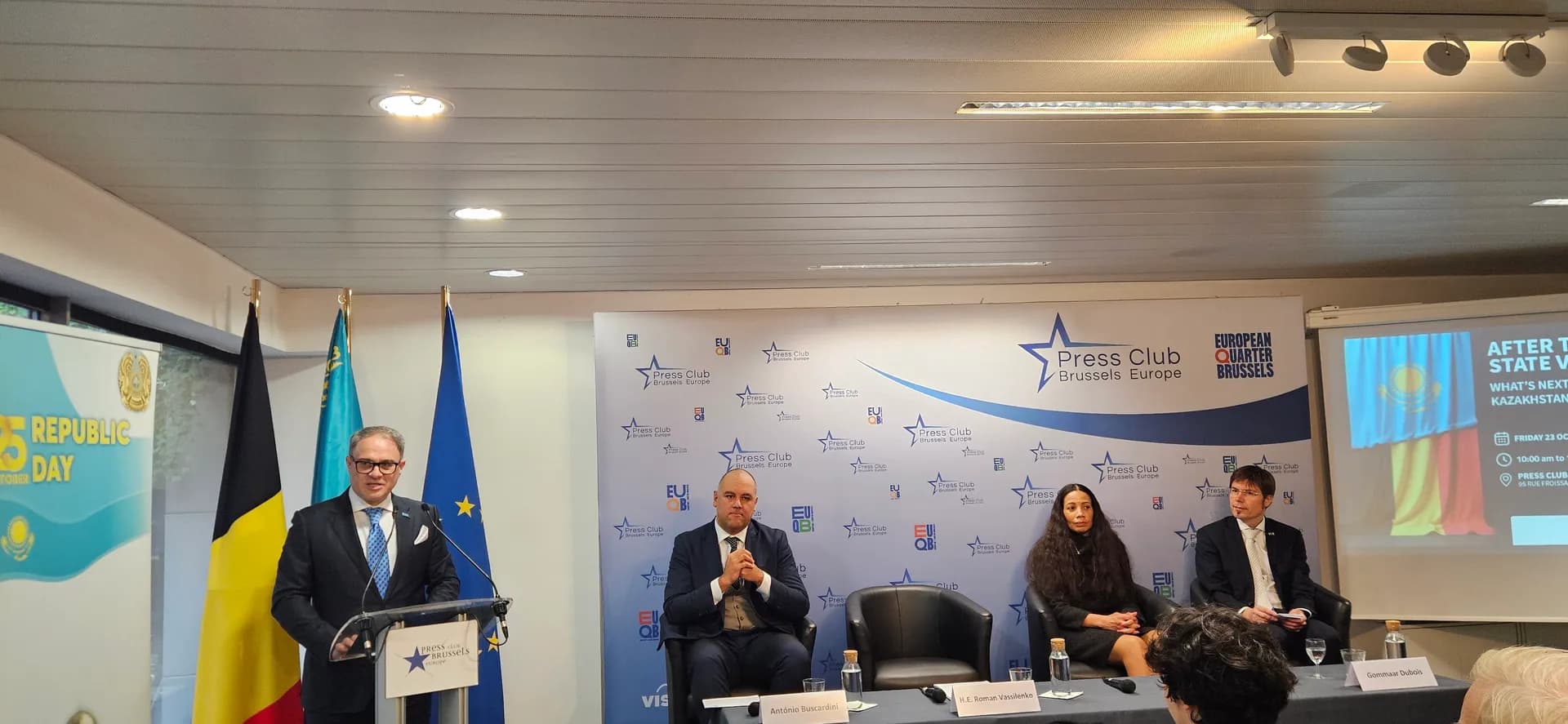
On the 26th of April was held a high-level roundtable about the Sustainability of theMiddleCorridor at the European Institute for Asian Studies in Brussels organized by Kazakhstan EU-Gateway in collaboration with FERRMED.
It opened with words from M. Roman Vassilenko, Head of mission of Kazakhstan to the European Union.Speakers from variousactorsof the European Institutions such asMs. Charlotte Adriaen, Head of Unit Central Asia & Afghanistan and logisticsenterpriseslikeMr. Joan Amoros, president ofFerrmedandMr. Marc Billiet fromInternational Road Transport Union.
The conversation highlighted the importance of the establishment of reliable infrastructure, especially in the domain of transport. Economicdevelopment would follow the development of connectivity between the countries across the two continentswith the construction ofrailwaysand ports and strengthening the capacity of already operable ones. Those instruments are also discussed to helpbridging peace through connectivity.
Alongside those lines, the questions of naturalresourcesare indeed understood,and efforts are made to achieve significantcarbon reduction and energy efficiency. In that regard, theemergence ofgreen logistics is a key point of the evolution of the traditional supply chain.
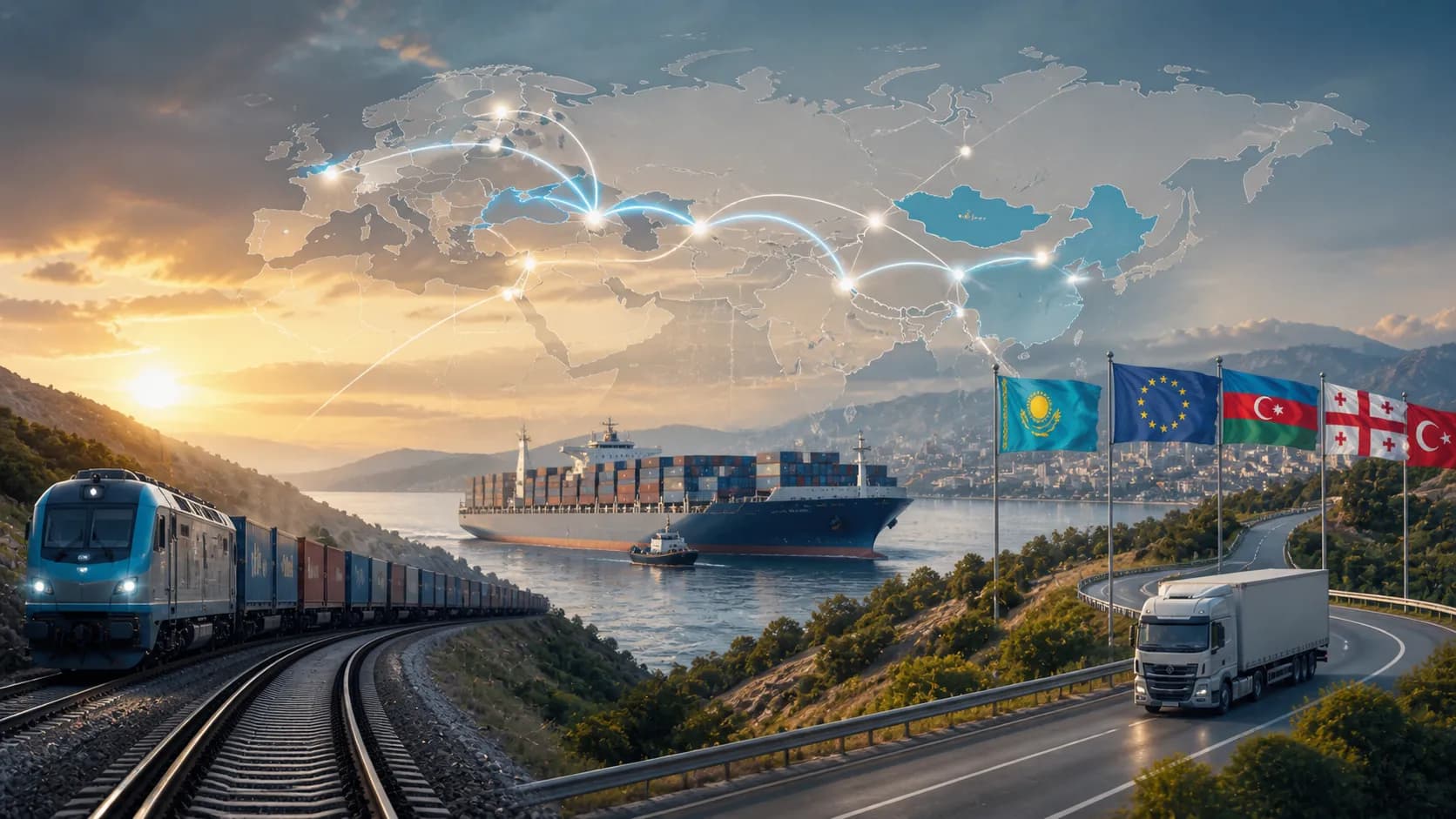
The Trans-Caspian International Transport Route links Kazakhstan to the European Union through a mix of rail and sea transport. Goods travel by train across Kazakhstan, cross the Caspian Sea by ship to Azerbaijan, continue by rail through Georgia and Turkey, and then enter Europe. It's an important alternative trade route that avoids Russia and is faster than traditional sea shipping, but it still faces bottlenecks—especially at the Caspian Sea and border crossings.
Faudel Taouli
Contributing writer at EUReflect.
Follow EUReflect
See more of our reporting on Google
Mark EUReflect as a preferred source and our stories are ranked higher for you in Top Stories, Discover and Google News — and carry a “preferred” badge when they are cited in AI results.
Add EUReflect as a preferred source