Tajikistan Delivers Humanitarian Aid to Iran Amid Escalating Crisis
March 25, 2026 As the humanitarian situation in Iran continues to deteriorate, Tajikistan has stepped in with a large-scale aid delivery, underscoring both regional solidarity and its growing role in international humanitarian efforts.
Humanitarian Convoy Dispatched
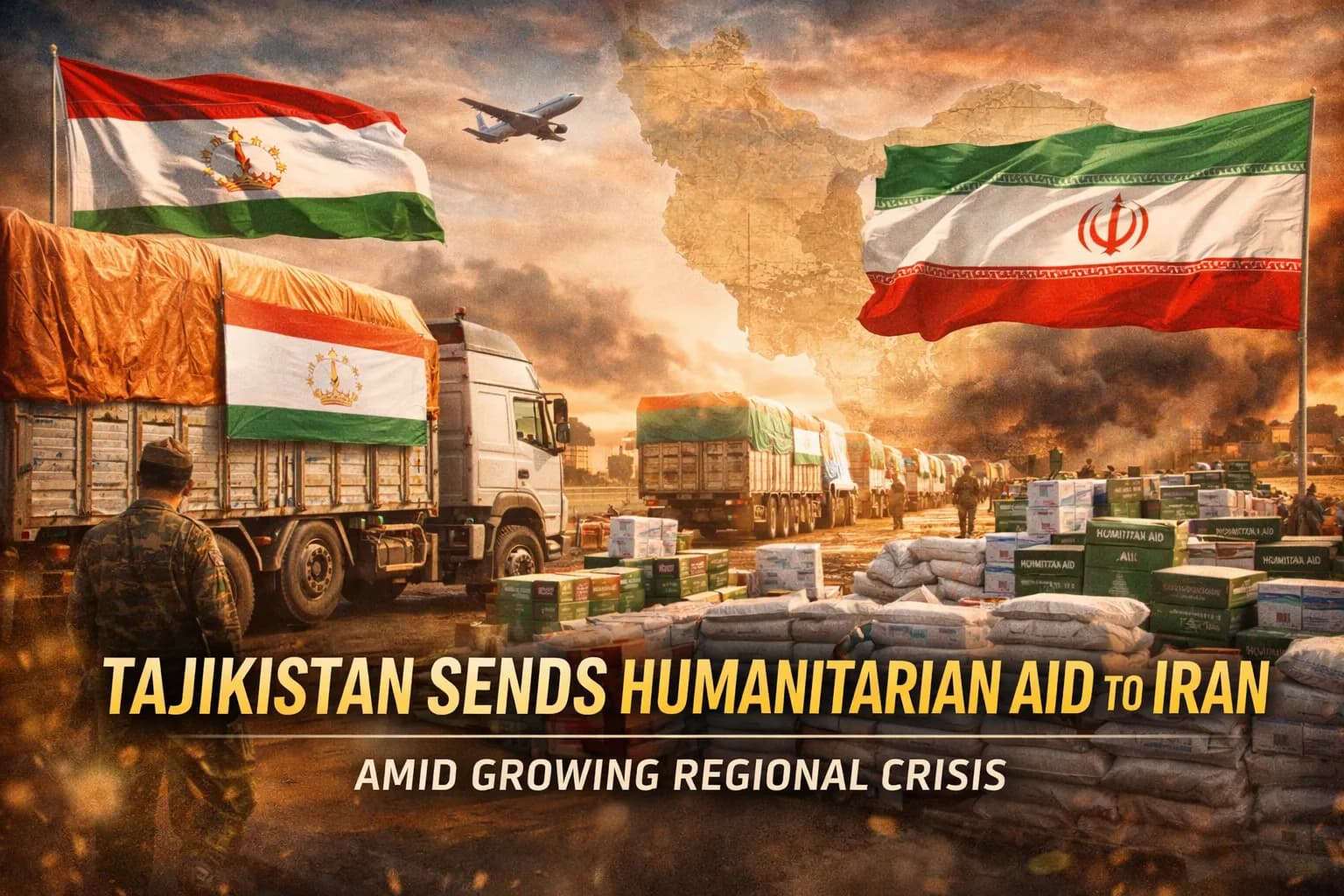
Tajikistan has sent substantial humanitarian assistance to Iran following the escalation of conflict in the region. Acting under the directive of Emomali Rahmon, the aid includes essential supplies intended to support civilians affected by ongoing hostilities.
The shipment is part of a broader regional response. Other Central Asian nations, including Turkmenistan and Uzbekistan, have also contributed assistance. Tajikistan’s effort stands out for its scale, with approximately 110 trucks transporting goods such as food, medicine, and basic necessities.
Additional reports indicate that the total volume of aid amounts to several thousand tonnes, including medical supplies, hygiene products, and construction materials designed to assist displaced communities.
Responding to a Deepening Crisis
The aid arrives at a time when Iran is facing a rapidly worsening humanitarian situation. International assessments suggest that millions of people have been internally displaced due to ongoing conflict, with many seeking safety in more stable regions of the country.
This situation has prompted neighboring and regional states to act quickly, providing emergency support to relieve pressure on local infrastructure and humanitarian systems. Tajikistan’s involvement reflects a coordinated regional effort to respond to the crisis and prevent further instability.
Strengthening Regional Cooperation
Beyond immediate relief, the aid delivery highlights the historically close relationship between Tajikistan and Iran. The two nations share linguistic, cultural, and historical ties, often described in official statements as “brotherly relations.”
Recent diplomatic engagement has reinforced these connections, with both countries expressing interest in expanding cooperation across economic, cultural, and social sectors. In this context, the aid shipment serves not only as humanitarian support but also as a reaffirmation of longstanding bilateral ties.
At a broader level, the coordinated response among Central Asian countries reflects a growing trend toward collective action during times of crisis. Analysts suggest this may signal a shift toward more structured regional diplomacy, particularly in addressing cross-border humanitarian challenges.
Logistical and Political Importance
The scale of Tajikistan’s aid operation demonstrates its logistical capacity and willingness to engage internationally, despite its own economic limitations. Coordinating and transporting such a large volume of supplies requires close collaboration between government agencies, transport networks, and international partners.
At the same time, the decision carries political significance. By assisting Iran during a period of conflict, Tajikistan positions itself as an active participant in regional affairs while maintaining a careful diplomatic balance.
This approach reflects a broader regional pattern, with Central Asian countries increasingly seeking to play a role in international issues without becoming directly involved in geopolitical conflicts.
Tajikistan’s Diplomatic Position
Tajikistan has maintained a cautious and measured stance regarding the conflict in Iran. Official statements from the Ministry of Foreign Affairs emphasize concern over escalating violence and call for peaceful resolution through dialogue and adherence to international law.
Rather than taking sides, the country has focused on humanitarian assistance and diplomatic neutrality, advocating for stability and de-escalation. This approach aligns with a broader strategy aimed at preserving regional security while avoiding direct political alignment in a complex geopolitical environment.
By combining practical aid with diplomatic restraint, Tajikistan demonstrates a balanced approach—supporting affected populations while safeguarding its strategic interests.
Conclusion
Tajikistan’s decision to send humanitarian aid to Iran goes beyond a logistical effort. It reflects the country’s increasing engagement in regional affairs, its commitment to humanitarian principles, and its careful navigation of a complex geopolitical landscape.
As the situation in Iran continues to evolve, Tajikistan’s response illustrates how smaller states can play a meaningful role in addressing global crises—offering both tangible support and a consistent call for peace and stability.
Dmytro Melnyk
Contributing writer at EUReflect.
Follow EUReflect
See more of our reporting on Google
Mark EUReflect as a preferred source and our stories are ranked higher for you in Top Stories, Discover and Google News — and carry a “preferred” badge when they are cited in AI results.
Add EUReflect as a preferred source