The Great Atlantic Fracture: Macron, Trump, and the Death of the "Bromance"
The once famous image of Emmanuel Macron and Donald Trump planting an oak tree on the White House lawn in 2017 has become a distant, ironic memory. As of April 2026, that tree of friendship hasn't just withered, it has been uprooted by a series of explosive personal insults and a fundamental divergence in global strategy. What began as a high-stakes partnership has devolved into a public spectacle of hostility, signaling a historic shift in the Western alliance.
The latest "beef" was ignited following a report of a private White House lunch where President Trump reportedly made remarks on the French President’s personal life. Trump allegedly joked that Macron was "still recovering" from a "punch to the jaw" from his wife, Brigitte, and mocked Macron's leadership style as weak.
The response from Paris was swift and uncharacteristically blunt. Speaking from a summit in Seoul, Macron dismissed the remarks as "neither elegant nor dignified," stating that such rhetoric was "unworthy of attention." He pivoted the conversation back to the "seriousness" required for global stability, implicitly labeling Trump’s approach as a theatrical distraction rather than genuine statesmanship. This exchange has effectively ended any pretense of a working personal relationship between the two.
The ideological core of the rift lies in the future of NATO. Frustrated by a lack of European support for his military campaigns in the Middle East, Trump recently branded the alliance a "paper tiger." In interviews in early April 2026, he suggested that U.S. withdrawal was "beyond reconsideration," claiming that the alliance has become a "one way street" where America provides protection without receiving loyalty in return.
Macron has emerged as the chief defender of the alliance, though not in the traditional sense. He has accused Trump of "hollowing out" NATO by creating "daily doubt" about the U.S. commitment. This has accelerated Macron's push for European Strategic Autonomy, a movement to make the EU militarily independent. The French President now argues that European Predictability must replace the volatility of a Washington that labels its own allies as "cowards."
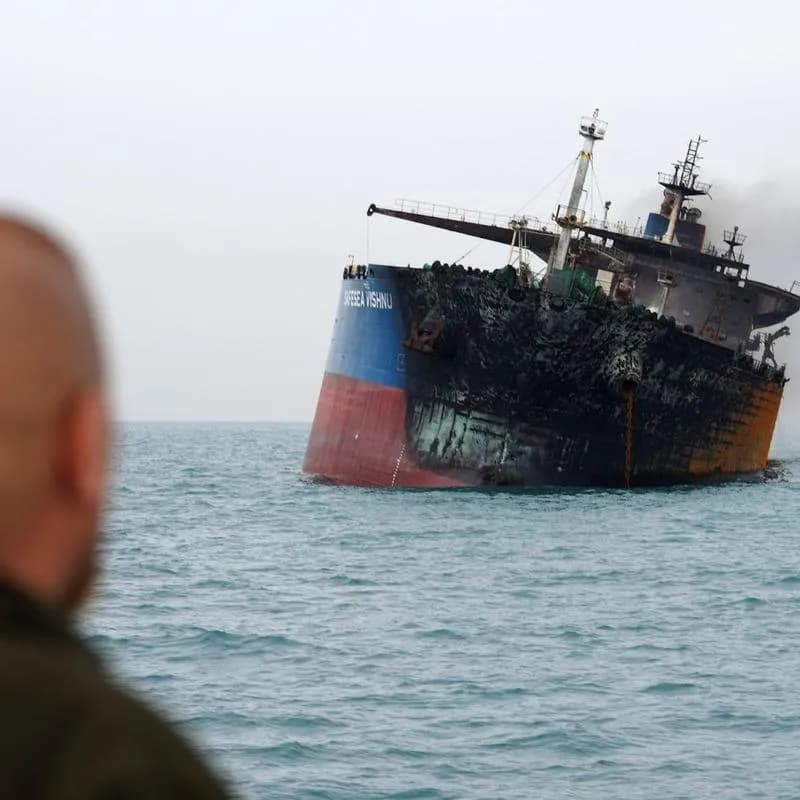
The tactical breaking point occurred over the 2026 Strait of Hormuz crisis. Following joint U.S.-Israeli strikes on Iran (Operation Epic Fury), the crucial shipping lane was effectively closed, rattling the global economy. Trump demanded that NATO allies send naval assets to "TAKE IT" (the Strait) by force, even suggesting that countries refusing to fight should "get their own oil." However, France, along with the U.K. and Spain, flatly refused to join the decapitation of Iran. Macron has condemned the military escalation as "unrealistic," instead championing a diplomatic ceasefire. In retaliation, Trump has reportedly considered closing U.S. airspace to French military flights, further isolating Paris.
The friction isn't limited to France. Trump’s second term has seen a return of his interest in Greenland, which he has framed as a vital U.S. national security asset. In January 2026, he intensified pressure on Denmark to cede the territory, even threatening a 25% tariff on Denmark, the U.K., and France for conducting military exercises there. The situation became so dire that reports emerged of Danish forces preparing "scorched earth" protocols to prevent an American landing, a staggering reality for two NATO allies. Moreover, Trump has also taken aim at the United Kingdom, mocking Prime Minister Keir Starmer’s navy as "too old" and questioning the U.K.'s relevance after Starmer restricted U.S. use of British airbases for strikes in Iran. In Asia, he has even targeted Taiwan, demanding that they pay for defense in exchange for American protection.
As we move toward the next G7 summit, the divide is no longer just about policy. It is about the very definition of an "ally." For Trump, an ally is a customer who pays for security and follows orders. For Macron, an ally is a partner in a shared value system. With Trump signaling that the U.S.A. won't be there to help you anymore. Whereas, Macron’s vision of a self-reliant Europe is no longer a theoretical debate, it is a race against time. The "bromance" didn't just end. It was replaced by a cold reality where the Atlantic is wider than it has been in eighty years.
Hashim Aslam Khan
Contributing writer at EUReflect.
Follow EUReflect
See more of our reporting on Google
Mark EUReflect as a preferred source and our stories are ranked higher for you in Top Stories, Discover and Google News — and carry a “preferred” badge when they are cited in AI results.
Add EUReflect as a preferred source