The Middle East War That Has No Winner
U.S. and Israeli attacks on Iran are pushing the Middle East toward disaster. Iran resists fiercely, leaving no clear winner. Gulf states suffer, and economic and humanitarian crises grow. Religion, nationalism, and geopolitical conflicts make peace nearly impossible.
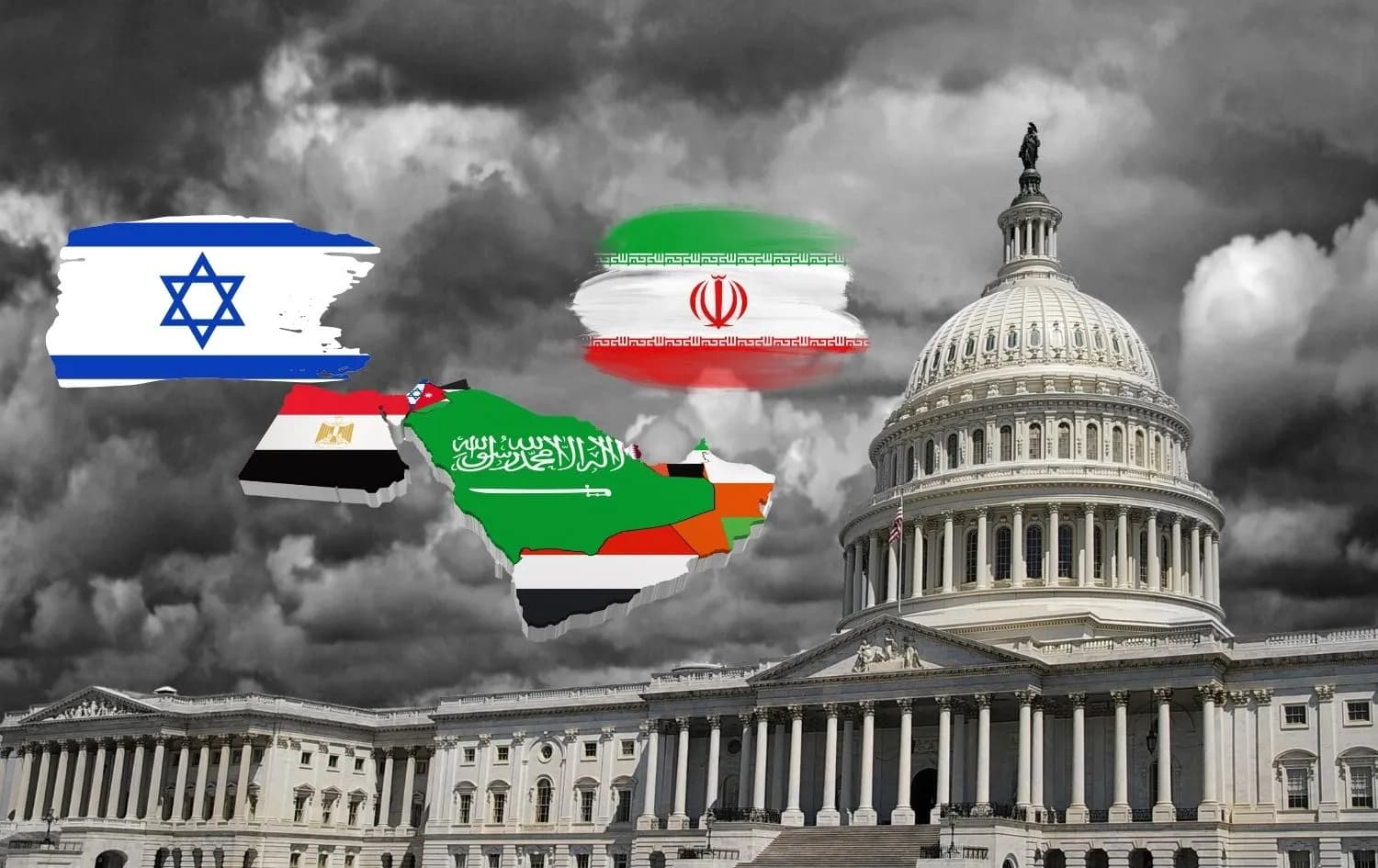
The Middle East is on fire. American and Israeli bombs are falling on Iran. Iranian missiles are targeting American bases in the Gulf. Every day, more people die. Every day, the world moves closer to a disaster that no one seems able to stop.But here is the truth that politicians in Washington and Tel Aviv will not tell you: no one is going to win this war.Let me explain why. This war did not start suddenly. It has been building for decades.
Believe it or not, there was a time when Iran and Israel were friends. Under the Shah of Iran, before 1979, they cooperated on trade and even military matters. Both were worried about their Arab neighbors. Then came the Islamic Revolution of 1979. Ayatollah Khomeini took power and turned Iran into an enemy of both America and Israel. He called America the "Great Satan" and Israel the "Little Satan." From that moment on, the two countries have been locked in a hidden war.
For forty years, it was a shadow war. Iran supported groups like Hezbollah in Lebanon and Hamas in Gaza to attack Israel. Israel, in turn, assassinated Iranian nuclear scientists and launched cyber attacks on Iranian facilities. Both sides knew the rules: fight secretly, never admit anything. Those rules are now gone. On February 28, 2026, American and Israeli forces launched open, direct attacks on Iran. The shadow war is over. The real war has begun. Many people remember the 2003 invasion of Iraq. Saddam's army collapsed in weeks. But anyone expecting the same in Iran is making a terrible mistake.
Iran is not Iraq. First, Iran is huge. It is three and a half times larger than Iraq. You cannot conquer such a vast country quickly.
Second, Iran is mountainous. The Zagros mountains run along its western border like a giant wall. The Romans could not cross them. Saddam Hussein's army was destroyed trying to fight through them in the 1980s. Modern American tanks would also struggle in those narrow mountain passes.
Third, Iran has built its important military facilities deep underground. Some are buried 500 meters inside mountains. American bombs cannot reach them. Fourth, Iran has 90 million people. They are proud and nationalistic. The 1979 revolution taught them to resist foreign powers. When their leader Ayatollah Khamenei was killed in the first strikes, it did not break their spirit. It united them.
Former Pakistani foreign secretary Aizaz Ahmad Chaudhry put it well: "The people of Iran are too proud and nationalistic to surrender." He also pointed out that in Shia Islam, martyrdom is honoured in ways that Westerners do not fully understand. Killing their leaders only makes them more determined.
The honest answer is: no one. Iran will consider itself victorious if it simply survives. For Tehran, this is an existential war. If the government holds on despite the bombing, they will claim victory.
America has the most powerful military on earth. It will not lose the war in a military sense. But it may not win either. Why? Because America has no clear goals. Is it trying to topple the government? Destroy nuclear facilities? Force surrender? Without clear objectives, there is no clear endpoint. And the American people have little appetite for another long war in the Middle East.
Israel sees Iran as the last obstacle to its dream of "Greater Israel" a Jewish state dominating the region from the Euphrates to the Nile. If Iran survives this war, that dream dies.
The Gulf states Saudi Arabia, UAE, Qatar, Kuwait are the real losers. They did not want this war. They tried to stay neutral. But Iranian missiles have hit their cities, damaged their desalination plants, and scared away investors. They are now trapped between their American ally and their Iranian neighbour. And they are learning a hard lesson: hosting American bases made them targets, not protectors.
Experts see a few possible futures. The most likely is a long war of exhaustion. Iran will keep firing cheap drones. America and Israel will keep firing expensive missiles to stop them. Both sides will bleed slowly. No one will surrender. No one will win.
The nightmare scenario is a full regional war. If Iran closes the Strait of Hormuz, through which 20% of the world's oil passes , the global economy will crash. Oil could hit $150 per barrel. Food prices would skyrocket. Poor countries would suffer terribly.
Another possibility is that President Trump declares victory and leaves. He has already said the war will end "soon" because there is "practically nothing left to target." This would anger Israel, which wants to keep fighting. It would leave the conflict unresolved. But it might be the only way to stop the killing.
We cannot understand this war without understanding religion. In Iran, the leadership draws inspiration from the story of Imam Hussain, the Prophet's grandson who was martyred in 680 CE. He stood against a tyrant with only 72 followers and was killed. In Shia Islam, standing against injustice even unto death is the highest virtue. This is why Iranians do not fear martyrdom.
In Israel, religious Zionists believe that God gave them this land. The 1967 victory, when they captured East Jerusalem, is seen as divine intervention. Some believe rebuilding the Temple in Jerusalem is a religious duty even though it would mean destroying the Al-Aqsa Mosque.
In America, many evangelical Christians support Israel because they believe it will bring the Second Coming of Jesus. Twenty percent of American voters hold these beliefs. They push their politicians to support Israel no matter what.
When leaders believe God is on their side, peace becomes very difficult. When this war ends and it will end , the Middle East will be a completely different place. American credibility will be shattered. Gulf states will rethink their alliances. Iran will be wounded but proud. Israel will have weakened its enemy but lost its dream of regional acceptance.
And ordinary people will ask: was any of this worth it?
The mothers who lost children. The fathers who could not protect their families. The young people who will spend years rebuilding what bombs destroyed in second. No victory parades. No celebrations. Just exhaustion, bitterness, and the slow work of picking up the pieces.That is the only certainty in this war: no one wins. Everyone loses. And the Middle East will never be the same.
Uroosa Khan
Contributing writer at EUReflect.
Follow EUReflect
See more of our reporting on Google
Mark EUReflect as a preferred source and our stories are ranked higher for you in Top Stories, Discover and Google News — and carry a “preferred” badge when they are cited in AI results.
Add EUReflect as a preferred source