The Opening Ceremony of the Akhal-Teke World Championship
An international conference in the Netherlands brought together diplomats, scientists and equestrian experts to open the 2026 Akhal-Teke World Championship.
Overview
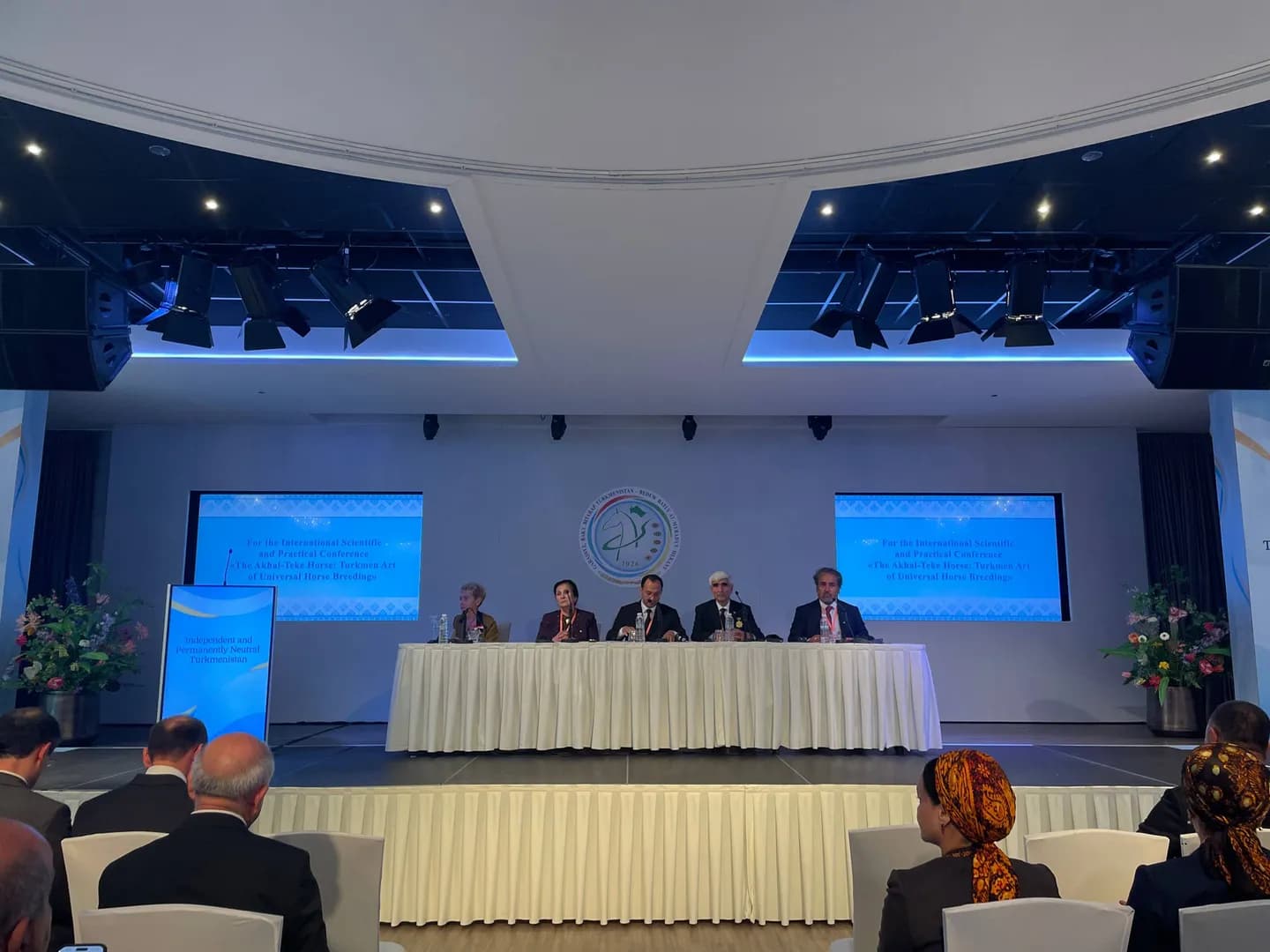
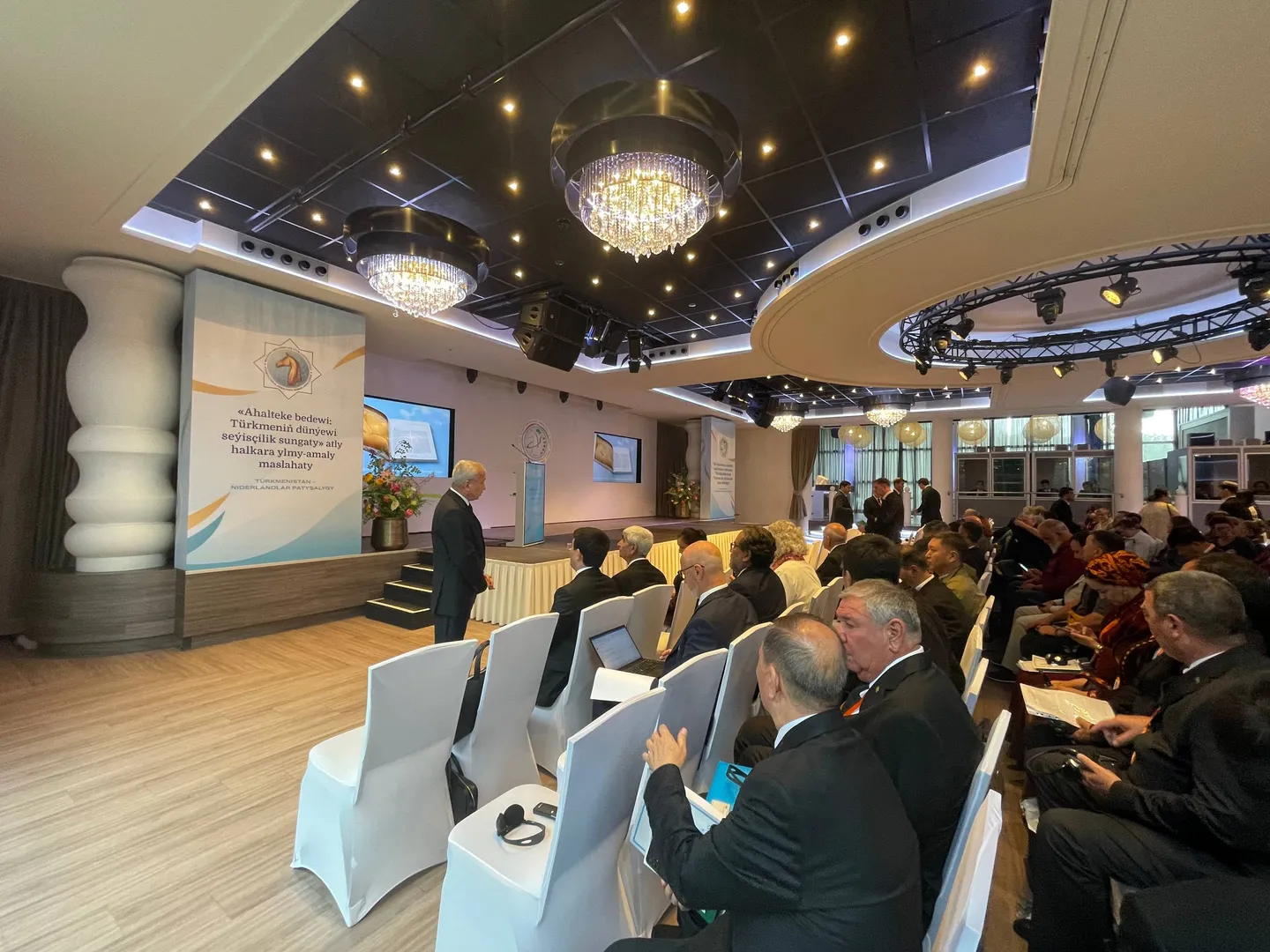
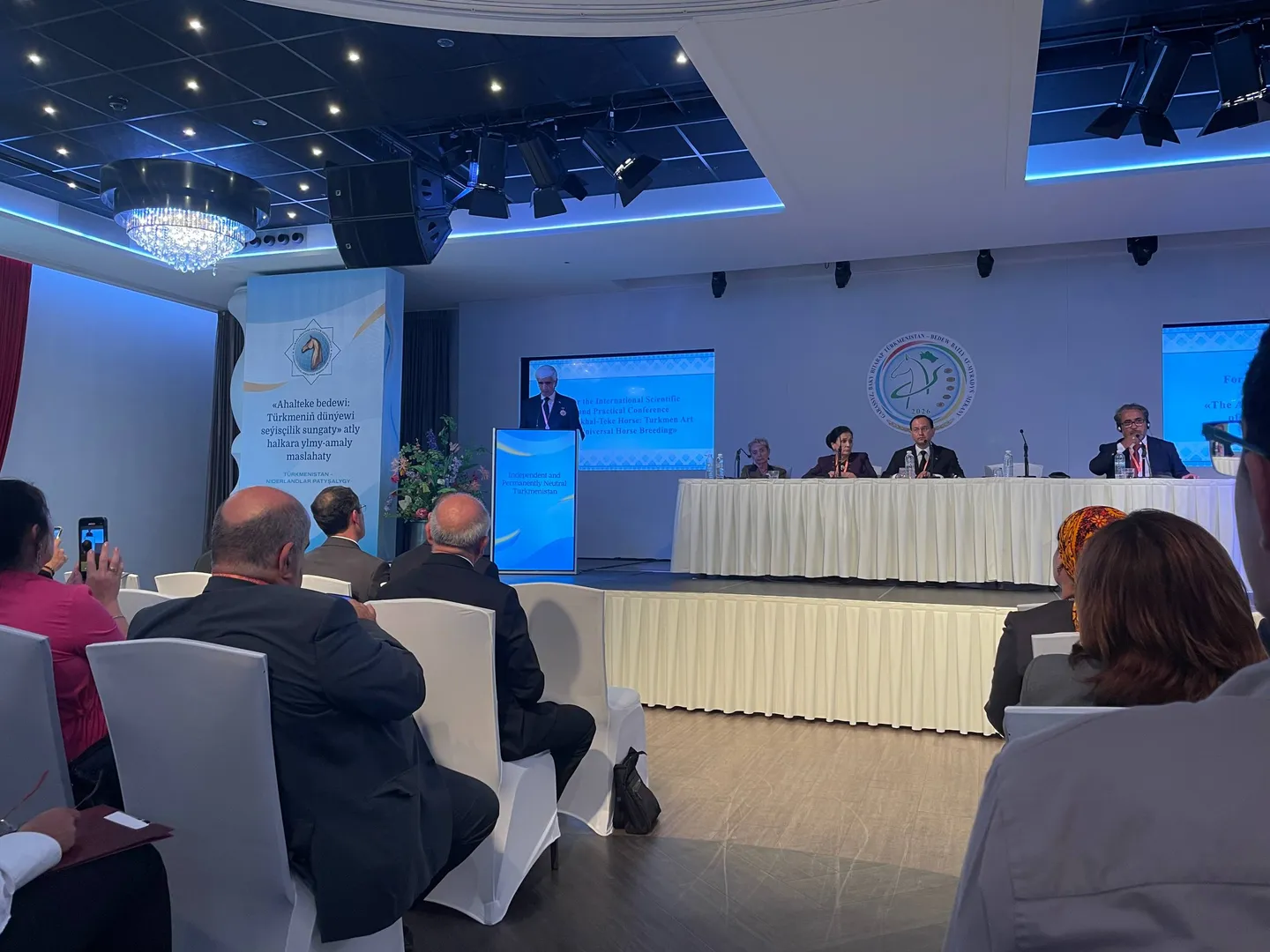
On Friday, 4 September, the conference hall of the Asteria Hotel in Venray, in the Kingdom of the Netherlands, hosted the International Scientific and Practical Conference "Akhal-Teke Horse: The Turkmen Art of World-Class Horse Breeding." The event opened the wider World Beauty Championship among Heavenly Akhal-Teke horses, held at the Peelbergen Equestrian Centre in Kronenberg, and gathered a large delegation from Turkmenistan together with diplomats, ambassadors, media and equestrian experts from across Europe and beyond.
The Akhal-Teke is one of the oldest horse breeds in the world, developed over thousands of years on the territory of modern Turkmenistan. It is known for its slender build, its endurance in extreme desert conditions and its distinctive metallic, almost golden coat. For Turkmenistan the breed is far more than an animal. It is a national symbol, and in 2023 UNESCO inscribed the art of Akhal-Teke horse breeding and the traditions of horse decoration on the Representative List of the Intangible Cultural Heritage of Humanity, recognising the customs, craftsmanship and knowledge built up around the horse over generations.
The conference was structured in two parts. It began with opening remarks and a plenary session of speeches from international experts, and continued, after a short break, with five thematic breakout sections held in parallel. The programme reflected the ambition of the event, which was to examine the Akhal-Teke not from a single angle but through history, art, science, sport and cultural diplomacy.
Opening Words
Ambassador Sapar Palvanov welcomed guests and introduced the presentation of the Dutch edition of the book by the National Leader of the Turkmen people, Gurbanguly Berdimuhamedov, "The Horse as a Symbol of Faithfulness and Happiness." In his remarks, the Ambassador stressed that the book is not only about horses but about the deeper relationship between people and animals, and about faithfulness understood as loyalty to one's roots, memory and culture. He argued that translating such a work into Dutch turns national heritage into a space for dialogue, allowing readers in another country to compare their own experience with that of the Turkmen people.
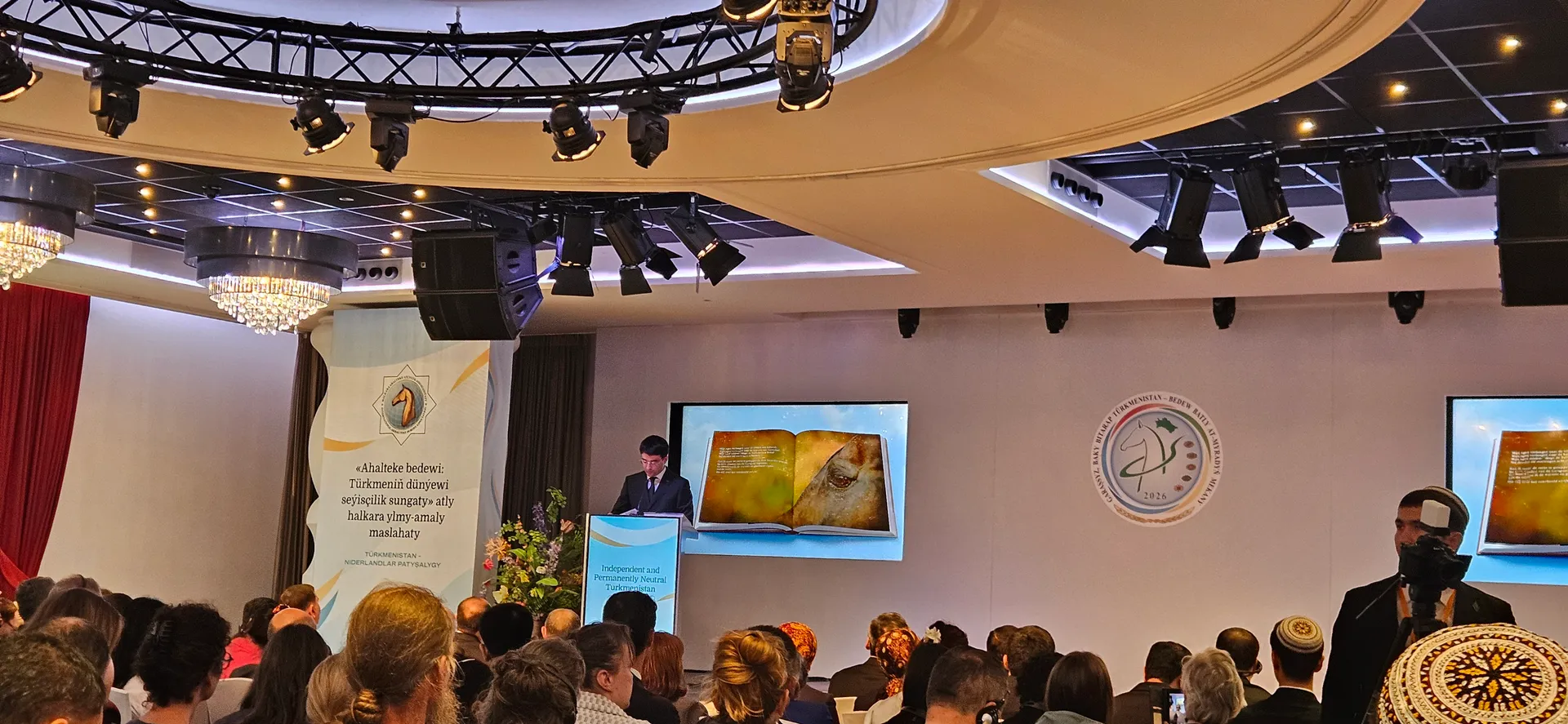
The Ambassador also placed the event in a long historical frame. He recalled that what Europeans call the Great Silk Road was known to the ancestors of the Turkmen people as the Golden Road, and was described by early historians as a route of equestrian culture. Along those roads, he noted, not only goods travelled but also ideas, knowledge, traditions and horses. He presented the gathering in the Netherlands as a modern continuation of that ancient story, in which one of the new roads between peoples has become a book.
António Buscardini, President of the Press Club Brussels Europe and Founder and Editor-in-Chief of Travel Tomorrow, a media partner of the event, chose to look at the subject through the lens of heritage, travel and cultural dialogue. He picked up the same image of the Silk Road as a route of equestrian culture, noting that long before tourism existed in its modern form, horses carried not only people but ideas, languages, traditions and craftsmanship. "Horses did not simply connect places. They helped connect cultures," he said. He argued that the Akhal-Teke should be understood as much more than an exceptional breed, describing it as part of a broader cultural heritage tied to craftsmanship, knowledge and the relationship between people and horses.
The Book Behind the Presentation
A central element of the opening was the presentation of the Dutch edition of "The Horse as a Symbol of Faithfulness and Happiness," written by Gurbanguly Berdimuhamedov, National Leader of the Turkmen people and Chairman of the Halk Maslahaty of Turkmenistan, known in his country by the title "Arkadag", meaning Protector. Copies were made available to guests, who could take the book with them at the end of the conference. The Dutch edition carries on its cover a photograph of an Akhal-Teke stallion in full ceremonial decoration, its golden coat matched by an ornamented collar and breastplate set with green stones, an image that captures both the breed itself and the craft traditions that surround it.
The book belongs to a series of works the author has devoted to the Akhal-Teke, alongside earlier titles such as "Akhal-Teke Horse, Our Pride and Glory" and "The Flight of Celestial Race Horses." It traces the evolution of the breed and its role in world history, and examines the place of the horse in Turkmen literature, folklore, painting, sculpture and carpet weaving. Rather than treating the Akhal-Teke as a subject of breeding alone, it presents the animal as a thread running through the culture that raised it.
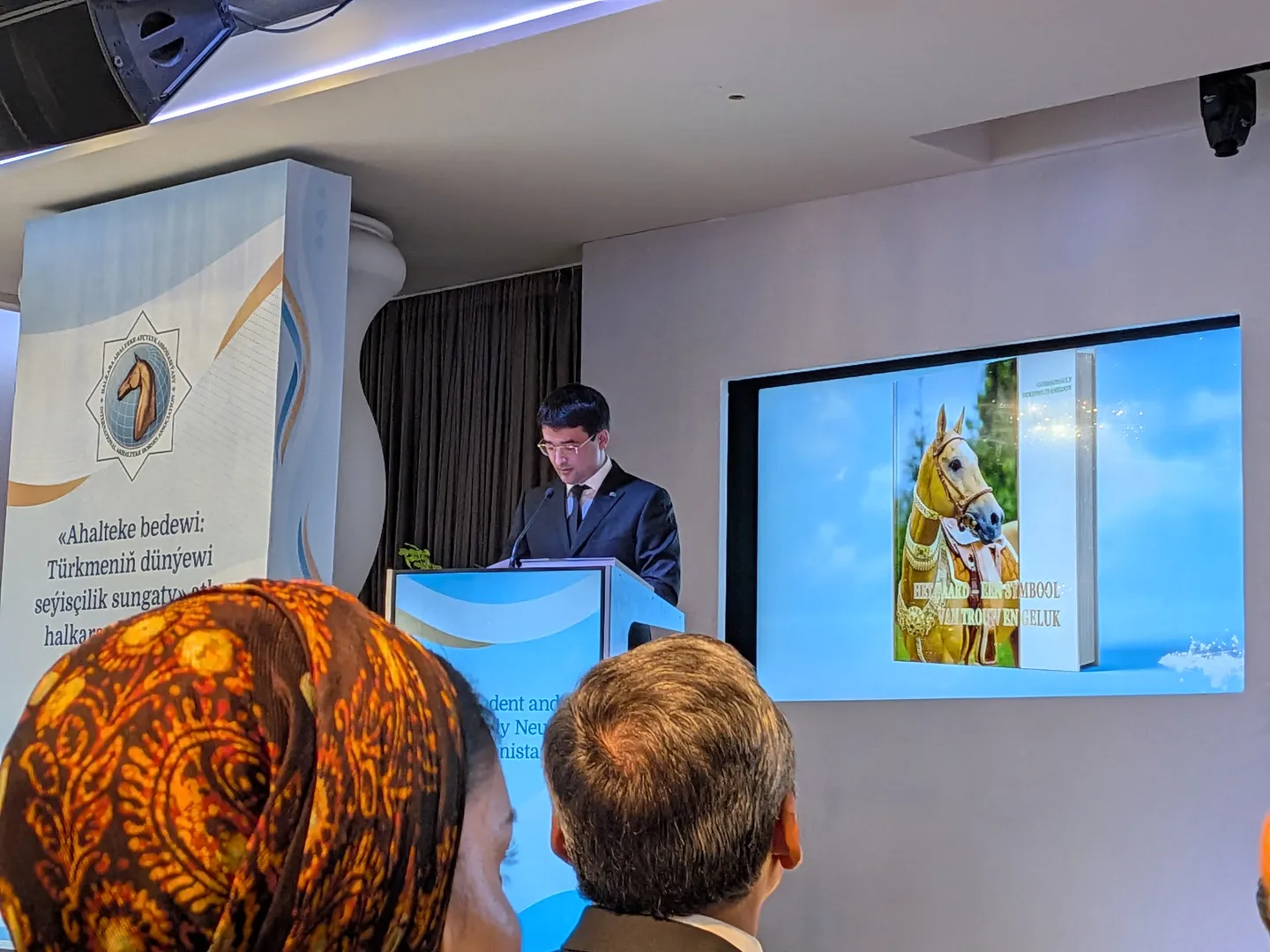
Ambassador Palvanov used the presentation to explain why such works are translated at all. Translation, he argued, turns national heritage into a space for dialogue, because a book that exists in only one language belongs first of all to the environment that produced it. He cited a passage in which the author writes that world culture is the result of the shared experience of humanity, while national experience forms part of that wider whole. The Ambassador said the aim was for a Dutch horse breeder, trainer, veterinarian or simply a horse lover to open the book and recognise something familiar. "Because love for a horse does not require translation," he said, adding that the culture which has grown around that love does deserve to be translated. The Dutch edition has now joined versions of the work already published in several other languages.
The Plenary Session
The plenary session included a presentation on the artistic dimension of the breed by Antonio Jariola, head of the Italian cultural and show company Proeventi, a theatre director specialising in equestrian and circus performances and artistic director of Fieracavalli in Verona. Speaking from his background in dramaturgy and staging, he examined why the Akhal-Teke so often appears almost unreal when it enters a performance space. He linked this to the horse's silhouette, its long neck, fine head and light body. "The Akhal-Teke possesses a fundamental characteristic in the world of art: the ability to transform the body into image and movement into emotion," he said. He described the breed's gliding gait, developed to avoid sinking into desert sand, as producing a quality of lightness that makes the horse appear to float on stage, closer to a contemporary dancer than to a conventional show animal.
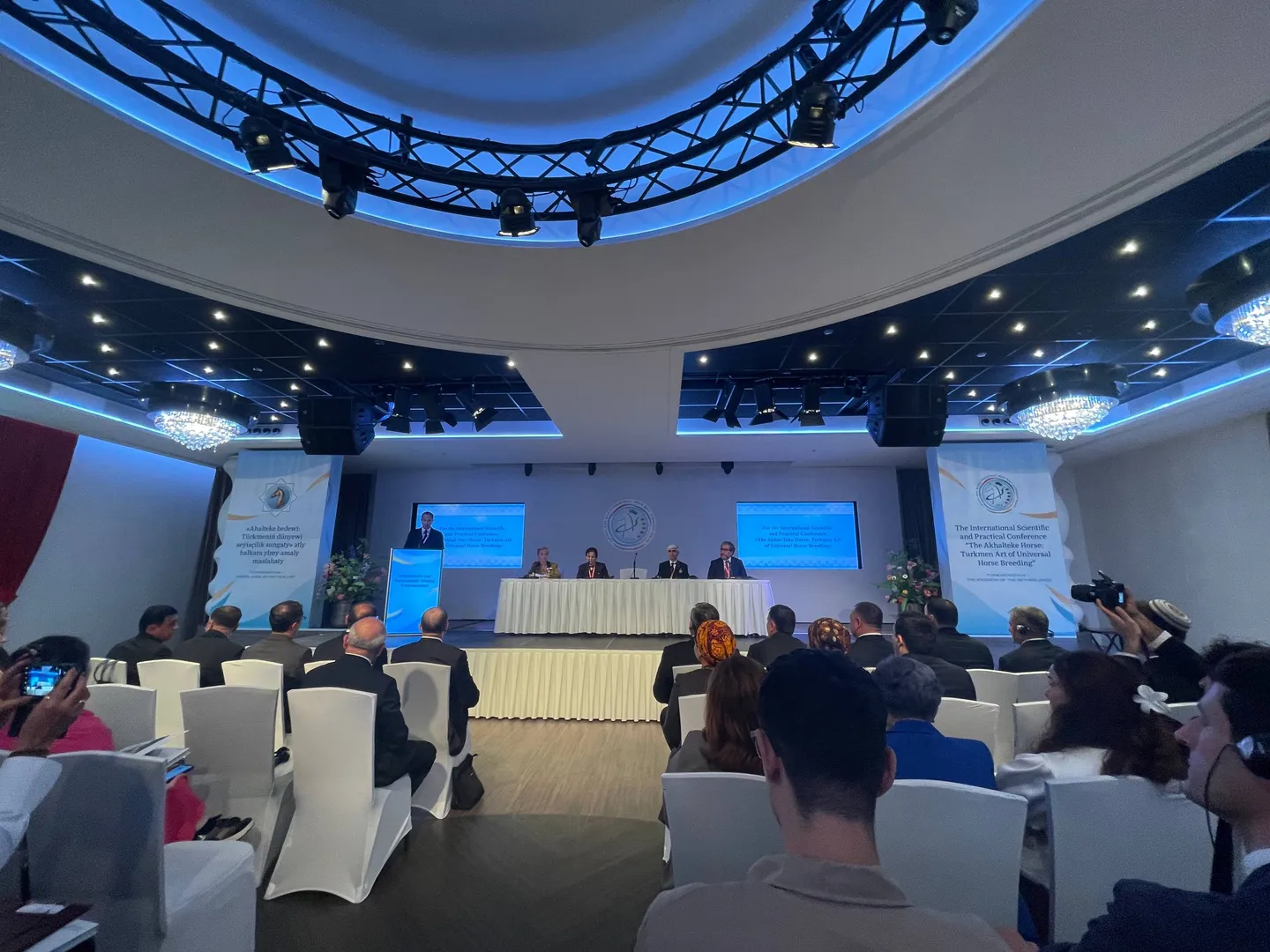
Neda Berger, head of the Austrian-Turkmen Association, spoke about the wider cultural and humanitarian meaning of the championship. She described the Akhal-Teke as a unique heritage and pride of Turkmenistan, a horse that has preserved its original form across the centuries, and underlined its role in sport, in beauty contests and in cultural diplomacy. "The Turkmen Akhal-Teke can rightly be called an ambassador of peace, a symbol of friendship and goodwill," she said. She welcomed the 2023 UNESCO recognition of the breed and congratulated not only Turkmenistan but lovers of equestrian art around the world, presenting the horse as a bridge between countries.
A more personal note came from Alexandre Gro, national technical expert of the French Equestrian Federation, who recounted his experience training and presenting an Akhal-Teke stallion in France. He described a horse of exceptional sensitivity and a striking golden coat, presented in the setting of the Republican Guard's riding hall and covered widely in the French press at the time. His account focused on patience, balance and mutual trust in training, and on the breed's suitability for the Olympic disciplines of dressage, show jumping and eventing. "The Akhal-Teke is the living witness of a thousand-year history and a constant ambassador of equestrian nobility," he said.
Science, Sport and Stewardship
The scientific perspective was represented by Julio Bendezu-Sarmiento, senior researcher at the French National Centre for Scientific Research and the National Museum of Natural History, and co-director of a Turkmen-French archaeological mission that has worked in Turkmenistan for more than three decades. He placed the horse at the centre of human history. "The riding horse was the world's first means of rapid travel," he said, comparing its historical role to that of the train or the aeroplane today, and locating the early domestication of the horse for riding in Central Asia.
Jean-Philippe Camboulives, Director of the FEI Solidarity Department, spoke on behalf of the international governing body of equestrian sport. He praised the state policy carried out in Turkmenistan to preserve the purity of the breed and its ancient genetic heritage, and highlighted the partnership between the FEI and the Turkmen national federation. He singled out endurance riding, the second FEI discipline after show jumping, as a field particularly suited to the breed, and described the new international horse-breeding academy as one of the most important recent achievements for the development of equestrian sport in the country.
Patricia Johnson, President of the Akhal-Teke Horse Foundation of the United States, presented conservation work carried out in North America. She thanked the people of Turkmenistan for safeguarding the breed over more than four thousand years and stressed that her work does not propose a new direction for the Akhal-Teke, but applies contemporary conservation science in support of established Turkmen breeding traditions. She reported that a first comprehensive North American census had identified more than four hundred purebred Akhal-Teke horses, of thirteen imported sire lines, three of which no longer have a living stallion. "Once it is gone, we are never going to get it back," she said. The plenary also heard from Saragt Babayev, People's Artist and Hero of Turkmenistan and senior lecturer at the State Academy of Arts of Turkmenistan, who spoke about the image of the Akhal-Teke in Turkmen painting, sculpture and national monuments, and about how the beauty of the breed has been recorded in the country's artistic tradition.
The Breakout Sections
After a short break, the conference continued in five parallel sections, each held in a differently named conference hall of the Asteria Hotel and led by a specialist moderator. Section I examined the history and development of the Akhal-Teke horse, while Section II focused on the significance of the 2023 UNESCO inscription of the breeding art and horse-decoration traditions. Section III was devoted to the Akhal-Teke in fine and applied arts, Section IV to breeding and veterinary science and the genetic foundations for preserving the purity of the breed, and Section V to the influence of the Akhal-Teke on world equestrian culture, history and horse breeding.
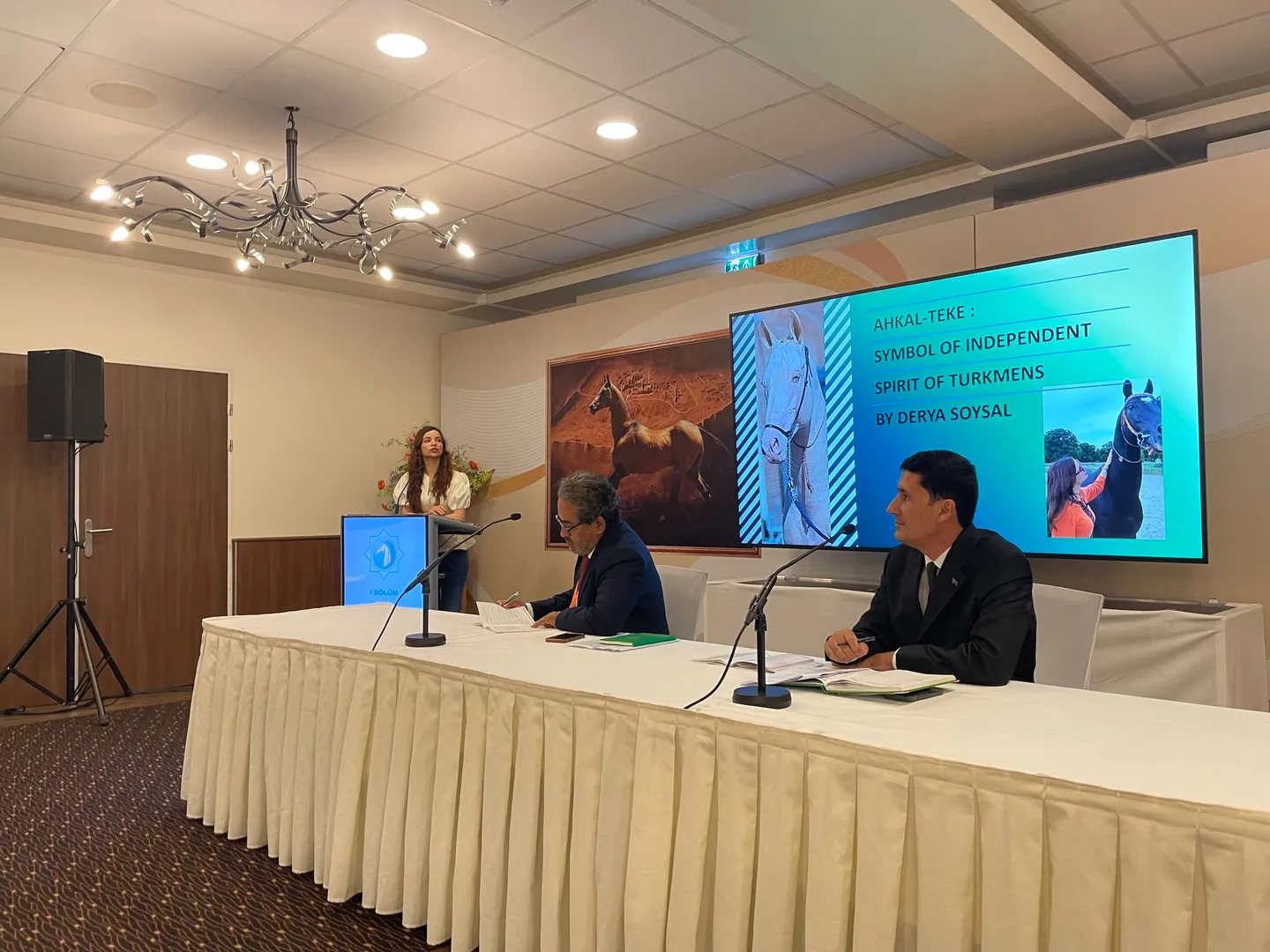
Together the sections allowed specialists to move from broad cultural themes into the detailed scientific and practical questions that will shape the future of the breed. The format gave breeders, veterinarians, artists and researchers space to work through their own fields in depth, rather than remaining at the level of general presentations.
Following programme of the next days
The programme continues on Saturday, 5 September, with the main championship day at the Peelbergen Equestrian Centre. It includes the open conference of the International Akhal-Teke Horse Breeding Association, a visit to the exhibition dedicated to Turkmen equestrian art and culture, the beauty contest for adult horses, the selection of the World Champion among the winners of the age categories, the "Best Decorated Horse" competition, a show jumping competition, an award ceremony for the winners of the creative and sporting competitions, and a gala dinner with performances by masters of Turkmen culture and arts.
On Sunday, 6 September, the championship closes with cultural performances at the Peelbergen Equestrian Centre and the closing of the exhibition.
Related Topics
Dmytro Melnyk
Contributing writer at EUReflect.
Follow EUReflect
See more of our reporting on Google
Mark EUReflect as a preferred source and our stories are ranked higher for you in Top Stories, Discover and Google News — and carry a “preferred” badge when they are cited in AI results.
Add EUReflect as a preferred source