“The United States and China agree to open a military-to-military communication channel aimed at resolving any emerging issues.”
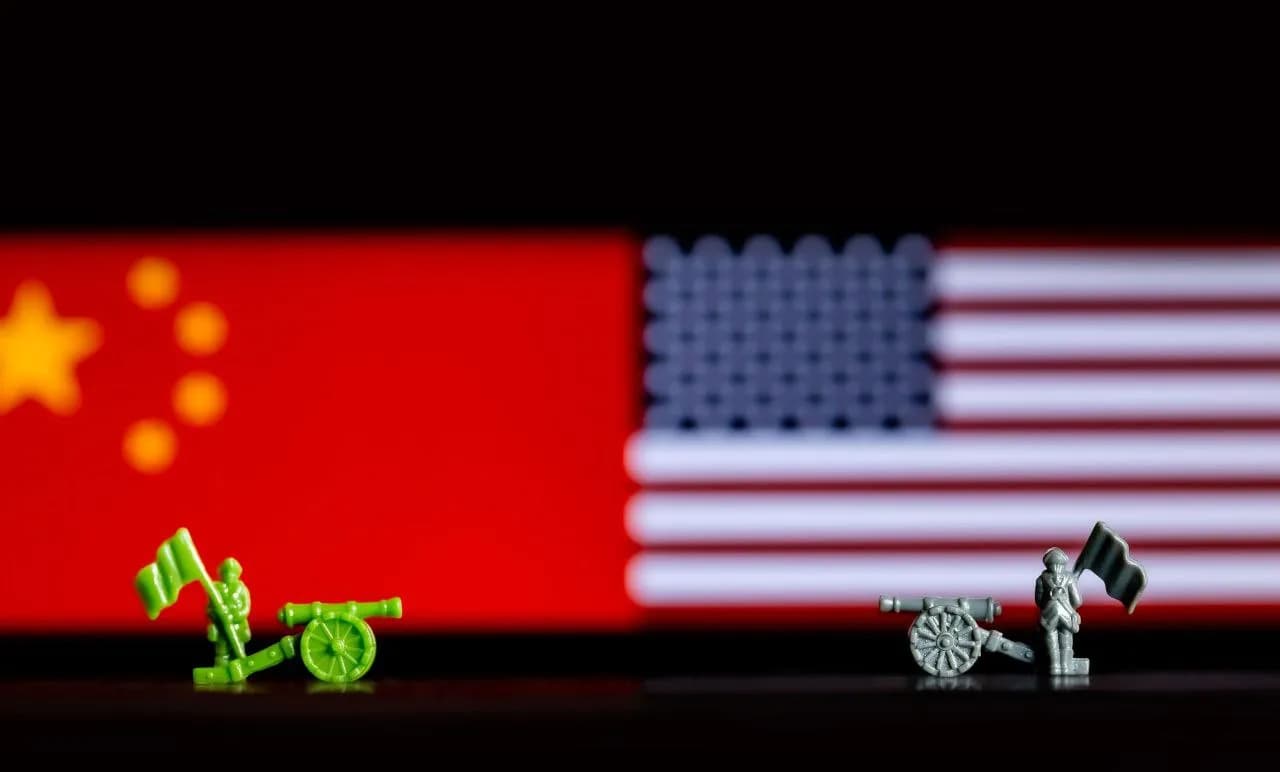
In early November 2025, Pete Hegseth, the U.S. Secretary of War, announced that the United States and People’s Republic of China (PRC) have reached an agreement to establish dedicated military-to-military lines of communication.
The announcement followed meetings between Hegseth and his Chinese counterpart, Dong Jun, on the margins of the Association of Southeast Asian Nations (ASEAN) Defence Ministers Meeting Plus in Kuala Lumpur, Malaysia.
According to Hegseth, both sides agreed that “peace, stability and good relations are the best path for our two great and strong countries.” He added that the new channels would serve to “de-conflict and de-escalate any problems that arise.” This move comes after a period of strained military communications between Washington and Beijing. Several direct military channels were suspended by China in August 2022, following former Speaker Nancy Pelosi’s visit to Taiwan, which angered Beijing.
In short, the event marks a revival of dialogue between the U.S. and Chinese militaries, targeting direct channels to manage risks of mis-calculation. It is an important diplomatic step, though actual implementation and sustained use will determine its long-term impact. From a global perspective, the recent U.S.–China agreement to re-establish military communication channels represents a cautiously optimistic shift in great-power relations at a time of growing geopolitical fragmentation. In an era defined by multipolar competition — from the Russia–Ukraine war to instability in the Middle East — the U.S.–China relationship remains the central axis upon which global security risks pivot. Their agreement to institutionalize crisis communication mechanisms is therefore not simply regional diplomacy, but a development with worldwide implications.
Direct military channels are designed to prevent unintended escalations — especially in high-risk zones like the South China Sea — yet their value extends further. They help anchor a minimum level of predictability between the world’s two largest military powers, reducing the likelihood that accidents or misunderstandings trigger global crises, affect markets, or compel the involvement of third parties. The move is also symbolically important: it suggests that even amid strategic rivalry, both Washington and Beijing recognise the need for guardrails.
However, the global system should not mistake dialogue for détente. The structural drivers of competition — technological dominance, maritime influence, and ideological positioning — remain largely unresolved. The efficacy of this agreement will hinge on whether both sides use the communication channels consistently, especially during moments of tension rather than only in calm conditions.
The U.S.–China military communication agreement demonstrates the complexity of contemporary great-power relations, where rivalry and cooperation coexist. While rooted in realist calculations of self-preservation, the agreement also reflects liberal institutionalist principles of structured dialogue and constructivist attempts to reshape identities. Its significance lies not in an immediate reduction of tensions but in its function as a strategic guardrail—a mechanism designed to prevent miscalculation and preserve stability in a fragmented global system.
Ultimately, this development reinforces a broader truth in international politics: even amid increasing polarization, great powers can and must adopt measures that protect systemic security. Whether these channels endure under strain will serve as a crucial test of both countries’ commitment to responsible statecraft in the 21st century.
Bibliography
Associated Press. (2025, November 2). US and China agree to set up direct military communication channels, Hegseth says. Retrieved from https://apnews.com/article/cb665d76fbb965eb616f9209c410fbaa
Ng, E. (2025, November 2). US, China reportedly agree to set up military communication channels. Defense News. Retrieved from https://www.defensenews.com/news/pentagon-congress/2025/11/02/us-china-reportedly-agree-to-set-up-military-communication-channels
Anadolu Agency. (2025, November 2). US, China agree on need to set up military-to-military channels. Retrieved from https://www.aa.com.tr/en/americas/us-china-agree-on-need-to-set-up-military-to-military-channels-/3732936
Elbek Qo'chqarov
Contributing writer at EUReflect.
Follow EUReflect
See more of our reporting on Google
Mark EUReflect as a preferred source and our stories are ranked higher for you in Top Stories, Discover and Google News — and carry a “preferred” badge when they are cited in AI results.
Add EUReflect as a preferred source