Throne Day of Morocco in Brussels
Morocco Showcases a Vision of Strategic Partnership, Economic Transformation and Regional Leadership
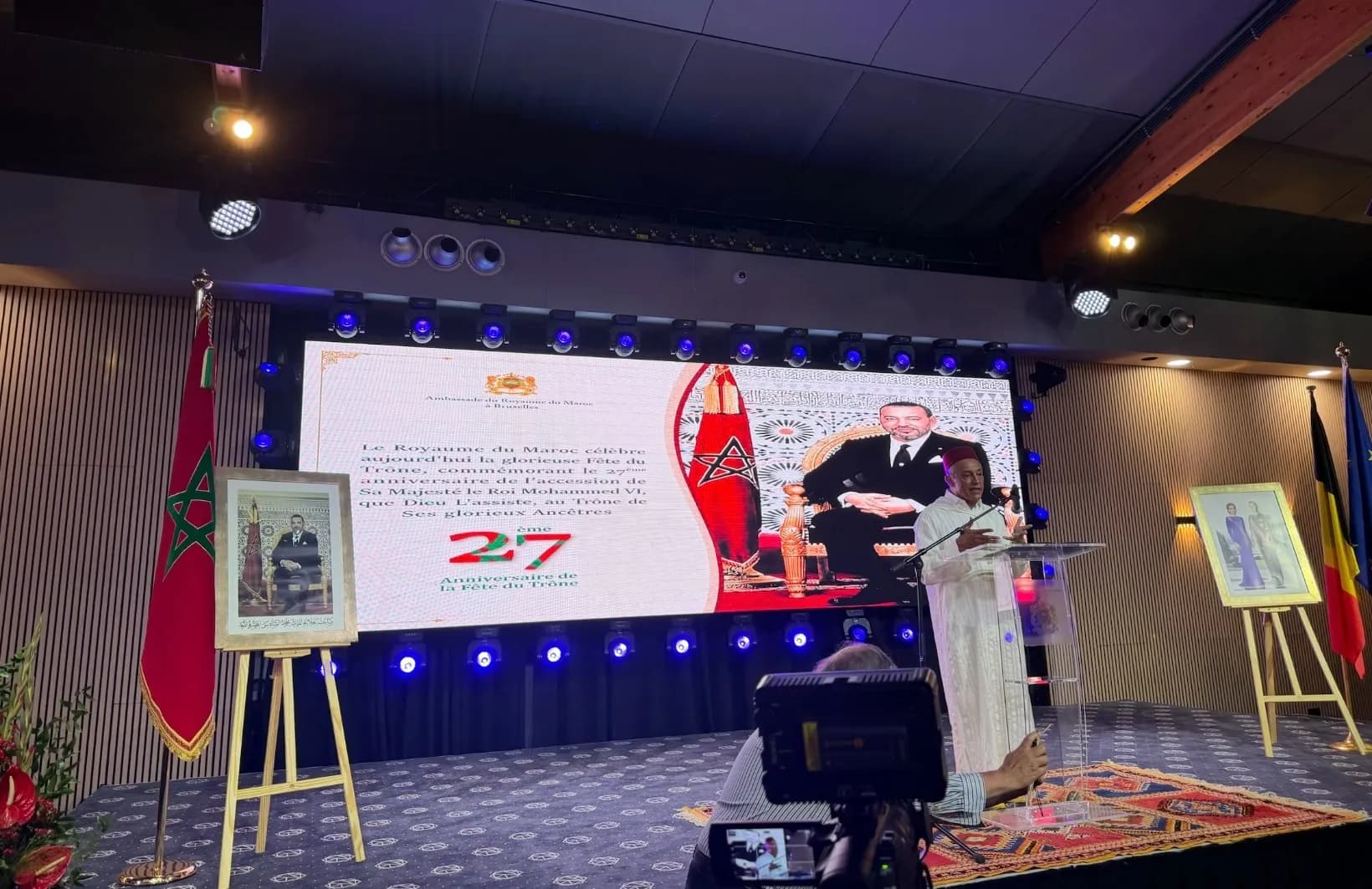
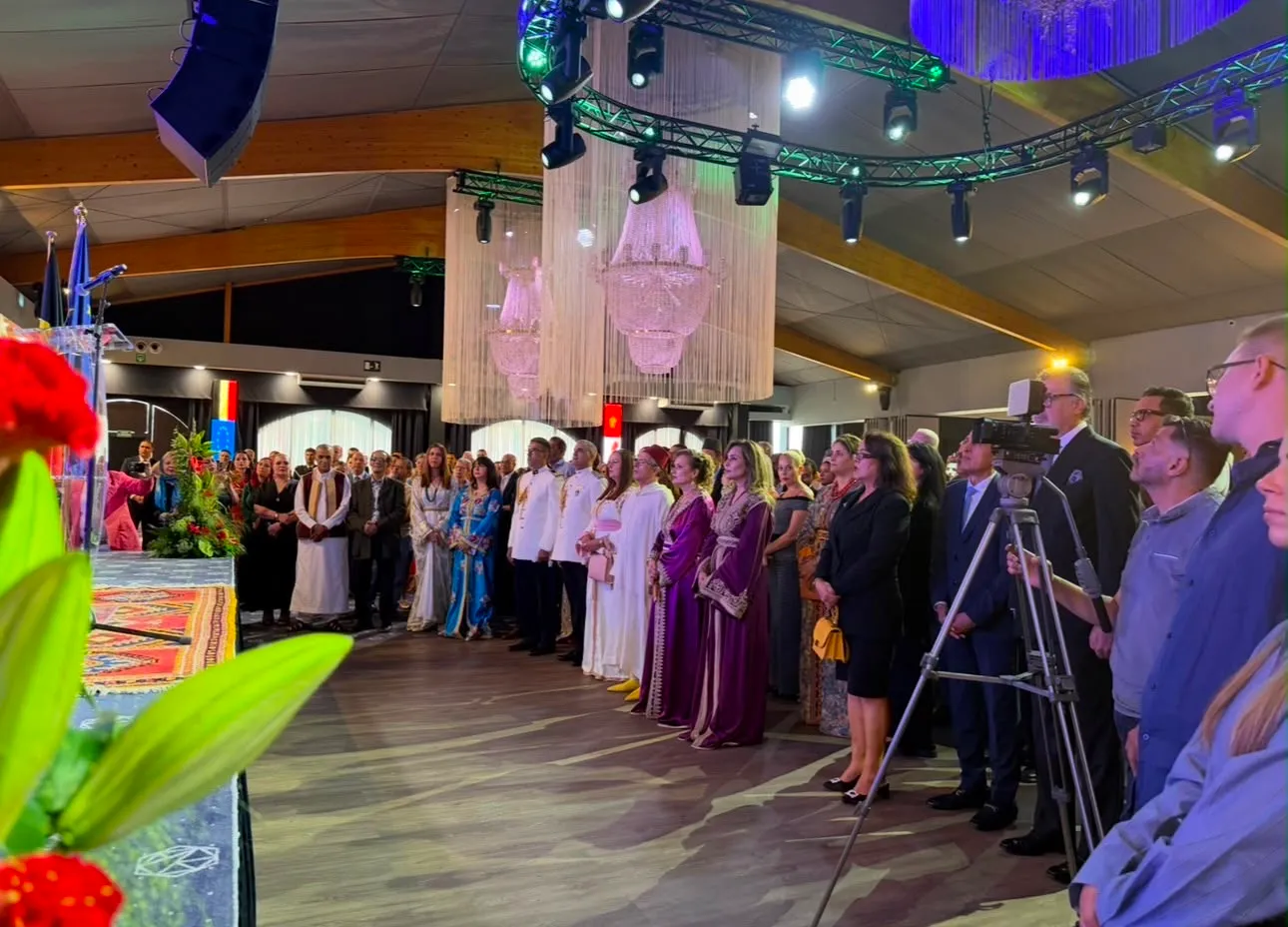
On 30 July 2026, diplomats, policymakers, representatives of European institutions, members of the Moroccan diaspora, academics, and civil society figures gathered at the Birmingham EventCenter in Anderlecht, Brussels, to celebrate the Throne Day of the Kingdom of Morocco. The reception was hosted jointly by Mohammed Ameur, Ambassador of His Majesty the King to the Kingdom of Belgium and the Grand Duchy of Luxembourg, and Ahmed Réda Chami, Ambassador of His Majesty the King to the European Union and NATO. The invitation highlighted the symbolic importance of the occasion and reflected the close links Morocco maintains both with Belgium and with the European institutions based in Brussels.
The event offered much more than a national celebration. Through the speeches delivered by the ambassadors, guests were presented with a comprehensive overview of Morocco's political stability, economic ambitions, energy transition, African engagement, and growing strategic partnership with Europe.
The official invitation to the event emphasized the diplomatic significance of the gathering.
A Kingdom Marking Nearly Three Decades of Transformation
In his address, Mohammed Ameur reflected on the 27th anniversary of the accession of His Majesty King Mohammed VI to the Throne, describing the past decades as a period of profound transformation for Morocco.
He highlighted what he called four major achievements that have shaped the modern Kingdom, beginning with political and institutional stability. According to the ambassador, Morocco has become "a pole of stability and continuity" in a regional and international environment increasingly marked by uncertainty. He stressed that this stability is rooted in the enduring relationship between the Throne and the Moroccan people, which has provided the foundation for reforms, social cohesion, and economic development.
The ambassador also underlined Morocco's remarkable infrastructure development. Referring to the country's industrial modernization, he noted that Morocco has become Africa's leading industrial platform.Particular attention was given to major logistical projects, including the internationally renowned Tanger Med port and the ambitious Dakhla Atlantic Port, expected to strengthen economic connectivity between Africa and Europe in the coming years.
Morocco's Green Transition and Energy Ambitions
One of the most compelling themes of the evening was Morocco's leadership in renewable energy. Despite lacking oil and gas resources, the country has developed a forward-looking energy strategy focused on sustainability and green innovation.
As Ambassador Ameur noted in his speech:
"Morocco has become a true pioneer of the green transition. Producing neither oil nor gas, the Kingdom has transformed this constraint into an opportunity by developing an electricity mix generated by more than 41% renewable energy sources, with the ambition of reaching 80% by 2050."
He further emphasized Morocco's growing attractiveness for investors in greenhydrogen, a sector increasingly viewed as critical for the future of global energy systems.
These remarks resonated strongly with European audiences concerned with energy security, decarbonization, and sustainable development.
Social Reform and Human Development
Alongside economic modernization, the speech highlighted Morocco's ongoing social reforms. According to Ambassador Ameur, social protection has become one of the central pillars of Morocco's development strategy.
He pointed out that the generalization of social protection and mandatory health insurance now benefits more than 24 million citizens, reflecting a national effort to improve healthcare access and combat vulnerability.
The ambassador acknowledged that Morocco continues to face important challenges, particularly in education, youth employment, and territorial equity. Yet he presented these issues not as obstacles, but as priorities guiding the country's future reforms.
"The successes we celebrate today invite us to look to the future with clarity and to transform constraints into drivers of innovation and progress."
A Strategic Message to Europe
While Ambassador Ameur focused largely on Morocco's national achievements and bilateral relations with Belgium, Ambassador Ahmed Réda Chami delivered a broader strategic visioncentered on the future of Morocco-European Union relations.
His speech reminded the audience that cooperation between Morocco and Europe stretches back decades.
"Our first partnership dates back to the European Community in 1969. Since then, the relationship has steadily evolved."
He emphasized that the 1996 Association Agreement remains "the cornerstone of our relationship" and highlighted the scale of economic cooperation today.
"Today, our annual trade amounts to approximately €62 billion. The European Union exports around €37 billion to Morocco, while Morocco exports approximately €25 billion to the EU."
Yet for Ambassador Chami, these impressive figures represented only a starting point.
"I believe we can go much further."
He argued that Morocco should be considered an integral component of Europe's wider strategic economic space, particularly at a time when Europe faces increasing competition from Asia, geopolitical instability, and changing global trade conditions.
"That is why we believe it is essential to build an even stronger partnership with Morocco. Morocco can become part of Europe's strategic economic space. We can enhance Europe's competitiveness."
The ambassador pointed to Morocco's role as a manufacturing and investment hub, noting that approximately half of all foreign direct investment in Morocco originates from European companies. Major industrial actors such as Renault, Stellantis, and Safran have already established significant operations in the Kingdom.
According to Chami, the reasons are clear:
"Morocco offers greater competitiveness. This is where we contribute something valuable to Europe."
Artificial Intelligence, Renewable Energy andDefenseCooperation
Among the most forward-looking aspects of the speech was Ambassador Chami's vision for cooperation in emerging sectors.
He argued that Morocco possesses two key ingredients necessary for the future development of artificial intelligence:
"AI requires both talent and affordable electricity. Morocco has both: a very young population that is deeply interested in technology and access to low-cost energy."
He also underlined Morocco's extraordinary renewable energy potential:
"Morocco possesses enormous renewable energy potential, comparable to Nigeria's energy potential, except ours is based not on oil but on renewable energy sources."
Looking beyond economics, the ambassador identifieddefense cooperation as another promising field of collaboration, particularly as Europe continues to strengthen its security capabilities.
Africa, Europe and Regional Connectivity
A recurring theme throughout the evening was Morocco's unique position as a bridge between continents.
Ambassador Ameur highlighted the ambitious Nigeria-Morocco Gas Pipeline project, describing it as one of the clearest illustrations of Morocco's African engagement.
"This structuring project will cross 13 countries on the Atlantic coast before connecting to the European market."
According to the ambassador, the pipeline is expected to provide energy security to more than 400 million people while strengthening ties between Africa and Europe.
This vision of connectivity was echoed by Ambassador Chami, who stressed the importance of deeper integration of European and Moroccan value chains.
"We can integrate our value chains more closely. We can foster greater innovation together."
Belgium and Morocco: An Expanding Partnership
The special relationship between Belgium and Morocco occupied a central place in the celebration.
Ambassador Ameur described Belgian-Moroccan relations as distinguished by their "human depth," "historical density," and growing economic significance. He noted that bilateral trade has nearly tripled between 2016 and 2026 and pointed to the major Belgian Economic Mission to Morocco scheduled for 2027, to be led by Her Majesty Queen Mathilde.
Equally important is the human dimension of the partnership. The ambassador paid tribute to the Moroccan community in Belgium, which numbers more than 800,000 people.
"The Moroccan community established in Belgium continues to constitute the most beautiful bond and the most dynamic driving force behind thisBelgian-Moroccan friendship."
In resume
The 2026 Throne Day celebration in Brussels revealed a Morocco confident in its achievements yet fully aware of the challenges ahead. Through the speeches of Ambassadors Mohammed Ameur and Ahmed Réda Chami, guests were presented witha vision of a country that seeks not only to modernize domestically but also to play a larger role in shaping economic, energy, and strategic partnerships across Europe and Africa.
The central message of the evening was perhaps best captured in Ambassador Chami's concluding words:
"I truly believe that together we can build much more than we have achieved so far."
For many attendees, the reception served as a reminder that the Morocco-Europe relationship is no longer defined solely by geography or trade, but increasingly by shared ambitions in innovation, sustainability, security, and prosperity.
CONCLUSION
The Throne Day reception was not only a celebration of Morocco's national achievements, but also a remarkable diplomatic gathering reflecting the Kingdom's growing international engagement.
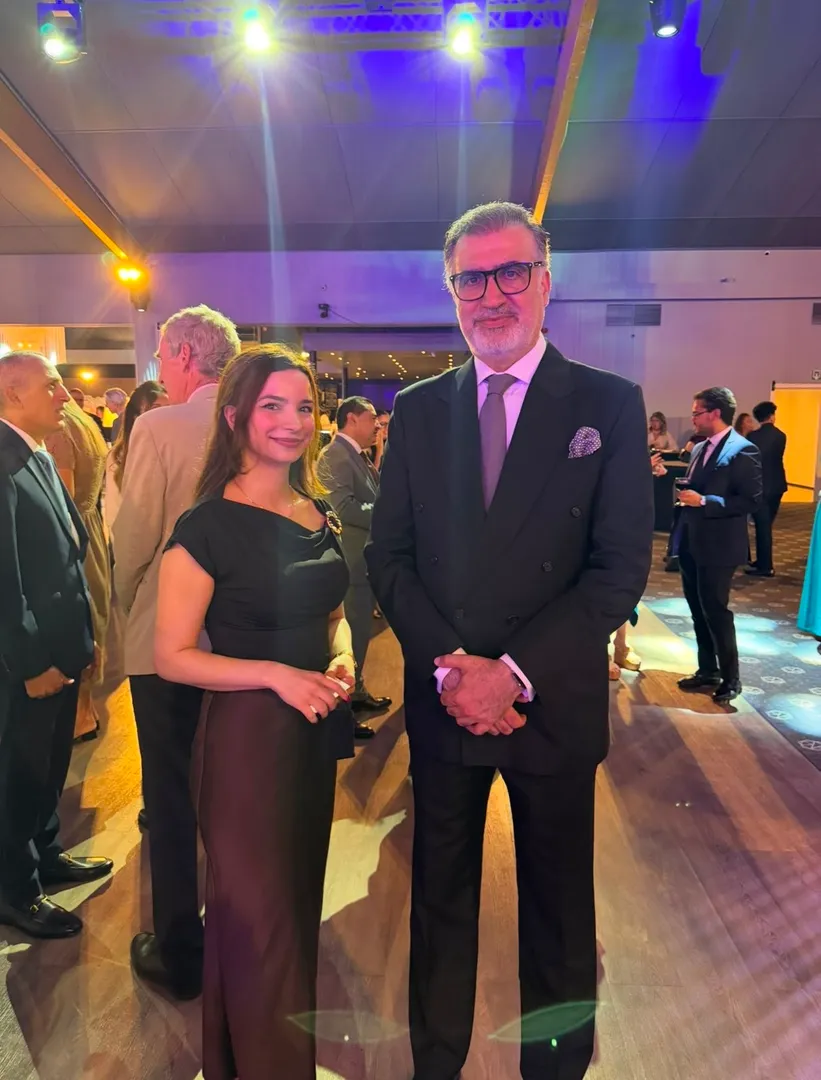
The event brought together ambassadors, senior diplomats and representatives from numerous countries accredited to Belgium, the European Union and NATO. Among those in attendance were diplomatic representatives of Syria, Qatar, Kyrgyzstan, Tajikistan, Tunisia, Sri Lanka, Kuwait, Oman, Bahrain and Indonesia,...alongside members of the European diplomatic corps and representatives of international institutions.
Their presence highlighted Morocco's ability to serve as a bridge between regions and cultures, fostering dialogue between Europe, the Arab world, Africa and Asia. Throughout the evening, guests exchanged views on regional developments, economic cooperation and opportunities for strengthening international partnerships.
The diversity of the diplomatic audience reflected the growing importance of Morocco as a strategic actor on the international stage. As discussions unfolded around topics such as renewable energy, trade, connectivity and regional stability, the reception became a platform not only for celebrating the Throne Day but also for encouraging new avenues of cooperation among nations represented in Brussels.
The presence of ambassadors and senior diplomats from the Arab world, Central Asia, South Asia and Southeast Asia further underscored the international significance of the celebration, transforming the reception into one of Brussels' notable diplomatic gatherings of the summer season.
Derya Soysal
Contributing writer at EUReflect.
Follow EUReflect
See more of our reporting on Google
Mark EUReflect as a preferred source and our stories are ranked higher for you in Top Stories, Discover and Google News — and carry a “preferred” badge when they are cited in AI results.
Add EUReflect as a preferred source