Tokayev Answers Journalists on Kurultai Election Day
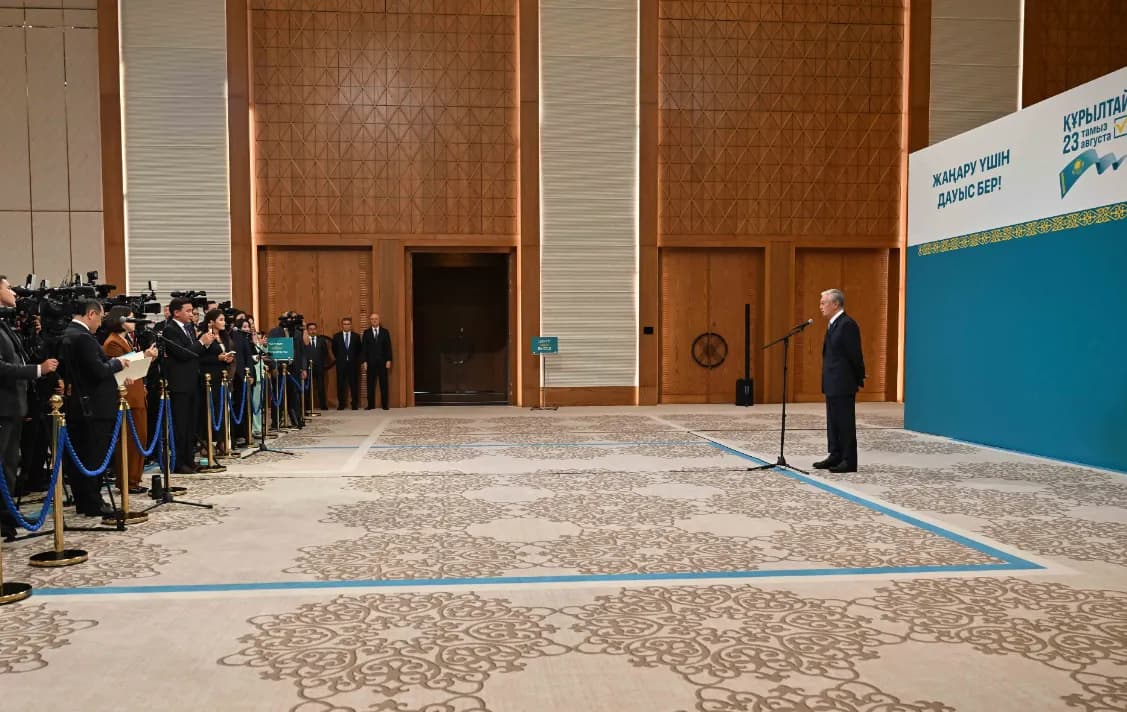
ASTANA – After casting his vote in Kazakhstan's first-ever elections to the newly established Qurultay, President Kassym-Jomart Tokayev met members of the press for an extensive question-and-answer session that offered valuable insight into the country's political priorities and future direction.
As a participant in the press briefing, this author witnessed a discussion that went far beyond the electoral process itself. The questions raised reflected the concerns of Kazakh society as it enters a new political era marked by constitutional reform, institutional restructuring, digital transformation, and growing expectations from a younger generation.
The significance of the moment was underscored by President Tokayev himself, who described the election as a historic milestone and the beginning of a new phase in Kazakhstan's development.
What Will Change After the Creation of the Kurultai?
One of the central questions focused on the practical consequences of the constitutional reforms. What changes should citizens expect now that the Kurultai has been elected? How will the newly created Vice Presidency function? What role will the Kazakhstan People's Council play?
President Tokayev described these reforms as essential building blocks of a renewed political system. He emphasized that the Vice Presidency was intentionally included in the Constitution because of its importance for effective governance during challenging times. He also presented the Kazakhstan People's Council as a modern political mechanism designed to strengthen civic participation and support national unity.
Beyond institutional reform, he outlined ambitious development plans, including large-scale infrastructure projects, healthcare facilities, rehabilitation centres, urban modernization programmes, and environmental initiatives across the country.
Will President Tokayev Seek Another Term?
Perhaps the most anticipated question concerned the future of Kazakhstan's presidency.
Following a recent Constitutional Court clarification stating that Tokayev is legally eligible to run again, journalists sought a direct answer: does he intend to stand in future presidential elections?
The President acknowledged that the legal possibility exists but dismissed speculation about future campaigns as premature. Instead, he argued that the country's immediate focus should remain on modernization, economic growth, social development, and maintaining stability in an increasingly uncertain international environment.
His response suggested that Kazakhstan's current political agenda remains centred on governance and reform rather than electoral calculations.
What Kind of Deputies Does the New Kurultai Need?
Another important question addressed the responsibilities of the newly elected deputies.
What qualities should representatives possess? What should voters expect from them?
Tokayev's answer was clear: members of the Kurultai must be accountable for the quality of legislation they pass, for fulfilling their promises, and for advancing programmes that genuinely contribute to national development.
The President also reiterated his long-standing belief that younger generations should play a greater role in public life. New faces and new ideas, he argued, are essential for the country's future progress.
What Comes Next for the Government?
Because the election of the Kurultai requires the formation of a new government, journalists also asked about possible cabinet changes and the priorities of a future administration.
While praising the work of the current government, Tokayev confirmed that some changes would occur. At the same time, he stressed that personnel decisions should not be made simply for political spectacle.
Instead, modernization requires continuous renewal, new energy, and effective governance capable of responding to growing economic and global challenges.
How Competitive Was the Election Campaign?
Another question focused on the campaign itself.
Did the election demonstrate genuine political competition?
Tokayev responded positively, pointing to the televised debates and the active public engagement that accompanied the campaign. He highlighted the strong interest shown by younger citizens and described the electoral process as another milestone in Kazakhstan's political modernization.
According to the President, the campaign introduced new political voices and generated constructive ideas that could contribute to future reforms.
Can Young People Transform Kazakhstan's Politics?
Youth emerged as one of the dominant themes of the briefing.
With many young candidates participating in the elections, journalists asked whether the new generation would truly be capable of influencing the work of the Kurultai.
While acknowledging that not every young official appointed in recent years had succeeded in government roles, Tokayev maintained that Kazakhstan must continue investing confidence in younger generations.
As a country with a relatively young population, Kazakhstan's long-term success, he argued, will depend heavily on the engagement, responsibility, and leadership of its youth.
Is Kazakhstan Building a New Civic Culture?
The discussion then moved beyond politics toward social values.
A question was raised about the President's repeated calls for a new culture of civic responsibility, respect, self-discipline, and public ethics.
Tokayev explained that modernization is not only about institutions and economic growth. It is also about behaviour, public culture, and national values.
Linking these ideas to the "Taza Kazakhstan" initiative, he argued that cleanliness should be understood both literally and symbolically: as care for public spaces, but also as an expression of moral responsibility, dignity, and civic consciousness.
Is Artificial Intelligence Already Changing Kazakhstan?
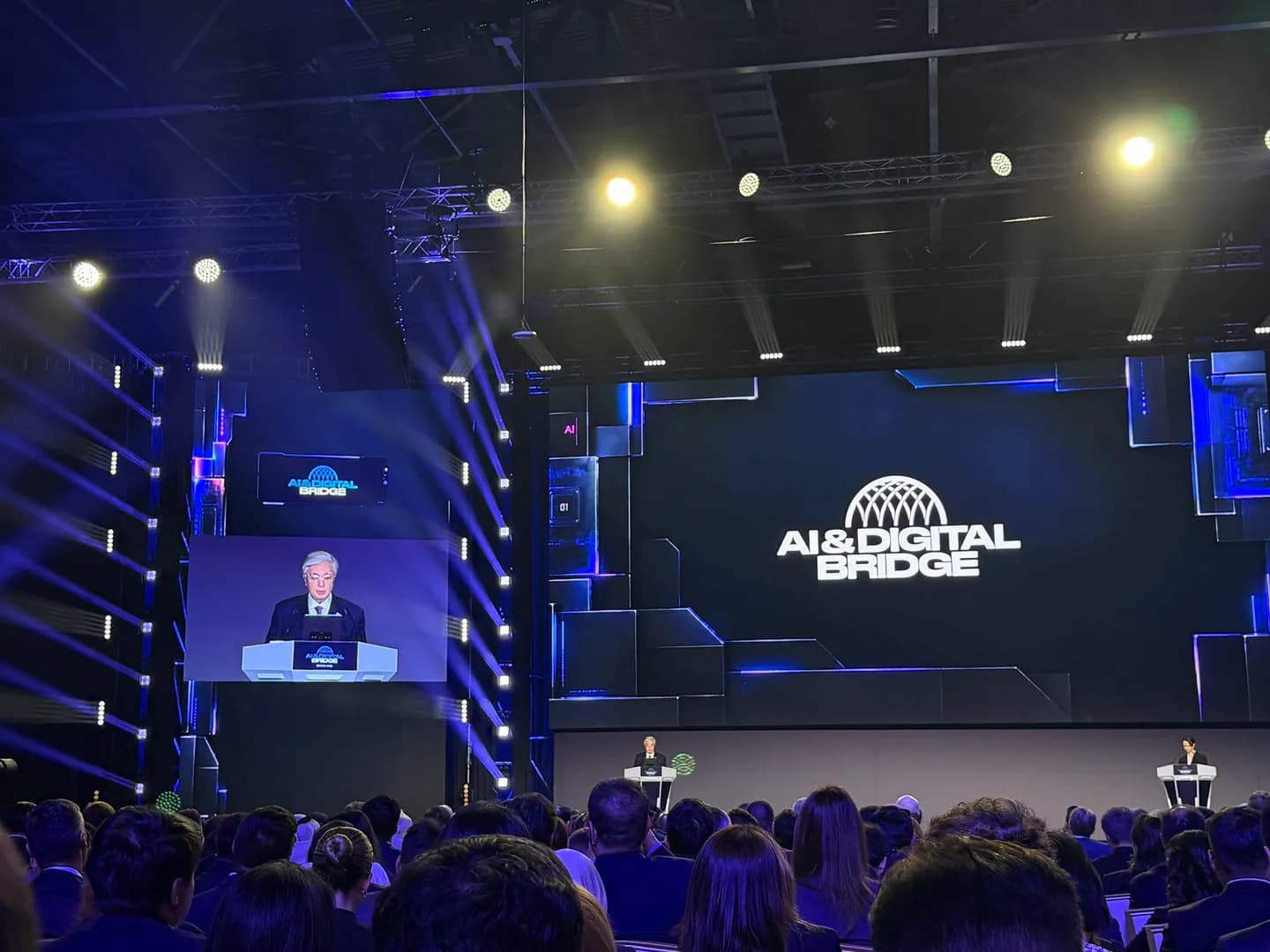
One of the most forward-looking questions concerned artificial intelligence and digitalization.
Having declared the year a national Year of Digitalization and Artificial Intelligence, how does the President assess progress so far?
Tokayev said Kazakhstan has already completed the first stage of building a digital state by providing accessible electronic public services. Citizens can now accomplish tasks from home that previously required lengthy administrative procedures.
However, he stressed that the next phase is even more important. Artificial intelligence and digital technologies, he said, must move beyond presentations and conferences and begin delivering practical benefits for ordinary citizens.
In particular, he emphasized opportunities for entrepreneurs, farmers, and regional communities to use digital tools to create income and improve productivity. In his words, a smartphone should not merely be a source of entertainment but also a tool for economic opportunity.
A Reflection of Kazakhstan's Priorities
The questions raised during President Tokayev's briefing revealed far more than curiosity about a single election. Together, they painted a picture of a country debating its future: how political institutions should evolve, how economic modernization should proceed, how technology can improve lives, and what role young citizens should play in shaping the nation.
As Kazakhstan embarks on the first chapter of its new Kurultai system, the questions posed to the President may ultimately prove as important as the historic vote that preceded them.
For observers of Central Asia, the briefing offered a rare and revealing glimpse into the issues currently defining Kazakhstan's political conversation and its vision for the years ahead.
Derya Soysal (EUReporter) participated in the press briefing held by President Kassym-Jomart Tokayev in Astana after he cast his vote during Kazakhstan's first Kurultai elections.
Related Topics
Derya Soysal
Contributing writer at EUReflect.
Follow EUReflect
See more of our reporting on Google
Mark EUReflect as a preferred source and our stories are ranked higher for you in Top Stories, Discover and Google News — and carry a “preferred” badge when they are cited in AI results.
Add EUReflect as a preferred source