Tokayev Is Redefining the Architecture of the National Security Committee
President Kassym-Jomart Tokayev has signed a landmark decree redefining Kazakhstan’s security architecture by expanding the powers of the National Security Committee. The reform centralizes control over digital and critical infrastructure, transfers key oversight functions from civilian bodies to intelligence structures, and mandates rapid legal amendments. Placed under direct presidential supervision, the initiative reflects a strategic shift toward a strong, centralized state model aimed at safeguarding national security, economic stability, and public welfare in an era of growing digital and cyber threats.
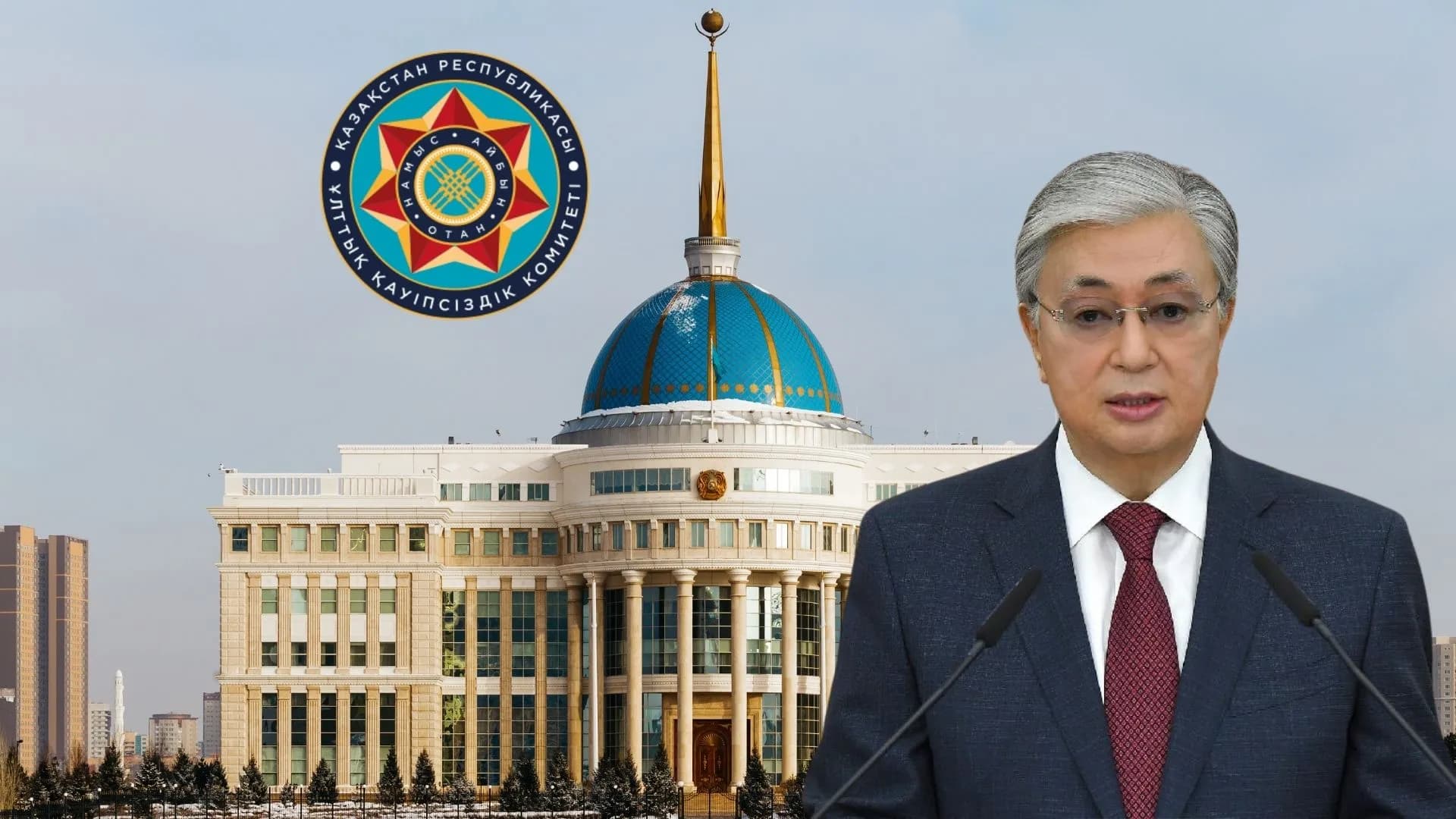
Kassym-Jomart Tokayev has taken a decision of transformative significance and, by signing a critical decree within the framework of comprehensive public administration reform, has redefined Kazakhstan’s security architecture. According to the announcement from Akorda, the powers of the National Security Committee (KNB) have been substantially expanded. In Astana’s political circles, this move is interpreted not as an ordinary administrative adjustment, but as an explicit declaration of political will to establish full state control over digital, strategic, and critical infrastructure. In the context of accelerating digitalization, the Tokayev administration aims to centralize state capacity by extending the concept of security beyond its traditional boundaries.
1. Redistribution of Authority in Digital Security: Centralized Control
Under the decree, certain powers and functions related to state oversight in the field of informatization have been transferred from the Ministry of Digital Development to the National Security Committee. In particular, responsibility for ensuring the information security of critical assets within the information and communications infrastructure now falls under the direct authority of the KNB.
This restructuring implies centralized, security-oriented management of the state’s “digital nerve centers,” including energy networks, transport systems, financial infrastructure, public databases, and strategic communication networks. According to expert assessments, this step extends beyond cybersecurity alone and is directly linked to energy security and macroeconomic stability.
2. Reconfiguration of the Legal and Administrative Framework
The instruction issued to the Government within the decree goes well beyond a conventional call for implementation. The requirement to prepare the necessary legislative amendments without delay, in full and continuous coordination with the National Security Committee, indicates that the Tokayev administration is pursuing an accelerated reform agenda rather than a gradual, time-extended process. The emphasis is not merely on updating existing legislation, but on constructing a new legal architecture capable of addressing emerging threats in the domains of security, digitalization, and state oversight.
This approach transforms the initiative from a simple transfer of authority into a structural transformation that redefines the operational logic of the state. The realignment of legislation around security priorities seeks to reduce inter-agency jurisdictional conflicts, streamline decision-making processes, and pre-empt legal ambiguities that may arise during crisis situations. As a result, so-called “grey areas” in the implementation of security policy are minimized, while accountability chains are clearly delineated.
According to assessments in Astana, the Tokayev administration aims to overcome the inertia and coordination challenges generated by the previous dispersion of powers among multiple ministries and agencies. The intended model is a state structure that is capable of rapid decision-making during crises, equipped with centralized command and oversight mechanisms, and characterized by flexibility combined with institutional strength. This is particularly critical in time-sensitive scenarios such as cyberattacks, threats to energy infrastructure, and information security crises.
3. Presidential Oversight: Reform under Direct Political Supervision
The mandate granted to the National Security Committee to submit draft amendments and additions to its internal regulations directly to the President demonstrates that reforms in the security sector are not being relegated to routine bureaucratic procedures. By bypassing intermediate administrative layers, the Committee becomes directly accountable to the highest political authority, thereby accelerating decision-making processes and limiting potential institutional resistance.
Furthermore, the assignment of final oversight authority for the implementation of the decree to the Presidential Administration indicates that the reform will be monitored in a centralized, continuous, and unified manner. This governance mechanism reflects a model that extends beyond issuing directives, encompassing systematic monitoring of implementation, outcomes, and practical effects on the ground. In other words, the security reform is placed under direct presidential supervision at both the planning and execution stages.
Taken together, these measures clearly indicate that the initiative is not a purely technical adjustment in the field of security or cyber defense, but a strategic transformation designed and guided by political leadership. The state’s new roadmap for intelligence and digital security will advance not through fragmented institutional discretion, but under the direct control of President Tokayev. In Astana’s policy circles, this approach is interpreted as the construction of a state model that prioritizes rapid crisis response and relies on strong central coordination rather than dispersed authority.
Conclusion
The decree entered into force immediately upon its signing, demonstrating that implementation will proceed not incrementally but in a direct and comprehensive manner. Within Astana’s expert community, this step is widely regarded as a new phase in the long-emphasized doctrine of a “strong state and a secure society” advanced by Tokayev.
In an era of accelerated digitalization, where cyber threats have attained a level of significance comparable to traditional military risks, Kazakhstan is redefining security through the centralization of state control. The message is unambiguous: all critical domains are subject to strict oversight, and the ultimate objective is to ensure the security, welfare, and long-term stability of the Kazakh people.
EUReflect News
Site Administrator
Follow EUReflect
See more of our reporting on Google
Mark EUReflect as a preferred source and our stories are ranked higher for you in Top Stories, Discover and Google News — and carry a “preferred” badge when they are cited in AI results.
Add EUReflect as a preferred source