Turkmenistan: The Caspian’s Hidden Investment and Tourism Gem
Turkmenistan: The Caspian’s Hidden Investment and Tourism Gem
Introduction
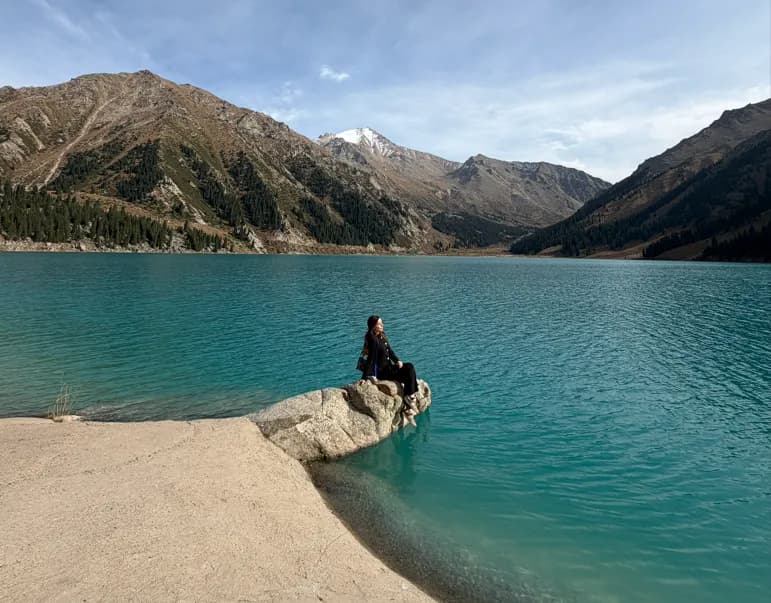
Scenic mountains, beautiful turquoise‑tinted beaches, long deserts, and incredible historical sights. This may sound like a fictional place, but Turkmenistan truly exists off the coast of the Caspian Sea, bordering Iran, Afghanistan, Uzbekistan, and Kazakhstan. Turkmenistan has been a country where tourists and investors have been missing for years, yet it has a striking mix of deserts, mountains, and Caspian coastline, with historical sights that will keep you in awe. Turkmenistan not only flourishes with a varied climate and terrain, but its diverse cultural heritage is one to be flaunted.
What makes the tourism unique?
Ashgabat and its bazaars
The “White Marble City”, Ashgabat, is a flawless‑looking, multiple Guinness World Record‑holding capital. Its most famous record, which gives the city its unique, clean, and almost surreal appearance, is the highest density of white marble‑clad buildings, making Ashgabat a capital you will not easily forget.
Beyond this aesthetic, Ashgabat gives a Central Asian twist to the spectacular Turkish bazaars by not only out‑sizing many of them, but also offering a broader and more unusual product range. On the edge of the city, the Altyn Asyr Bazaar sells livestock, an endless supply of traditionally woven Turkmen carpets (whose craft is recognized by UNESCO as intangible heritage), electronics, and even cars, alongside spices, dried fruits, and hand‑crafted silver jewelry.
Thursdays and Sundays bring the famous camel markets, where camels are traded in a spectacular show of living Silk Road commerce. Ashgabat also flaunts its Soviet heritage with the central Russian Bazaar, focused more on food, spices, and daily goods, further diversifying these traditional and unique market experiences.
Despite all this, Ashgabat is often described as “empty”: roughly one million inhabitants are spread over a very large urban area, giving the city an unusually quiet feel compared with much denser capitals such as Tehran, where eight times the population lives in an area only one and a half times bigger.
Lakes, beaches, and the Caspian coast
About 100 kilometers west of Ashgabat lies Kow Ata, an underground thermal lake in a limestone cave. Locals have visited this highly mineralized water for centuries, and today it is seen as a natural spa where the water is believed to rejuvenate the skin.
Roughly 450–500 kilometers northwest of Ashgabat (via Kow Ata) are the Awaza resorts on the Caspian coast. Awaza features long, shell‑dotted sandy beaches, diverse sports facilities, and huge dancing fountains that give the already clear waters an extra appeal to tourists.
Desert adventures
Moving away from the sea, Turkmenistan has 70–80 percent of its area dominated by the Karakum Desert, making desert explorations and safaris a central part of its tourism offering.
Turkmenistan’s gas‑rich desert holds one of the world’s most unique sights: the “Gates of Hell”, a fiery, roughly 70‑meter‑wide pit that has been burning since the early 1970s after a Soviet drilling mishap, according to most accounts. The deserts include salt flats, gravel plains, and several striking depressions that sink close to 100 meters below sea level. They are also home to wildlife such as gazelles and saker falcons, with some habitats sustained by the more than 1,000‑kilometer‑long Karakum Canal.
Heritage and UNESCO sites
If the diverse terrain is not your main calling, Turkmenistan’s heritage sites are nothing short of spectacular. They showcase a blend of several ancient civilizations, layering Turkic, Islamic, and Iranian influences on top of one another. The country’s soil hosted early agricultural settlements and Bronze Age cultures.
UNESCO World Heritage sites worth visiting include Ancient Merv, Kunya‑Urgench, the Parthian Fortresses of Nisa, and segments of the Silk Roads. Other major archaeological complexes, such as Gonur‑depe, are managed as impressive open‑air museum sites along with their “‑depe” settlement counterparts.
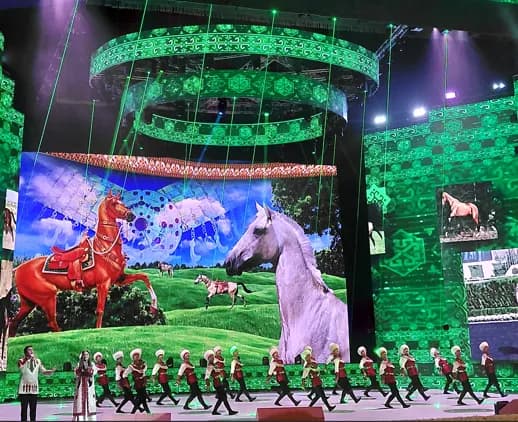
Another UNESCO‑recognized intangible cultural heritage element and key tourism attraction is the art of Akhal‑Teke horse breeding and decoration. It is centred on the Akhal‑Teke, a horse breed with an unreal, metallic‑looking coat that serves as a national symbol. The Akhal‑Teke is one of the world’s oldest and rarest horse breeds and is often described as loyal, intelligent, and tough, traits that many would also associate with the people of Turkmenistan.
Why invest in Turkmenistan?
Beyond tourism, Turkmenistan is rich with hydrocarbons, mainly oil, gas, and petrochemicals. As the country with the world’s fourth‑largest gas reserves, it holds substantial investment potential in its subsoil alone.
At the same time, its growing agricultural and manufacturing industries are intended to diversify the economy away from gas, turning Turkmenistan into a potential hub for future industrial and processing projects in an almost untouched market.
Turkmenistan’s constitutionally enshrined neutrality in global affairs is presented by the government, together with claims of macroeconomic stability and cheap energy, as a key attraction for investors. Its geographical location further strengthens that pitch: China–Europe transit corridors and Caspian Sea links place Turkmenistan on important East–West and North–South routes for trade, energy, and logistics.
Conclusion
Turkmenistan is a country like no other. Its diverse terrain, resource‑rich soil, relative safety, economic ambitions, and unique aesthetic, combined with a deep cultural heritage, make it one of the most intriguing and under‑appreciated investment and tourism destinations in the world today. Turkmenistan remains a high‑risk, high‑reward frontier market, where strong cultural and natural assets coexist with tight political controls and significant economic opacity.
Tamim Majdoub
Contributing writer at EUReflect.
Follow EUReflect
See more of our reporting on Google
Mark EUReflect as a preferred source and our stories are ranked higher for you in Top Stories, Discover and Google News — and carry a “preferred” badge when they are cited in AI results.
Add EUReflect as a preferred source