Uzbekistan Is Recalibrating Its Foreign Policy in a Fragmented World
Between Balance and Ambition: How Uzbekistan Is Recalibrating Its Foreign Policy in a Fragmented World
N.Nurmamatov, Tashkent State University of Law (TSUL)
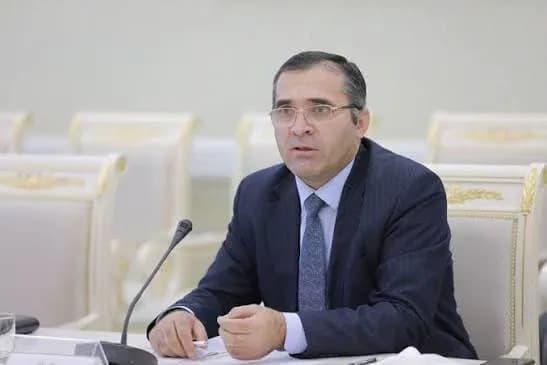
The high-level meeting held in mid-January under the chairmanship of Shavkat Mirziyoyev has become one of the most significant political events at the start of the year in Uzbekistan. Formally devoted to reviewing the work of the Ministry of Foreign Affairs, the meeting in fact served as a strategic stocktaking exercise, outlining how Uzbekistan intends to navigate an increasingly unstable and polarized international environment. The discussion revealed a foreign policy model that combines geopolitical restraint, economic pragmatism, and a growing focus on the human dimension.
The global context shaping Uzbekistan’s diplomacy is marked by accelerating fragmentation. International politics is increasingly structured around competing blocs, while sanctions, trade wars, and regional conflicts are no longer exceptional but systemic features of the global order. In such conditions, the president’s emphasis on avoiding emotional or bloc-driven decisions carries particular weight. Uzbekistan is deliberately refusing to bind itself to any single geopolitical center, opting instead for a balanced and cautious course rooted in national interests.
This strategy of balance allows Tashkent to avoid being drawn into confrontations between major powers while preserving working relations in multiple directions. Rather than neutrality for its own sake, this approach functions as a mechanism for protecting sovereignty and maintaining strategic flexibility. It also reflects an understanding that excessive alignment in today’s world can quickly turn into vulnerability.
At the same time, restraint has not translated into isolation. On the contrary, Uzbekistan’s international activity has expanded significantly. In 2025 alone, the president carried out high-level visits to 26 countries, while Tashkent hosted, for the first time in its history, official visits by the leaders of several European, Middle Eastern, and Latin American states. Diplomatic relations now extend to 165 countries, and Uzbekistan maintains 60 diplomatic and consular missions abroad. These figures illustrate a qualitative shift from selective engagement to a broad and systematic diplomatic presence.
Importantly, this growing visibility is closely linked to concrete economic outcomes. Foreign policy has been explicitly reframed as a tool for economic development. This is particularly relevant at a time when global supply chains are under strain and protectionism is on the rise. The president’s assertion that economic security forms the foundation of state security reflects a broader trend in which diplomacy and domestic development are increasingly intertwined.
The results of this economic diplomacy are measurable. In 2025, Uzbekistan’s foreign trade turnover exceeded USD 80 billion for the first time, while exports reached USD 33.5 billion. Foreign investment inflows surpassed USD 43 billion, and agreements signed during bilateral and multilateral engagements amounted to approximately USD 160 billion in potential investment and trade contracts. These numbers signal that diplomacy is delivering tangible dividends, translating political engagement into industrial projects, new jobs, and technology inflows.
Another key theme highlighted during the meeting was the diversification of foreign trade. Overreliance on one or two markets has become a critical risk factor in an era of sanctions and logistical disruptions. Uzbekistan’s turn toward Northern Europe, Africa, and the Middle East reflects an effort to hedge against these risks. Africa alone, with more than 50 countries and a combined economic output exceeding USD 3 trillion, represents a rapidly expanding consumer market. The targeted engagement with Iraq—an economy importing nearly USD 100 billion worth of goods annually—demonstrates a data-driven and demand-oriented approach to market expansion rather than opportunistic experimentation.
Perhaps the most notable evolution in foreign policy thinking concerns labor migration. The president articulated a clear shift away from viewing migration solely as a social challenge. Today, Uzbek citizens are employed under organized labor schemes in more than 30 countries, compared to just two or three destinations a decade ago. Cooperation with countries such as Germany, Japan, and South Korea has led to the establishment of training centers inside Uzbekistan, while joint projects—including plans to send up to 10,000 trained specialists to Japan—illustrate the scale of this new approach.
Equally significant is the emphasis on protecting citizens abroad. As many host countries tighten migration controls, the role of embassies and consulates is being redefined. Diplomats are now expected not only to manage political relations but also to provide legal assistance, engage directly with migrant communities, and respond to rights violations. This focus on protection and accountability underscores a broader human-centered turn in Uzbekistan’s foreign policy.
Taken together, the January meeting demonstrated that Uzbekistan’s external strategy is evolving into a multidimensional framework. It combines geopolitical balance with economic calculation, diversification with risk management, and state interests with individual welfare. In a fragmented world where rigid alignments often generate new vulnerabilities, Uzbekistan is opting for flexibility, pragmatism, and measurable results—positioning itself as a stable, predictable, and development-oriented actor on the international stage.
Nurmamatov Nurmuhammad
Contributing writer at EUReflect.
Follow EUReflect
See more of our reporting on Google
Mark EUReflect as a preferred source and our stories are ranked higher for you in Top Stories, Discover and Google News — and carry a “preferred” badge when they are cited in AI results.
Add EUReflect as a preferred source