Tokayev Addresses AI & Digital Bridge 2026
Tokayev Addresses AI & Digital Bridge 2026
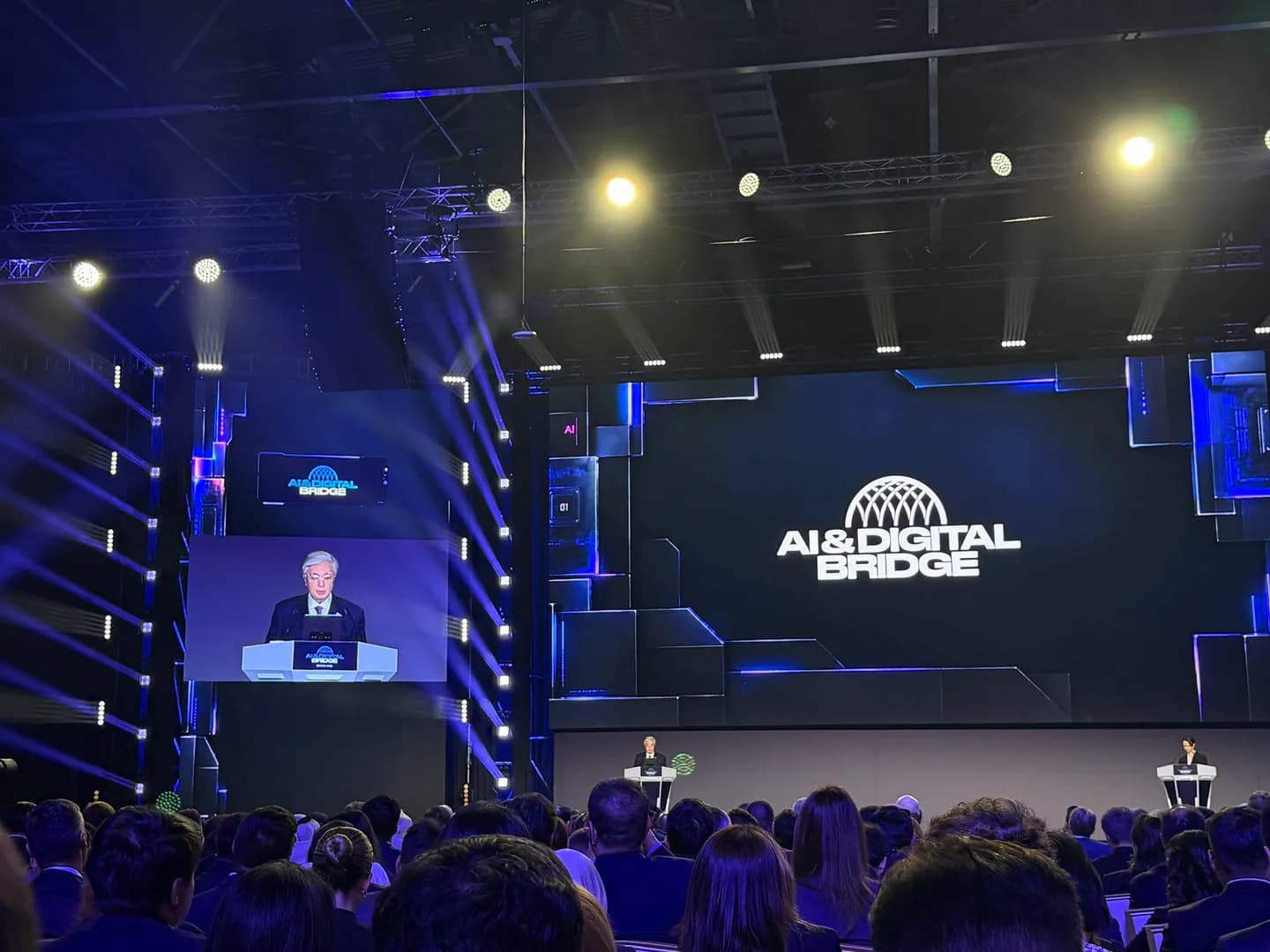
ASTANA, Kazakhstan — October 1, 2026 — Kazakhstan is positioning artificial intelligence at the center of its economic and technological transformation, with President Kassym-Jomart Tokayev calling for greater international cooperation, stronger human capital and a regulatory framework that protects citizens without driving innovation and investment abroad.
Kazakhstan is the new AI hub, and you only need to type "AI Kazakhstan" to see how all the world's media outlets are covering the AI development in Kazakhstan; Euronews, Al Jazeera, and all the major global media are talking about it.
“Kazakhstan plans to train one million citizens in AI over the next five years. To achieve this goal, the country is opening Central Asia’s first International AI Centre, ALEM AI, launching new educational programmes, and expanding online public services” noted Euronews
Kazakhstan’s President Kassym-Jomart Tokayev delivered his address in Kazakh, Russian and English, underscoring the international character of one of Eurasia’s growing technology forums.
The multilingual address added a distinctly diplomatic dimension to a speech focused on a rapidly changing technological landscape.
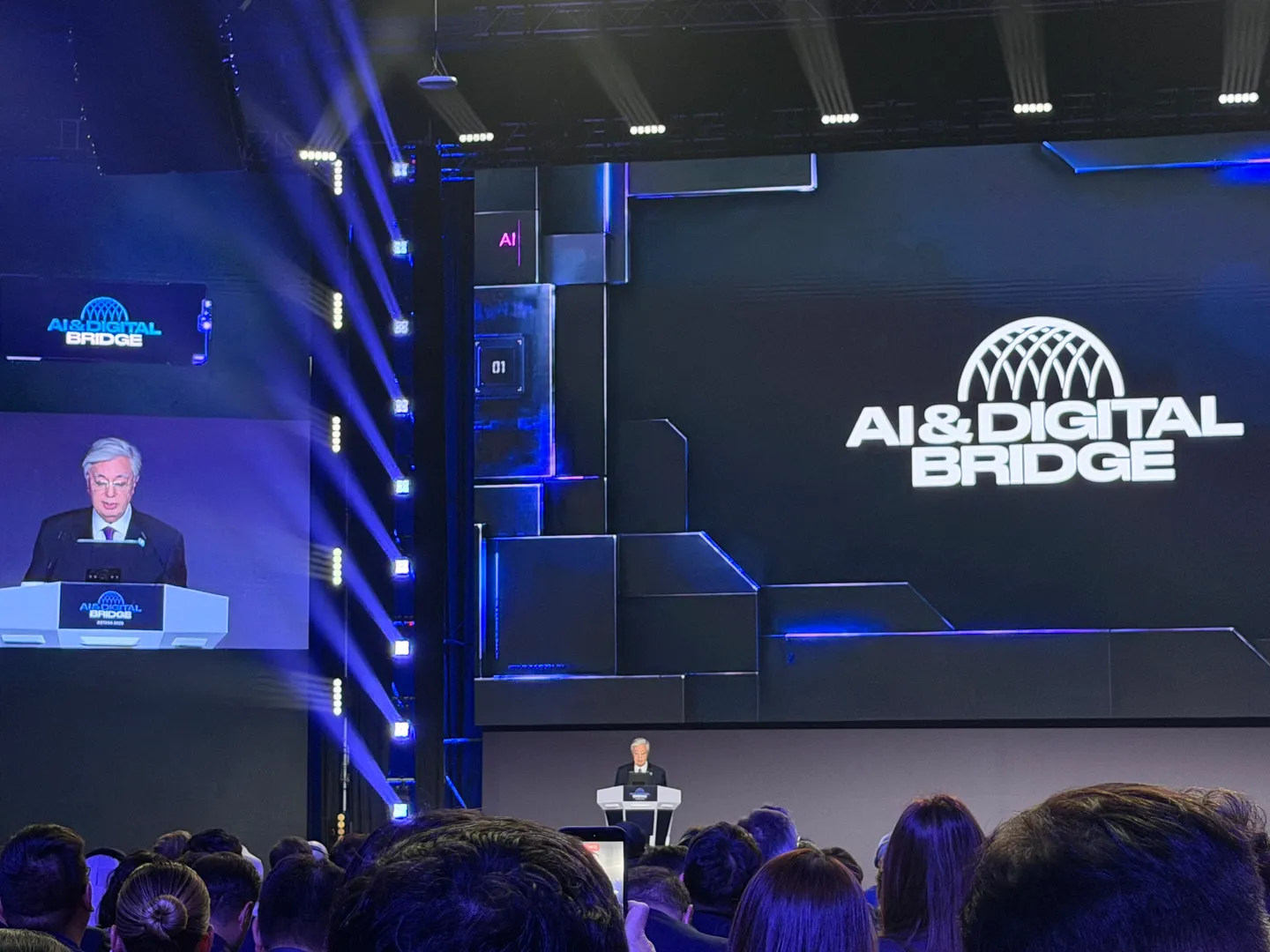
A former foreign minister, United Nations senior official and career diplomat, Tokayev has spent decades working at the intersection of international affairs and global cooperation. His professional background includes diplomatic postings in China, leadership of Kazakhstan’s Foreign Ministry and service as Deputy Secretary-General of the United Nations.
That experience was evident in Astana as he addressed an audience extending well beyond Kazakhstan’s borders.
Last year, Kazakh President Kassym-Jomart Tokayev has taken a significant step toward digital transformation by announcing the creation of a new Ministry of Artificial Intelligence (AI) and Digital Development. He made the announcement on Sept. 8, 2025, during a national address.
He also declared this year 2026, the year of AI.
Addressing the AI & Digital Bridge-2026 International Forum in Astana, Tokayev presented artificial intelligence not simply as a technological trend, but as a defining force for the country’s economic future and its place in the emerging global technology landscape.
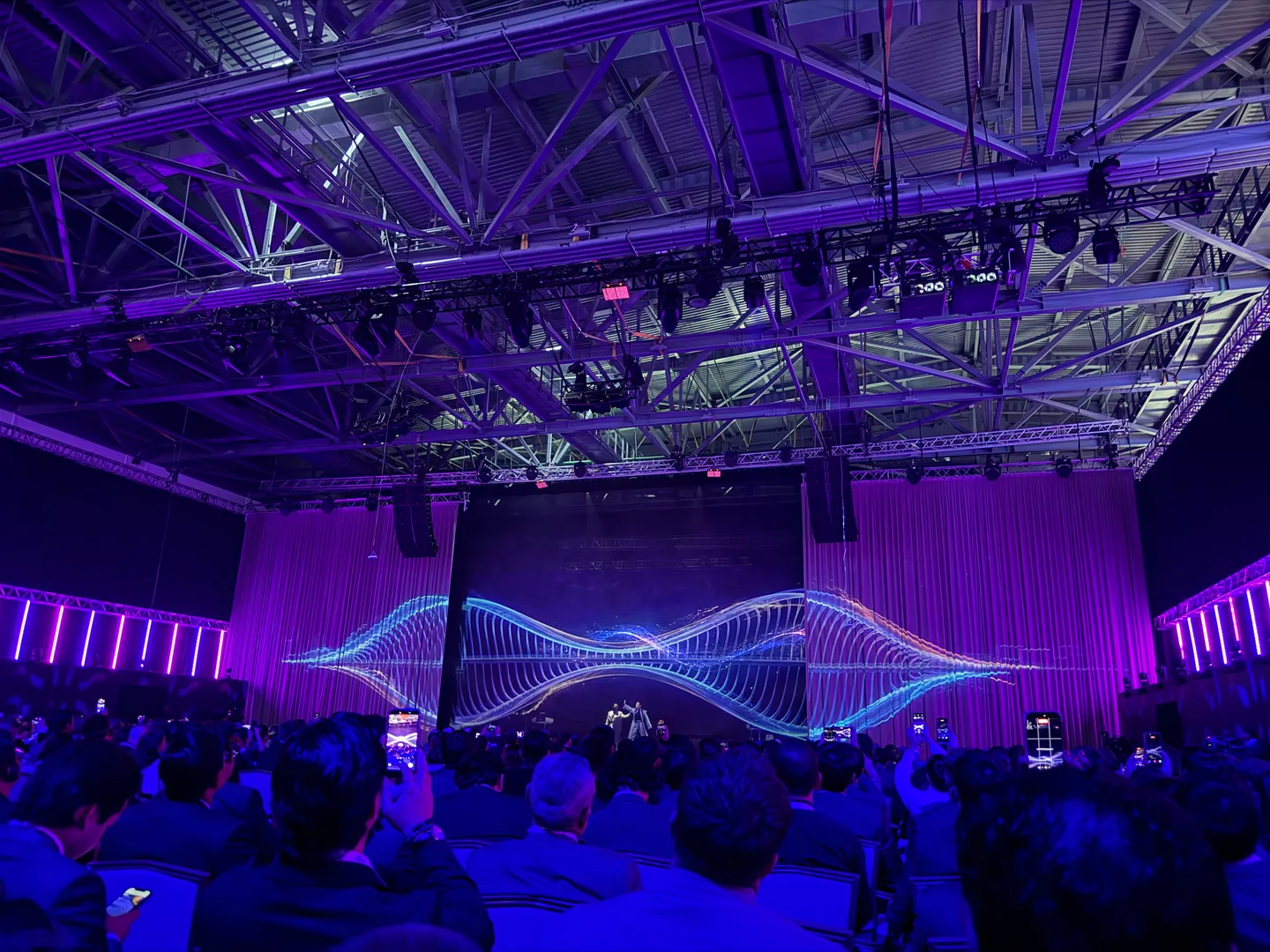
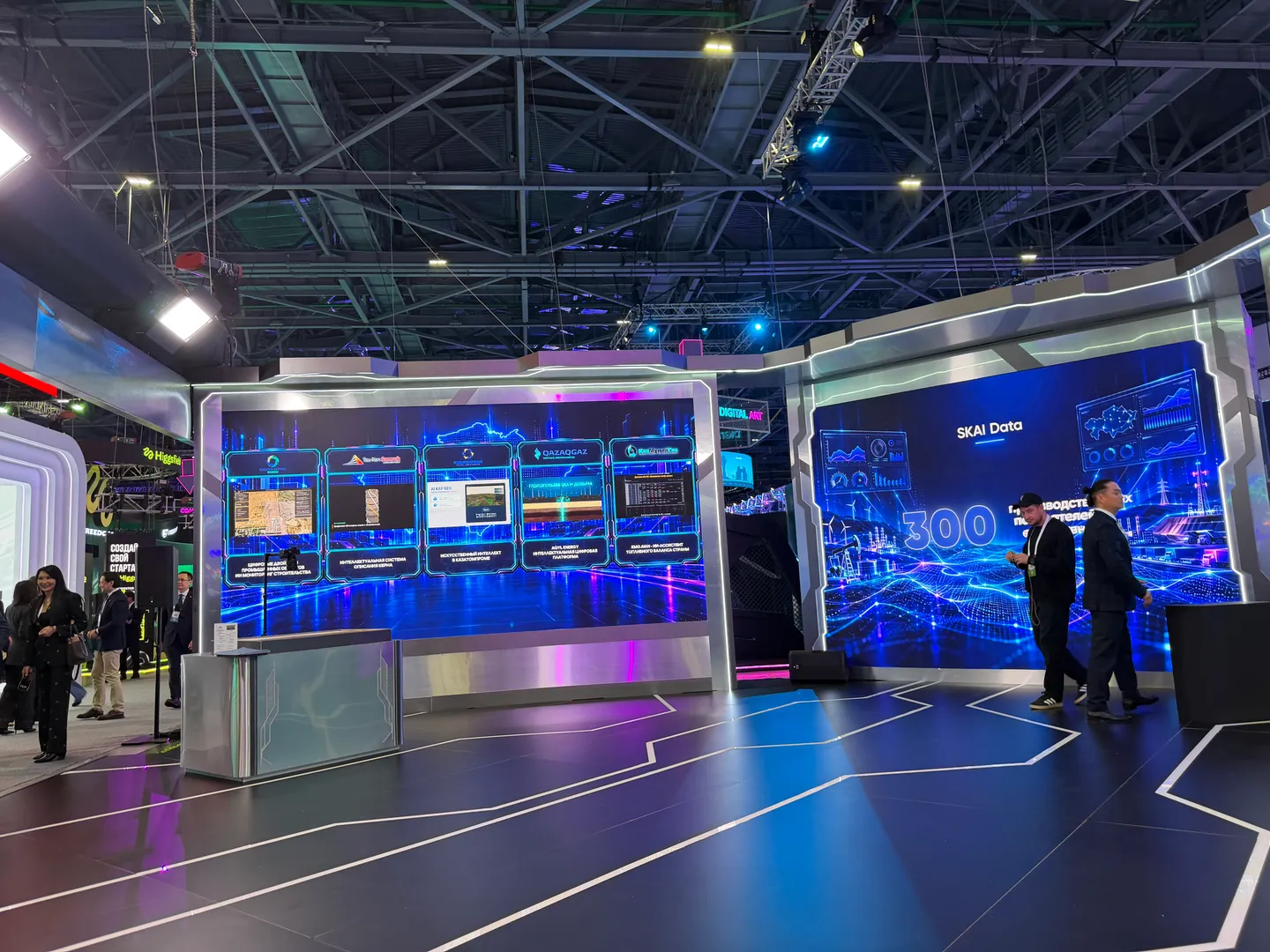
The annual forum, which has grown into a major technology gathering in Eurasia, brings together technology companies, entrepreneurs, investors, researchers and government representatives. The 2026 edition is being held at the EXPO International Exhibition Centre in Astana from October 1 to 3. Organizers say the platform has attracted more than 127,000 visitors from 100 countries over seven years, with more than 1,500 speakers and over 600 startups represented.
“This is a place where innovative ideas are born, business contacts are forged and real projects are launched,” Tokayev said.
He described AI & Digital Bridge as a platform bringing together people with “innovative thinking, creativity and intellectual potential,” arguing that its expanding international participation reflects the growing importance of emerging technologies.
AI Is Reshaping the Economy of Kazakhstan
The President said artificial intelligence is already transforming the way economies and societies operate.
“We are all witnessing how artificial intelligence technologies are fundamentally transforming industry, finance, education, science, public administration and people’s way of life,”
Tokayev said.
The forum’s agenda reflects that transformation, extending beyond digitalization to computing infrastructure, large language models and robotics, while also addressing regulation and technological safety.
“Thus, AI & Digital Bridge effectively serves as a golden bridge for international engagement in the field of emerging technologies,” he said.
For Kazakhstan, the ambition is increasingly tied to economic performance. Tokayev said the country’s IT-services exports exceeded $1 billion last year, while Kazakh digital solutions are now available in more than 100 countries.
“Nevertheless, we cannot rest on our achievements in the field of advanced technologies,” he said. “If we seek to build a strong technological foundation for our country, we must provide tangible support to innovative startups and implement cutting-edge projects.”
From AI Ideas to Industrial Applications
One of the most concrete proposals in the President’s address was the creation of an AI Challenge focused on real industrial problems.
Tokayev called for the development of a list of AI challenges based on the actual needs of Kazakhstan’s economy. Teams from Kazakhstan and abroad would then be invited to develop solutions, with the most effective projects potentially moving from competition into real-world production.
“The best projects demonstrating proven effectiveness will be implemented in production,” Tokayev said.
The proposal reflects a broader effort to connect Kazakhstan’s growing technology ecosystem with the practical needs of industry rather than treating AI development as an exclusively research-driven exercise.
A Delicate Balance on AI Regulation
Regulation emerged as another central theme of the President’s speech.
Kazakhstan has established what Tokayev described as a basic legal framework for digital transformation, including its Law on Artificial Intelligence and the Digital Code. But he argued that regulation must evolve without creating unnecessary barriers to technological development.
“We must not overregulate this sphere to the point where promising teams, technologies and capital begin moving to other jurisdictions,” Tokayev said.
He added:
“Where safety, rights and vital interests of citizens are at stake, requirements must be strict, but not excessive.”
The message reflects a broader policy challenge facing governments around the world: how to address the risks associated with rapidly developing AI systems while preserving an environment attractive to developers, startups and investors.
Tokayev also referred to the recently signed Superintelligence Accord involving leading American technology companies under U.S. President Donald Trump, saying the approach could be considered by other countries as a potential model after further discussion.
The Human Factor
Despite the emphasis on infrastructure and technology, Tokayev repeatedly returned to the importance of people.
Data centers and advanced computing systems, he argued, cannot by themselves produce a technological breakthrough.
“A technological breakthrough is impossible without scientists, engineers and entrepreneurs,”
he said.
The President highlighted the recently opened Qazaq AI Research University, assigning it a role that extends beyond education to research addressing the needs of industry and the wider economy.
He also promoted the AI+X model, which aims to apply artificial intelligence across specific sectors, including industry, energy, healthcare, finance and public administration.
But Tokayev stressed that the rapid development of AI should make human knowledge more important, rather than less.
“Artificial intelligence is not a substitute for human intellectual abilities, but rather an auxiliary tool in the process of learning and acquiring knowledge.”
He argued that as technology advances, societies will need stronger capabilities in “knowledge, critical thinking, decision-making skills and a sense of responsibility.”
Kazakhstan Calls for Open International Cooperation
The President also placed Kazakhstan’s AI strategy within a broader international context.
He warned against technological fragmentation and called for continued cooperation between countries in research, investment, technology and talent development.
“No nation can fully unlock its potential in isolation,” Tokayev said.
“We need international knowledge exchange, joint research, investment, tech cooperation and talent development.”
He stressed that Kazakhstan supports the “peaceful, safe and responsible development of artificial intelligence” and argued that AI should not become a new source of division between countries.
“Artificial intelligence must not create new dividing lines,” he said.
According to Tokayev, technological barriers could widen existing gaps between nations, making international scientific and technological cooperation increasingly important.
The Risks Behind the AI Boom
Alongside the opportunities, Tokayev highlighted the growing risks associated with increasingly powerful AI systems.
Cybersecurity, data protection, information integrity, algorithmic transparency and accountability, he said, all require timely responses.
“Artificial Intelligence has already been acknowledged as a powerful tool,” Tokayev said. “But ultimately, everything depends on the human being who uses it.”
He went further, describing AI as “a powerful tool and even a weapon of our time,” while placing responsibility for its consequences primarily on those who develop and deploy it.
“Whether it brings benefit or harm to global development will depend, first and foremost, on humanity itself,” he said.
A New Generation and Jana Qazaqstan
The President also singled out young people as central to Kazakhstan’s digital future.
AI, he said, is opening new opportunities for education and personal development, but technological access must be accompanied by the ability to think critically and use these systems responsibly.
“It is important that our young compatriots make effective use of these opportunities and develop as educated individuals who can confidently harness artificial intelligence while possessing critical thinking skills,” Tokayev said.
The emphasis on education comes as Kazakhstan seeks to build a domestic pool of engineers, researchers and entrepreneurs capable of developing technologies for both the local and international markets.
It is important to note that more than 5.8 million young people live in Kazakhstan, accounting for nearly one-third of the country’s population according to Qazinform. Furthermore, the development of human capital, education, science and innovation are key national priorities enshrined in Kazakhstan’s new Constitution.
Global Positioning
Tokayev concluded by linking Kazakhstan’s AI agenda to a wider national transformation.
“The central task of the Year of Digitalization and Artificial Intelligence is to turn this progress into tangible benefits for every citizen and make it irreversible,”
he said.
“Kazakhstan is well positioned to take its place in the new tech era.”
The President said the country’s future success would depend on “deep knowledge, bold decisions, pragmatic approach and responsible action.”
His address came as AI & Digital Bridge seeks to strengthen its role as a meeting point between Kazakhstan’s emerging technology ecosystem and international investors, companies and researchers. The forum’s official program includes technology exhibitions, startup activities, international speakers and discussions on AI and the digital economy.
The plenary session also featured William Ford, Chairman and CEO of General Atlantic; Rev Lebaredian, Vice President of NVIDIA; Balaji Srinivasan, founder of the Network School; and Greg Wyler, founder of OneWeb and E-Space.
For Kazakhstan, the forum represents more than an annual technology gathering. It is part of a broader effort to translate digital infrastructure and AI investment into industrial applications, exportable technology and a new generation of technological talent.
The challenge, as Tokayev's address made clear, is no longer simply whether Kazakhstan will adopt artificial intelligence. It is how effectively the country can develop the skills, institutions, businesses and international partnerships needed to turn AI into a sustainable part of its economic future.
external sources
Kazakhstan aims to train one million people in AI skills by 2030 | Euronews
Speeches — Official website of the President of the Republic of Kazakhstan
Young people make up nearly one-third of Kazakhstan’s population
Related Topics
Derya Soysal
Contributing writer at EUReflect.
Follow EUReflect
See more of our reporting on Google
Mark EUReflect as a preferred source and our stories are ranked higher for you in Top Stories, Discover and Google News — and carry a “preferred” badge when they are cited in AI results.
Add EUReflect as a preferred source