Uzbekistan’s Good Neighborliness Policy: A New Paradigm for Regional Cooperation in Central Asia
Uzbekistan’s foreign policy has undergone a major shift since 2016, moving from the isolation and regional tensions of the Karimov era to a cooperative “good neighborliness” approach under President Mirziyoyev. Significant progress has been made in resolving border disputes with Kyrgyzstan and Tajikistan, advancing shared water-resource management, revitalizing regional dialogue platforms, and engaging pragmatically with Taliban-ruled Afghanistan to support security and connectivity. While challenges such as reliance on political leadership, limited institutional capacity, and external geopolitical pressures persist, Uzbekistan’s new strategy has strengthened regional stability and positioned the country as a driving force for cooperation and integration in Central Asia.
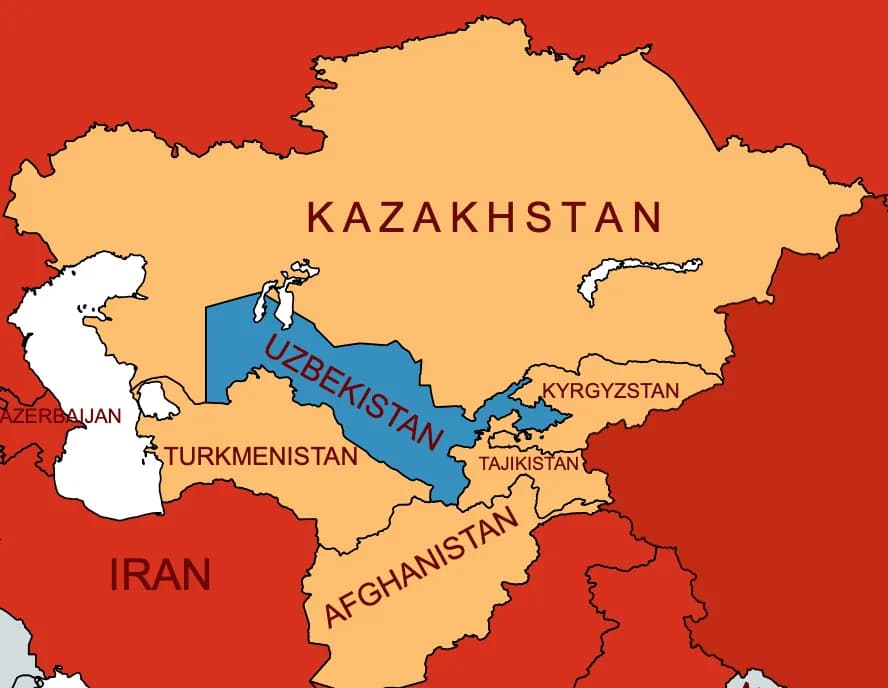
Since the collapse of the Soviet Union in 1991, the Central Asian republics have grappled with unresolved border disputes, resource competition, and fragile bilateral relations. Among them, Uzbekistan—due to its geographical centrality and demographic weight—has long been a key actor in shaping the region’s geopolitical trajectory. Under President Islam Karimov (1991–2016), Tashkent adopted an insular and securitized foreign policy, characterized by mistrust, minimal regional cooperation, and periodic tensions with neighbors such as Kyrgyzstan and Tajikistan. However, the post-2016 era under President Shavkat Mirziyoyev has marked a profound transformation in Uzbekistan’s regional posture. Mirziyoyev’s administration has embraced a policy of “good neighborliness” aimed at fostering dialogue, resolving historical disputes, and promoting regional integration. This policy shift has not only redefined Uzbekistan’s bilateral relations but also stimulated broader patterns of cooperation and stability in Central Asia. The key pillars of this approach—border demarcation, water diplomacy, and institutionalized regional dialogue—reflect a strategic recalibration from unilateralism and isolation to pragmatism and multilateral engagement.
Border Dispute Resolution: From Conflict to Cooperation
Perhaps the most tangible manifestation of Uzbekistan’s new foreign policy lies in its approach to border demarcation, particularly with Kyrgyzstan and Tajikistan. During the Karimov era, the Fergana Valley became a flashpoint for recurrent tensions and military standoffs, resulting in closed borders and strained cross-border interactions. Since 2016, however, a series of sustained diplomatic negotiations has yielded significant breakthroughs. In the case of Kyrgyzstan, over a dozen rounds of talks culminated in the 2022 agreement that resolved approximately 99% of the previously contested border. The establishment of joint border commissions, coordinated patrols, and demilitarized zones reflects a clear departure from past confrontational practices. In disputed areas, barbed wire fences have been replaced with open markets and cultural initiatives. With Tajikistan, similar progress has been achieved. A 2018 Friendship and Cooperation Agreement included provisions for expedited border mapping and de-escalation measures in historically contested regions. These developments underscore a pragmatic shift toward conflict prevention and mutual trust-building.
Water Diplomacy: Toward Shared Resource Management
Water has historically been a source of interstate tension in Central Asia, where Soviet-era infrastructure and uneven access to upstream and downstream resources complicate equitable distribution. Under Karimov, Uzbekistan staunchly opposed hydropower projects upstream, particularly in Kyrgyzstan and Tajikistan, citing threats to its agricultural water security. In contrast, the Mirziyoyev government has pursued a cooperative approach centered on shared interests. One of the most striking developments was Uzbekistan’s support for the Rogun Dam in Tajikistan—a project that had previously been a major point of contention. Rather than obstruct construction, Tashkent promoted technical cooperation and proposed joint planning for energy and irrigation infrastructure. Uzbekistan also reengaged in regional mechanisms such as the International Fund for Saving the Aral Sea (IFAS), which had previously been sidelined. These initiatives signify a broader strategic vision in which water is treated not as a zero-sum asset, but as a shared resource requiring multilateral governance.
Regional Institutions and Multilateral Dialogue
Uzbekistan’s good neighborliness policy extends beyond bilateral engagements to the revitalization of regional institutional frameworks. The Central Asia Heads of State Consultative Meetings—dormant for years—have become active platforms for regional leaders to discuss a range of issues, including border facilitation, transportation, environmental challenges, and energy cooperation. Unlike externally driven formats such as the CSTO or SCO, this forum emphasizes regional ownership and autonomy. In parallel, Uzbekistan has expanded its engagement with the Organization of Turkic States, deepening its integration into regional infrastructure and trade initiatives. These multilateral platforms not only facilitate policy coordination but also serve as venues for building regional identity and trust. Importantly, they reflect a departure from dependency on external powers and signal a growing sense of strategic self-confidence among Central Asian states.
Another dimension of Uzbekistan’s evolving foreign policy is its cautious yet pragmatic engagement with Taliban-ruled Afghanistan. Following the Taliban’s return to power in 2021, while much of the international community refrained from formal recognition, Tashkent opted for a realist approach centered on direct bilateral dialogue. Prioritizing border security, trade in electricity, and transport connectivity—including the planned extension of the Trans-Afghan Railway—Uzbekistan maintained open communication channels with the de facto authorities in Kabul. By doing so, it sought to prevent Afghanistan’s isolation from triggering broader regional instability. This approach reflects a foreign policy driven not by ideology but by regional security and economic pragmatism, and it demonstrates Uzbekistan’s willingness to extend its good neighborliness policy beyond Central Asia’s traditional core.
Challenges and the Road Ahead
While the achievements of Uzbekistan’s foreign policy transformation are notable, the durability of this new regional order remains uncertain. Much of the recent progress has hinged on the political will and personal leadership of President Mirziyoyev. The sustainability of cooperative frameworks will require institutionalization beyond individual administrations. Moreover, regional institutions still lack binding enforcement mechanisms, permanent secretariats, or robust financial structures, rendering them vulnerable to political fluctuations and donor fatigue. Additionally, external actors such as Russia and China continue to exert significant influence in the region. Competing infrastructure, security, and economic agendas may complicate efforts to sustain indigenous cooperation. On the domestic front, border communities still face challenges related to unresolved land access, economic inequality, and infrastructural underdevelopment, which could undermine the long-term legitimacy of regional agreements.
Conclusion
Uzbekistan’s post-2016 good neighborliness policy represents a paradigm shift in Central Asian diplomacy. By replacing coercion with cooperation and isolation with integration, Tashkent has helped reconfigure regional dynamics in favor of peace and interdependence. Border normalization, water-sharing arrangements, and multilateral dialogue mechanisms signal a new mode of regional engagement—one that values pragmatism, mutual benefit, and long-term stability. Although the path ahead remains complex and contingent on continued leadership, institutional resilience, and geopolitical balance, Uzbekistan’s evolving foreign policy offers a hopeful model. It demonstrates that even in a region long associated with fragmentation and rivalry, diplomacy and cooperation can take root and flourish. In this sense, Uzbekistan’s trajectory holds valuable lessons for other post-Soviet and post-conflict regions seeking to construct stability in a multipolar world.
Sources:
Шавкат Мирзиёев подписал законы по границе с Кыргызстаном и Андижанскому водохранилищу, https://kun.uz/ru/news/2022/11/30/shavkat-mirziyoyev-podpisal-zakony-po-granitse-s-kyrgyzstanom-i-andijanskomu-vodoxranilishchu, (10.04.2025).
Catherine Putz, Kyrgyz and Uzbek Presidents Sign Border Agreements Into Law, https://thediplomat.com/2022/12/kyrgyz-and-uzbek-presidents-sign-border-agreements-into-law/, (07.04.2025).
Bruce Pannier, Uzbekistan: The Suddenly Good Neighbor, https://www.rferl.org/a/uzbekistan-suddenly-good-neighbor/28031740.html, (07.04.2025).
O‘zbekiston Turkiy davlatlar tashkiloti tarkibida: hamkorlik xronologiyasi, https://www.gazeta.uz/oz/2025/05/21/organization-of-turkic-states/, (16.05.2025).
Beishenbek Toktogulov, Uzbekistan’s Foreign Policy under Mirziyoyev: Change or Continuity? https://dergipark.org.tr/en/pub/erj/issue/68365/1066059, (16.05.2025).
Alouddin Komilov and Mirshohid Aslanov, Why Is Uzbekistan Engaging with the Taliban? https://nationalinterest.org/blog/silk-road-rivalries/why-is-uzbekistan-engaging-with-the-taliban, (16.07.2025).
Dolunay Yusuf Baltürk
Contributing writer at EUReflect.
Follow EUReflect
See more of our reporting on Google
Mark EUReflect as a preferred source and our stories are ranked higher for you in Top Stories, Discover and Google News — and carry a “preferred” badge when they are cited in AI results.
Add EUReflect as a preferred source