Uzbekistan’s Quiet Revolution: How “Yangi Oʻzbekiston” is Rewriting Central Asia
For decades, Central Asia was a land of immense potential trapped behind rigid borders, frozen conflicts, and cautious diplomacy. Uzbekistan, the region’s largest and most influential country, often seemed content to watch from the sidelines.
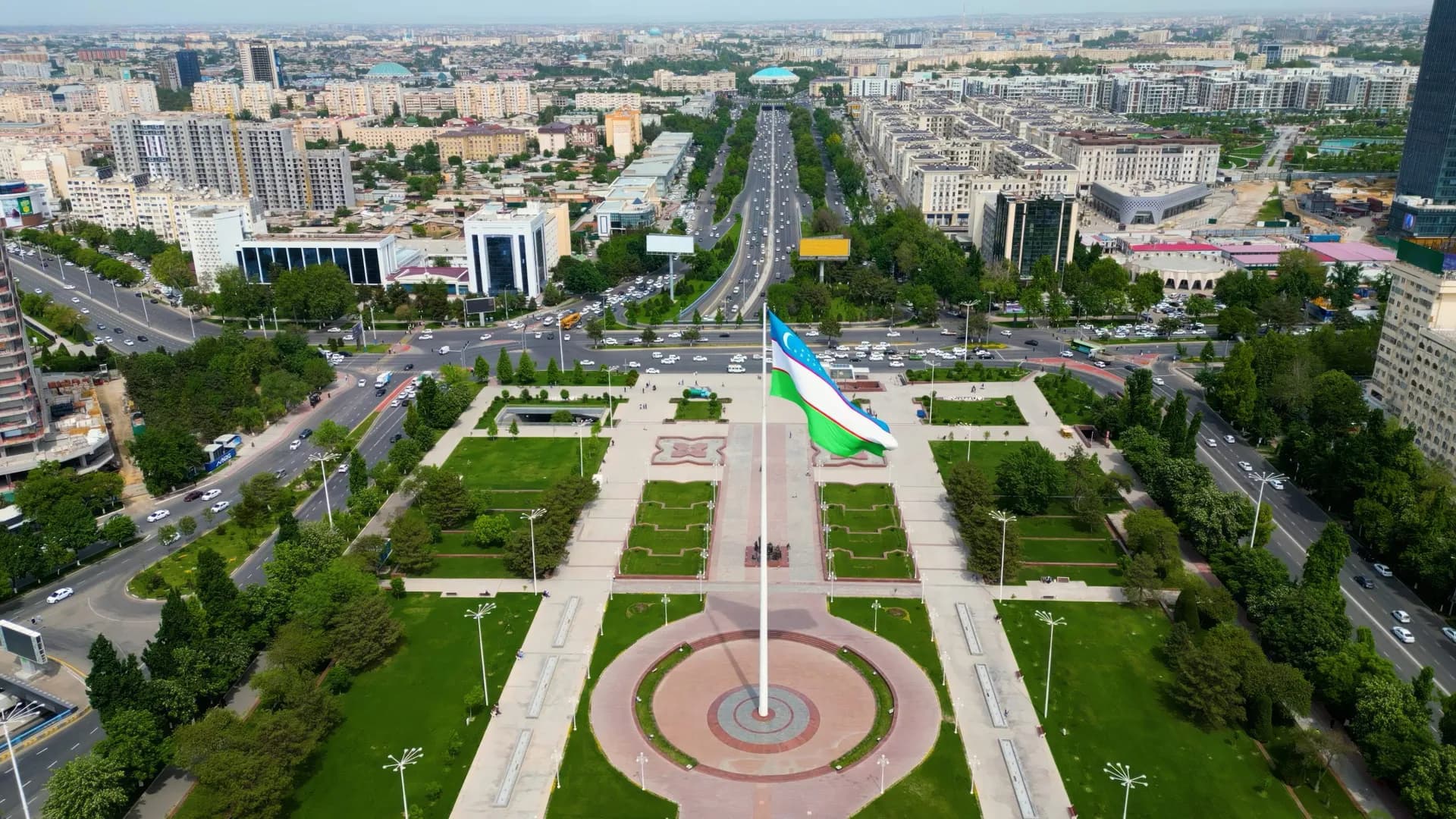
For decades, Central Asia was a land of immense potential trapped behind rigid borders, frozen conflicts, and cautious diplomacy. Uzbekistan, the region’s largest and most influential country, often seemed content to watch from the sidelines. That is no longer the case. Under President Shavkat Mirziyoyev, the Yangi Oʻzbekiston—“New Uzbekistan”—strategy is quietly reshaping not only the country’s domestic landscape but the balance of power across Central Asia. At its core, Yangi Oʻzbekiston is a bold bet: a vision that links domestic reform to strategic foreign engagement. Internally, Uzbekistan is modernizing governance, strengthening the rule of law, and opening its economy to competition and innovation. Yet these reforms are not just about domestic prosperity—they are the foundation for a new, assertive foreign policy. For the first time in decades, Tashkent is signaling that it intends to shape, rather than merely react to, the currents of regional politics.
The change is tangible. Borders that were once tightly controlled are opening. Trade corridors are coming to life. Infrastructure projects now crisscross the region, connecting Uzbekistan to neighbors with railways, highways, and energy networks that promise mutual growth. Even the historically thorny issue of water management—a perennial source of tension in Central Asia—is being approached with dialogue, cooperation, and technical coordination rather than unilateral maneuvering. Uzbekistan is increasingly seen as the convening hub for the region, a place where disputes can be resolved over negotiation rather than brinkmanship. On the global stage, Uzbekistan is also recalibrating its presence. It maintains strategic ties with Russia and China while exploring deeper connections with the European Union, the United States, and countries across the Middle East and Asia. Multilateral forums, from the Shanghai Cooperation Organization to the United Nations, have become platforms where Tashkent projects itself as a reliable, forward-looking partner. By pursuing balanced diplomacy, Uzbekistan is demonstrating that a landlocked country can still wield influence far beyond its borders.
The implications of this approach for Central Asia are profound. For years, the region was defined by fragmentation, mistrust, and missed opportunities. Today, with Tashkent taking a leadership role, there is a cautious optimism that Central Asia can evolve into a hub of economic and political connectivity. A stable, reform-oriented Uzbekistan can anchor regional integration, facilitating trade, joint infrastructure development, and cooperative security initiatives. In effect, the country is converting geographic centrality into strategic centrality. Yet the path ahead is not without obstacles. Economic pressures, domestic resistance to reform, and competing interests from global powers could test the resilience of Yangi Oʻzbekiston. Success is far from guaranteed. But the ambition itself signals a fundamental shift: Uzbekistan is no longer content to be a passive observer of global and regional developments. The country is asserting agency, setting its own agenda, and inviting neighbors to follow a cooperative vision for Central Asia’s future.
Yangi Oʻzbekiston is more than a slogan; it is a strategic blueprint. It shows that influence is not determined solely by size, resources, or military might, but by vision, timing, and the courage to act. As Uzbekistan quietly reshapes its domestic institutions and forges new regional ties, it is also reminding the world that Central Asia is not a periphery—it is a space of possibility, and Tashkent is determined to lead the way.
For those watching Eurasia, the message is clear: Central Asia is waking up, and Uzbekistan is ringing the alarm clock. The region’s future may be unpredictable, but one thing is certain—Uzbekistan intends to write the first chapter.
References
Yangi O‘zbekiston tashqi siyosatining ustuvor yo‘nalishlari, https://yuz.uz/uz/news/yangi-ozbekiston-tashqi-siyosatining-ustuvor-yonalishlari, (05.08.2025).
Yangi O‘zbekiston taraqqiyot strategiyasi va tashqi siyosat: maqsad-vazifalar ijrosida parlamentning o‘rni, http://nhrc.uz/oz/news/m6701, (05.08.2025).
Многогранность внешней политики Нового Узбекистана, https://slovo.kg/politika/mnogogrannost-vneshnej-politiki-novogo-uzbekistana/, (05.08.2025).
Dolunay Yusuf Baltürk
Contributing writer at EUReflect.
Follow EUReflect
See more of our reporting on Google
Mark EUReflect as a preferred source and our stories are ranked higher for you in Top Stories, Discover and Google News — and carry a “preferred” badge when they are cited in AI results.
Add EUReflect as a preferred source