Why Kazakhstan Is Emerging as a Global Education and AI Hub
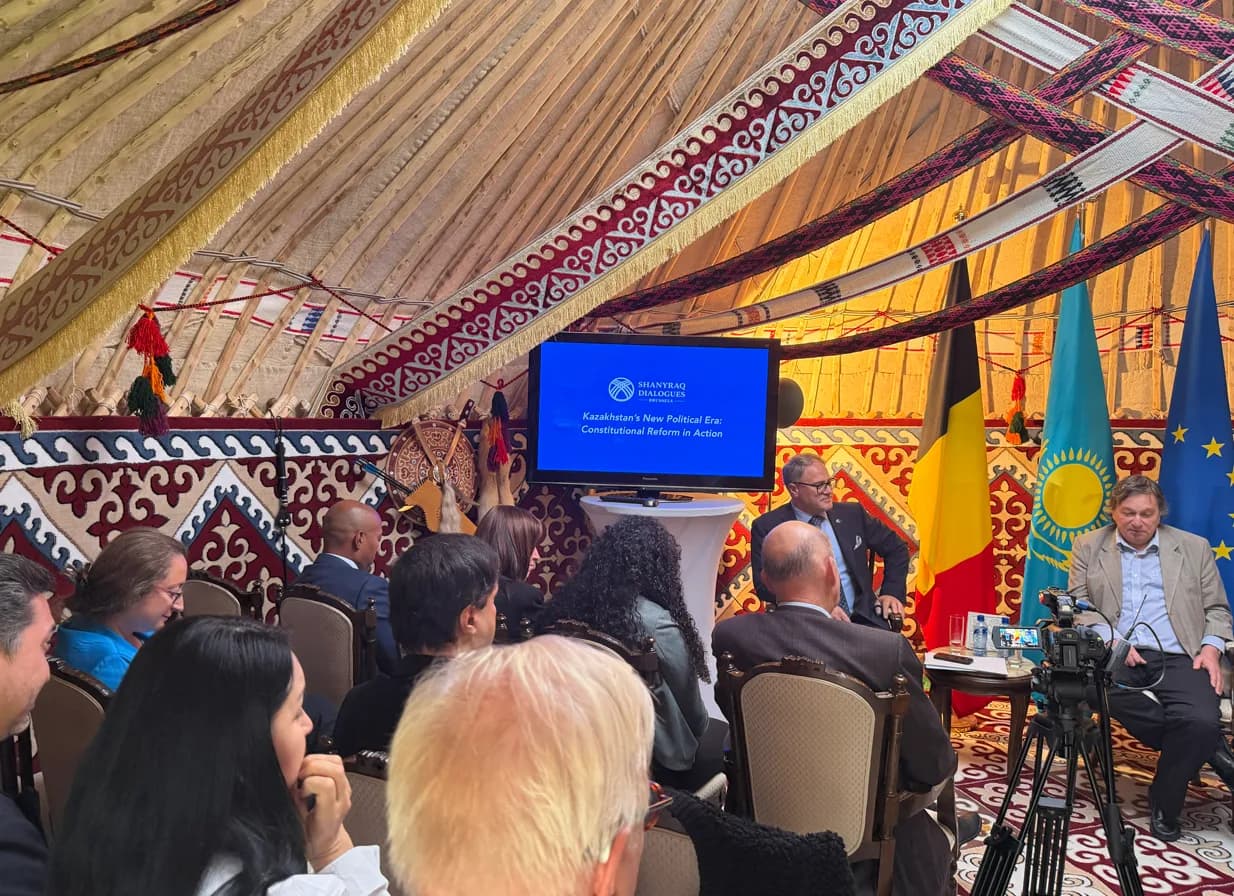
Latest edition of the Shanyraq Dialogue Series held in Brussels
Brussels, June 2026 — For decades, Kazakhstan’s international image was largely associated with its vast natural resources, strategic geographic location and role as a key energy supplier connecting Europe and Asia. Today, however, the country is pursuing a far more ambitious objective: transforming itself into a knowledge-driven economy capable of competing in the fields of higher education, scientific research and artificial intelligence.
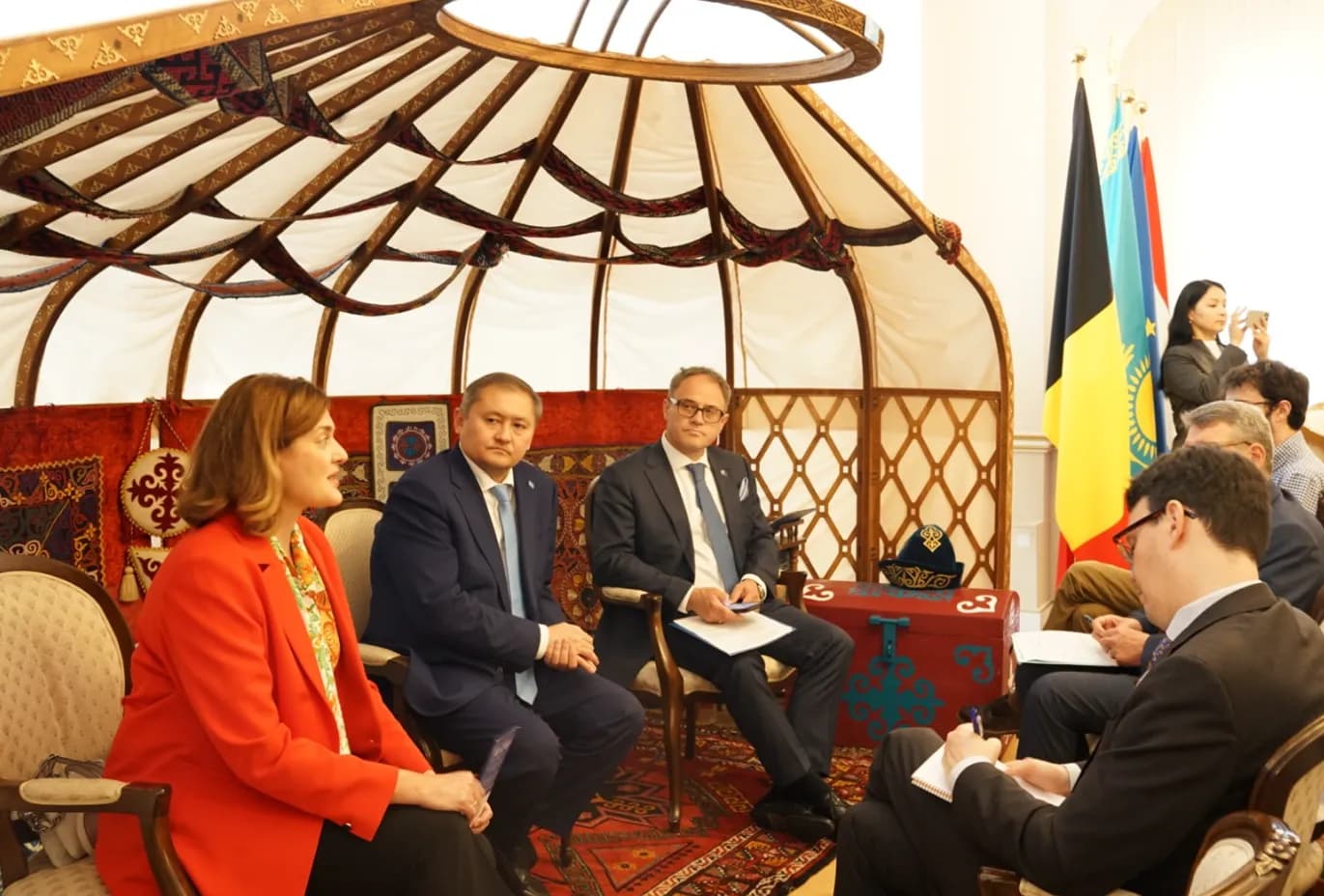
This ambition was at the heart of the latest edition of the Shanyraq Dialogue Series held in Brussels under the theme “Kazakhstan’s Knowledge Economy: New Frontiers for EU Partnership.” Bringing together policymakers, researchers, academics and innovation experts from both Europe and Central Asia, the event highlighted how education and technology are becoming central pillars of the evolving partnership between Kazakhstan and the European Union.
The discussions revealed a country seeking not only to modernize its economy, but also to redefine its position on the global stage. Kazakhstan’s leadership increasingly sees science, innovation and human capital as the foundations of long-term prosperity in a rapidly changing world.
From Strategic Partner to Knowledge Partner
Speaking at the event, Ambassador Roman Vassilenko emphasized that 2026 represents an important milestone in relations between Kazakhstan and the European Union. This year marks the tenth anniversary of the Enhanced Partnership and Cooperation Agreement (EPCA), as well as thirty-three years of diplomatic relations between the two partners.
The economic relationship is already substantial. The European Union remains Kazakhstan’s largest trade and investment partner, with bilateral trade reaching approximately $45 billion and cumulative European investments surpassing $210 billion. Yet while economic cooperation remains essential, both sides increasingly recognize that the future of the relationship will depend on their ability to collaborate in areas such as research, innovation and advanced technologies.
“This year carries immense symbolic weight for Kazakh-EU relations. We are marking the 10th anniversary of the Enhanced Partnership and Cooperation Agreement and 33 years of diplomatic relations between Kazakhstan and the European Union,” Ambassador Vassilenko said.
For the ambassador, the next stage of cooperation should be defined by intellectual capital rather than exclusively by commercial exchanges.
“In the 21st century, the ultimate currency is intellect,” he noted.
That statement encapsulates a broader shift currently underway in Kazakhstan. While the country continues to benefit from its natural resources, policymakers increasingly view education and innovation as the real drivers of future economic growth. In this context, Europe is regarded not only as an economic partner but also as a source of expertise, research excellence and institutional know-how.
Why Europe Matters to Kazakhstan’s Scientific Ambitions
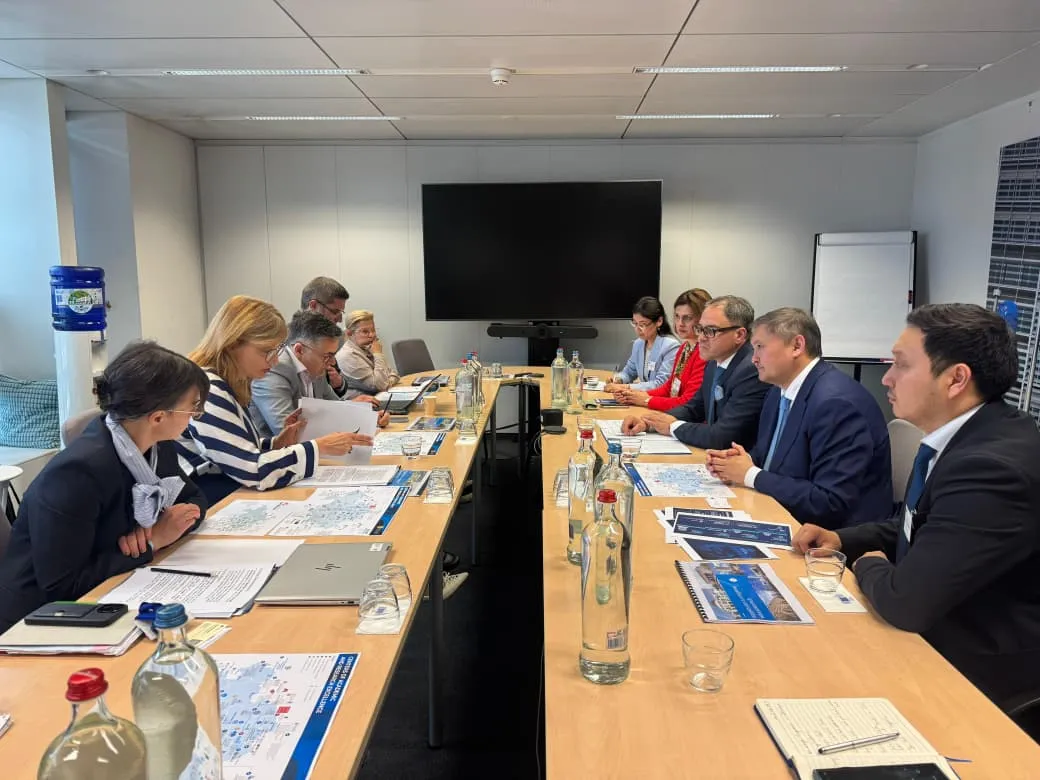
Minister of Science and Higher Education Sayasat Nurbek used the Brussels forum to present Kazakhstan’s Higher Education and Science Development Strategy for 2023–2029. The strategy reflects a growing conviction within the government that future competitiveness will depend on the country’s ability to generate knowledge rather than simply export commodities.
“Kazakhstan sees science and technology cooperation with the European Union as the next logical step in a relationship that is already strong in trade, energy, transport and critical raw materials,” Nurbek explained.
He stressed that Kazakhstan wants to be recognized as much more than a supplier of resources or a transit corridor linking East and West.
“We want to be recognised as a knowledge partner: a country with young researchers, reforming universities, growing research infrastructure and real innovation capacity.”
This vision is particularly significant given Kazakhstan’s demographic profile. With a relatively young population and increasing demand for higher education, the country sees an opportunity to develop a new generation of scientists, engineers and entrepreneurs capable of contributing to both national development and international research networks.
For Kazakhstan, cooperation with Europe offers access not only to funding and collaborative projects but also to internationally recognized standards in research quality, transparency and academic governance.
“The EU is important for us because it brings high standards in research, transparency, quality assurance, innovation policy and long-term institutional cooperation,” the minister said.
Nurbek also pointed to the European Union’s Global Gateway strategy as an example of how modern connectivity should be understood. In his view, connectivity today extends far beyond roads, railways and logistics corridors. It increasingly encompasses digital networks, scientific collaboration, educational exchanges, energy cooperation and people-to-people contacts.
Artificial Intelligence at the Center of National Transformation
Perhaps the most striking aspect of Kazakhstan’s modernization agenda is the central role assigned to artificial intelligence.
While many countries are still debating how to integrate AI into their educational systems, Kazakhstan has chosen to make artificial intelligence a national priority. The government sees AI not merely as a technological trend but as a transformative force capable of reshaping education, public administration, healthcare and industry.
According to Minister Nurbek, one of the most promising areas for cooperation with European partners concerns digital technologies, data science and artificial intelligence. Kazakhstan is investing heavily in talent development, computing infrastructure and applied research with the objective of becoming a regional leader in AI innovation.
The country aims to become the first nation in Central Asia to implement AI literacy on a nationwide scale through a structured, secure and ethical framework. Rather than focusing solely on technical specialists, policymakers want to ensure that AI skills become part of the broader educational experience for students across disciplines.
This approach reflects a recognition that artificial intelligence is likely to affect virtually every sector of the economy. International studies suggest that AI could influence up to 70 percent of existing jobs while significantly increasing automation potential across multiple industries. Preparing the workforce for this transition has therefore become an urgent priority.
AI-Sana: Creating a New Generation of Innovators
At the heart of Kazakhstan’s AI strategy is the AI-Sana initiative, a large-scale national program designed to develop artificial intelligence competencies throughout the education system.
The scale of the project is remarkable. Government targets include foundational AI training for 650,000 students, advanced project-based learning opportunities for 100,000 participants and pathways for approximately 60,000 graduates to integrate their skills into industry and entrepreneurship.
Beyond educational objectives, AI-Sana is intended to stimulate innovation and startup creation. Authorities hope to accelerate around 1,500 AI-related projects while building a broader innovation ecosystem capable of generating commercially viable technologies.
The long-term ambition is even more significant: training up to one million people in AI by 2029.
To achieve these goals, Kazakhstan has partnered with major international organizations including Huawei, Coursera and Astana Hub. These partnerships combine global expertise and technological resources with local implementation, helping to accelerate the country’s digital transformation.
Bringing Artificial Intelligence into Universities
Kazakhstan’s AI ambitions are not limited to training students. The government is also working to integrate artificial intelligence directly into the management and operation of universities.
A landmark agreement with OpenAI is expected to provide at least 165,000 ChatGPT Edu licenses annually across the higher education sector. The initiative includes secure infrastructure aligned with international data protection standards and aims to support teaching, research and administrative processes.
Officials believe AI tools can significantly reduce administrative burdens on academic staff while improving curriculum development and personalized learning. The objective is not to replace educators but rather to enable them to focus more on teaching and research.
The government has set an ambitious target of achieving AI competency among university faculty nationwide. If successful, Kazakhstan would join a relatively small group of countries attempting to implement artificial intelligence across an entire higher education system rather than through isolated pilot projects.
Building an AI University for the Future
One of the most visible symbols of Kazakhstan’s ambitions is the creation of the University of Artificial Intelligence in Astana, scheduled to welcome its first students in September 2026.
The institution is designed to become a flagship center for AI education and research. It will offer undergraduate, master’s and doctoral programs while also developing interdisciplinary curricula that apply artificial intelligence to sectors ranging from healthcare and finance to engineering and public policy.
The university plans to establish specialized research laboratories focusing on quantum AI, robotics and medical technologies. Partnerships with internationally renowned institutions such as Carnegie Mellon University, Gazi University of Turkiye, the Hong Kong University of Science and Technology are expected to strengthen its academic profile and facilitate international collaboration.
More broadly, the project reflects Kazakhstan’s determination to create domestic centers of excellence capable of attracting both local and international talent.
Developing the Infrastructure Behind the Vision
Educational reform alone is not sufficient to build a competitive AI ecosystem. Recognizing this reality, Kazakhstan is simultaneously investing in digital infrastructure.
One of the most significant projects is the development of alem.cloud, which is expected to become the most powerful supercomputing platform in Central Asia. Combined with new data centers, GPU clusters and national AI platforms, these investments are intended to provide researchers, startups and businesses with the computing resources required for advanced AI applications.
Such infrastructure is increasingly viewed as a strategic asset. Just as previous generations invested in roads, railways and energy networks, countries now compete through their ability to provide computing power and access to data.
Kazakhstan’s leadership understands that attracting researchers and technology companies requires more than educational reforms; it also requires world-class digital infrastructure.
A Global Education Strategy
Kazakhstan’s transformation is perhaps most visible in its higher education sector. Rather than attempting to build an internationally competitive system entirely from scratch, the country has chosen to integrate itself directly into global academic networks.
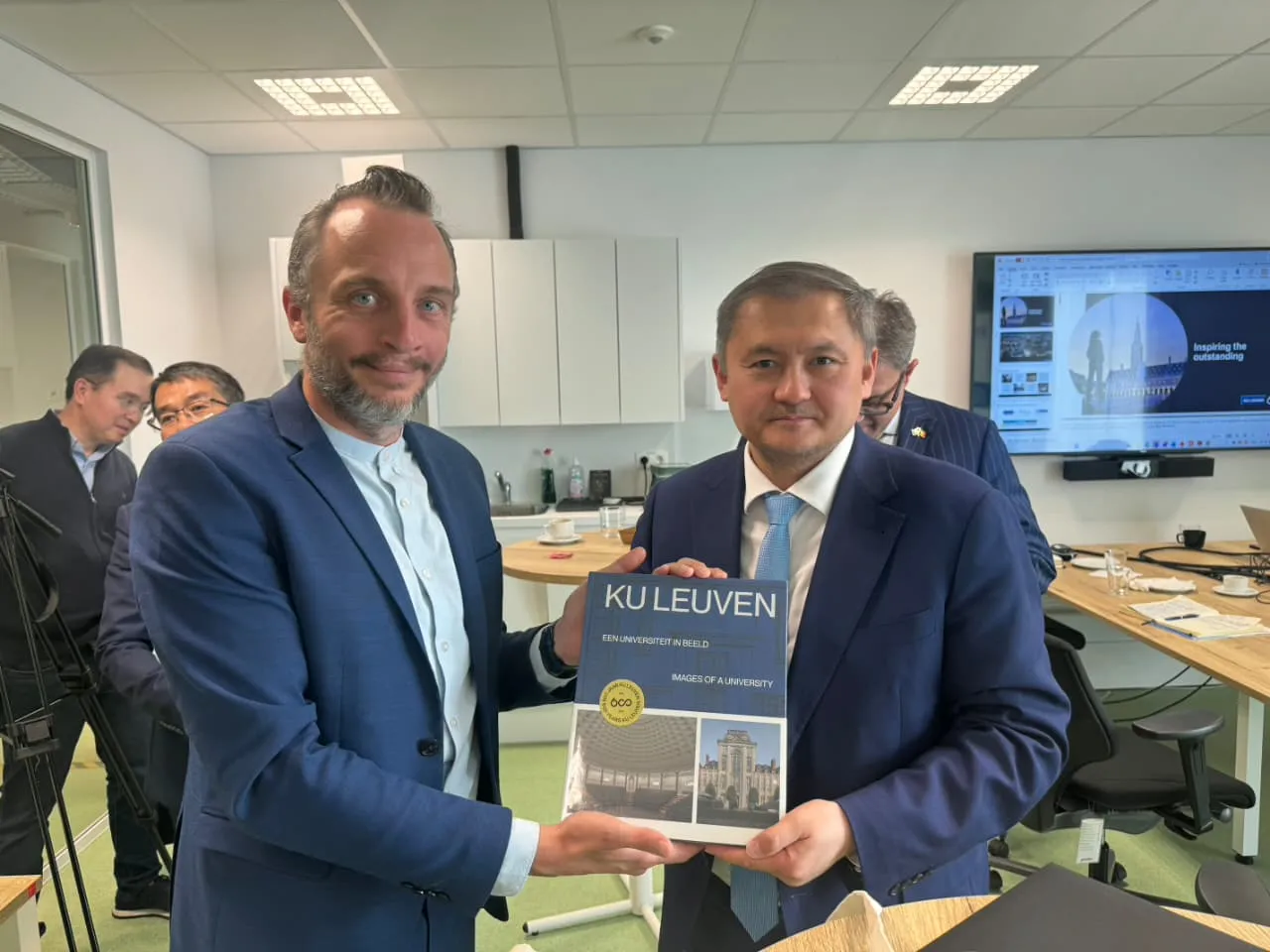
This strategy has led to partnerships with some of the world’s most respected universities. American institutions such as Arizona State University, the University of Arizona and Pennsylvania State University have established collaborations in fields ranging from biotechnology and information technology to cybersecurity and engineering. British universities including Heriot-Watt, Coventry University and De Montfort University have also developed significant presences in the country.
At the same time, Kazakhstan is strengthening relationships with leading Asian institutions such as the City University of Hong Kong and Beijing Language and Culture University.
This combination of Western and Asian partnerships is not accidental. It reflects Kazakhstan’s broader geopolitical position as a bridge between Europe and Asia, allowing the country to benefit from multiple innovation ecosystems simultaneously.
Foreign Campuses and International Opportunities
One of the most remarkable developments in recent years has been the rapid expansion of foreign university campuses within Kazakhstan itself.
Institutions such as Cardiff University, Coventry University, De Montfort University, Woosong University, MGIMO and the New York Film Academy have either recently opened or announced campuses in the country. These campuses offer full academic programs rather than symbolic partnerships, giving students access to internationally recognized degrees without leaving Kazakhstan.
The approach addresses several policy objectives simultaneously. It improves access to high-quality education, reduces educational migration, strengthens local research ecosystems and increases the country’s attractiveness as a regional education hub.
For many students across Central Asia, Kazakhstan is increasingly becoming a destination rather than a departure point.
A New Model for Central Asia?
Kazakhstan’s educational transformation remains a work in progress, and significant challenges remain. Building a knowledge economy requires sustained investment, institutional reform and long-term commitment. Yet the scale of the country’s ambitions is difficult to ignore.
What distinguishes Kazakhstan from many emerging economies is the comprehensiveness of its approach. Educational reform, scientific research, artificial intelligence, international partnerships and digital infrastructure are not being pursued as separate initiatives. Instead, they are being integrated into a broader national strategy aimed at preparing the country for the demands of the twenty-first century.
As Ambassador Vassilenko observed, the future of international partnerships will increasingly be shaped by ideas, innovation and human capital. Kazakhstan appears determined to position itself at the center of that transformation.
By investing simultaneously in education, research and artificial intelligence, the country is not only redefining its own development model but also emerging as one of the most dynamic knowledge hubs in Central Asia. For Europe, this evolution presents an opportunity to deepen cooperation with a partner that increasingly sees its future not underground, in natural resources, but in classrooms, laboratories and innovation centers.
Derya Soysal
Contributing writer at EUReflect.
Follow EUReflect
See more of our reporting on Google
Mark EUReflect as a preferred source and our stories are ranked higher for you in Top Stories, Discover and Google News — and carry a “preferred” badge when they are cited in AI results.
Add EUReflect as a preferred source