Why the Social State Cannot Function Without Digital Health
The EUReflect– Mr. Zahid Ali A. meeting emphasized that digital health is a structural requirement of the social state. Integrated, real-time health data networks enable equitable access, effective oversight, preventive governance, and sustainable use of public resources through data-driven healthcare systems.

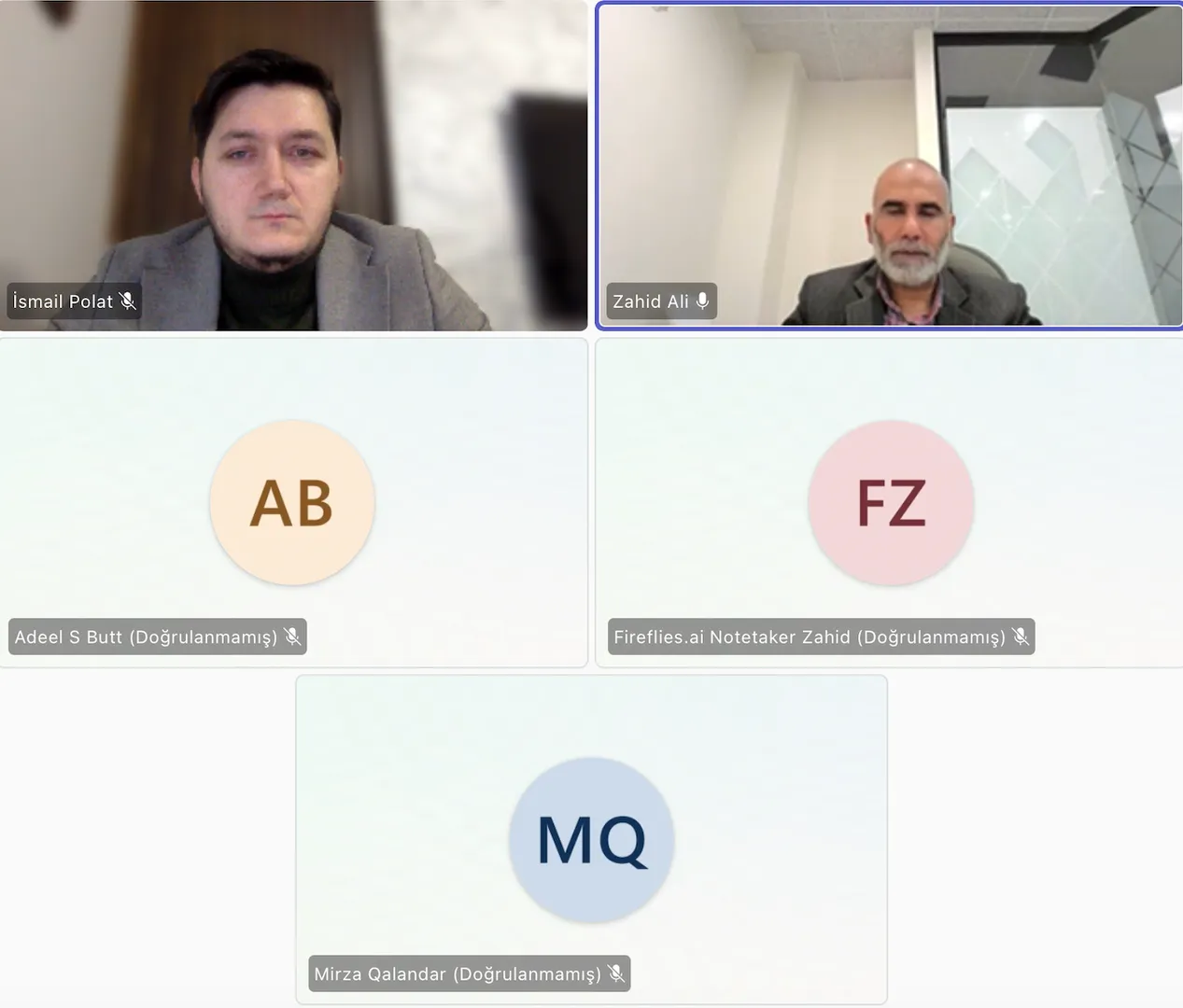
EUReflect conducted an online meeting with Mr. Zahid Ali A., a globally recognized thought leader in digital health and innovation. The discussion focused on the current state of digitalization in the healthcare sector, global trends, and, in particular, the capacity of digital health networks in terms of service delivery, oversight, and governance within the framework of the social state concept. Key strategic observations and policy-level notes were recorded during the meeting.
The primary focus of the meeting was the necessity of establishing a secure, integrated, and real-time digital networkthat enables health data generated in any hospital, regardless of geographic location, to be shared among physicians, hospital administrators, provincial and municipal health authorities, ministerial staff, and the Ministry of Health. It was emphasized that such a structure should not be perceived merely as a technological investment aimed at accelerating service delivery, but rather as a foundational infrastructure of the social state that institutionalizes equality, transparency, and accountability in healthcare governance.
The Unsustainability of the Social State Without Digitalization
One of the key conclusions drawn from the meeting was that the effectiveness of the social state is no longer measured by physical capacity alone, but increasingly by digital capacity. Geographic disparities, unequal distribution of medical expertise, and the growing demand for healthcare services have rendered traditional and fragmented management approaches insufficient.
Through digital health networks, health data belonging to citizens in rural or underserved regions can be transmitted instantly to central specialists and decision-makers. As a result, equality in healthcare provision moves beyond technical aspiration and becomes systematically embedded within institutional structures.
Moreover, digitalization enables one of the most critical pillars of the social state: oversight and accountability. Fragmented and manual systems undermine the efficient use of public resources, whereas integrated digital infrastructures allow:
-Hospital and regional performance monitoring,
-Measurement of service quality indicators,
-Optimization of human resource allocation, and
-Continuous tracking of regional health risks.
This transformation allows the social state to operate not as an abstract normative concept, but as a data-driven public responsibility.
Preventive Social State and Data-Driven Governance
Drawing upon Mr. Zahid Ali’s work in big data, artificial intelligence, and machine learning, the discussion emphasized that modern social states must transition from reactive to preventive governance models. Traditional healthcare systems largely intervene after health problems emerge, a model associated with increasing human and economic costs.
Digitalization enables the early detection of:
-Epidemic risks,
-Trends in chronic diseases, and
-Region-specific health threats.
Consequently, the state evolves from an entity that reacts belatedly to crises into one that anticipates, mitigates, and manages risks before they materialize. This approach fundamentally reshapes the contemporary definition of the social state, transforming it from a passive service provider into an active and protective institutional mechanism.
Contribution of Expertise and Global Experience
Mr. Zahid Ali’s collaborations with Harvard T.H. Chan School of Public Health, Stanford University School of Medicine, and California State University demonstrate how data integration and AI-enabled care models can generate transformative impacts on healthcare systems. His previous role as Chief Information Officer at the Pakistan Kidney and Liver Institute, along with his position as the first Executive Director of HL7 Pakistan, provided a strong institutional and technical foundation for discussions on national interoperability of Electronic Health Record (EHR) systems.
Currently serving as a Board Member of Trioca Ventures and CEO of Tech-Medo, Ali shared multidimensional insights through his roles within HIMSS, his advisory work with the National Institute of Health Pakistan, and his consulting engagements across multiple countries. His experience with projects conducted under the World Bank (WB), World Health Organization (WHO), and Asian Development Bank (ADB) further underscored that digital transformation in healthcare is not solely a technological issue, but also one of financing, governance, data sovereignty, and national resilience.
Conclusion: Digital Health as the Infrastructure of the Social State
The shared conclusion of the meeting was unequivocal: digitalization is no longer a matter of choice, modernization luxury, or secondary reform. A social state lacking a digital health infrastructure:
Cannot ensure equitable access to healthcare services,
Cannot establish effective and continuous oversight,
Cannot manage public resources sustainably, and
Cannot respond to crises in a timely and coordinated manner.
Therefore, digitalization represents not an optional initiative, but a strategic necessity for the social state, where delays result in both social and economic costs. The meeting between EUReflect and Mr. Zahid Ali stands as a strong reflection of a shared vision for building human-centered, data-driven, transparent, and accountable digital health systems.
EUReflect News
Site Administrator
Follow EUReflect
See more of our reporting on Google
Mark EUReflect as a preferred source and our stories are ranked higher for you in Top Stories, Discover and Google News — and carry a “preferred” badge when they are cited in AI results.
Add EUReflect as a preferred source