Why the U.S. Iran Truce Was Destined to Collapse?
The collapse of the US-Iran ceasefire showed that peace cannot last without addressing the root causes of conflict. Disputes over the Strait of Hormuz, deep mistrust, exclusion of regional actors, and vague provisions reignited tensions. Lasting peace requires inclusive diplomacy, monitoring mechanisms, and respect for international law.
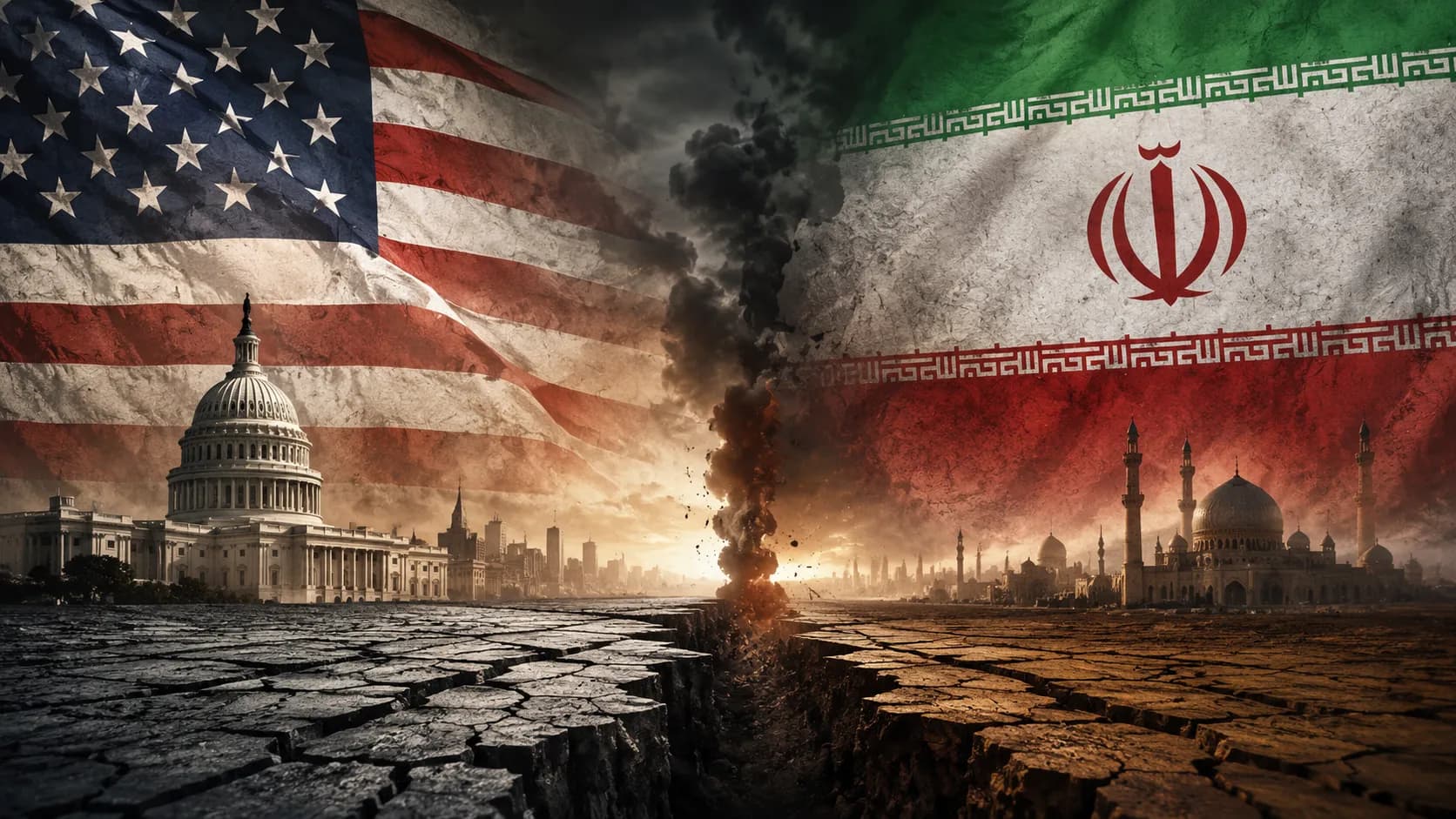
The collapse of the United States Iran ceasefire demonstrates a fundamental reality of international politics. Peace agreements cannot survive when they fail to address the underlying causes of conflict. What appeared to be a diplomatic breakthrough was, in reality, only a temporary suspension of hostilities between two states whose strategic objectives remain fundamentally incompatible. Rather than creating conditions for lasting peace, the agreement merely delayed renewed confrontation while allowing all parties to regroup politically and militarily. The return to conflict illustrates that ceasefires built on ambiguity, mistrust, and exclusion are inherently fragile.
One of the principal reasons for the breakdown was the absence of clarity regarding the Strait of Hormuz. As one of the world's most strategically important maritime corridors, the strait carries nearly one fifth of global oil supplies. Both Washington and Tehran interpreted provisions concerning maritime security according to their own strategic interests. Iran continued to regard the waterway as a critical source of geopolitical leverage, whereas the United States maintained that freedom of navigation remained a non-negotiable principle. The ceasefire failed to establish enforceable monitoring mechanisms or an independent dispute resolution framework capable of managing disagreements before they escalated. Consequently, every maritime incident became an opportunity for renewed military confrontation.
Equally significant was the deep political mistrust that has shaped United States Iran relations for decades. Diplomatic agreements require a minimum level of confidence that commitments will be respected. Instead, both governments viewed the ceasefire primarily as a tactical instrument rather than a genuine pathway toward reconciliation. Washington sought to contain Iran's regional influence without fundamentally altering its pressure campaign, while Tehran regarded the agreement as an opportunity to secure temporary economic relief without abandoning its strategic deterrence capabilities. Since neither side was prepared to compromise on its long term security objectives, the agreement lacked the political foundation necessary for sustainability.
Iran's domestic political environment further complicated implementation. Internal divisions between pragmatic policymakers seeking diplomatic engagement and hardline factions advocating resistance limited Tehran's negotiating flexibility. In highly polarized political systems, any concession to external rivals risks being portrayed as national weakness. This domestic competition reduced the government's ability to maintain consistent policy, allowing internal political calculations to undermine diplomatic commitments. Consequently, external negotiations became intertwined with internal power struggles, making the ceasefire increasingly vulnerable.
However, responsibility for the collapse cannot be attributed solely to Iran. The United States also bears considerable responsibility. American policy has often combined diplomatic engagement with military deterrence and extensive economic sanctions. This dual approach generates contradictory incentives. While negotiations encourage cooperation, continued military pressure reinforces perceptions that diplomacy merely serves as a temporary instrument rather than a genuine effort to resolve disputes. Such inconsistency weakens trust and encourages reciprocal escalation instead of confidence building.
Another structural weakness was the exclusion of key regional stakeholders. Lasting Middle Eastern security cannot be achieved through bilateral agreements that ignore broader regional dynamics. Israel's security concerns, Iran's relationships with regional proxy groups, and the strategic interests of Gulf Arab states remained outside the framework of the ceasefire. As military operations continued elsewhere in the region, events beyond the direct control of Washington and Tehran repeatedly threatened the agreement. A ceasefire involving only two actors was therefore insufficient for a conflict involving numerous interconnected regional players.
The renewed confrontation has produced consequences extending far beyond the battlefield. Humanitarian conditions have deteriorated as civilian populations face displacement, infrastructure destruction, and growing insecurity. Continued military operations place additional pressure on already fragile healthcare systems and public services while increasing regional refugee movements. Beyond the immediate humanitarian costs, prolonged instability risks creating long-term political radicalization and undermining prospects for future reconciliation.
The economic implications are equally significant. Heightened tensions surrounding the Strait of Hormuz create uncertainty in global energy markets, increasing oil prices and transportation costs. Since energy markets are closely interconnected with global inflation, disruptions in Gulf shipping routes can generate worldwide economic consequences, particularly for energy importing developing countries. Rising fuel prices also contribute to higher production costs, inflationary pressures, and slower economic growth across international markets.
The collapse of the ceasefire also raises important questions regarding international diplomacy. Effective peace agreements require clearly defined obligations, credible verification mechanisms, inclusive participation, and enforceable guarantees. Ambiguous provisions leave excessive room for competing interpretations, while the absence of independent monitoring reduces accountability. Furthermore, excluding major regional stakeholders allows external events to derail even well intentioned agreements. Sustainable diplomacy therefore demands institutional mechanisms capable of managing crises before they escalate into armed conflict.
From an international law perspective, repeated military escalation by all parties further weakens respect for the principles of sovereignty, proportionality, and civilian protection established under the United Nations Charter and international humanitarian law. Regardless of political objectives, attacks that endanger civilian populations or critical infrastructure increase humanitarian suffering while diminishing the credibility of international legal institutions. Diplomatic solutions become increasingly difficult when military force replaces legal and political dialogue.
To prevent similar failures, future negotiations must adopt a more comprehensive approach. First, ceasefire agreements should include precise legal language supported by independent international monitoring mechanisms capable of investigating alleged violations. Second, regional stakeholders, including Gulf states and other affected parties, should participate in negotiations to ensure that broader security concerns are addressed. Third, confidence building measures such as humanitarian cooperation, prisoner exchanges, maritime communication channels, and phased sanctions relief should precede more ambitious political negotiations. Finally, sustained diplomatic engagement through neutral mediators and multilateral institutions should replace reliance on coercive strategies that reinforce mutual suspicion.
Ultimately, the collapse of the United States Iran ceasefire demonstrates that diplomacy cannot succeed when it merely postpones conflict rather than resolving its underlying causes. Strategic rivalry, ideological hostility, regional competition, and institutional mistrust remained unaddressed throughout the agreement, making renewed confrontation increasingly likely. Lasting peace in the Middle East requires more than temporary pauses in violence. It demands inclusive diplomacy, mutual accountability, respect for international law, and sustained political commitment from all parties. Without addressing these structural challenges, future ceasefires risk becoming little more than brief intermissions in an enduring cycle of conflict rather than genuine foundations for regional stability.
Uroosa Khan
Contributing writer at EUReflect.
Follow EUReflect
See more of our reporting on Google
Mark EUReflect as a preferred source and our stories are ranked higher for you in Top Stories, Discover and Google News — and carry a “preferred” badge when they are cited in AI results.
Add EUReflect as a preferred source