World Cup 2026 Debutants: Jordan, Uzbekistan, Curaçao and Cape Verde Ready to Make History
4 April 2026 The 2026 World Cup will feel different from any other edition before it. With the expanded format, more teams than ever will step onto football’s biggest stage, and for the debutants especially, this is a tournament that carries enormous meaning. It’s not just about playing football in a global competition, but about placing their nations on a map that millions of people follow closely. For these countries, qualification is a historic achievement that speaks to progress, ambition, and national pride. It also gives their fans a rare chance to celebrate their identity through sport on the world’s biggest stage.
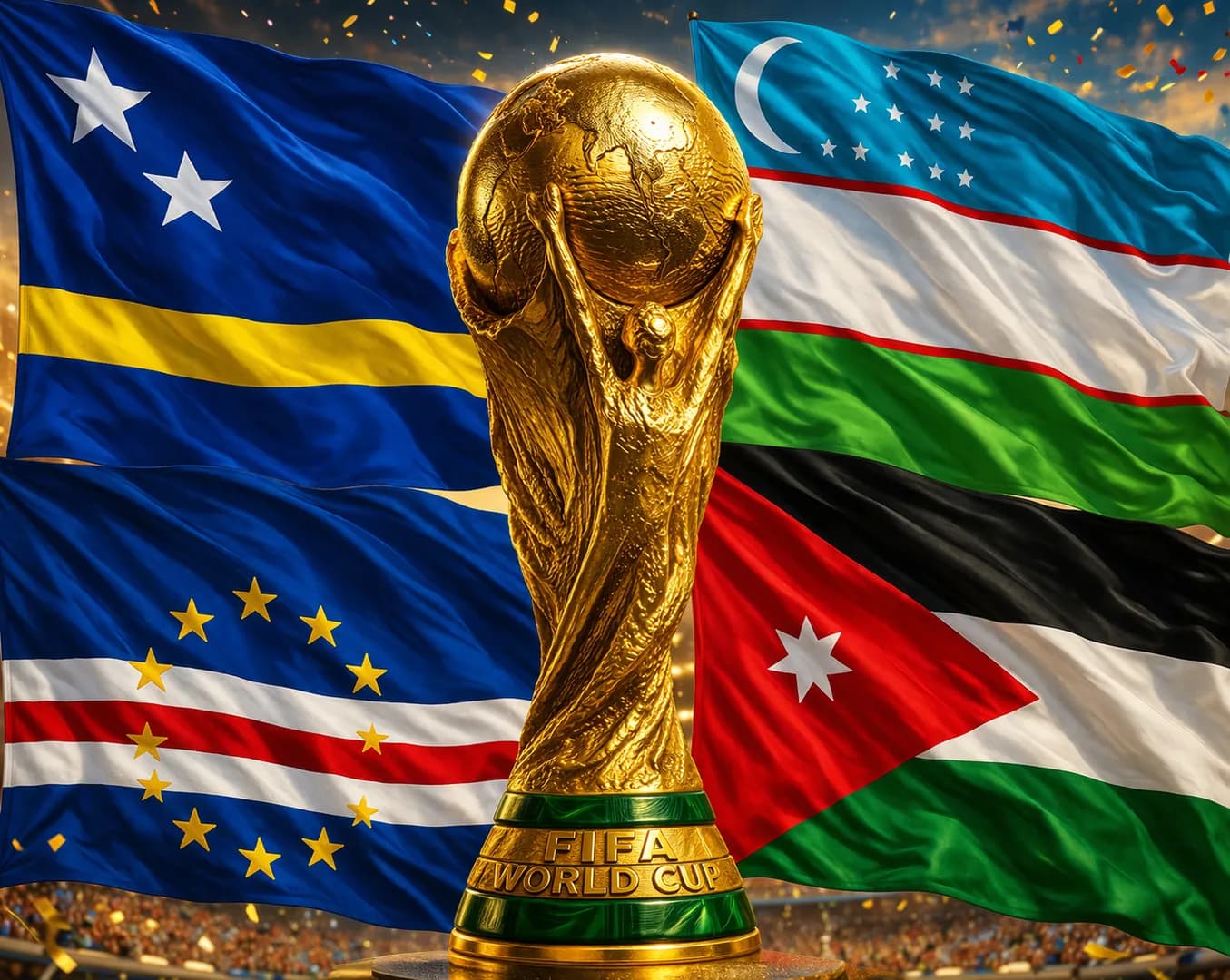
This tournament matters, because it gives debutant nations a moment they may never have imagined. For some, it is the first time they have ever reached the World Cup. For others, it is only the second appearance, but that is still a milestone that can shape how the country is seen both at home and abroad. In every case, the event becomes more than football. It becomes a story about resilience, recognition, and the power of sport to unite people across politics, culture, and geography.
Curaçao
Curaçao’s qualification is one of the most remarkable stories in the tournament. As a small island nation, reaching the World Cup for the first time is an extraordinary achievement that will inspire pride across the Caribbean. It shows that even countries with limited resources can build something special through organisation, belief, and talent. For Curaçao, this is not only a football breakthrough, but a cultural moment that gives the island global visibility.
The team’s rise also matters because it reflects the strength of Caribbean football beyond the traditional giants. Curaçao has often been overlooked in world football, but qualification changes that immediately. It gives young players on the island a new 2 dream to chase and reminds the wider world that football talent can come from anywhere. The national team now carries the hopes of a country that will be watching every minute with immense pride.
Curaçao’s squad has earned respect for its discipline and tactical quality. The team has been built around players with experience in strong European leagues, such as dutch Eredivisie, and a strong sense of collective identity. While it may not have the star power of larger nations, it has something just as important: unity, momentum, and belief. That combination can make a huge difference in a short tournament.
Jordan
Jordan’s first World Cup appearance is a major moment for the country and for Asian football. For years, Jordan has been close to the global stage without quite reaching it, so qualification feels like a reward for long term development. It is also important culturally, because football has become one of the strongest ways for Jordanians to express national pride and optimism. The World Cup gives the country a chance to show its talent, resilience, and identity to a worldwide audience.
The team has several well known and important players, who have helped carry it to this level. Jordan’s strength has often come from a combination of discipline, defensive organisation, and moments of quality in attack. This balance has allowed the team to compete against stronger opposition and still believe in its own path. For a country with a growing football culture, this debut is likely to inspire a new generation of players and fans.
Jordan’s World Cup story also matters because of what it means beyond the pitch. International recognition at this level can strengthen national morale and bring people together in a shared moment of celebration. It can also help the country build a stronger sporting identity over time. For Jordan, this is not only a football success but a symbol of possibility.
Uzbekistan
Uzbekistan’s World Cup debut is one of the biggest achievements in the country’s sporting history. For a nation with a deep football tradition and strong support for the game, reaching the finals for the first time is a breakthrough years in the making. It is especially meaningful because football is closely tied to modern national identity and international respect. Uzbekistan now has a chance to show that it belongs among the world’s football nations.
One player name that stands out in wider discussion is Abdukodir Khasanov, who plays for Manchester City, whose profile reflects the growing visibility of Uzbek talent abroad. Alongside him, Uzbekistan has built a team with technical players, energy, and tactical discipline.
The squad’s development has been steady rather than sudden, which makes this qualification feel earned and lasting. Supporters will hope the team can compete with confidence and not simply make up the numbers.
For Uzbekistan, the World Cup is also a cultural opportunity. The tournament gives the country a platform to present itself to the world in a positive and memorable way. It can help strengthen national pride and inspire young athletes across the country. In that sense, the debut is as much about the future as it is about the present.
Cape Verde
Cape Verde’s first World Cup appearance is one of the most inspiring stories in this tournament. As a small island nation, qualifying for the World Cup is a huge achievement and a source of pride for Cape Verdeans everywhere. It shows what can happen when a country develops a strong football identity and believes in long term progress. For many fans, this moment will feel like the fulfilment of a dream that once seemed distant.
The team’s success is also important, because it represents the wider strength of African football. Cape Verde has shown that smaller nations can compete with far larger ones through structure, discipline, and determination. Its players bring energy and 4 commitment, and the team’s rise has earned admiration well beyond its own borders. This debut will likely become one of the most talked about stories of the tournament.
Cape Verde’s World Cup journey also has a deep cultural meaning. For a country with a strong diaspora, the tournament offers a rare moment of collective identity and global recognition. Families at home and abroad will follow every match with pride. It is not just a football milestone, but a national celebration.
Conclusion
This World Cup will definitely surprise us, especially with its expanded format and the chance for so many new teams to appear on the biggest stage. The move to a larger tournament means more countries, more stories, and more opportunities for nations that have waited decades for a breakthrough. For debutants, and for those making only their second appearance, this is a historically valuable moment that can shape how their countries are seen for years to come.
It will also be interesting to follow the tournament in a wider political context, especially with the tension between the United States and Iran forming part of the backdrop. That makes the World Cup feel even bigger than sport alone. Above all, though, the most powerful part of this tournament will be seeing participants who have fought for the chance to be there, because for some countries this will be their first time at the World Cup,
Dmytro Melnyk
Contributing writer at EUReflect.
Follow EUReflect
See more of our reporting on Google
Mark EUReflect as a preferred source and our stories are ranked higher for you in Top Stories, Discover and Google News — and carry a “preferred” badge when they are cited in AI results.
Add EUReflect as a preferred source