$145 Billion Lost to Corruption in Afghanistan
According to SIGAR’s final report, nearly $145 billion spent by the United States on rebuilding Afghanistan over 20 years was squandered due to corruption, poor planning, and institutional failures. Massive funding for security forces failed to produce lasting stability, while repeated warnings from watchdogs were largely ignored. The outcome was a strategic, financial, and human failure.
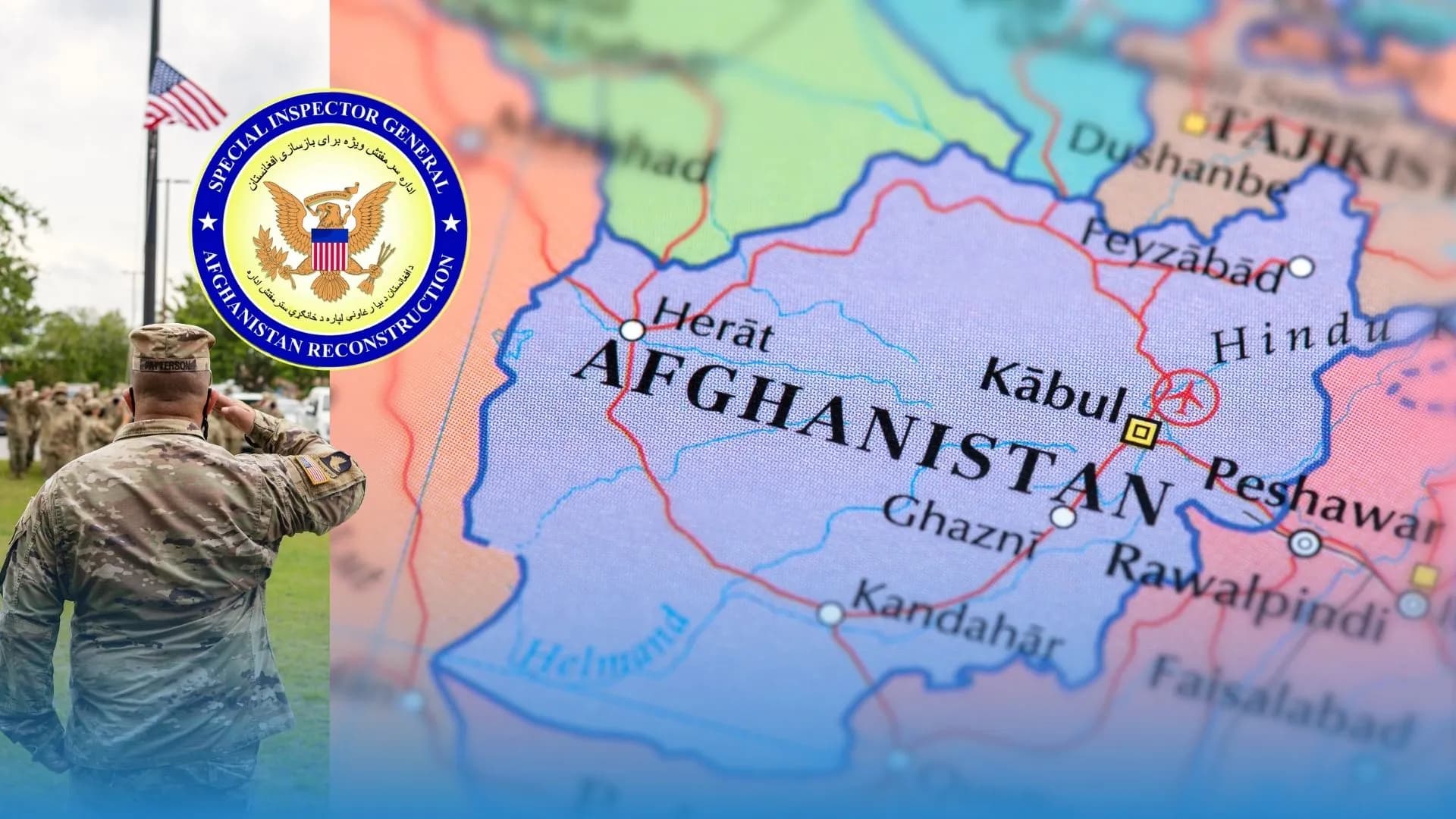
The United States poured nearly $145 billion into rebuilding Afghanistan over two decades, yet the mission to transform the country into a stable democracy collapsed under the weight of corruption, poor planning, and systemic failures, according to a sweeping new report by the Special Inspector General for Afghanistan Reconstruction (SIGAR).
The findings, summarized this week by U.S. and international media, depict a reconstruction effort riddled with fraud and mismanagement. From 2002 to 2021, Congress appropriated about $144.7 billion for Afghan recovery programs, but watchdogs recorded more than 1,300 cases of abuse, embezzlement, and fraud, raising fundamental questions about how the money was spent and who benefited.
“This was not what winning looked like,” Acting Inspector General Gene Aloise told journalists at a recent briefing, reflecting on two decades of audits and investigations. He described Afghanistan’s former political system as resembling a “white-collar criminal enterprise” rather than a partner state.
Billions for Security, Little Stability
Of the total spending, roughly $90 billion went to building Afghan security forces — the army and police that were supposed to guarantee long-term stability. Yet SIGAR’s quarterly assessments since 2012 repeatedly warned that these institutions were structurally weak, deeply corrupt, and incapable of standing on their own.
According to Aloise, these warnings often met resistance in Washington. He said that as the scale of the failures became clearer, key sections of SIGAR’s reports were increasingly classified, limiting public scrutiny.
What the U.S. Left Behind
Although the watchdog did not focus directly on the chaotic 2021 withdrawal, it estimated the material footprint the U.S. left in Afghanistan: about $38.6 billion worth of military equipment and infrastructure built with American funds now sits beyond U.S. control.
Meanwhile, the SIGAR office itself is being wound down. Created by Congress in 2008, the inspectorate will officially close on January 31, ending a body that over its lifetime:
Produced around 900 reports,
Issued over 1,500 formal recommendations,
Identified at least $26 billion in waste, fraud, and abuse,
Generated $4.6 billion in cost savings for U.S. taxpayers.
Political Pushback After the Exit
Aloise also revealed that after U.S. troops withdrew, his office faced a year-long standoff with the Biden administration. Officials argued that SIGAR’s mandate had expired with the end of the military mission — even though U.S. funds were still flowing to Afghanistan. Cooperation reportedly resumed only after pressure from Congress, primarily involving the State Department and USAID.
A Cautionary Tale for Future Interventions
Taken together, the final SIGAR report paints a bleak picture: enormous resources, sacrificed lives — more than 2,450 U.S. soldiers killed and over 20,000 wounded — and yet no durable political outcome.
The watchdog’s conclusion is implicit but devastating: the failure in Afghanistan was not just military or political. It was also bureaucratic — a reconstruction project so vast that corruption, misaligned incentives, and the absence of a coherent long-term plan became embedded in the system itself.
Sources:
Special Inspector General for Afghanistan Reconstruction, https://www.sigar.mil/Portals/147/Files/Reports/sigar-final-report.pdf
Eleanor Watson, U.S. mission in Afghanistan was "two-decade long effort fraught with waste," watchdog finds, https://www.cbsnews.com/news/u-s-mission-afghanistan-fraught-with-waste-sigar-report/
Botakoz Unbayeva
Contributing writer at EUReflect.
Follow EUReflect
See more of our reporting on Google
Mark EUReflect as a preferred source and our stories are ranked higher for you in Top Stories, Discover and Google News — and carry a “preferred” badge when they are cited in AI results.
Add EUReflect as a preferred source