2026: The Year of Kyrgyzstan?
How a landlocked nation of mountains and nomads became one of Eurasia's busiest diplomatic crossroads
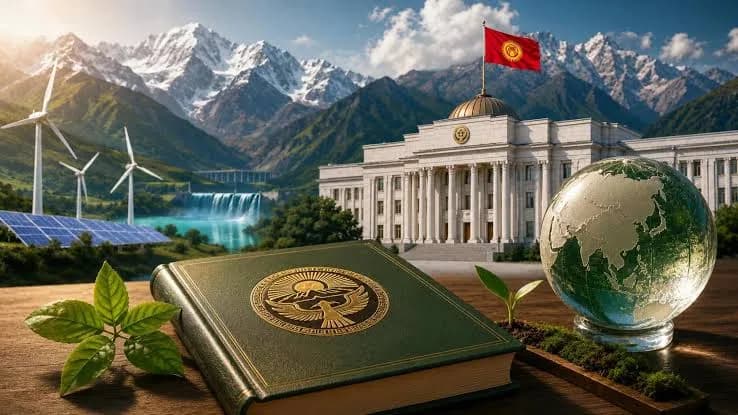
The developments of 2026 point to something larger than a crowded calendar. They suggest a country whose international profile is expanding rapidly — and, crucially, by design.
Two Mega-Events, One Week
Nothing captured Kyrgyzstan's moment more vividly than the final week of August, when two major international events converged in the same window — August 31 to September 6 — placing Bishkek and Issyk-Kul firmly under the global spotlight.
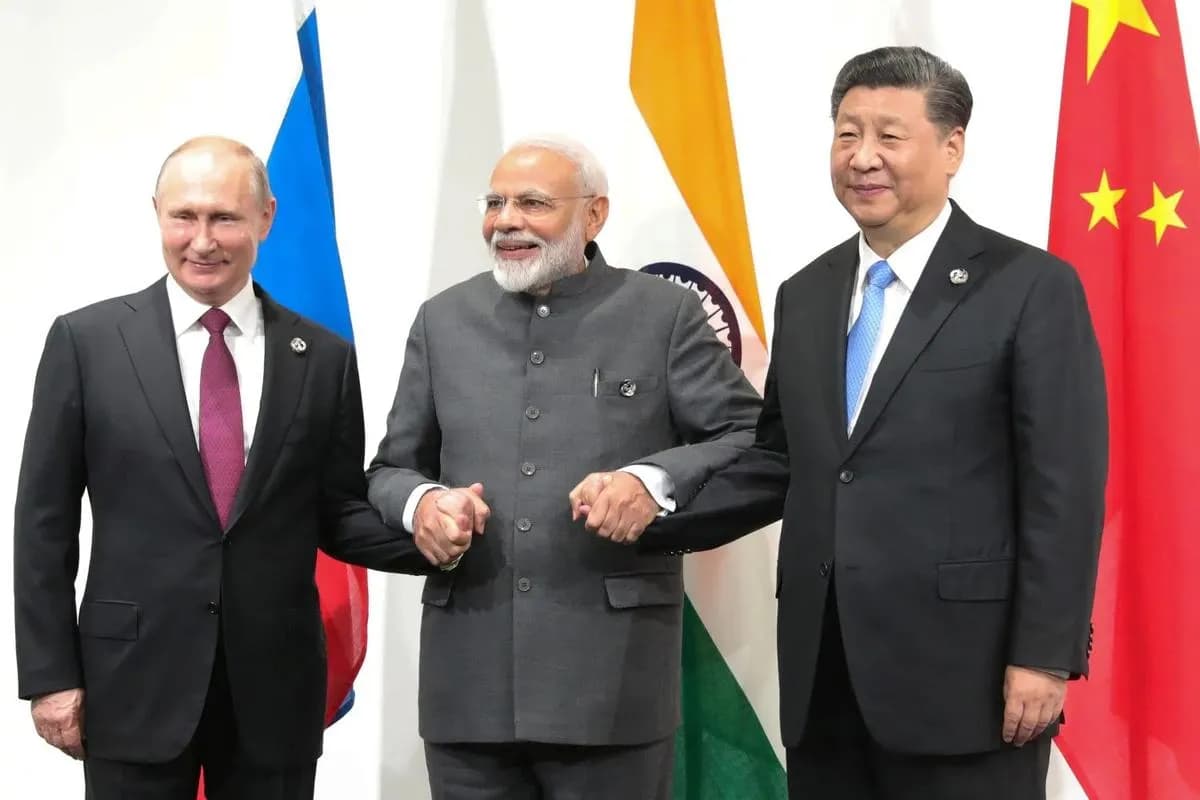
The first was the 25th-anniversary Summit of the Shanghai Cooperation Organisation (SCO), held in Bishkek on August 31–September 1 under Kyrgyzstan's rotating chairmanship. For a country of roughly seven million people, hosting the quarter-century milestone of one of Eurasia's most consequential blocs was a diplomatic coup in itself. The summit was themed"25 Years of the SCO: A Common Journey Toward Lasting Peace, Development, and Prosperity."
The scale was striking. The ten SCO member states together represent a combined population of about 3.4 billion people — nearly a quarter of humanity — and account for close to one-quarter of global GDP. Around the table sat the leaders of the major Eurasian powers: China's Xi Jinping, Russia's Vladimir Putin, India's Narendra Modi, Kazakhstan's Kassym-Jomart Tokayev, Uzbekistan's Shavkat Mirziyoyev, Pakistan's Shehbaz Sharif, Iran's Masoud Pezeshkian, Belarus's Alexander Lukashenko and Tajikistan's Emomali Rahmon — alongside host President Sadyr Japarov. Turkish President Recep Tayyip Erdoğan attended as a dialogue partner, underscoring the growing weight of the Turkic dimension within the organisation, while UN Secretary-General António Guterres and a wide array of regional leaders joined the expanded "SCO Plus" format.
The summit concluded with the adoption of the Bishkek Declaration, marking the SCO's 25th anniversary, together with a series of decisions aimed at deepening cooperation in trade, transport, energy, digital connectivity and humanitarian affairs. It was the first summit held under the new Strategy for the Development of the Organisation until 2035, signalling a shift from the bloc's traditional security focus toward a more concrete economic agenda.
At the very same moment, Kyrgyzstan hosted the 6th World Nomad Games, welcoming athletes and delegations from 89 nations across Asia, Europe, the Middle East, the Americas and Africa. Across 37 disciplines — from kok-boru (the ancient horseback contest played with a goat carcass) and horseback wrestling to salburun eagle hunting and traditional archery — the Games showcased how Kyrgyzstan is transforming its nomadic heritage from a museum-piece identity into a living platform for cultural diplomacy.
The symbolism ran deep. The Games were founded in Kyrgyzstan in 2014, and after editions in Turkiye (2022) and Kazakhstan (2024), the 2026 edition marked a homecoming to the country where it all began. On the shores of Issyk-Kul, Cholpon-Ata hosted the largest ethnographic village ever assembled — 100 traditional yurts representing 89 nations — while manaschy bards recited verses from the 500,000-line Manas epic. In 2021, the World Nomad Games were even inscribed by UNESCO on its Register of Good Safeguarding Practices for intangible cultural heritage.
And the calendar delivered one final flourish: August 31 is Kyrgyzstan's Independence Day. The opening of the World Nomad Games therefore doubled as a celebration of national sovereignty — a single date binding together statehood, heritage and global visibility in one carefully choreographed moment.
Issyk-Kul: From Tourism Destination to Diplomatic Platform
If Bishkek supplied the political theatre, Issyk-Kul supplied the stage for regional diplomacy. The alpine lake — long marketed as Central Asia's premier holiday destination — is being quietly reinvented as a venue for high-level statecraft.
In July, Azerbaijani President Ilham Aliyev and Uzbek President Shavkat Mirziyoyev travelled to Kyrgyzstan for an informal Central Asia–Azerbaijan summit in Cholpon-Ata, which concluded with the signing of the Cholpon-Ata Declaration — a document reflecting the deepening alignment among the Turkic states of the region.
The lake also hosted the 40th Issyk-Kul International Forum in June, co-chaired by President Japarov and Albanian President Bajram Begaj, drawing representatives from more than 15 countries. The 35th Meeting of the Heads of CIS News Agencies convened there in late August to coordinate on media, culture and tourism cooperation. And in a sign of Issyk-Kul's expanding brand, even F1H2O, the international Formula 1 powerboat championship, brought its high-speed circuit to the lake in early August.
Taken together, these events reveal a coherent strategy. Issyk-Kul is no longer only a tourism destination — it has become a deliberate instrument of soft power, where tourism, culture, diplomacy and international visibility are woven into a single national brand.
A New Diplomatic Profile
Perhaps the most consequential development of the year arrived quietly, in June, when Kyrgyzstan was elected as a non-permanent member of the United Nations Security Council for 2027–2028 — the first time in the country's history that it will hold a seat on the world's most powerful body.
The victory was hard-won. Kyrgyzstan faced a uniquely competitive path, requiring four rounds of secret balloting in the 193-member General Assembly before finally defeating the Philippines — a nation that had previously served four times on the Council — by a decisive 142 votes to 49. Bishkek becomes only the second Central Asian country ever to sit on the 15-member Council, after Kazakhstan (2017–2018), and its campaign was propelled by a wave of support from its Central Asian neighbours, Türkiye and the Organization of Islamic Cooperation. In December 2025, the presidents of all five Central Asian states had publicly endorsed the bid.
The significance is hard to overstate. A nation once defined by its landlocked geography and modest economic footing will soon sit at the table where questions of war, peace and global security are decided. President Japarov framed the win as"a sign of great trust from the international community," pledging that Kyrgyzstan would advance preventive diplomacy, the peaceful resolution of disputes, and the integration of climate, water and mountain challenges into the global security agenda — priorities that speak directly to the concerns of small and developing states.
At the same time, President Xi Jinping's state visit (August 30–September 3) further underlined Bishkek's rising strategic importance. During talks at the Harmony Palace, Xi and Japarov signed a landmark Treaty of Permanent Good-Neighbourliness, Friendship and Cooperation, alongside a joint declaration on the high-quality development of a comprehensive strategic partnership. In total, the two sides signed 32 documents, spanning the China–Kyrgyzstan–Uzbekistan railway corridor, the Bedel border crossing, science, education, culture, media and sister-region ties — with Xi hailing a"golden period" in bilateral relations. China has been Kyrgyzstan's largest trading partner and top source of foreign investment for several consecutive years.
A Country in Transformation
Individually, each of these events might be read as a headline. Together, they trace the outline of a broader transformation.
Kyrgyzstan is moving beyond the familiar image of the"Switzerland of Central Asia" — a label that captured its beauty but understated its ambition. Increasingly, the country is positioning itself as a meeting point between Central Asia, China, Russia, the wider Turkic world and the international community. Its diplomacy blends hard geopolitics — an SCO summit, a UN Security Council seat, a treaty with China — with soft power rooted in heritage, sport and hospitality.
From Bishkek to Issyk-Kul, from summit diplomacy to nomadic heritage, 2026 has placed Kyrgyzstan at the centre of an extraordinary number of international conversations.
Perhaps, then, 2026 really is the Year of Kyrgyzstan.
And perhaps the more important question is the one now facing the wider region: what role will Kyrgyzstan play in the emerging Eurasian order?
Related Topics
Derya Soysal
Contributing writer at EUReflect.
Follow EUReflect
See more of our reporting on Google
Mark EUReflect as a preferred source and our stories are ranked higher for you in Top Stories, Discover and Google News — and carry a “preferred” badge when they are cited in AI results.
Add EUReflect as a preferred source