A New Dawn in EU-ASEAN Relations: Brussels Event Unlocks Synergy
The 47th ASEAN Summit and the future of ASEAN-EU relations were the focal points of the "ASEAN Forum 2025," held today in Brussels on December 5, 2025. Below is an extended news article covering the event/forum hosted by the Embassy of Malaysia in Brussels & European Institute of Asian Studies also known as EIAS.
A New Chapter in ASEAN-EU Relations
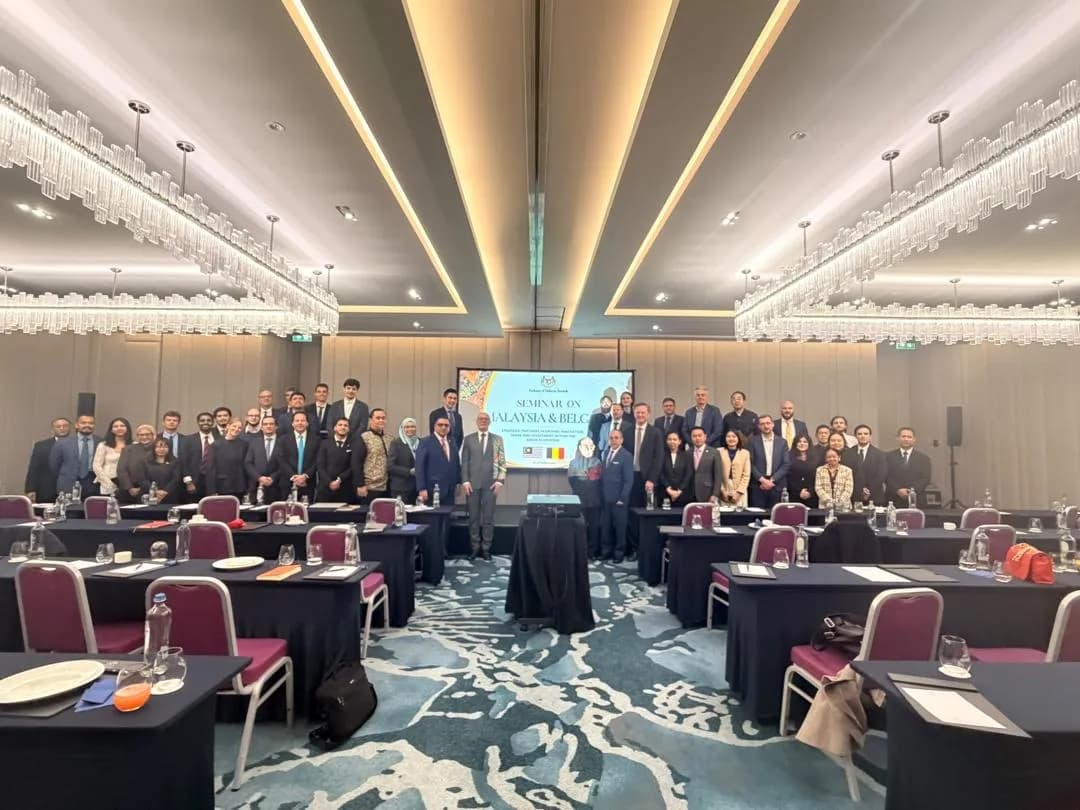
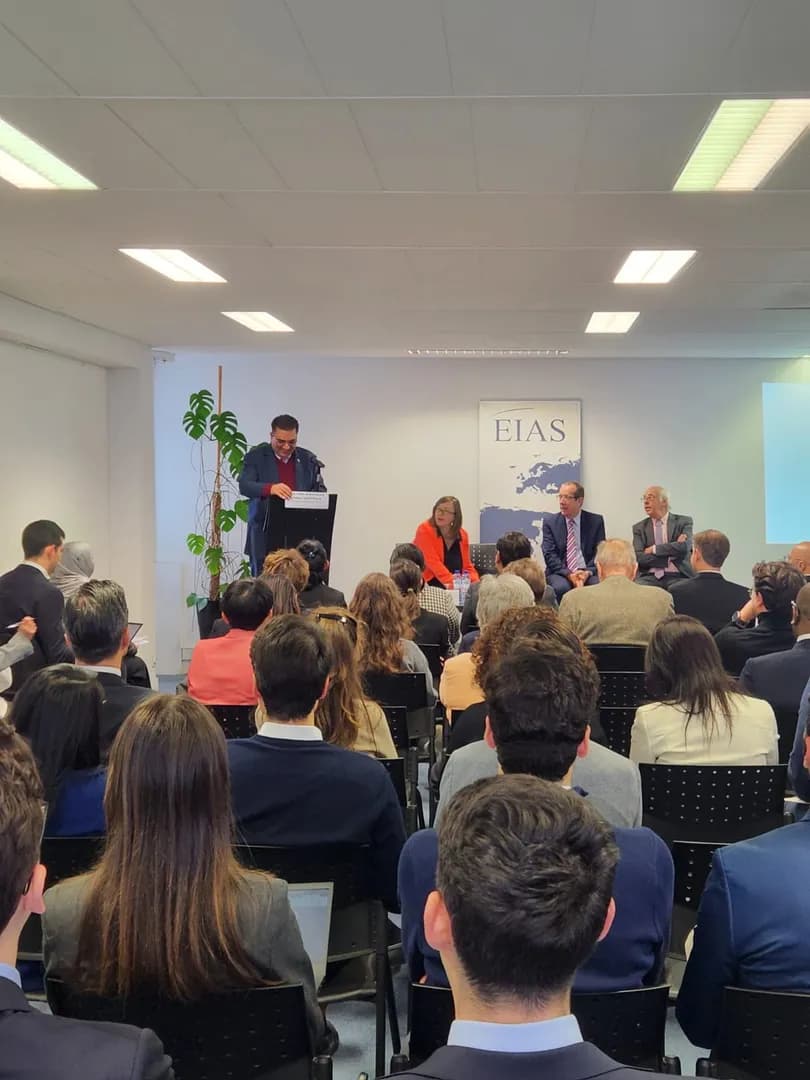
Eureflect had the honour of attending the “ASEAN Forum 2025”, organised by the European Institute of Asian Studies (EIAS) and the Embassy of Malaysia in Brussels. The event took place on Friday, 5 December 2025, at the EIAS premises located at Rue de la Loi 26, Brussels.
The Forum addressed the central theme: "The Outcome of the 47th ASEAN Summit – The Way Forward on ASEAN-EU Relations Beyond 2025." It brought together diplomats, experts, and policymakers to reflect on the future of EU-ASEAN relations at a moment when geopolitical shifts in both Asia and Europe are more significant than ever.
Setting the Stage: A Call for Sustained Dialogue
The moderator of the day, Ms. Lin Goethals, Director of EIAS, opened the programme and guided participants through the agenda. In her opening address, she underlined the importance of sustained and constructive dialogue between Europe and Southeast Asia, especially in light of recent regional developments. Ms. Goethals emphasised that the relationship between the two blocs is no longer just about trade; it is about building a resilient partnership capable of navigating a fragmented global order. Her introduction set the tone for a morning focused on practical outcomes rather than mere diplomatic pleasantries.
Highlights presentation of HE Dato' Mohd Khalid Abbasi Abdul Razak
The first major segment was a presentation by HE Dato' Mohd Khalid Abbasi Abdul Razak, Ambassador of Malaysia to the EU. The Ambassador briefed the audience on the outcomes of the 47th ASEAN Summit held in Kuala Lumpur in October 2025.
As the 2025 ASEAN Chair, Malaysia played a pivotal role in steering the bloc before handing the chairmanship over to the Philippines for 2026. Ambassador Razak highlighted that the transfer of leadership symbolises a continuously evolving region that prioritises stability and cooperation over rivalry.
Major Outcomes of the Summit:
- Inclusivity and Expansion: A historic milestone was achieved with the full admission of Timor-Leste as ASEAN’s 11th member state. This move reinforces the bloc’s "leave no one behind" philosophy, integrating Timor-Leste into the region's economic and political architecture.
- Treaty of Amity and Cooperation (TAC): The Ambassador noted the growing interest in ASEAN’s foundational peace treaty. During the summit, Finland officially signed the TAC, becoming the 58th High Contracting Party. This follows recent accessions by nations such as Serbia (2023) and Panama, further internationalising ASEAN’s code of conduct.
- Critical Resources & Economic Integration: Moving beyond politics, the Ambassador stressed ASEAN's economic integration. He highlighted Malaysia's resource strategy, pointing out that the region is rich in critical raw materials, including 16.1 million tonnes of non-radioactive rare earth elements. Furthermore, Malaysia is positioning itself as a key player in the global battery and EV supply chain, a direct message to the EU about the strategic value of deeper integration.
Panel Discussion: Opening the Path for future EU-ASEAN Relations
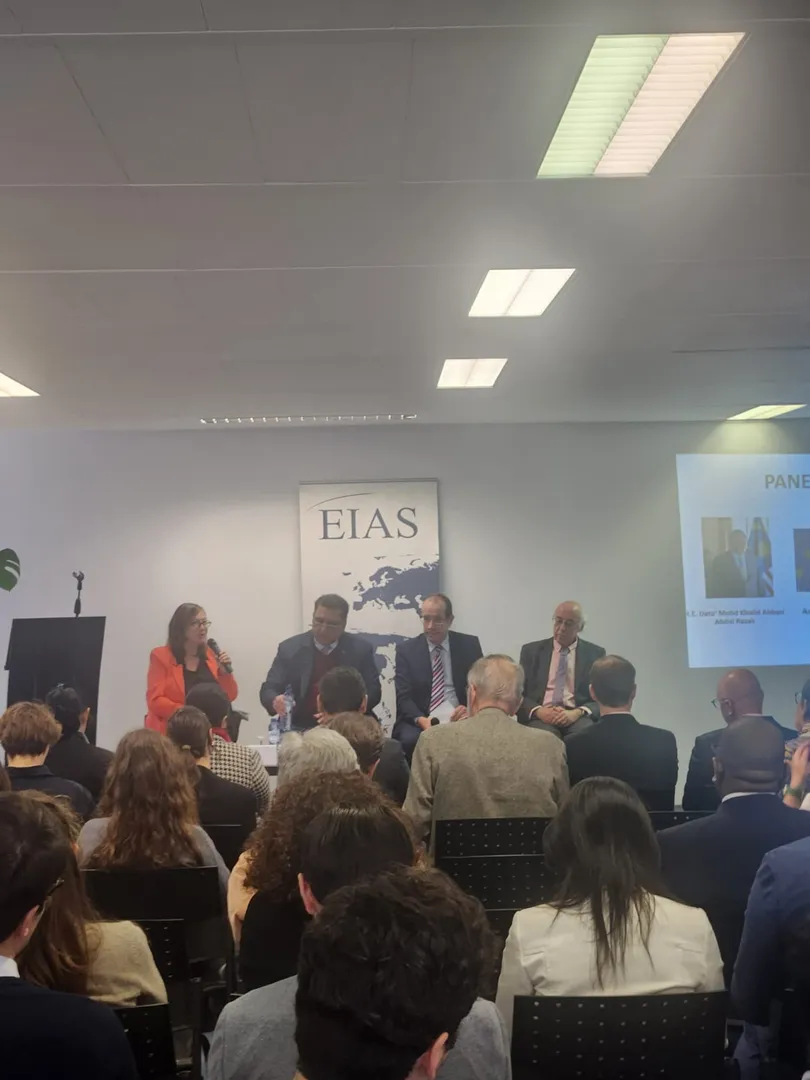
The core of the forum was the panel discussion titled "The Way Forward on ASEAN-EU Relations Beyond 2025,"
Featuring the following key note speakers:
- H.E. Dato' Mohd Khalid Abbasi Abdul Razak, Ambassador of Malaysia to the EU
- Mr. Andrew Jacobs, Former EU Ambassador to Timor-Leste (Ret.) and Member of the Advisory Board, ASEANChamEU
- Mr. Xavier Nuttin, Senior Associate and Member of the Advisory Board, EIAS
Ambassador Abdul Razak’s Vision: Trust and Prosperous bloc
Ambassador Abdul Razak described ASEAN as the "most prosperous bloc at the moment" citing a combined market of over 700 million people and a GDP projected to make it the fourth-largest economy in the world by 2030. He referenced a quote from European Council President António Costa, who stated at the summit that "A multipolar world requires multipolar cooperation". Highlighting the ASEAN as a reliable partner for EU to build shared stability and prosperity against geopolitical backdrop
The Ambassador was sincere about what ASEAN wants from the EU: "No more trust issues." He emphasised that ASEAN is a trusted partner that possesses exactly what Europe needs for its green transition namely; critical raw materials. He urged the EU to lower trade barriers and accelerate Free Trade Agreements (FTAs), noting that Malaysia is a major supplier of palm oil and semiconductors, while neighbour like Indonesia are key for coffee and nickel.
Andrew Jacobs vision: Connectivity and People
Mr. Jacobs focused on the human dimension. While acknowledging the geopolitical uncertainty. He emphasized that the EU must use tools like the Erasmus+ programme more effectively to foster “people-to-people” exchanges. He stressed that long-term security is built not just on treaties, but on student mobility and cultural understanding between the two regions.
Xavier Nuttin vision: The Implementation Gap
Reflecting on the upcoming 50th Anniversary of ASEAN-EU Dialogue Relations in 2027, Mr. Nuttin invoked a sentiment used by former European Council President Herman Van Rompuy: "We have strategies ready, but now we have to implement those strategies". Mr. Nuttin argued that while the foundational work is done, the pace of implementation especially in digital connectivity and their according legal settlements needs to accelerate to match the speed of global change.
The Geopolitical Question: Competition vs. Neutrality
During the interactive Q&A, the audience pressed the panel on the inevitable question: "Can ASEAN compete with China, and is it forced to choose sides between the US and China?"
Ambassador Abdul Razak responded by reaffirming ASEAN’s strict neutrality. He explained that ASEAN is "pragmatic, people-centered, and transparent," and fundamentally not a competing military alliance. He used the diversity of Malaysia as a case study. He noted that while ethnic Malaysian Chinese make up approximately 25 % of Malaysia’s population, the country remains sovereign in its policy decisions. He stated: "China is a major economic partner”, "but Malaysia is fully in charge based on its national interest." This can be seen as a strong balance between defending domestic interests, integrating minority groups in society and balancing between a major power such as China in this case. This neutrality allows ASEAN to be a stabilizing peace "buffer" in the Indo-Pacific, a bloc that engages with everyone but isolates no one.
Bridging Cultures: A Taste of Malaysia
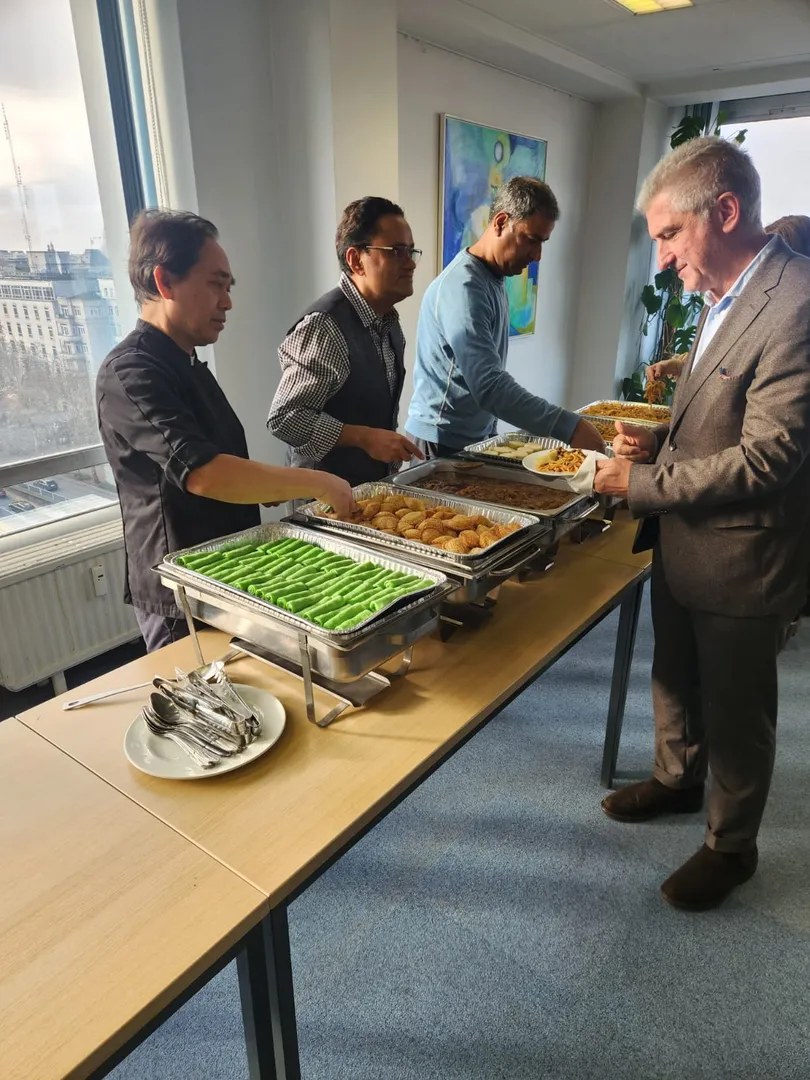
The Forum concluded with a networking reception, featuring a selection of Malaysian delicacies. The atmosphere shifted from high-level policy analysis to warm human-centred exchange. The diversity of attendees, ranging from ASEAN diplomats to representatives from observing states and future partners like Bangladesh reflected the inclusive spirit mentioned throughout the morning. The sharing of food and culture served as a tangible reminder that diplomacy is ultimately built on personal connections.
Eureflect’s Conclusion: Trust as the New Currency
For Eureflect, the event clearly demonstrated that the future of EU-ASEAN cooperation is built not only on diplomacy, but also on mutual trust, shared values, and emerging economic opportunities.
The key takeaway is clear: ASEAN is open for business to the EU and the entire world. With Timor-Leste completing the family and partners like Finland signing the Treaty of Amity, the bloc is expanding its influence without compromising its neutrality. For the EU, the message is equally direct: ASEAN offers a market of nearly 700 million people and the critical resources needed for the green transition. As Ambassador Abdul Razak mentioned: “ASEAN will not tell other countries what to do, but it expects to be treated as an equal, trusted partner in return.”
The Main Author of this article is Ibrahimjan Abdimutalipjan, together with Co-Author Derya Soysal - Central Asia Expert.
İbrahimjan Abdimutalipjan
Contributing writer at EUReflect.
Follow EUReflect
See more of our reporting on Google
Mark EUReflect as a preferred source and our stories are ranked higher for you in Top Stories, Discover and Google News — and carry a “preferred” badge when they are cited in AI results.
Add EUReflect as a preferred source