A Poetry Lesson in Brussels: Mukagali Makataïev, a Kazakh Voice Between Culture and Universality
A culturalevent at the Embassy of Kazakhstan
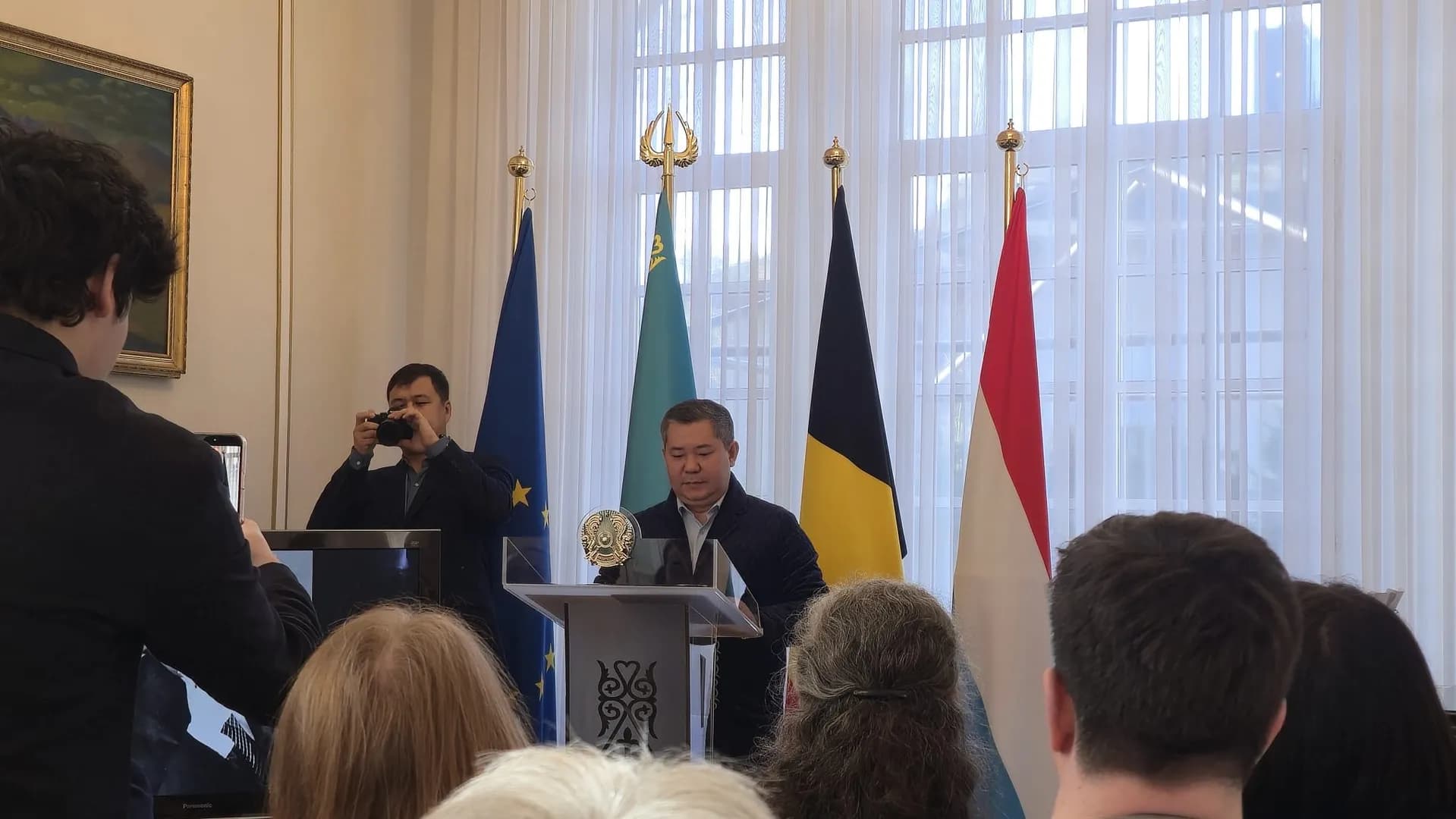
On 8 February, the Kazakh Culture Center in Brussels, hosted at the Embassy of Kazakhstan, organized a Poetry Lesson dedicated to the 95th anniversary of Mukagali Makataïev, one of the most significant poets of modern Kazakh literature. EU Reflect was invited to attend this cultural event, which aimed to promote literary discovery while encouraging intercultural dialogue.
Held in an institutional yet welcoming setting, the event brought together guests interested in culture, literature, and international exchange, creating an atmosphere conducive to reflection and discussion.
Discovering Kazakh poetry
During the poetry lesson, the audience had the opportunity to discover several poems by Mukagali Makataïev through readings accompanied by explanations regarding their historical and thematic context. For many participants, this was a first introduction to Kazakh poetry. Despite linguistic and cultural differences, the poems resonated strongly with the audience, as they addressed universal themes such as identity, solitude, the relationship with nature, and the search for meaning.
The simplicity of Makataïev’s language, combined with its emotional depth, allowed listeners to connect easily with his work, even without prior familiarity with Kazakh literature.
Apoetshaped by his time
Born in 1931 in a rural region of Kazakhstan, Mukagali Makataïev grew up in an environment deeply influenced by village life and by the social transformations of the Soviet era. These experiences played a central role in shaping his poetic voice. His writing reflects everyday life, personal struggles, and a strong attachment to his homeland.
Rather than focusing on complex literary forms, Makataïev sought to convey sincere human emotions. His poetry often explores inner conflict, faith, and moral responsibility, making his work both personal and socially meaningful.
Recognitionbeyondhislifetime
During his lifetime, Makataïev did not always receive the recognition he deserved. It was only after his death that his work gained widespread acknowledgment. Today, he is considered a key figure in Kazakhstan’s cultural heritage. His poems are taught in schools and universities and continue to influence contemporary Kazakh literature and public discourse.
In addition to his original work, Makataïev also made an important contribution as a translator, bringing major works of world literature into the Kazakh language. Through this effort, he helped enrich the national literary tradition and strengthen cultural exchange.
Poetry as a tool for dialogue
The Poetry Lesson organized in Brussels went beyond a simple literary tribute. It provided a space to reflect on the role of poetry in modern societies and its ability to foster understanding across cultures. The discussions following the readings highlighted how Makataïev’s work remains relevant today, particularly in its exploration of identity and human responsibility.
For EU Reflect, attending this event was a valuable opportunity to engage with a literary tradition that is still relatively unknown in Western Europe. The initiative demonstrated how culture and literature can serve as effective tools of cultural diplomacy, building bridges between societies and encouraging mutual understanding. Through this celebration of Mukagali Makataïev, the richness of Kazakh culture was meaningfully showcased in Brussels.
Enes Taskin
Contributing writer at EUReflect.
Follow EUReflect
See more of our reporting on Google
Mark EUReflect as a preferred source and our stories are ranked higher for you in Top Stories, Discover and Google News — and carry a “preferred” badge when they are cited in AI results.
Add EUReflect as a preferred source