Abraham Accords Expansion: Rising Pressure on Turkey and Qatar
Trump’s push to expand the Abraham Accords by involving Qatar, Turkey, and others alongside Iran negotiations is increasing regional tension. While framed as a peace framework, the strategy risks diplomatic fractures due to conflicting interests over Israel, Iran, and Gaza dynamics.
Introduction
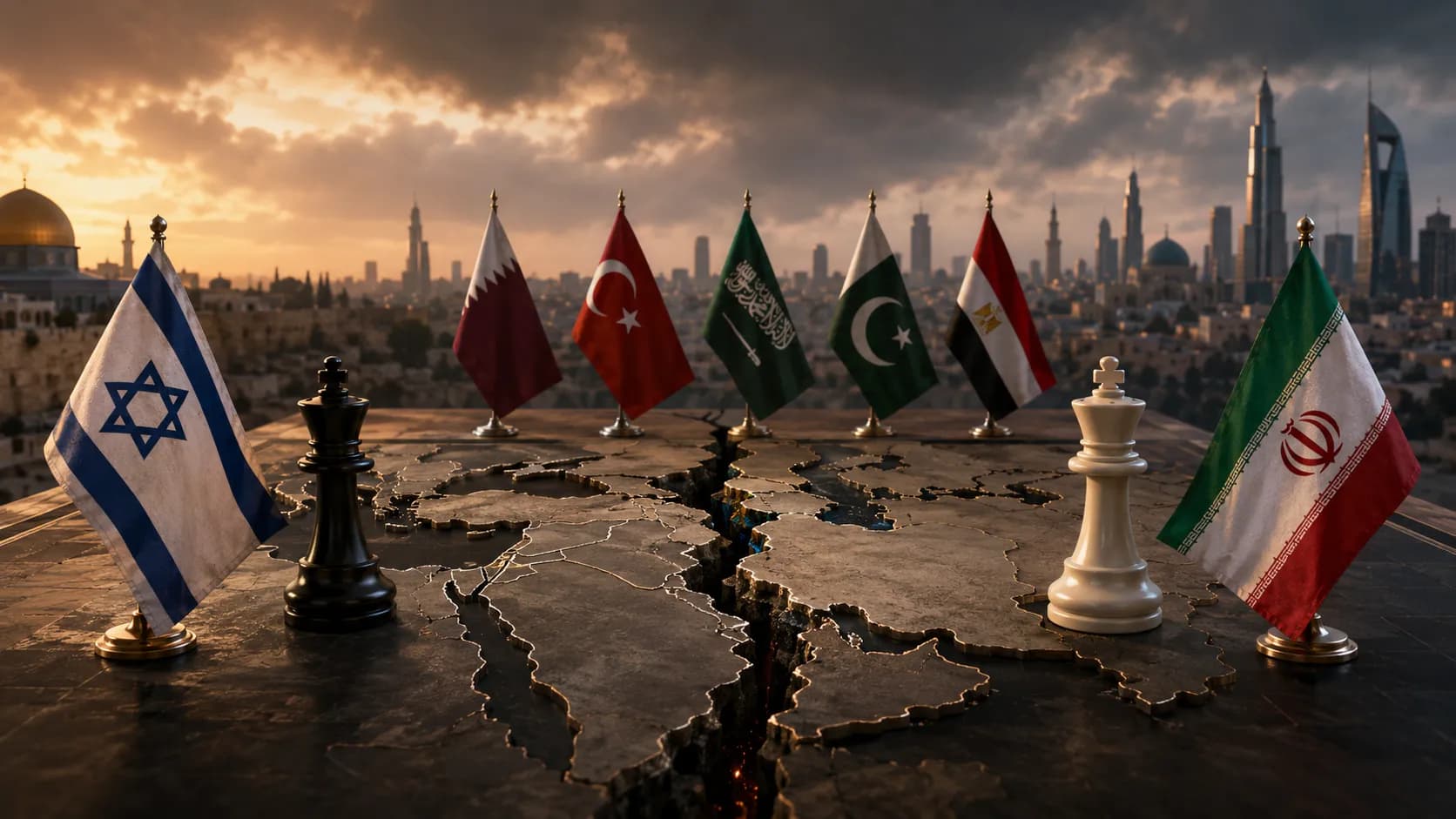
In the last several days, former U.S. President Donald Trump’s renewed diplomatic offensive to expand the Abraham Accords has intensified geopolitical tensions across the Middle East. His explicit calls for countries such as Qatar, Turkey, Saudi Arabia, and Pakistan to join a broadened normalization framework with Israel—linked to ongoing negotiations with Iran—have triggered widespread debate among regional analysts. The initiative, which is being framed as part of a larger Iran peace architecture, is increasingly being interpreted not as a stabilizing effort but as a potential catalyst for renewed regional polarization.
Recent reporting indicates that Trump has directly urged multiple Muslim-majority states, including Qatar and Turkey, to align with the Accords as a prerequisite or parallel condition for participation in a broader Iran settlement framework. This approach has been met with silence or cautious rejection from several capitals, highlighting the fragility of the diplomatic environment and raising concerns that external pressure could harden existing political divisions rather than resolve them.
Expanding Abraham Accords Under Iran Deal Pressure
The core of the current diplomatic tension lies in Trump’s attempt to merge two separate geopolitical tracks: the Iran nuclear/ceasefire negotiations and the expansion of the Abraham Accords. According to multiple recent reports, Trump has argued that a comprehensive regional peace structure requires normalization with Israel as a foundational pillar. In this context, countries such as Qatar, Turkey, Egypt, Jordan, Pakistan, and Saudi Arabia are being encouraged—or in some interpretations pressured—to formally join the Accords framework.
However, this linkage strategy has generated significant skepticism among regional actors. While some Gulf states have previously engaged in normalization processes, Qatar maintains a more complex diplomatic role as a mediator in Gaza-related negotiations, and Turkey continues to balance NATO membership with regional political positioning. These structural differences make a unified accession to the Accords politically difficult in the short term. Analysts note that the attempt to synchronize normalization with Iran negotiations may overload an already fragile diplomatic process.
Qatar and Turkey as Strategic Pressure Points
Particularly sensitive within this evolving framework are Qatar and Turkey, both of which occupy strategic but non-aligned positions in Middle Eastern diplomacy. Qatar’s role as a mediator in regional conflicts and its maintained channels with various non-state and state actors make its inclusion in a normalization bloc politically complex. Any perceived shift in its diplomatic neutrality could alter ongoing negotiation channels, especially regarding Gaza and broader humanitarian mediation efforts.
Turkey, meanwhile, already maintains formal diplomatic relations with Israel but has experienced cyclical tensions linked to the Gaza conflict and broader regional dynamics. Its inclusion in an expanded Abraham Accords framework would therefore not represent a simple normalization step but rather a redefinition of its regional alignment architecture. Recent statements attributed to Trump’s diplomatic outreach suggest that Ankara is being viewed not merely as a participant but as a strategic lever within a broader coalition-building effort aimed at legitimizing an Iran-related settlement.
Escalation Risks and Emerging Diplomatic Fractures
The central concern emerging from current developments is whether this accelerated diplomatic bundling could produce unintended escalation effects. Rather than stabilizing the region, the simultaneous pressure on multiple states to adopt a unified diplomatic position may reinforce existing geopolitical fault lines. Countries with divergent security priorities—particularly regarding Iran, Israel, and Palestinian statehood—may interpret the initiative as externally imposed alignment rather than voluntary cooperation.
Recent analysis of regional reactions suggests a pattern of cautious distancing, with some states refraining from immediate responses while others implicitly reject conditional normalization. This reflects broader uncertainty over whether the proposed framework can accommodate deeply entrenched disputes, particularly those linked to Gaza, Iranian regional influence, and internal political constraints within each country.
Conclusion
The latest diplomatic developments surrounding Trump’s Abraham Accords expansion initiative indicate a potential inflection point in Middle Eastern geopolitics. While the stated objective is the creation of a unified regional peace architecture tied to Iran negotiations, the practical effect may be increasing diplomatic strain among key regional actors. Qatar and Turkey, in particular, represent critical test cases for the viability of this approach, given their unique geopolitical roles and existing foreign policy constraints.
If current trends continue, the intersection of Iran negotiations and normalization pressure could evolve into a broader geopolitical stress test for the region. Rather than consolidating stability, the initiative risks accelerating fragmentation within an already volatile strategic environment.
Alvara Merrick
Contributing writer at EUReflect.
Follow EUReflect
See more of our reporting on Google
Mark EUReflect as a preferred source and our stories are ranked higher for you in Top Stories, Discover and Google News — and carry a “preferred” badge when they are cited in AI results.
Add EUReflect as a preferred source