Africa: The Center of the New Global Strategic Competition
As global power shifts toward multipolarity, competition is intensifying in Africa. While U.S. influence becomes more selective, China expands through Belt and Road and port investments, Turkey via military and hybrid outreach, Gulf states through maritime trade, and Russia through security partnerships.
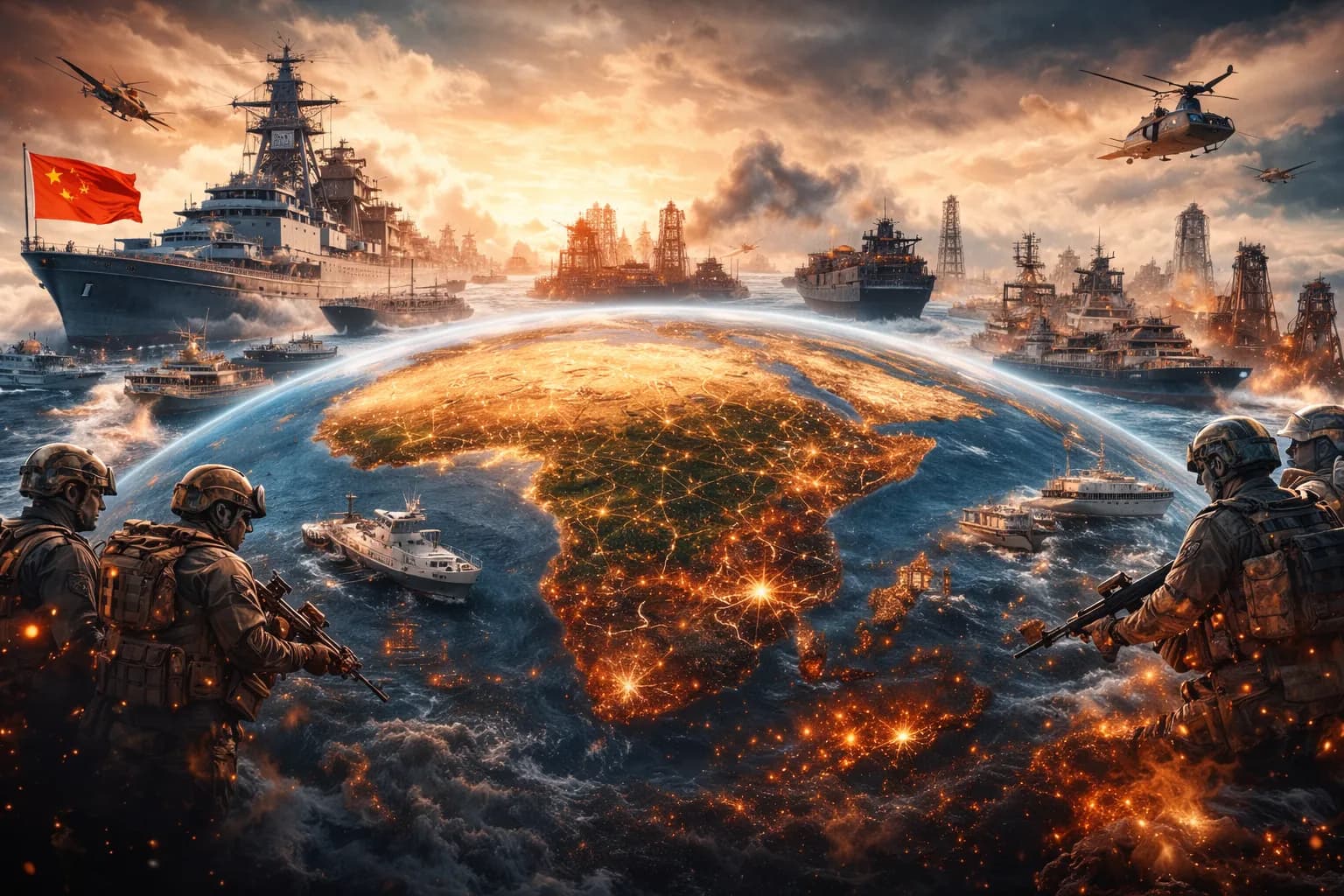
The world is focusing on changing global power dynamics, in which the United States' backtracking influence globally is seen;in this way,the hard approach by the Trump Administration further enhanced the role of middle powers and especially China internationally. Undoubtedly,the multipolar world is in the making, in which the single major power would not hold significant importance in international affairs, but the majority of nations will.
However, everyone is focused on the US/China rivalry but blinded to what is happening in the African region, where major countries have involved themselves to exert power and dominance. It is undeniable to say that Africa is an important region in the 21st century's needs and wants, especially in the area of tech and AI.The presence of minerals in the soil of Africa attracts major powers to dominate the tech-driven world.
Similarly, with France no longer being a dominant power in the African region, other countries are more willing to take control of the mineral abundant and strategically located African region. China is the largest country in the world that is expanding its control by developing the Belt and Road Initiative and financing the infrastructure in African countries.The focus of the country is more on partnership with energy projects to penetrate the African markets.
While Turkey is pursuing a more hybrid approach with the combination of religious/military and political/economic means. With the presidency of Recep Tayyip Erdogan, Turkey is expanding its Islamic outreach by building mosques, instituting Islamic education exchange programs, and providing aid to the Islamic countries of Somalia, Sudan, and Senegal.
Türkiye is becoming a major defense and military exporter to African countries. For instance, military trainings, drone technology export (Bayraktar drones), and defense agreements are taking place. Hence, the most important area every country wants to dominate is maritime security and strategic influence. This is one of the important areas for global dominance in today’s century. Still, 80% of global trade moves by sea. Thus,shipments of energy and all other essentials are important for the world. Military power requires naval control. As we see in the recent Palestine-Israel war, the proxy groups dominated some areas of seas and disrupted the global trade.
Major powers are wanting to dominate the Red Sea, Suez, and other naval routes in the Horn of Africa.
Suez Canal access, Horn of Africa coastal ports, and the Bab el-Mandeb Strait are important chokepoints for trade and importantly increase the superiority of countries over others; if they dominate these points. In this context, countries are cooperating with countries of Africa diplomatically and building economic zones. The example of Türkiye, such as the Somalia coast cooperation and the Eastern Mediterranean maritime doctrine expansion toward Africa, is worth mentioning.
China is the most aggressive maritime investor in the region. The Chinese has also recently invested in the construction of a naval base in Djibouti and other port facilities in Africa.
It should also be noted that the United Arab Emirates and the Kingdom of Saudi Arabia are also involved in consolidating control in the region. Either we can see in Yemen, Sudan, and in other countries. Both countries are involved to extract economic, political, military, and maritime dominance. The Horn of Africa and the Red Sea are important areas where both countries are involved in maintaining supremacy over ports, logistics, and commercial maritime power while involving the countries of Somalia, Eritrea, and Djibouti.
In relation to Sudan and Yemen, it has been observed that Saudi Arabia has relied on a combination of political stability, financial diplomacy, and religious persuasion. However, it seems that the UAE has taken a different approach and focused its attention on the sea, developing ports, and establishing integrated logistics systems and local security collaborations.
In different roles, Saudi Arabia and the UAE are likely to act differently. State-led economic investments and diplomacy will characterize Saudi Arabia, while commercial and strategic maritime investments will characterize the UAE. There will, however, be a continuation of competition for dominance in the global trade routes of the Red Sea and the African continent's resources, while in the case of regional stability, cooperation will be observed. Total domination is impossible for both nations; control is possible via competitive methods.
Russia is trying to expand control over Africa and the Middle East via military cooperation, arms sales, and security partnerships and is confronting the U.S. Ex. Russian military and political personnel in Mali, security and regime support in the Central African Republic, and resource extraction (gold and other minerals) agreements with Sudan. In addition, Russia uses private military companies and security diplomacy to create partnerships with local governments, thereby acquiring geopolitical dominance and control over the international rivalry.
New global and regional order is characterized as multipolar, data-oriented, and resource driven. The U.S. global influence is becoming more selective (towards passive global participation) with the dominance of the trade route and infrastructure financing bloodline control by emerging powers (especially China). Along with this, Russia is expanding influence in Africa by military and security partnerships with Mali and Central African Republic.
Through investment diplomacy, strategic alliances, and maritime commerce, Gulf nations like Saudi Arabia and the United Arab Emirates (UAE) are also in competition with middle powers, particularly Turkey.
By 2030–2040, resources, trade routes, and technological dominance are expected to be the main factors determining power in a competitive and fragmented global order.Henceforth,the African region seems where many countries are interesting to hold dominance in the tech-driven world.
Uroosa Khan
Contributing writer at EUReflect.
Follow EUReflect
See more of our reporting on Google
Mark EUReflect as a preferred source and our stories are ranked higher for you in Top Stories, Discover and Google News — and carry a “preferred” badge when they are cited in AI results.
Add EUReflect as a preferred source