Air India Crash Probe Continues One Year Later
One year after the Air India Boeing 787 crash that killed 260 people, investigators say more time is needed to complete the inquiry. Officials report significant progress in analyzing evidence but stress that the final report will only be released after all reviews are completed.
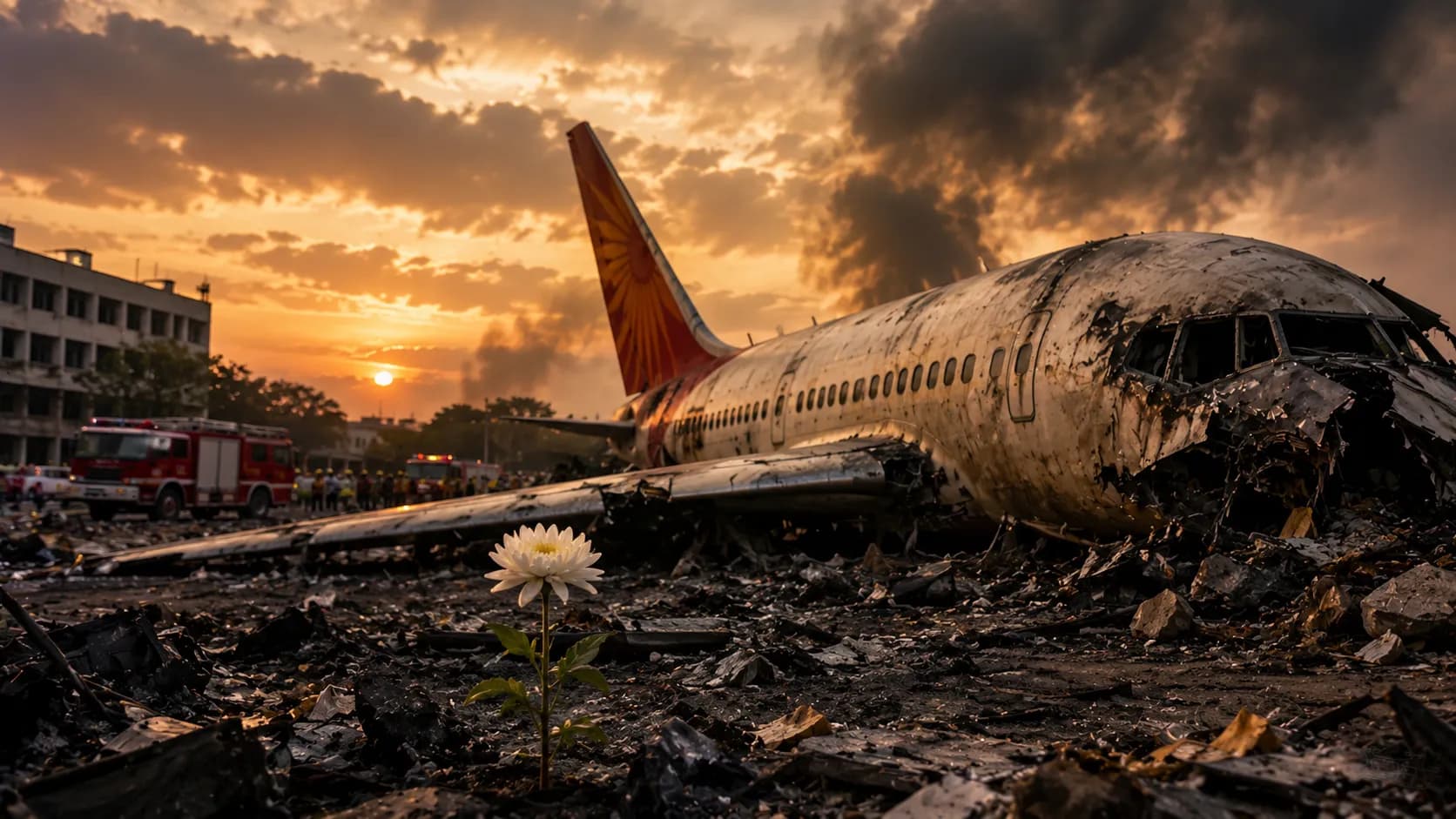
One year after the devastating Air India crash that claimed 260 lives, investigators say more time is needed before a final report can be released. The tragedy, which occurred on 12 June 2025 shortly after a Boeing 787 Dreamliner departed from Ahmedabad for London, remains one of the deadliest aviation disasters in recent Indian history. As families continue to seek answers, officials stress that the investigation is progressing steadily and that every aspect of the accident is being examined with the utmost care.
Significant Progress Reported by Investigators
India’s Aircraft Accident Investigation Bureau (AAIB) issued an update on the first anniversary of the disaster, confirming that investigators have made substantial progress in analyzing evidence collected from the crash site and aircraft systems. According to the agency, experts have conducted an extensive review of technical, operational, organizational, and human factors related to the accident.
Investigators have examined flight recorder data, aircraft systems, engine components, maintenance records, operational procedures, and other critical evidence. However, officials emphasized that the analysis remains ongoing and that additional work is required before definitive conclusions can be reached.
The AAIB stated that the final report will only be published after all investigative activities are completed and after international review and consultation procedures have been finalized. The agency reiterated that its primary objective is to improve aviation safety and prevent similar tragedies in the future rather than assign blame.
Crash Details and Human Toll
The Air India Boeing 787 Dreamliner crashed just minutes after takeoff from Ahmedabad while operating a scheduled flight to London. The aircraft came down approximately six kilometers from the airport and struck a building used as accommodation for doctors at the Byramjee Jeejeebhoy Medical College and Civil Hospital.
The impact triggered a massive explosion and fire. A total of 241 passengers and crew members lost their lives aboard the aircraft, while 19 people on the ground were also killed. Among the victims were 169 Indian citizens and 53 British nationals.
Remarkably, one passenger survived the disaster. Viswashkumar Ramesh of Leicester became the sole survivor of the crash, a fact that drew international attention and sympathy.
The tragedy left families across multiple countries mourning loved ones and sparked widespread discussions about aviation safety standards, pilot training, aircraft systems, and emergency response procedures.
Questions Remain Over Cause of the Accident
The exact cause of the crash has been the subject of intense debate and speculation since a preliminary report was released in July 2025. That report indicated that fuel-control switches moved unexpectedly into the “cut-off” position shortly after takeoff, causing fuel starvation and a complete loss of engine power.
Cockpit voice recordings reportedly captured an exchange between the two pilots, with one questioning why the switches had been moved and the other denying responsibility. Investigators did not publicly identify which pilot made either statement.
Subsequent media reports suggested that attention had shifted toward the aircraft’s captain, Capt. Sumeet Sabharwal. Reports from international media organizations cited unnamed sources who claimed cockpit recordings supported the theory that the captain may have cut fuel flow to the engines.
These claims generated significant controversy. Pilot associations across India strongly criticized the reports and warned against drawing conclusions before the official investigation had been completed. Aviation experts also emphasized the importance of relying on verified findings rather than speculation.
This week, Capt. Sabharwal’s father publicly defended his son’s reputation, arguing that pilots are often blamed prematurely following aviation accidents. He stated that his son could no longer defend himself against allegations and urged investigators and the public to wait for the final report before reaching conclusions.
Conclusion
As the investigation enters its second year, authorities maintain that a thorough and scientifically rigorous approach remains essential. While significant progress has been made, investigators insist that additional analysis is necessary to fully understand the sequence of events that led to the catastrophe.
For the families of the victims, the final report represents more than a technical document—it is a crucial step toward understanding how one of the world’s deadliest aviation disasters occurred. Until that report is released, many questions remain unanswered, and the search for definitive conclusions continues.
Zhansaya Nurlanovna
Contributing writer at EUReflect.
Follow EUReflect
See more of our reporting on Google
Mark EUReflect as a preferred source and our stories are ranked higher for you in Top Stories, Discover and Google News — and carry a “preferred” badge when they are cited in AI results.
Add EUReflect as a preferred source