Business Diplomat: Beyond Exchanges
Support for young people’s international experience should not stop at academic exchanges, says Evelin Hornyák. She calls for fellowships, professional exchanges, internships and early-career programmes, open to those without money or connections. Interviewed by: Olha Pashchenko Interviewee: Evelin Hornyák, Interim Head of Office and Advisor to a Member of the European Parliament; specialist in Migration, Inclusion and Communication
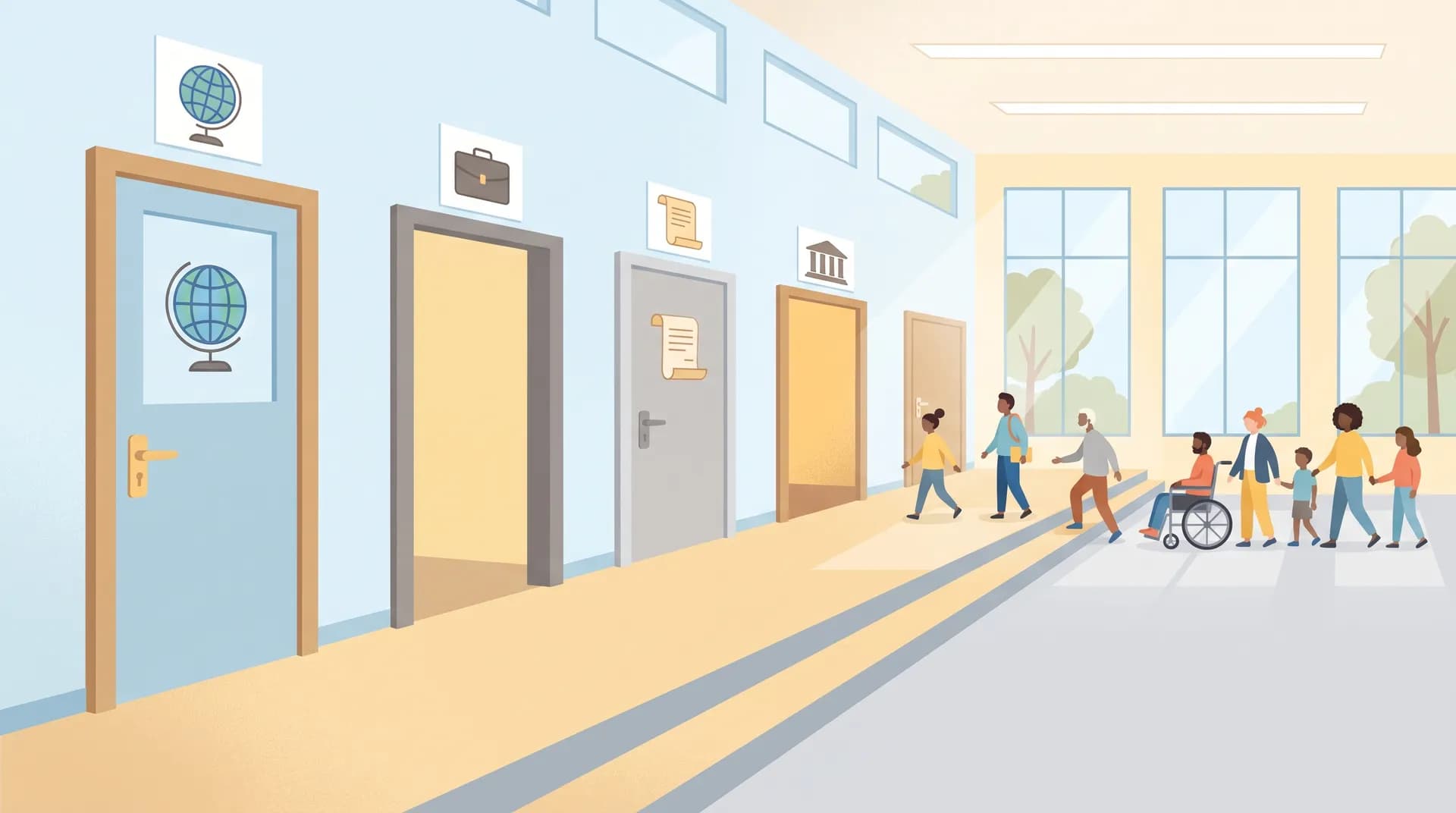
Beyond academic exchanges
Student exchange programmes are the best-known form of public support for international experience. Evelin Hornyák, Interim Head of Office and Advisor to a Member of the European Parliament, argues that they are not enough. In this part of its interview series, Business Diplomat presents her answer on how public support in this area should be designed.
First observation: widening the instruments
The assessment begins with a limit:
“That’s why support shouldn’t stop at traditional academic exchanges.”
The sentence does not dismiss academic exchanges; it says they should not be the end of the policy. The “that’s why” refers back to her earlier argument: if what young people gain includes understanding how institutions work and how decisions are made, then forms of experience that put them inside institutions are needed.
Four practical instruments
Second observation: four instruments
The assessment names them:
“Countries could invest more in international fellowships, professional exchanges, internships, and early-career programs that give young people experience in diplomacy, public policy, business, and international organisations.”
The four instruments are fellowships, professional exchanges, internships and early-career programmes. The four fields are diplomacy, public policy, business and international organisations. Note that business stands alongside diplomacy and policy. Together the list shows an aim to prepare young people for work, not only for study, and for work in the settings where international decisions are made.
Access for all
Third observation: open to all
The assessment then states a condition:
“These opportunities should also be open to those who don’t already have the money or connections to take part.”
This condition is what makes public funding necessary. If these opportunities were open only to those who already had money or connections, private resources would be enough and public support would add nothing. By aiming at those without them, Hornyák gives public investment its distinct role. The word “also” matters: it sits beside the other aims without being subordinate to them.
The logic of the assessment
The structure is short. Go beyond academic exchanges. Use four practical instruments across four fields. Ensure access for those who lack money or connections. The sequence moves from limit to means to condition.
Business Diplomat's mission
The role of Business Diplomat
The platform’s mission is to give young people experience, bring a diplomatic order to the business world, and benefit states by revitalising the economy. Several of the instruments Hornyák lists, such as professional exchanges and early-career programmes, correspond to what a platform like Business Diplomat can organise. By connecting young people with practitioners in diplomacy and business, it can widen access to just the kind of experience she describes.
Conclusion
Public support for international experience should go beyond academic exchanges to include fellowships, professional exchanges, internships and early-career programmes, in diplomacy, policy, business and international organisations. These opportunities should be open to those without money or connections. Business Diplomat aims to contribute to that wider access.
Olha Pashchenko
Contributing writer at EUReflect.
Follow EUReflect
See more of our reporting on Google
Mark EUReflect as a preferred source and our stories are ranked higher for you in Top Stories, Discover and Google News — and carry a “preferred” badge when they are cited in AI results.
Add EUReflect as a preferred source